


Applying the Motivational Spectrum of TTI Driving Forces in the Digital Transformation Journey
Last updated: October 08, 2025 Read in fullscreen view


 Recommended for you
- 13 Oct 2025
 Mastering the Dynamic Squad Model: A Modern Approach to Agile Teams 211/420
 - 19 Oct 2021 Software development life cycles 144/822
- 04 Oct 2021 Product Validation: The Key to Developing the Best Product Possible 131/439
- 18 Dec 2025 EOS as a Business Operating System: Powerful, but Not Always Plug-and-Play 131/184
- 13 Oct 2021 Outsourcing Software Development: MVP, Proof of Concept (POC) and Prototyping. Which is better? 129/606
- 07 Oct 2025 Case Study: Using the “Messaging House” Framework to Build a Digital Transformation Roadmap 127/207
- 12 Oct 2022 14 Common Reasons Software Projects Fail (And How To Avoid Them) 112/677
- 12 Aug 2024 Understanding Google Analytics in Mumbai: A Beginner's Guide 110/217
- 28 Jul 2022 POC, Prototypes, Pilots and MVP: What Are the Differences? 109/850
- 09 Oct 2024 Are Expensive CRM Systems Really Worth It? 103/198
- 31 Aug 2022 What are the best practices for software contract negotiations? 97/371
- 12 Dec 2021 Zero Sum Games Agile vs. Waterfall Project Management Methods 96/510
- 05 Jun 2023 Bespoke Solution: Annual Maintenance Contract (AMC) Software 95/288
- 05 Sep 2023 The Cold Start Problem: How to Start and Scale Network Effects 93/291
- 18 Sep 2024 11 Psychological Defense Mechanisms and How to Recognize Them 93/290
- 05 Mar 2021 How do you minimize risks when you outsource software development? 91/424
- 06 Mar 2024 [SemRush] What Are LSI Keywords & Why They Don‘t Matter 82/284
- 01 Dec 2023 Laws of Project Management 79/394
- 18 Jul 2021 How To Ramp Up An Offshore Software Development Team Quickly 76/668
- 03 Feb 2024 "Kham Nhẫn" in Business: A Guide to Patience and Resilience 71/234
- 04 Oct 2022 Which ERP implementation strategy is right for your business? 70/430
- 03 May 2024 The Iceberg of Ignorance 69/497
- 01 May 2024 Warren Buffett’s Golden Rule for Digital Transformation: Avoiding Tech Overload 69/277
- 27 May 2026 Best 5 Software Development Companies Ideal for Early-Stage Startups 67/93
- 05 Oct 2021 Shiny Object Syndrome: Why Your Business Isn't "Going Digital" 63/444
- 15 Aug 2025 Quantum Technology: Global Challenges and Opportunities for Innovators 61/193
- 26 Nov 2024 Harnessing Time Management Skills for Remote Team Effectiveness 60/281
- 28 Oct 2022 Build Operate Transfer (B.O.T) Model in Software Outsourcing 60/470
- 05 Feb 2024 Bespoke Solution: Visitor Management System for Corporate 58/321
- 01 May 2023 Understanding Business as Usual (BAU) and How to Transition 52/1174
Why Motivation Is the Key to Digital Transformation
Most digital transformation projects fail not because of technology — but because people don’t change. Employees show little interest in new systems. Managers don’t stay committed to data. Leaders see transformation as just another “IT project.”
To shift this reality, organizations must understand the invisible engine that drives human behavior — motivation. It’s what determines whether people learn, collaborate, innovate, or resist.
That’s why the Motivational Spectrum, based on the TTI Driving Forces model, is so powerful. It’s a scientific framework derived from DISC theory and Eduard Spranger’s value system, helping leaders decode what truly moves their teams from compliance to commitment.
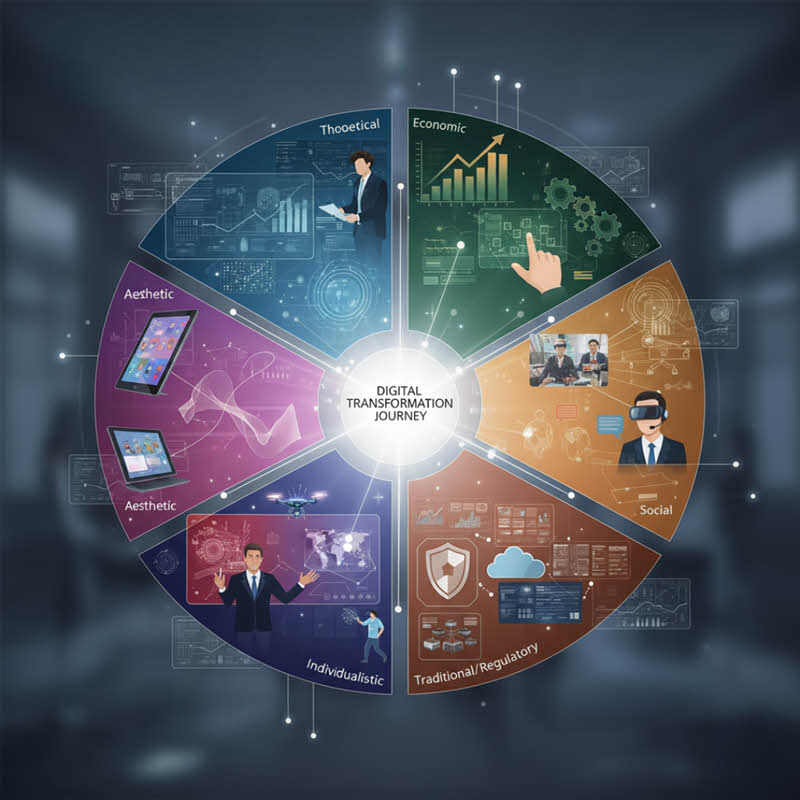
Overview of the Motivational Spectrum – The 12 Core Driving Forces
According to TTI Success Insights, there are six pairs of opposing drives (twelve in total).
Each person has a unique motivational DNA — a compass guiding what gives them meaning, energy, and satisfaction at work.
| Category | Drive 1 | Drive 2 | Summary |
|---|---|---|---|
| Knowledge | Intellectual | Instinctive | Curiosity for knowledge vs. Learning through experience |
| Utility | Resourceful | Selfless | Optimizing return vs. Acting for non-monetary values |
| Aesthetic / Surroundings | Harmonious | Objective | Seeking beauty and balance vs. Focusing on results |
| Individualistic / Power | Commanding | Collaborative | Leading from the front vs. Influencing through teamwork |
| Traditional / Methodologies | Structured | Receptive | Preserving order vs. Embracing innovation |
| Others (Social...) | Altruistic | Intentional | Helping everyone vs. Helping with purpose |
Each drive is like a color in the organization’s emotional palette. Together, they paint the culture of transformation.
Applying the Spectrum in Each Phase of Digital Transformation
Digital transformation unfolds in three main stages — Awareness, Implementation, and Sustainment. Each stage requires different motivational levers to ignite engagement across diverse personalities.
Phase 1: Awareness & Alignment
-
Intellectuals need logic, data, and technological vision.
→ They support change when they see opportunities to learn and expand knowledge. -
Harmonious types need stability and emotional safety.
→ Help them see that change won’t destroy balance, but rather create new harmony.
Phase 2: Technology Implementation
-
Commanding individuals thrive when given authority or pilot roles.
→ They become your digital ambassadors. -
Resourceful employees care about ROI, KPIs, and measurable efficiency.
→ Turn them into efficiency evangelists. -
Receptive minds enjoy experimenting with new tools when benefits are clear.
→ They are your pathfinders of innovation.
Phase 3: Sustaining the Digital Culture
-
Collaborative personalities flourish in knowledge-sharing communities.
→ Empower them as internal mentors and trainers. -
Altruistic people stay loyal when they see positive social or team impact.
→ They are the soul of a human-centered digital culture.
Building a Motivation Map for Your Organization
Start by assessing individual or departmental motivations using tools like the TTI Driving Forces Assessment.
From there, you can:
- Cluster employees by dominant drives
- Assign roles and communicate based on their motivational profiles
- Design internal campaigns that resonate with the heart, not just the head
- Reduce conflict between innovators (Receptive, Commanding) and traditionalists (Structured, Objective)
→ The outcome? Your organization doesn’t just digitally transform — it mentally and culturally evolves.
Conclusion: Digital Transformation Is a Journey of Inspiration, Not Just Technology
The Motivational Spectrum helps you see your workforce not as “supporters or resistors,” but as different sources of energy in the same system.
A truly transformed organization is one where:
- The Resourceful see efficiency,
- The Intellectual see learning,
- The Collaborative see connection, and
- The Harmonious find peace amid change.
When that happens, digital transformation stops being a project — it becomes a movement with a soul.
 Explore more on these topics























 Guest Blogging: The Definitive Guide

 Top Trending Topics
 Share This
 Link copied!
 Recently Updated News