

Data-driven ways to build a customer-centric culture
Last updated: November 15, 2025 Read in fullscreen view


 Recommended for you
- 08 Aug 2021
 XERO vs ODOO: Which fits your needs? 652/974
 - 14 Jan 2026 How to Evaluate the Business and Productivity Software Company Seismic on RFP AI Agent Use Cases 257/311
- 01 Dec 2025 Manufacturing 4.0: AI Agents Enabling Self-Optimizing Production Systems 185/246
- 25 Jul 2022 Govern your Business with Odoo - One Solution To Many Challenges 150/410
- 06 Nov 2025 DataOps: The Next Frontier in Agile Data Management 145/205
- 06 Nov 2023 How do you streamline requirement analysis and modeling? 131/369
- 20 Jan 2021 Fail early, fail often, fail cheap, fail safe but always fail forward 131/952
- 14 Dec 2021 Odoo - the Right Software for Your Digital Transformation? 130/582
- 08 Aug 2022 Scale-up! The ultimate business game to learn business operations before you get started 127/773
- 10 Aug 2021 Build A Marketplace Website with Odoo ecommerce 123/944
- 21 Apr 2021 Most frequently asked questions about Odoo ERP 122/1341
- 08 Apr 2026 Top AI Agent Development Companies for Manufacturing Industry (2026) 119/150
- 11 Sep 2022 Odoo - a product-market fit for a radical and meaningful transformation of SMEs in Japan 118/429
- 16 Aug 2022 What is a Headless CMS? 116/402
- 02 Nov 2021 [Case Study] Streamlined Data Reporting using Tableau 116/419
- 11 Nov 2021 What is an IT Self-service Portal? Why is it Important to Your Business? 115/567
- 04 Apr 2023 Odoo: A Re-Birth for Enterprise Software 115/260
- 09 Apr 2025 Odoo Migration Best Practices: A Complete Guide to Upgrading Your ERP System 111/210
- 08 Aug 2022 Difference between Power BI and Datazen 105/440
- 09 Apr 2022 Comparing Features for Odoo ERP with ERPNext 104/424
- 01 May 2023 Understanding Business as Usual (BAU) and How to Transition 102/1229
- 16 Sep 2022 Examples Of Augmented Intelligence In Today’s Workplaces Shaping the Business as Usual 100/537
- 09 Sep 2025 Aligning BI Dashboards with KPIs: A Business + Data Collaboration Guide 99/187
- 28 Jul 2025 Data Modernization for SMBs: Small Steps, Big Impact 97/250
- 01 Jan 2024 The pros and cons of the Centralized Enterprise Automation Operating model 96/320
- 08 Aug 2022 Why is Odoo growing faster than other ERP software systems? 91/308
- 20 Oct 2022 Odoo roadmap for beginners and small businesses 91/1195
- 10 Feb 2022 Odoo Implementation Services - Let Us Be the Icing 89/467
- 01 Jan 2023 Senior Odoo Business Developer - Job Detail 88/631
- 08 Nov 2022 Considerations in revolutionizing your business with Odoo 86/359
- 03 Apr 2021 How digital asset management streamlines your content workflow? 84/415
- 09 Nov 2021 Frequently Asked Questions about Odoo 83/555
- 20 Jan 2022 TIGO Self-Organization Practice: Change Management Workflow 83/555
- 19 Sep 2022 Comparison between Odoo and SAP: It doesn't matter whether a cat is black or white, as long as it catches mice 82/315
- 19 Jan 2022 TIGODOO - The leading player in the digital transformation market 80/448
- 02 Dec 2022 Success Story: Satsuki - Sales Management Software, back office app for School Subscription Management 80/320
- 10 Feb 2022 Odoo Implementation - Basics of the QuickStart Methodology 79/551
- 03 Sep 2022 The secret of software success: Simplicity is the ultimate sophistication 77/282
- 19 Oct 2021 The Workplace of the Future: Gamification to Encourage and Reward Employees 76/391
- 18 May 2022 Odoo Employee Contract Portal Self Service 76/721
- 03 Nov 2021 7 phases of Odoo Implementation and Development: Can they be outsourced? 76/501
- 13 Feb 2021 Why is TIGOSOFT a software house for Enterprise Application Development? 73/454
- 10 Apr 2022 Odoo Dealership Management 71/656
- 01 Nov 2023 Unlocking the power of Odoo 17 - What are the new and improved features? 71/418
- 03 May 2024 The Iceberg of Ignorance 71/500
- 15 Jul 2025 Steps to Successful Odoo Implementation 70/203
- 19 Apr 2023 A Deep Dive into Odoo: Benefits, Drawbacks, Strategic Fit, and Investment Models 69/305
- 12 Oct 2022 Why is ODOO end-to-end business management software? 69/430
- 29 Nov 2019 Odoo Website Builder Allows You to Make Your Own Website 67/785
- 01 Feb 2024 Employee Attendance Using Camer AI 67/255
- 05 Oct 2021 Shiny Object Syndrome: Why Your Business Isn't "Going Digital" 67/449
- 01 Apr 2025 How to Manage Social Media Marketing with Odoo 66/200
- 01 Jan 2024 Odoo: The Small Business Game-Changer — Cost Savings and Enhanced Productivity 66/190
- 16 Jun 2022 Rapid Application Development (RAD): Pros and Cons 66/952
- 07 Nov 2022 The Future of Odoo Consulting 66/320
- 16 Mar 2022 Digital Transformation With Odoo: an ERP made for you as SME and grow with you? 65/239
- 21 Jun 2021 6 Useful Tips To Streamline Business Processes and Workflows 65/598
- 01 Oct 2022 Odoo 16 will Disrupt The ERP Mid-Market with stunning features 65/480
- 08 Nov 2021 Why Odoo is considered best for streamlining your business? 62/331
- 25 Dec 2021 Compare Odoo Studio vs QuickBase vs OutSystems 59/574
- 18 Mar 2020 Automate Recruitment with Odoo: Work smarter, not harder 58/407
- 23 Aug 2022 How to Create Qweb Report in Odoo 16? 57/976
- 02 Oct 2022 Odoo: The Disruptor of Traditional ERP in the Age of AI and Blockchain 57/347
- 18 Mar 2025 Odoo HRMS Software for Efficient HR Management in Dubai Businesses 54/184
- 17 Feb 2022 10 services of Odoo Development for streamlining your business 54/481
- 03 Apr 2023 Odoo ERP - "Swiss army knife" approach for all business solutions 50/295
- 01 Mar 2024 Odoo Ecosystem - ALL-IN-ONE BUSINESS MANAGEMENT SOFTWARE 45/247
- 07 Feb 2023 Odoo Consulting Services in Vietnam 45/301
- 16 Dec 2025 How High-Speed File Transfer Solves Big Data Challenges in the Energy and Construction Sectors 43/55
- 20 Jul 2026 Why Enterprises Are Embracing Microsoft Copilot and Agentic AI in 2026 22/25
- 03 Dec 2024 CRM Solutions on the Odoo Platform 3/143
Client-centricity is the most important factor in a successful business digitalization, since client-centric companies are 60% more profitable compared to companies not focused on the customer.
-- Deloitte
Read also: 75+ Inspirational Quotes on Customer Centricity
What is client-centric?
Being Client-centric is about focusing your business strategy to provide a positive experience and build a long-term relationship.
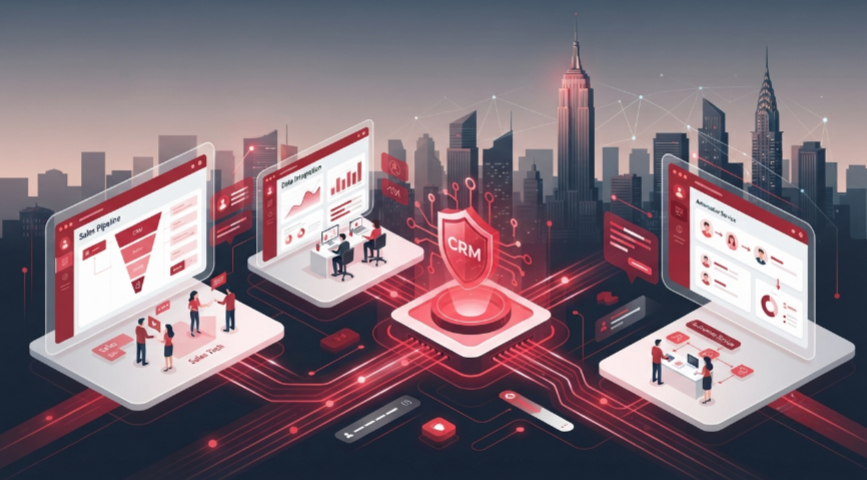
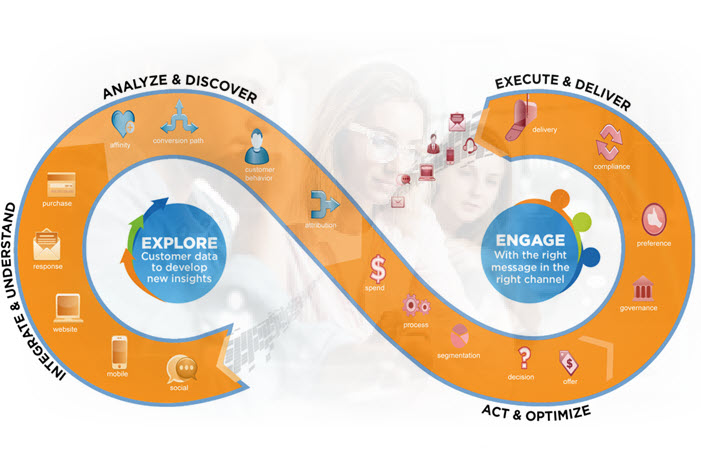
Putting your customer experience at the core of your business, and implementing a Customer Relationship Management (CRM) to collect data you'll have a full 360 degrees view of the customer.
This data is critical to enhance your customer’s experience.
How to build your Client centricity strategy?
- You need a Customer focused Leadership
- Your Leadership must Empower the front line
- You need Technology to Collect Metrics that matter
If you are successful on this,
- You'll be able to understand behavior, interests and engagement of your customers.
- You'll be able to identify opportunities to personalize products and services for your very important customers
- You'll be able to use your Customer Lifetime Value to segment them based on top clients.
What are main challenges of becoming a client-centric organization?
The experience tells that companies struggling to become a customer-centric organization are:
- Unable to share customer information across departments
- They have not an aligned culture around the customer’s needs.
Are you struggling with these challenges?
- Functional silos prevent data sharing
- Culture misalignment around the customer needs
- Key technology managing data is missing
- Support without the right tools and information to manage issues
- Insufficient expertise in data analytics
Here below you'll find 3 actions to get started overcoming these challenges.
Hire with Customer Success as priority
Employees being the front-facing workforce will build the relationship with your customers.
Focus on hiring talent that can be aligned with your business culture, independently the role.
Share customer data across your organization
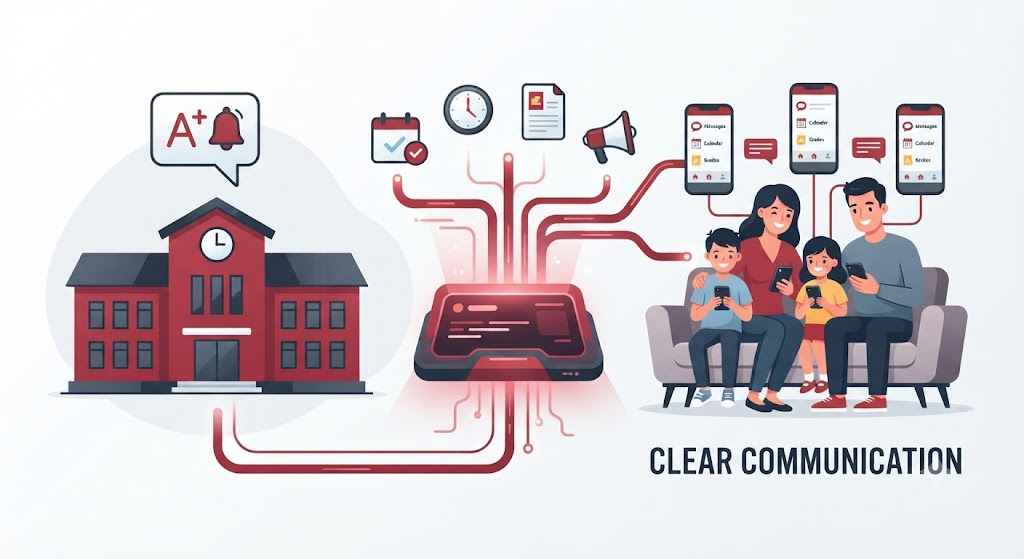
A centralized access to customer data and insights is required.
A CRM will give your team a better understanding of customers to deliver the best of the experiences.
Connect customer outcomes to measurable indicators
1. Net Promoter Score (NPS)
Have you implemented a way to measure customer happiness?
If not, you need to uncover customer loyalty by asking only one, simple question: how likely is your customer to recommend you to a friend or colleague.
In a score from 1 to 10 , customers rating your company with a 9 or 10 (Promoters) will have a high Customer Lifetime Value. The number of Promoters is a key indicator of the health of your business.
2. Churn rate
This is a good indicator that you are doing great, everybody knows that acquiring new customers is difficult.
Investing and obtaining results in keeping existing customers instead of trying to find new ones it’s a great deal.
Acquiring new customers can cost up to 5x more than keeping existing customers. A 2% increase in customer retention has the same effect on profits as cutting costs by 10%.
3. Customer lifetime value (CLV)
The most valuable asset for a business is their customer base and the approach to estimate the "health" of the relationship is named Customer Lifetime Value (CLV).
CLV measures the amount of revenue a customer contributes to your business for as long as they are a paying customer. It starts with their first purchase and ends when they stop doing business with you. You need to carefully track that.
Your Take-away...
The change towards becoming a properly customer-centric company is a long and complex journey but note that small changes can have remarkable benefits for both the company and your customer.
Customer data must be shared across your organization, a CRM software is essential for this.
Minimize customer effort and maximize customer value are main objectives.
 Explore more on these topics









04102024050214_thumb.jpg)













 Guest Blogging: The Definitive Guide
 Top Trending Topics
 Share This
 Link copied!
 Recently Updated News
 thực chiến - Kiến tạo tương lai cho các nhà sáng tạo nội dung.