




How AI Agents are Changing Software Development?
Last updated: October 28, 2025 Read in fullscreen view


 Recommended for you
- 06 Mar 2026
 Next-Generation AI Agents Explained: OpenClaw, NanoClaw, IronClaw and the Rise of Agent Architectures 343/380
 - 05 Oct 2025 The New Facebook Algorithm: A Paradigm Shift in Content Discovery 262/324
- 21 Dec 2023 Top 12 Low-Code Platforms To Use in 2024 205/1500
- 23 Dec 2025 Microsoft Power Automate vs. n8n: What’s the Real Difference? 201/323
- 29 Oct 2024 Top AI Tools and Frameworks You’ll Master in an Artificial Intelligence Course 178/582
- 02 Oct 2022 The Real Factors Behind Bill Gates’ Success: Luck, Skills, or Connections? 176/548
- 21 Sep 2023 Abraham Wald and the Missing Bullet Holes 174/875
- 14 Aug 2024 From Steel to Software: The Reluctant Evolution of Japan's Tech Corporates 173/718
- 01 Dec 2025 Manufacturing 4.0: AI Agents Enabling Self-Optimizing Production Systems 166/225
- 09 Jul 2024 What Is Artificial Intelligence and How Is It Used Today? 163/416
- 18 Oct 2020 How to use the "Knowns" and "Unknowns" technique to manage assumptions 162/1256
- 03 Oct 2025 Top CMS Trends 2026: The Future of Digital Content Management 159/188
- 23 Dec 2024 Garbage In, Megabytes Out (GIMO): How to Rise Above AI Slop and Create Real Signal 155/208
- 16 Oct 2025 AI Inference Explained Simply: What Developers Really Need to Know 154/188
- 05 Jun 2025 How AI-Driven Computer Vision Is Changing the Face of Retail Analytics 152/275
- 25 Mar 2026 Token Bills: The "Cost Shock" After the AI Boom in Companies 151/171
- 13 Oct 2025 Dora AI: Turn Prompts Into Pixel-Perfect Websites-No Code, No Limits 149/212
- 02 Dec 2025 The Question That Shook Asia: What Happens When We Ask AI to Choose Between a Mother and a Wife? 148/184
- 20 Dec 2025 The Future of IT Consulting: Key Trends for 2026–2030 145/185
- 12 Dec 2025 FlexClip AI Video Magic Review: Professional AI-Powered Video Editing 143/187
- 19 Oct 2021 Software development life cycles 142/820
- 31 Dec 2025 10 Skills to Make You "Irreplaceable" in the Next 3 Years (even if AI changes everything) 137/166
- 06 Nov 2025 Top 10 AI Development Companies in the USA to Watch in 2026 136/210
- 06 Nov 2025 DataOps: The Next Frontier in Agile Data Management 133/192
- 06 Dec 2025 Enterprise Operations 2.0: Why AI Agents Are Replacing Traditional Automation 132/176
- 18 Jul 2024 The 8 Best ways to Innovate your SAAS Business Model in 2024 132/387
- 26 Mar 2026 What Is a System Integrator (SI)? Why the Software Subscription Model Is Becoming the New Standard 125/158
- 16 Oct 2024 7 Game-Changing Features of InstaDoodle: The Ultimate AI Doodle Video Maker 125/192
- 13 Oct 2021 Outsourcing Software Development: MVP, Proof of Concept (POC) and Prototyping. Which is better? 124/600
- 24 Mar 2026 AI for Financial Reconciliation: Automating Finance Operations in 2026 123/149
- 25 Nov 2025 How AI Agents Are Redefining Enterprise Automation and Decision-Making 121/179
- 31 Jul 2025 Top WooCommerce Pre-Order Plugins with Countdown & Discounts 121/217
- 07 Oct 2025 Case Study: Using the “Messaging House” Framework to Build a Digital Transformation Roadmap 121/200
- 04 Oct 2021 Product Validation: The Key to Developing the Best Product Possible 121/429
- 21 Apr 2026 Vibe Coding vs. Expert Shopify Development: What AI Tools Can (and Can't) Do? 119/143
- 13 Dec 2020 Move fast, fail fast, fail-safe 116/454
- 18 Aug 2022 What are the consequences of poor requirements with software development projects? 116/384
- 11 Jan 2024 What are the Benefits and Limitations of Augmented Intelligence? 116/602
- 25 Dec 2025 What Is Algorithmic Fairness? Who Determines the Value of Content: Humans or Algorithms? 113/156
- 04 Mar 2026 CRM Trends Shaping Customer Engagement in 2026 113/140
- 22 Dec 2025 The Role of Automotive Software in Building Smarter Vehicles 112/154
- 06 Feb 2021 Why fail fast and learn fast? 112/586
- 01 Oct 2020 Fail fast, learn faster with Agile methodology 111/1185
- 01 Jul 2025 The Hidden Costs of Not Adopting AI Agents: Risk of Falling Behind 111/259
- 20 Feb 2025 How Machine Learning is Shaping the Future of Digital Advertising 110/232
- 15 Apr 2024 Weights & Biases: The AI Developer Platform 110/301
- 12 Oct 2022 14 Common Reasons Software Projects Fail (And How To Avoid Them) 108/673
- 10 Aug 2024 Odoo vs. Lark: A Comprehensive Comparison 105/931
- 28 Nov 2025 Best Kentico CMS Development Practices for Agile Software Teams 105/158
- 16 Dec 2025 Reducing Cognitive Friction in Software Development: A Guide to Faster, Happier Teams 104/176
- 16 Aug 2022 What is a Headless CMS? 103/389
- 27 Jul 2024 Positive Psychology in the Digital Age: Future Directions and Technologies 103/529
- 12 Aug 2024 Understanding Google Analytics in Mumbai: A Beginner's Guide 103/210
- 16 Aug 2022 What is a Headless CMS? 103/389
- 02 Dec 2024 The Intersection of AI and Business Analytics: Key Concepts to Master in Your Business Analytics Course 101/396
- 03 Jan 2024 Why Partnership is important for Growth? 100/258
- 14 Mar 2024 Why should you opt for software localization from a professional agency? 98/237
- 28 Jul 2022 POC, Prototypes, Pilots and MVP: What Are the Differences? 98/836
- 12 Jan 2026 Companies Developing Custom AI Models for Brand Creative: Market Landscape and Use Cases 98/130
- 16 Sep 2022 Examples Of Augmented Intelligence In Today’s Workplaces Shaping the Business as Usual 97/533
- 21 Nov 2025 The Rise of AgentOps: How Enterprises Are Managing and Scaling AI Agents 97/152
- 27 Aug 2025 How AI Consulting Is Driving Smarter Diagnostics and Hospital Operations 97/197
- 16 Sep 2022 Examples Of Augmented Intelligence In Today’s Workplaces Shaping the Business as Usual 97/533
- 23 Sep 2021 INFOGRAPHIC: Top 9 Software Outsourcing Mistakes 96/519
- 10 Nov 2025 Multi-Modal AI Agents: Merging Voice, Text, and Vision for Better CX 95/208
- 12 Dec 2021 Zero Sum Games Agile vs. Waterfall Project Management Methods 94/507
- 31 Aug 2022 What are the best practices for software contract negotiations? 94/365
- 11 Oct 2022 Why choose Billable Viable Product (BVP) over Minimum Viable Product (MVP) 94/436
- 17 Oct 2025 MLOps vs AIOps: What’s the Difference and Why It Matters 93/204
- 21 Aug 2024 What is Singularity and Its Impact on Businesses? 93/552
- 20 Aug 2025 What Is Agentic AI? The Next Phase of Artificial Intelligence 92/251
- 24 Dec 2024 Artificial Intelligence and Cybersecurity: Building Trust in EFL Tutoring 92/262
- 25 Sep 2024 Enhancing Decision-Making Skills with an MBA: Data-Driven Approaches for Business Growth 92/299
- 14 Oct 2021 Advantages and Disadvantages of Time and Material Contract (T&M) 91/984
- 06 May 2025 How Machine Learning Is Transforming Data Analytics Workflows 91/288
- 25 Jan 2025 The Decline of Traditional SaaS and the Rise of AI-first Applications 90/195
- 18 Jan 2024 Self-healing code is the future of software development 89/306
- 05 Sep 2023 The Cold Start Problem: How to Start and Scale Network Effects 89/286
- 09 Sep 2025 Aligning BI Dashboards with KPIs: A Business + Data Collaboration Guide 89/177
- 07 Nov 2025 Online vs. Offline Machine Learning Courses in South Africa: Which One Should You Pick? 87/155
- 05 Mar 2021 How do you minimize risks when you outsource software development? 86/419
- 08 Oct 2022 KPI - The New Leadership 85/692
- 28 Dec 2021 8 types of pricing models in software development outsourcing 85/519
- 05 Aug 2024 Revisiting the Mistake That Halted Japan's Software Surge 85/432
- 23 Jun 2025 AI Avatars in the Metaverse: How Digital Beings Are Redefining Identity and Social Interaction 85/272
- 09 Sep 2024 How AI Rewriting Can Improve Your Content’s SEO Performance 79/276
- 06 Mar 2024 [SemRush] What Are LSI Keywords & Why They Don‘t Matter 78/280
- 30 Jul 2024 The Future of IT Consulting: Trends and Opportunities 78/286
- 04 Oct 2023 The Future of Work: Harnessing AI Solutions for Business Growth 77/356
- 19 Oct 2021 Is gold plating good or bad in project management? 77/908
- 06 Oct 2025 AI Agents in DevOps: From Automated Runbooks to Self-Healing Pipelines 77/193
- 28 Nov 2025 How AI Will Transform Vendor Onboarding and Seller Management in 2026 76/206
- 31 Dec 2022 The New Normal for Software Development 76/429
- 18 Aug 2024 The Future of Web Development: Emerging Trends and Technologies Every Developer Should Know 76/271
- 31 Dec 2023 Software Development Outsourcing Trends to Watch Out for in 2024 75/304
- 10 Dec 2023 Pain points of User Acceptance Testing (UAT) 75/533
- 01 Dec 2023 Laws of Project Management 75/390
- 22 Nov 2024 The Role of AI in Enhancing Business Efficiency and Decision-Making 74/269
- 10 Nov 2022 Poor Code Indicators and How to Improve Your Code? 74/291
- 10 Sep 2024 Leading Remote Teams in Hybrid Work Environments 73/216
- 17 Feb 2022 Prioritizing Software Requirements with Kano Analysis 73/377
- 18 Jul 2021 How To Ramp Up An Offshore Software Development Team Quickly 71/663
- 19 Apr 2021 7 Most Common Time-Wasters For Software Development 71/616
- 19 Dec 2023 How AI is Transforming Software Development? 70/363
- 22 Sep 2025 Why AI Is Critical for Accelerating Drug Discovery in Pharma 70/185
- 01 May 2024 Warren Buffett’s Golden Rule for Digital Transformation: Avoiding Tech Overload 69/277
- 03 Nov 2023 Why Is Billable Viable Product An Alternative To Minimum Viable Product? 69/260
- 24 Oct 2025 AI Agents in SaaS Platforms: Automating User Support and Onboarding 68/139
- 04 Oct 2022 Which ERP implementation strategy is right for your business? 67/427
- 01 Mar 2023 Bug Prioritization - What are the 5 levels of priority? 67/296
- 12 Mar 2024 How do you create FOMO in software prospects? 65/238
- 09 Oct 2024 Short-Form Video Advertising: The Secret to Captivating Your Audience 64/196
- 21 Apr 2025 Agent AI in Multimodal Interaction: Transforming Human-Computer Engagement 64/259
- 31 Oct 2021 Tips to Fail Fast With Outsourcing 62/453
- 05 Jan 2024 Easy ASANA tips & tricks for you and your team 60/258
- 05 Aug 2024 Affordable Tech: How Chatbots Enhance Value in Healthcare Software 60/290
- 02 Sep 2024 Toolzoon Review: Features, Benefits, and Essential Tools for Enhanced Productivity 59/300
- 15 Aug 2025 Quantum Technology: Global Challenges and Opportunities for Innovators 58/187
- 17 Mar 2025 Integrating Salesforce with Yardi: A Guide to Achieving Success in Real Estate Business 57/264
- 26 Sep 2024 Successful Project Management Techniques You Need to Look Out For 57/454
- 28 Oct 2022 Build Operate Transfer (B.O.T) Model in Software Outsourcing 57/466
- 29 Aug 2025 How AI Is Transforming Modern Management Science 56/123
- 26 Dec 2023 Improving Meeting Effectiveness Through the Six Thinking Hats 51/327
- 10 Sep 2024 AI in Email Marketing: Personalization and Automation 50/227
- 31 Dec 2022 Future of Software Development Trends and Predictions 45/196
- 25 Jun 2026 Vercel: The "Secret Weapon" for Modern, High-Performance Web Deployment 45/50
- 21 Oct 2024 Simplify Your Workflow with an AI Summary Generator 44/224
- 06 Nov 2019 How to Access Software Project Size? 38/295
- 12 Sep 2024 Be Water, My Friend: Fluidity, Flow & Going With the Flow 28/197
Software development is evolving fast, and AI agents are at the center of this transformation. Businesses are no longer relying solely on human developers to write, test, and optimize code. AI-powered agents now assist in everything from automating repetitive tasks to improving software security and performance.
Companies integrating AI-driven development see reduced costs, faster project turnaround, and enhanced software quality. These intelligent agents analyze vast datasets, detect patterns, and make real-time decisions that streamline workflows. Their ability to automate testing, optimize code, and predict software failures is changing how businesses build and maintain digital products.
As AI agents become more advanced, their role in development will continue to expand. The shift isn’t just about efficiency—it’s about redefining how businesses approach software engineering.
How AI Agents Are Changing Software Development?
AI agents are reshaping software development by introducing automation, intelligence, and efficiency across the entire lifecycle. From writing and reviewing code to optimizing software performance, these agents are reducing manual effort, cutting costs, and improving product quality. Businesses leveraging AI-driven software development see faster turnaround times, improved accuracy, and better scalability.
Here’s a detailed look at how AI agents are driving transforming software development:
AI-Driven Code Generation and Optimization
AI-powered tools like GitHub Copilot and Tabnine assist developers by suggesting code snippets, automating repetitive tasks, and even generating entire functions. These agents analyze existing code bases and industry best practices to provide optimized solutions.
- Software developers spend less time on boilerplate coding and more on innovation.
- AI detects inefficiencies in real-time and suggests improvements.
- Code readability and maintainability improve as AI enforces best practices.
Businesses using AI-driven coding tools experience shorter software development life cycles and higher code accuracy, reducing overall project costs.
Automated Testing and Debugging
AI agents revolutionize software testing by automating test case generation, bug detection, and code debugging. Tools like Diffblue and Testim use machine learning to identify errors before deployment.
- AI generates thousands of test cases in minutes, reducing human effort.
- Predictive debugging helps identify potential failures before they occur.
- Self-healing test scripts adapt to software changes, reducing maintenance overhead.
By catching errors early, businesses reduce post-release failures, leading to higher software reliability and fewer costly patches.
AI in Software Maintenance and Upgrades
Legacy systems often require continuous updates, refactoring, and optimizations. AI agents simplify maintenance by identifying outdated code structures and suggesting modern alternatives.
- AI automates code refactoring, reducing technical debt.
- Predictive maintenance anticipates system failures, preventing downtime.
- AI suggests performance enhancements based on user behavior and system analytics.
With AI managing software upkeep, businesses can extend the lifespan of applications and ensure they remain efficient over time.
AI-Powered Project and Workflow Management
Project management tools integrated with AI agents help teams organize workflows, track progress, and optimize resource allocation. Platforms like Jira AI and ClickUp leverage AI to enhance decision-making.
- AI analyzes historical project data to improve time estimates.
- Intelligent task automation reduces manual backlog management.
- AI detects bottlenecks, ensuring smooth sprint execution.
This results in better efficiency, reduced delays, and improved collaboration across software teams.
Security Enhancement and Threat Detection
Cybersecurity threats continue to evolve, making software security a critical concern. AI-driven security tools monitor applications, detect vulnerabilities, and automate compliance enforcement.
- AI scans millions of lines of code for security gaps in real-time.
- Automated security patches ensure faster response to vulnerabilities.
- AI detects anomalies in user behavior, preventing cyberattacks.
By incorporating AI into security measures, businesses strengthen data protection and regulatory compliance.
Intelligent Software Deployment with AI-Powered DevOps
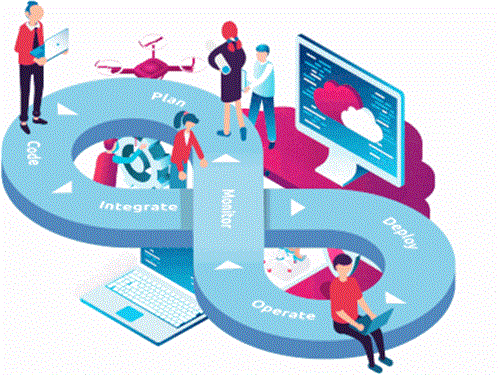
AI streamlines DevOps by automating software deployment, monitoring, and infrastructure management. AI-driven CI/CD pipelines improve speed and stability in software development processes.
- AI automates code integration, testing, and deployment.
- Self-learning DevOps tools identify system inefficiencies and suggest improvements.
- AI-powered monitoring tools predict server downtimes and optimize performance.
With AI-driven DevOps, businesses reduce system failures, minimize downtime, and enhance deployment efficiency.
AI in User Experience (UX) Optimization
AI agents help software applications adapt to user behavior, providing more intuitive and engaging experiences.
- AI-driven analytics personalize user interfaces based on behavior patterns.
- Chatbots and virtual assistants enhance real-time user interactions.
- AI optimizes app navigation and responsiveness, improving retention rates.
By leveraging AI-driven UX enhancements, businesses increase user engagement and customer satisfaction.
AI-Powered Scalability and Performance Optimization
AI agents ensure software applications remain scalable as business needs evolve. Cloud-based AI solutions dynamically manage resources to optimize performance.
- AI predicts traffic spikes and allocates server resources accordingly.
- Automated performance monitoring optimizes application response times.
- AI enhances database efficiency, reducing query response times.
With AI-driven scalability solutions, businesses ensure smooth application performance under varying loads.
Reducing Developer Workload and Bridging Skill Gaps
AI doesn’t replace software developers but enhances productivity by automating repetitive coding tasks and assisting junior developers with best practices.
- AI-generated documentation reduces onboarding time for new developers.
- Smart code reviews help maintain coding standards across teams.
- AI bridges the skill gap by providing real-time coding assistance.
This results in higher team efficiency and better software output without increasing labor costs.
Competitive Advantage Through AI-Driven Development
Businesses integrating AI in software development gain a significant edge over competitors. AI-powered development leads to:
- Faster time-to-market for software products.
- Lower operational costs through automation.
- Higher software quality with predictive analytics and AI-driven optimizations.
By adopting AI, companies future-proof their software development strategies and stay ahead of industry trends.
AI agents are no longer a supporting tool—they are becoming central to modern software engineering. From automating tedious coding tasks to ensuring software security and performance, AI is reshaping how businesses build, test, and deploy software. As AI continues to evolve, its role in software development will only expand. Companies that embrace AI-driven development of software solutions will innovate faster, reduce costs, and deliver superior software solutions.
Conclusion
AI agents are no longer just supporting tools in software development. They are active contributors, automating complex tasks, improving efficiency, and enhancing software quality. Businesses integrating AI-driven development see faster deployment, reduced costs, and better scalability.
From writing and optimizing code to managing software security and performance, AI agents are streamlining every stage of software development. Automated testing reduces human effort, predictive analytics improve decision-making, and AI-powered DevOps ensures smoother deployments. These advancements are not just improving workflows—they are shaping the future of software engineering.
As AI continues to evolve, its role in software development will expand. Businesses that adopt AI-driven software solutions will stay competitive, delivering faster and more reliable applications. Many top AI development companies are already leading this transformation, helping businesses integrate AI agents into their workflows. The shift toward AI-powered software development is well underway, and businesses that leverage these innovations will be better positioned for long-term success.
 Explore more on these topics





















 Guest Blogging: The Definitive Guide

 Top Trending Topics
 Share This
 Link copied!
 Recently Updated News