



Occam’s Razor and the Art of Software Design
Last updated: December 20, 2025 Read in fullscreen view


 Recommended for you
- 21 May 2022
 "Fail Fast, Fail Often, Fail Forward" is the answer to Agile practices of software success 73/1098
 - 19 Oct 2021 Software development life cycles 70/745
- 10 Apr 2022 Agile self-organizing teams: What are they? How do they work? 70/575
- 18 Oct 2020 How to use the "Knowns" and "Unknowns" technique to manage assumptions 67/1147
- 12 Oct 2022 14 Common Reasons Software Projects Fail (And How To Avoid Them) 57/610
- 13 Oct 2021 Outsourcing Software Development: MVP, Proof of Concept (POC) and Prototyping. Which is better? 56/515
- 27 Oct 2020 8 principles of Agile Testing 55/1353
- 31 Aug 2022 What are the best practices for software contract negotiations? 54/311
- 01 Sep 2022 Facts Chart: Why Do Software Projects Fail? 54/634
- 23 Oct 2024 The Achilles Heel of Secure Software: When “Best-in-Class” Security Still Leads to System Collapse 54/90
- 20 Nov 2022 Agile working method in software and football 50/389
- 13 Dec 2020 Move fast, fail fast, fail-safe 49/360
- 12 Jan 2026 Why YouTube Content Is the New Resume: Building Trust and Expertise Even Without Views 49/66
- 01 Oct 2020 Fail fast, learn faster with Agile methodology 48/1094
- 06 Feb 2021 Why fail fast and learn fast? 47/503
- 03 Jul 2022 Manifesto for Agile Software Development 46/309
- 30 Oct 2022 How Much Does MVP Development Cost in 2023? 44/285
- 01 Jun 2022 How Your Agile Development Team is Just Like a Football Team? 43/260
- 16 Jul 2022 What are disadvantages of Agile Methodology? How to mitigate the disadvantages ? 43/419
- 10 Apr 2021 RFP vs POC: Why the proof of concept is replacing the request for proposal 41/360
- 28 Nov 2023 Scrum Team Failure — Scrum Anti-Patterns Taxonomy 41/291
- 07 Jul 2021 The 5 Levels of IT Help Desk Support 41/501
- 14 Oct 2021 Advantages and Disadvantages of Time and Material Contract (T&M) 41/908
- 12 Dec 2021 Zero Sum Games Agile vs. Waterfall Project Management Methods 39/447
- 18 Aug 2022 What are the consequences of poor requirements with software development projects? 38/295
- 19 Sep 2025 The Paradoxes of Scrum Events: When You “Follow the Ritual” but Lose the Value 36/73
- 07 Oct 2025 Case Study: Using the “Messaging House” Framework to Build a Digital Transformation Roadmap 35/107
- 05 Sep 2023 The Cold Start Problem: How to Start and Scale Network Effects 35/224
- 01 Dec 2022 Difference between Set-based development and Point-based development 34/381
- 04 Oct 2021 Product Validation: The Key to Developing the Best Product Possible 34/337
- 08 Oct 2022 KPI - The New Leadership 34/629
- 08 Nov 2022 4 tips for meeting tough deadlines when outsourcing projects to software vendor 34/317
- 03 Nov 2022 Top questions and answers you must know before ask for software outsourcing 34/316
- 03 Dec 2025 IT Outsourcing Solutions Explained: What, How, Why, When 34/60
- 28 Jul 2022 POC, Prototypes, Pilots and MVP: What Are the Differences? 33/748
- 09 Jan 2022 How to Bridge the Gap Between Business and IT? 31/218
- 01 Mar 2023 Bug Prioritization - What are the 5 levels of priority? 31/252
- 28 Dec 2021 8 types of pricing models in software development outsourcing 31/464
- 10 Jul 2025 Building AI-Driven Knowledge Graphs from Unstructured Data 31/187
- 09 Oct 2022 Key Advantages and Disadvantages of Agile Methodology 30/732
- 12 Oct 2020 The Agile Manifesto - Principle #8 30/516
- 07 Oct 2020 How To Manage Expectations at Work (and Why It's Important) 30/333
- 05 Jan 2024 Easy ASANA tips & tricks for you and your team 30/225
- 04 Oct 2022 Which ERP implementation strategy is right for your business? 30/350
- 16 Feb 2021 Choose Outsourcing for Your Non Disclosure Agreement (NDA) 30/198
- 16 Apr 2021 Insightful Business Technology Consulting at TIGO 30/458
- 10 Dec 2023 Pain points of User Acceptance Testing (UAT) 29/479
- 05 Mar 2021 How do you minimize risks when you outsource software development? 29/350
- 12 Apr 2025 How to Ask Powerful Questions Like Socrates 29/62
- 12 May 2024 The Pros and Cons of the Creator Economy in the Age of AI: Opportunities, Challenges, and the Gray Zone with the Gig Economy 29/289
- 10 Nov 2022 Poor Code Indicators and How to Improve Your Code? 28/244
- 07 Aug 2022 Things to Consider When Choosing a Technology Partner 28/300
- 28 Oct 2022 Build Operate Transfer (B.O.T) Model in Software Outsourcing 28/425
- 17 Jun 2021 What is IT-business alignment? 28/394
- 23 Sep 2021 INFOGRAPHIC: Top 9 Software Outsourcing Mistakes 27/449
- 01 Dec 2023 Laws of Project Management 27/334
- 11 Jan 2024 What are the Benefits and Limitations of Augmented Intelligence? 26/499
- 18 Jul 2021 How To Ramp Up An Offshore Software Development Team Quickly 26/610
- 06 Mar 2024 [SemRush] What Are LSI Keywords & Why They Don‘t Matter 24/206
- 12 Mar 2024 How do you create FOMO in software prospects? 24/190
- 09 Feb 2023 The Challenge of Fixed-Bid Software Projects 23/237
- 19 Oct 2021 Is gold plating good or bad in project management? 23/845
- 17 Feb 2022 Prioritizing Software Requirements with Kano Analysis 23/326
- 06 Mar 2021 4 things you need to do before getting an accurate quote for your software development 22/700
- 19 Apr 2021 7 Most Common Time-Wasters For Software Development 22/565
- 09 Mar 2022 Consultant Implementation Pricing 22/231
- 01 Mar 2022 Why Does Scrum Fail in Large Companies? 22/282
- 01 May 2023 CTO Interview Questions 21/351
- 07 Oct 2022 Digital Transformation: Become a Technology Powerhouse 21/262
- 10 Oct 2022 Should Your Business Go Agile? (Infographic) 21/144
- 31 Oct 2021 Tips to Fail Fast With Outsourcing 20/406
- 26 Dec 2023 Improving Meeting Effectiveness Through the Six Thinking Hats 20/277
- 02 Nov 2022 Frequently Asked Questions about Agile and Scrum 20/414
- 14 Mar 2024 Why should you opt for software localization from a professional agency? 18/154
- 12 Aug 2024 Understanding Google Analytics in Mumbai: A Beginner's Guide 18/111
- 21 Oct 2022 Virtual meeting - How does TIGO save cost, reduce complexity and improve quality by remote communication? 18/202
- 06 Nov 2019 How to Access Software Project Size? 16/262
- 23 May 2024 Mastering AI: Sharpening the Axe in the Digital Age 16/272
- 01 May 2024 Warren Buffett’s Golden Rule for Digital Transformation: Avoiding Tech Overload 16/220
- 01 Mar 2023 How do you deal with disputes and conflicts that may arise during a software consulting project? 15/175
- 20 Nov 2022 Software Requirements Are A Communication Problem 15/255
- 17 Mar 2025 IT Consultants in Digital Transformation 11/95
Occam's Razor, a 14th-century philosophy, emphasizes simplicity over complexity. It suggests that the simplest solution is often the best, but this is often interpreted as the "fewest assumptions" or Principle of Parsimony. The principle is based on the idea that entities should not be multiplied beyond necessity. This principle is often used in software design, where the simplest solution is often the best.
The premise of Occam’s razor is that “entities should not be multiplied without necessity”. It emphasizes choosing the solution with the fewest assumptions when faced with competing hypotheses concerning the same prediction; nevertheless, it should be noted that this is not a method of selecting amongst hypotheses that make different predictions.
It is often mistaken to advocate simplicity, but has a more nuanced recommendation, which is described by the quote “Everything should be made as simple as possible, but no simpler.”. This idea, which goes, "It is vain to do with more what can be done with fewer".
In software design, it is crucial to question the validity of assumptions and ensure that everything is done in support of project objectives. By embodying Occam's Razor and doing less, developers can improve their productivity and overall productivity.
80% of the functionality built into software application is either never, or rarely used.
Scrum and Agile methods in software development focus on delivering value to end users. This approach ensures constant assessment and re-prioritization of features and functionality, leading to stakeholder satisfaction earlier in the development process. However, this approach is not enough.
In the world of predictive models, one needs to maintain a balance between model complexity and error, that would be a sweet spot between over-generalization and over-specialization.
Software solutions are increasingly complex due to the increasing requirements of application solutions. Complexity introduces uncertainty and risk, increasing the probability of failure. Plurality, which adds entities to support conclusions, multiplies the complexity of the system. The number of entities in a software system increases as the number of entities increases, but it is crucial to ensure that changes in any one entity will not impact any other. Additionally, the system's complexity increases with the number of assumptions, which represent assumptions in Occam's view. The more assumptions a system has, the more complex it becomes, and thus the higher the probability of failure.
Key Points
Software Development and Occam's Principles
- The principles espoused by Occam are not enough to address the increasing complexity of software solutions.
- Complexity introduces uncertainty and risk, increasing the probability of failure.
- Plurality in software adds complexity, not just adding entities.
- The complexity of the system increases as the number of entities increases.
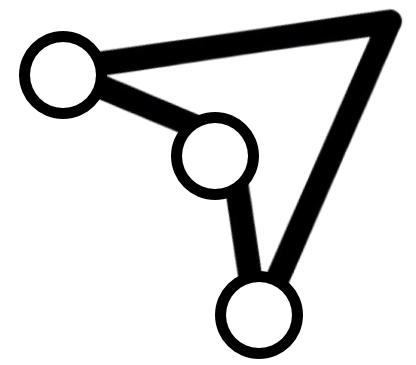
- The complexity of the system is not in the dots, but the number of lines connecting them.
The complexity of the system increases with the number of entities added. - The "what if's" represent assumptions in Occam's view, which increase with the number of entities added.
- Scrum and Agile Methods in software development focus on delivering value to end users, reducing the need for technology.
- 80% of the functionality in software applications is either never used or rarely used.
- Continuous assessment and re-prioritization of features and functionality ensures stakeholder satisfaction.
Continue reading at michaellant.com
| About the Author | Michael Lant | IT Consultant | MICHAEL LANT: Software Archictecture, Development, Agile Methods and the Intersection of People Process and Technology. I am an independent consultant who has been leading software teams, designing, building and delivering software for nearly three decades. It’s still as exciting and enjoyable for me today as at was when I wrote my very first Hello World program and saw it spring to life in front of me. |
 Explore more on these topics























 Guest Blogging: The Definitive Guide

 Top Trending Topics
 Share This
 Link copied!
 Recently Updated News

