


The AI-Driven Consultant: Strategies and Frameworks for Success in a Rapidly Evolving Landscape
Last updated: March 31, 2026 Read in fullscreen view


 Recommended for you
- 06 Mar 2026
 Next-Generation AI Agents Explained: OpenClaw, NanoClaw, IronClaw and the Rise of Agent Architectures 361/401
 - 05 Oct 2025 The New Facebook Algorithm: A Paradigm Shift in Content Discovery 294/356
- 12 Jun 2025 Rule-Based vs. Data-Driven Decision Making: The Critical Shift in Fintech and AI 235/359
- 21 Dec 2023 Top 12 Low-Code Platforms To Use in 2024 221/1520
- 29 Oct 2024 Top AI Tools and Frameworks You’ll Master in an Artificial Intelligence Course 189/594
- 01 Dec 2025 Manufacturing 4.0: AI Agents Enabling Self-Optimizing Production Systems 179/240
- 02 Dec 2025 The Question That Shook Asia: What Happens When We Ask AI to Choose Between a Mother and a Wife? 176/216
- 05 Jun 2025 How AI-Driven Computer Vision Is Changing the Face of Retail Analytics 171/295
- 31 Dec 2025 10 Skills to Make You "Irreplaceable" in the Next 3 Years (even if AI changes everything) 169/203
- 25 Mar 2026 Token Bills: The "Cost Shock" After the AI Boom in Companies 167/190
- 23 Dec 2024 Garbage In, Megabytes Out (GIMO): How to Rise Above AI Slop and Create Real Signal 166/220
- 03 Oct 2025 Top CMS Trends 2026: The Future of Digital Content Management 166/199
- 09 Jul 2024 What Is Artificial Intelligence and How Is It Used Today? 165/423
- 20 Dec 2025 The Future of IT Consulting: Key Trends for 2026–2030 163/206
- 16 Oct 2025 AI Inference Explained Simply: What Developers Really Need to Know 163/197
- 24 Mar 2026 AI for Financial Reconciliation: Automating Finance Operations in 2026 158/189
- 30 Oct 2022 How Much Does MVP Development Cost in 2023? 157/418
- 09 Jan 2022 How to Bridge the Gap Between Business and IT? 155/358
- 06 Dec 2025 Enterprise Operations 2.0: Why AI Agents Are Replacing Traditional Automation 153/197
- 26 Mar 2026 What Is a System Integrator (SI)? Why the Software Subscription Model Is Becoming the New Standard 151/185
- 01 Dec 2022 Difference between Set-based development and Point-based development 148/514
- 27 Oct 2020 8 principles of Agile Testing 142/1458
- 06 Nov 2025 DataOps: The Next Frontier in Agile Data Management 141/200
- 06 Nov 2025 DataOps: The Next Frontier in Agile Data Management 141/200
- 21 May 2022 "Fail Fast, Fail Often, Fail Forward" is the answer to Agile practices of software success 139/1188
- 18 Jul 2024 The 8 Best ways to Innovate your SAAS Business Model in 2024 137/392
- 01 Sep 2022 Facts Chart: Why Do Software Projects Fail? 134/729
- 25 Nov 2025 How AI Agents Are Redefining Enterprise Automation and Decision-Making 134/192
- 10 Apr 2022 Agile self-organizing teams: What are they? How do they work? 132/692
- 25 Dec 2025 What Is Algorithmic Fairness? Who Determines the Value of Content: Humans or Algorithms? 129/174
- 10 Apr 2021 RFP vs POC: Why the proof of concept is replacing the request for proposal 124/452
- 16 Jul 2022 What are disadvantages of Agile Methodology? How to mitigate the disadvantages ? 121/517
- 03 Jul 2022 Manifesto for Agile Software Development 121/391
- 15 Apr 2024 Weights & Biases: The AI Developer Platform 120/311
- 28 Nov 2023 Scrum Team Failure — Scrum Anti-Patterns Taxonomy 119/374
- 04 Mar 2026 CRM Trends Shaping Customer Engagement in 2026 117/148
- 20 Feb 2025 How Machine Learning is Shaping the Future of Digital Advertising 116/238
- 17 Oct 2025 MLOps vs AIOps: What’s the Difference and Why It Matters 114/226
- 01 Jul 2025 The Hidden Costs of Not Adopting AI Agents: Risk of Falling Behind 113/262
- 16 Aug 2022 What is a Headless CMS? 113/399
- 16 Aug 2022 What is a Headless CMS? 113/399
- 27 Jul 2024 Positive Psychology in the Digital Age: Future Directions and Technologies 110/539
- 05 Aug 2024 Debunking 10 Myths About Change Management 107/385
- 02 Dec 2024 The Intersection of AI and Business Analytics: Key Concepts to Master in Your Business Analytics Course 105/400
- 10 Nov 2025 Multi-Modal AI Agents: Merging Voice, Text, and Vision for Better CX 104/218
- 27 Aug 2025 How AI Consulting Is Driving Smarter Diagnostics and Hospital Operations 103/203
- 12 Jan 2026 Companies Developing Custom AI Models for Brand Creative: Market Landscape and Use Cases 103/135
- 07 Jul 2021 The 5 Levels of IT Help Desk Support 103/582
- 03 Jan 2024 Why Partnership is important for Growth? 102/260
- 21 Nov 2025 The Rise of AgentOps: How Enterprises Are Managing and Scaling AI Agents 102/159
- 03 Dec 2025 IT Outsourcing Solutions Explained: What, How, Why, When 101/133
- 16 Sep 2022 Examples Of Augmented Intelligence In Today’s Workplaces Shaping the Business as Usual 99/536
- 08 Nov 2022 4 tips for meeting tough deadlines when outsourcing projects to software vendor 99/391
- 16 Sep 2022 Examples Of Augmented Intelligence In Today’s Workplaces Shaping the Business as Usual 99/536
- 16 Feb 2021 Choose Outsourcing for Your Non Disclosure Agreement (NDA) 99/269
- 11 Oct 2022 Why choose Billable Viable Product (BVP) over Minimum Viable Product (MVP) 98/440
- 20 Nov 2022 Agile working method in software and football 98/438
- 24 Dec 2024 Artificial Intelligence and Cybersecurity: Building Trust in EFL Tutoring 98/268
- 21 Aug 2024 What is Singularity and Its Impact on Businesses? 98/560
- 15 May 2025 AI Consulting for Small Businesses: How to Leverage AI for Growth & Efficiency 98/291
- 07 Nov 2025 Online vs. Offline Machine Learning Courses in South Africa: Which One Should You Pick? 97/169
- 09 Sep 2025 Aligning BI Dashboards with KPIs: A Business + Data Collaboration Guide 97/185
- 18 Jan 2024 Self-healing code is the future of software development 96/313
- 25 Sep 2024 Enhancing Decision-Making Skills with an MBA: Data-Driven Approaches for Business Growth 95/302
- 20 Aug 2025 What Is Agentic AI? The Next Phase of Artificial Intelligence 95/255
- 23 Jun 2025 AI Avatars in the Metaverse: How Digital Beings Are Redefining Identity and Social Interaction 94/281
- 06 May 2025 How Machine Learning Is Transforming Data Analytics Workflows 94/291
- 07 Aug 2022 Things to Consider When Choosing a Technology Partner 94/377
- 07 Oct 2020 How To Manage Expectations at Work (and Why It's Important) 93/431
- 25 Jan 2025 The Decline of Traditional SaaS and the Rise of AI-first Applications 93/198
- 30 Jul 2024 The Future of IT Consulting: Trends and Opportunities 88/300
- 28 Nov 2025 How AI Will Transform Vendor Onboarding and Seller Management in 2026 88/218
- 24 Oct 2025 AI Agents in SaaS Platforms: Automating User Support and Onboarding 87/158
- 31 Dec 2023 Software Development Outsourcing Trends to Watch Out for in 2024 86/316
- 01 Jun 2022 How Your Agile Development Team is Just Like a Football Team? 86/304
- 09 Feb 2023 The Challenge of Fixed-Bid Software Projects 85/334
- 10 Jul 2025 Building AI-Driven Knowledge Graphs from Unstructured Data 84/246
- 22 Sep 2025 Why AI Is Critical for Accelerating Drug Discovery in Pharma 82/197
- 22 Nov 2024 The Role of AI in Enhancing Business Efficiency and Decision-Making 81/276
- 04 Oct 2023 The Future of Work: Harnessing AI Solutions for Business Growth 80/361
- 09 Oct 2022 Key Advantages and Disadvantages of Agile Methodology 80/784
- 03 Nov 2023 Why Is Billable Viable Product An Alternative To Minimum Viable Product? 79/270
- 18 Aug 2024 The Future of Web Development: Emerging Trends and Technologies Every Developer Should Know 79/274
- 31 Dec 2022 The New Normal for Software Development 76/429
- 10 Sep 2024 Leading Remote Teams in Hybrid Work Environments 76/220
- 02 Oct 2022 [Medium] The Importance of Being Able to Pivot 75/350
- 27 Feb 2025 How AI Agents are Changing Software Development? 74/313
- 19 Dec 2023 How AI is Transforming Software Development? 74/367
- 03 Nov 2022 Top questions and answers you must know before ask for software outsourcing 73/358
- 12 Oct 2020 The Agile Manifesto - Principle #8 73/568
- 21 Apr 2025 Agent AI in Multimodal Interaction: Transforming Human-Computer Engagement 71/266
- 16 Apr 2021 Insightful Business Technology Consulting at TIGO 70/525
- 06 Mar 2021 4 things you need to do before getting an accurate quote for your software development 69/766
- 20 Nov 2022 Software Requirements Are A Communication Problem 69/312
- 09 Oct 2024 Short-Form Video Advertising: The Secret to Captivating Your Audience 69/201
- 07 Oct 2022 Digital Transformation: Become a Technology Powerhouse 65/312
- 05 Aug 2024 Affordable Tech: How Chatbots Enhance Value in Healthcare Software 64/295
- 15 Aug 2025 Quantum Technology: Global Challenges and Opportunities for Innovators 63/197
- 29 Aug 2025 How AI Is Transforming Modern Management Science 60/128
- 01 May 2023 CTO Interview Questions 60/395
- 10 Sep 2024 AI in Email Marketing: Personalization and Automation 58/235
- 01 Mar 2022 Why Does Scrum Fail in Large Companies? 55/319
- 21 Oct 2022 Virtual meeting - How does TIGO save cost, reduce complexity and improve quality by remote communication? 51/241
- 10 Oct 2022 Should Your Business Go Agile? (Infographic) 51/175
- 09 Mar 2022 Consultant Implementation Pricing 50/263
- 01 Mar 2023 How do you deal with disputes and conflicts that may arise during a software consulting project? 50/211
- 31 Dec 2022 Future of Software Development Trends and Predictions 48/199
- 02 Nov 2022 Frequently Asked Questions about Agile and Scrum 47/444
- 17 Mar 2025 IT Consultants in Digital Transformation 42/133
- 06 Nov 2025 Top AI Development Companies in the USA to Watch in 2026 19/260
Management consultants often seem like experts with extraordinary abilities, but their real "magic" lies in the practical application of key techniques, frameworks, and tools. As businesses worldwide, including Vietnam, increasingly adopt Agile methodologies and Artificial Intelligence (AI) technologies to stay competitive in the Industry 4.0 era, mastering these techniques is crucial. Whether you're a consultant or a business leader, understanding how to apply these methods is essential for driving success. Below is a guide to some of the most impactful consulting tools, including modern techniques related to AI and Agile, to help you excel in the rapidly evolving business landscape.
Top Management Consulting Techniques, Tools, and Frameworks for Success in the Age of AI and Agile
1. Bottom-Up and Top-Down Approaches
In consulting, both the bottom-up and top-down approaches are commonly used to estimate market size, identify growth opportunities, or allocate resources.
- The bottom-up approach is ideal for estimating phenomena like user consumption or potential market demand by analyzing data from individual users or segments and scaling it up.
- The top-down approach, on the other hand, works from the total market size, allowing consultants to break it down into smaller, relevant parts or segments.
These techniques become even more powerful when combined with AI-driven data analytics, allowing consultants to make more accurate and granular estimations based on large datasets and machine learning predictions.
2. Backward Logic/Reasoning
This technique involves starting with the desired outcome and working backward to determine the necessary steps and resources to achieve that result. It’s particularly useful for goal-setting and predictive modeling, where AI tools can be used to forecast results based on historical data. This approach is often used in sales optimization or to achieve specific financial targets.
3. Issue Trees and Opportunity Trees
Consultants frequently use issue trees to break down problems into manageable parts, helping identify root causes and potential solutions. Similarly, opportunity trees focus on finding ways to improve business performance by identifying key metrics (KPIs) and business drivers. Both frameworks can be enhanced with AI-powered insights:
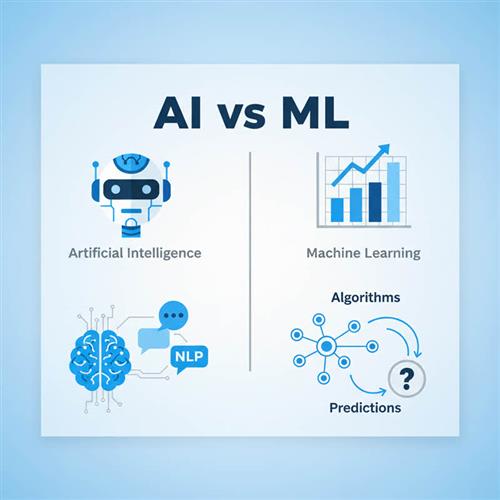
- Machine Learning (ML) algorithms can analyze historical performance data to predict future trends, allowing for more targeted opportunity identification.
- Natural Language Processing (NLP) tools can help consultants extract insights from large sets of unstructured data, such as customer reviews or market reports, to build more accurate issue trees.
4. KPIs, Business Drivers, and Benchmarking
A key role of consultants is to define and measure the Key Performance Indicators (KPIs) that drive a business. With the help of AI, businesses can automate the tracking of KPIs, and consultants can run predictive analytics to anticipate shifts in these metrics. This can be particularly useful in highly dynamic industries like retail, where real-time decision-making is crucial.
Moreover, benchmarking is essential to compare a company’s performance against industry standards. AI-driven benchmarks provide dynamic, real-time insights, helping businesses remain competitive by quickly adjusting to new trends and innovations.
5. Agile Consulting and Lean Startup Methods
Agile methodologies emphasize flexibility, collaboration, and iterative development. Agile Consulting, paired with AI-driven tools, allows businesses to:
- Develop Minimum Viable Products (MVPs) quickly and test them in the market using real-time feedback loops.
- Apply Scrum frameworks to break projects into short, manageable sprints, adjusting strategies based on continuous input.
- Use AI-enhanced project management tools to track sprint progress, predict bottlenecks, and optimize resource allocation.
The Lean Startup methodology, popular in both startups and consulting, complements Agile by encouraging rapid prototyping, customer validation, and iterative cycles - all optimized with AI insights to minimize waste and maximize innovation.
6. Decision Trees and Scenario Analysis
Decision trees are powerful tools for evaluating different options and their probable outcomes. When combined with AI and machine learning, consultants can improve the accuracy of their decision-making processes, especially in scenarios involving uncertainty. Scenario analysis is another technique where consultants prepare for different future outcomes (pessimistic, realistic, and optimistic) by considering various scenarios. AI enhances this process by modeling complex, multi-factor scenarios with greater accuracy, helping businesses better prepare for future events.
7. Theory of Constraints and Bottlenecks
Identifying and resolving bottlenecks is a critical step in optimizing operations. The Theory of Constraints (TOC) helps consultants focus on the slowest, most inefficient parts of a system to improve the whole. AI-driven process automation tools can identify bottlenecks more quickly by analyzing vast amounts of operational data in real time, enabling consultants to make more data-informed decisions about where to allocate resources.
8. Cost-Benefit and Feasibility Analysis
In most consulting projects, cost-benefit analyses are crucial to ensure that proposed solutions offer a positive return on investment. Feasibility analysis, in turn, checks whether solutions are technically or financially viable. Modern consulting leverages AI simulations and predictive models to analyze these factors, providing highly accurate and customizable scenarios that allow for deeper insights into the financial impact of strategic decisions.
9. Funnel Analysis and Business Model Canvas
Funnel analysis maps out the stages that lead to achieving a particular business goal, such as sales or customer acquisition. With AI-driven customer journey analytics, consultants can optimize these funnels in real-time, improving conversion rates and customer retention.
The Business Model Canvas remains a widely used tool for visualizing and summarizing a company’s business model. AI enables consultants to use large datasets to assess how changes in one part of the canvas (e.g., cost structure) will impact other parts (e.g., revenue streams), giving more holistic insights into business operations.
10. Lean Manufacturing and Operations Scaling
The Lean Manufacturing approach aims to eliminate waste, with a focus on value from the customer’s perspective. Paired with AI-powered analytics, consultants can detect inefficiencies in production or supply chains more effectively. Operations scaling also benefits from AI by optimizing processes such as inventory management, workforce allocation, and logistical planning.
Conclusion
In the modern business environment, consulting is no longer just about traditional frameworks and techniques - it’s about embracing new technologies like AI and Agile methodologies to drive growth and innovation. Techniques such as bottom-up estimation, KPIs, decision trees, and Lean methods are essential, but when combined with AI-driven insights, they become even more powerful. By mastering these tools and embracing Agile practices, businesses and consultants alike can stay ahead in the ever-evolving Industry 4.0 landscape.
 Explore more on these topics




04102024050214_thumb.jpg)



















 Guest Blogging: The Definitive Guide

 Top Trending Topics
 Share This
 Link copied!
 Recently Updated News