





What is Singularity and Its Impact on Businesses?
Last updated: October 28, 2024 Read in fullscreen view


 Recommended for you
- 06 Mar 2026
 Next-Generation AI Agents Explained: OpenClaw, NanoClaw, IronClaw and the Rise of Agent Architectures 345/382
 - 05 Oct 2025 The New Facebook Algorithm: A Paradigm Shift in Content Discovery 265/327
- 21 Dec 2023 Top 12 Low-Code Platforms To Use in 2024 209/1505
- 29 Oct 2024 Top AI Tools and Frameworks You’ll Master in an Artificial Intelligence Course 183/587
- 09 Jul 2024 What Is Artificial Intelligence and How Is It Used Today? 163/416
- 03 Oct 2025 Top CMS Trends 2026: The Future of Digital Content Management 163/193
- 23 Dec 2024 Garbage In, Megabytes Out (GIMO): How to Rise Above AI Slop and Create Real Signal 161/214
- 05 Jun 2025 How AI-Driven Computer Vision Is Changing the Face of Retail Analytics 159/282
- 16 Oct 2025 AI Inference Explained Simply: What Developers Really Need to Know 156/190
- 25 Mar 2026 Token Bills: The "Cost Shock" After the AI Boom in Companies 154/175
- 02 Dec 2025 The Question That Shook Asia: What Happens When We Ask AI to Choose Between a Mother and a Wife? 153/189
- 31 Dec 2025 10 Skills to Make You "Irreplaceable" in the Next 3 Years (even if AI changes everything) 148/178
- 20 Dec 2025 The Future of IT Consulting: Key Trends for 2026–2030 147/189
- 06 Nov 2025 Top 10 AI Development Companies in the USA to Watch in 2026 142/218
- 06 Dec 2025 Enterprise Operations 2.0: Why AI Agents Are Replacing Traditional Automation 138/182
- 18 Jul 2024 The 8 Best ways to Innovate your SAAS Business Model in 2024 135/390
- 26 Mar 2026 What Is a System Integrator (SI)? Why the Software Subscription Model Is Becoming the New Standard 131/164
- 24 Mar 2026 AI for Financial Reconciliation: Automating Finance Operations in 2026 127/154
- 25 Nov 2025 How AI Agents Are Redefining Enterprise Automation and Decision-Making 127/185
- 04 Mar 2026 CRM Trends Shaping Customer Engagement in 2026 117/145
- 25 Dec 2025 What Is Algorithmic Fairness? Who Determines the Value of Content: Humans or Algorithms? 114/157
- 15 Apr 2024 Weights & Biases: The AI Developer Platform 114/305
- 01 Jul 2025 The Hidden Costs of Not Adopting AI Agents: Risk of Falling Behind 112/260
- 20 Feb 2025 How Machine Learning is Shaping the Future of Digital Advertising 110/232
- 27 Jul 2024 Positive Psychology in the Digital Age: Future Directions and Technologies 105/533
- 16 Aug 2022 What is a Headless CMS? 105/391
- 27 Aug 2025 How AI Consulting Is Driving Smarter Diagnostics and Hospital Operations 102/202
- 03 Jan 2024 Why Partnership is important for Growth? 101/259
- 02 Dec 2024 The Intersection of AI and Business Analytics: Key Concepts to Master in Your Business Analytics Course 101/396
- 12 Jan 2026 Companies Developing Custom AI Models for Brand Creative: Market Landscape and Use Cases 99/131
- 10 Nov 2025 Multi-Modal AI Agents: Merging Voice, Text, and Vision for Better CX 98/212
- 21 Nov 2025 The Rise of AgentOps: How Enterprises Are Managing and Scaling AI Agents 98/153
- 16 Sep 2022 Examples Of Augmented Intelligence In Today’s Workplaces Shaping the Business as Usual 98/534
- 17 Oct 2025 MLOps vs AIOps: What’s the Difference and Why It Matters 97/208
- 18 Jan 2024 Self-healing code is the future of software development 95/312
- 11 Oct 2022 Why choose Billable Viable Product (BVP) over Minimum Viable Product (MVP) 94/436
- 20 Aug 2025 What Is Agentic AI? The Next Phase of Artificial Intelligence 94/253
- 24 Dec 2024 Artificial Intelligence and Cybersecurity: Building Trust in EFL Tutoring 93/263
- 25 Sep 2024 Enhancing Decision-Making Skills with an MBA: Data-Driven Approaches for Business Growth 93/300
- 06 May 2025 How Machine Learning Is Transforming Data Analytics Workflows 92/289
- 07 Nov 2025 Online vs. Offline Machine Learning Courses in South Africa: Which One Should You Pick? 90/160
- 25 Jan 2025 The Decline of Traditional SaaS and the Rise of AI-first Applications 90/195
- 23 Jun 2025 AI Avatars in the Metaverse: How Digital Beings Are Redefining Identity and Social Interaction 85/272
- 30 Jul 2024 The Future of IT Consulting: Trends and Opportunities 81/291
- 28 Nov 2025 How AI Will Transform Vendor Onboarding and Seller Management in 2026 81/211
- 18 Aug 2024 The Future of Web Development: Emerging Trends and Technologies Every Developer Should Know 77/272
- 04 Oct 2023 The Future of Work: Harnessing AI Solutions for Business Growth 77/356
- 22 Nov 2024 The Role of AI in Enhancing Business Efficiency and Decision-Making 77/272
- 31 Dec 2022 The New Normal for Software Development 76/429
- 31 Dec 2023 Software Development Outsourcing Trends to Watch Out for in 2024 75/304
- 10 Sep 2024 Leading Remote Teams in Hybrid Work Environments 75/218
- 22 Sep 2025 Why AI Is Critical for Accelerating Drug Discovery in Pharma 74/189
- 27 Feb 2025 How AI Agents are Changing Software Development? 73/310
- 19 Dec 2023 How AI is Transforming Software Development? 73/366
- 03 Nov 2023 Why Is Billable Viable Product An Alternative To Minimum Viable Product? 71/262
- 24 Oct 2025 AI Agents in SaaS Platforms: Automating User Support and Onboarding 71/142
- 03 May 2024 The Iceberg of Ignorance 68/496
- 21 Apr 2025 Agent AI in Multimodal Interaction: Transforming Human-Computer Engagement 67/262
- 09 Oct 2024 Short-Form Video Advertising: The Secret to Captivating Your Audience 66/198
- 05 Aug 2024 Affordable Tech: How Chatbots Enhance Value in Healthcare Software 60/290
- 15 Aug 2025 Quantum Technology: Global Challenges and Opportunities for Innovators 60/190
- 05 Oct 2021 Shiny Object Syndrome: Why Your Business Isn't "Going Digital" 59/440
- 29 Aug 2025 How AI Is Transforming Modern Management Science 57/124
- 10 Sep 2024 AI in Email Marketing: Personalization and Automation 50/227
- 31 Dec 2022 Future of Software Development Trends and Predictions 46/197
- 01 May 2023 Understanding Business as Usual (BAU) and How to Transition 38/1159
Singularity is a concept that refers to a point in the future when artificial intelligence (AI) surpasses human intelligence, leading to unprecedented technological growth and transformation. This idea has been widely discussed in the realms of science and technology, particularly in relation to the rapid advancements in AI. As we move closer to this potential turning point, businesses across various sectors are beginning to understand the implications of singularity for their operations and strategies.
The Impending Arrival of Singularity
The approach of singularity is often characterized by exponential growth in AI capabilities. As machines become smarter, faster, and more efficient, the way businesses operate will inevitably change. Companies that rely on traditional methods may find themselves at a disadvantage if they do not adapt to the evolving technological landscape.
Different Perspectives on Singularity
- Optimistic: Supporters, such as Ray Kurzweil, believe that singularity could bring unimaginable benefits to humanity, such as curing all diseases, extending lifespan, or solving global problems.
- Pessimistic: Some experts, like Stephen Hawking and Elon Musk, warn that the emergence of singularity could pose potential risks if AI becomes uncontrollable or surpasses human intelligence.
Impacts on Businesses and Digital Transformation
- Increased Competition: As AI systems improve, they will enable businesses to automate tasks, analyze data more efficiently, and enhance decision-making processes. This means that companies failing to integrate AI into their operations risk falling behind competitors who do embrace these technologies.
- Disruption of Business Models: Traditional business models may become obsolete as AI enables new ways of delivering products and services. Companies must rethink their strategies to stay relevant in a rapidly changing environment.
- Enhanced Customer Experience: AI's ability to analyze vast amounts of data will allow businesses to understand customer preferences better and personalize experiences. Organizations that harness AI can create more engaging and tailored offerings, thereby improving customer loyalty.
Business Concerns About Singularity
With the impending arrival of singularity, businesses are understandably concerned about the following:
-
Job Displacement: The automation of tasks could lead to significant job losses in various industries. Companies need to consider how they will manage workforce transitions and invest in reskilling employees.
-
Ethical Implications: As AI systems take on more decision-making roles, ethical concerns surrounding accountability, bias, and transparency will arise. Businesses must prioritize responsible AI practices to maintain trust with customers and stakeholders.
-
Security Risks: As reliance on AI grows, so does the vulnerability to cyber threats. Organizations must invest in robust security measures to protect their data and systems.
Strategies for Businesses to Stay Ahead of AI
To avoid being left behind in the face of AI advancements, businesses should consider the following strategies:
-
Embrace Digital Transformation: Companies should prioritize digital initiatives that incorporate AI technologies into their operations. This could include automation, data analytics, and machine learning to enhance productivity and efficiency.
-
Invest in Employee Training: Organizations must focus on upskilling and reskilling their workforce to ensure that employees are equipped to work alongside AI. This will not only improve employee retention but also foster a culture of innovation.
-
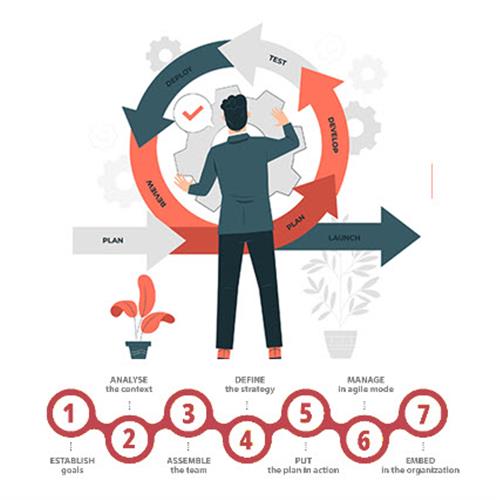
Adopt Agile Business Models: Flexibility and adaptability are crucial in a rapidly changing landscape. Businesses should adopt agile methodologies that allow them to pivot quickly in response to new technological developments or market demands.
-
Develop Ethical AI Guidelines: As AI systems become more integrated into business operations, organizations must create clear ethical guidelines for their use. This includes ensuring transparency, fairness, and accountability in AI-driven decision-making.
-
Collaborate and Partner: Businesses should seek partnerships with AI experts and technology providers to leverage external knowledge and resources. Collaborating with innovators can lead to new ideas and solutions that drive growth.
Conclusion
The arrival of singularity presents both challenges and opportunities for businesses. By understanding the potential impacts of AI and taking proactive steps to adapt, organizations can position themselves for success in an increasingly automated world. Embracing change, investing in technology and people, and maintaining ethical standards will be crucial for navigating the complexities of the future landscape. The time to act is now, as the singularity draws ever closer.
 Explore more on these topics

























 Guest Blogging: The Definitive Guide

 Top Trending Topics
 Share This
 Link copied!
 Recently Updated News