

Honne and Tatemae: Why Do Japanese People Seem Excessively Polite and Indirect?
Last updated: January 29, 2026 Read in fullscreen view


 Recommended for you
- 02 Nov 2023
 Unlocking Success with The Amoeba Management Model: Key Lessons, Pros & Cons, and Finding the Perfect Fit 390/1084
 - 09 Sep 2022 Kaizen, Kaikaku and Kakushin – what’s the difference? 384/3471
- 24 Nov 2022 Genba Genbutsu Genjitsu (3Gs), (Go to the Genba & see for yourself!) 302/3320
- 01 Dec 2023 What is Amoeba Management? 296/1295
- 10 Nov 2021 5S methodology - the SECRET to Japanese SUCCESS 282/2032
- 07 Mar 2023 Japan’s Unusual Farming Strategy: Renting Land and Leaving It Fallow for 5 Years — Here’s the Truth… 224/354
- 03 Jan 2024 What is the Ringi process? 213/1234
- 26 Mar 2026 AI Virtual Streamers Are Draining 18 Hours of "Dead Traffic" — And Threatening the Livestream Workforce 211/228
- 18 Oct 2020 How to use the "Knowns" and "Unknowns" technique to manage assumptions 170/1266
- 12 Jan 2026 Why YouTube Content Is the New Resume: Building Trust and Expertise Even Without Views 169/198
- 01 Mar 2022 The Toyota Way Management Principles 168/984
- 12 Apr 2025 How to Ask Powerful Questions Like Socrates 163/198
- 09 Sep 2022 What is 5 Whys (Five Whys)? 148/1123
- 02 Feb 2022 Yokoten: Best Practice Sharing from a success 147/1577
- 01 Apr 2022 Ishikawa (fishbone) diagram in software project management 146/3345
- 31 Dec 2025 26 Things You Should Do Now to Prepare for 2026 145/193
- 29 Aug 2022 Difference between Kaizen and Innovation 141/1049
- 23 Sep 2021 INFOGRAPHIC: Top 9 Software Outsourcing Mistakes 138/561
- 19 Sep 2022 Jidoka in Software Development and Odoo ERP/MRP 133/684
- 06 Jun 2022 HEIJUNKA: The art of leveling production 130/754
- 18 Aug 2022 What are the consequences of poor requirements with software development projects? 129/397
- 01 Oct 2020 Fail fast, learn faster with Agile methodology 123/1197
- 01 Jan 2023 How To Use Poka-Yoke (Mistake Proofing) Technique To Improve Software Quality 122/783
- 11 Jan 2024 What are the Benefits and Limitations of Augmented Intelligence? 121/608
- 27 Aug 2022 Kaizen - Culture of Continuous Improvement and Lean Thinking 120/1017
- 13 Dec 2020 Move fast, fail fast, fail-safe 120/464
- 06 Feb 2021 Why fail fast and learn fast? 118/597
- 10 Dec 2025 The Evolution of Isolation: The Global Rise of Hikikomori and Digital Withdrawal 112/135
- 01 Jan 2024 6 Japanese Life Principles That Quietly Transform You 111/236
- 15 Jul 2022 Hansei Methodology: Continuously Engaging People in Improvement 110/870
- 13 Jul 2022 Applying the business mantra "HORENSO" to Achieve 360-degree Communication 110/1073
- 17 Mar 2023 Reduce waste in software development with 3M model: Muda, Mura, Muri 110/1083
- 12 Mar 2022 The u-Japan concept 108/397
- 15 Apr 2022 Total Quality Management (TQM) - Japanese-style management approach to quality improvement. 106/835
- 04 Mar 2024 Tree Ring Management: Take the Long Term View and Grow Your Business Slowly 106/552
- 14 Mar 2024 Why should you opt for software localization from a professional agency? 102/241
- 18 Sep 2024 11 Psychological Defense Mechanisms and How to Recognize Them 102/302
- 14 Oct 2021 Advantages and Disadvantages of Time and Material Contract (T&M) 101/1000
- 28 Dec 2021 8 types of pricing models in software development outsourcing 99/533
- 12 Dec 2024 Danshari: A Japanese Minimalist Philosophy for Cleaner Code and Leaner IT Operations 93/180
- 17 Feb 2022 Prioritizing Software Requirements with Kano Analysis 91/397
- 19 Oct 2021 Is gold plating good or bad in project management? 91/924
- 05 Feb 2024 Ego and Attachment: Simplify Your Life Today 90/375
- 08 Oct 2022 KPI - The New Leadership 89/698
- 10 Nov 2022 Poor Code Indicators and How to Improve Your Code? 86/303
- 10 Dec 2023 Pain points of User Acceptance Testing (UAT) 83/544
- 12 Mar 2024 How do you create FOMO in software prospects? 81/255
- 01 Jun 2020 Japan Business Review (JBR) 76/411
- 01 Mar 2023 Bug Prioritization - What are the 5 levels of priority? 75/304
- 19 Apr 2021 7 Most Common Time-Wasters For Software Development 73/618
- 03 Feb 2024 "Kham Nhẫn" in Business: A Guide to Patience and Resilience 73/236
- 03 Feb 2024 "Kham Nhẫn" in Business: A Guide to Patience and Resilience 73/236
- 31 Oct 2021 Tips to Fail Fast With Outsourcing 70/461
- 15 Aug 2025 Quantum Technology: Global Challenges and Opportunities for Innovators 65/203
- 05 Jan 2024 Easy ASANA tips & tricks for you and your team 64/263
- 03 Jul 2022 Occam’s Razor and the Art of Software Design 58/560
- 26 Dec 2023 Improving Meeting Effectiveness Through the Six Thinking Hats 55/331
- 06 Nov 2019 How to Access Software Project Size? 51/311
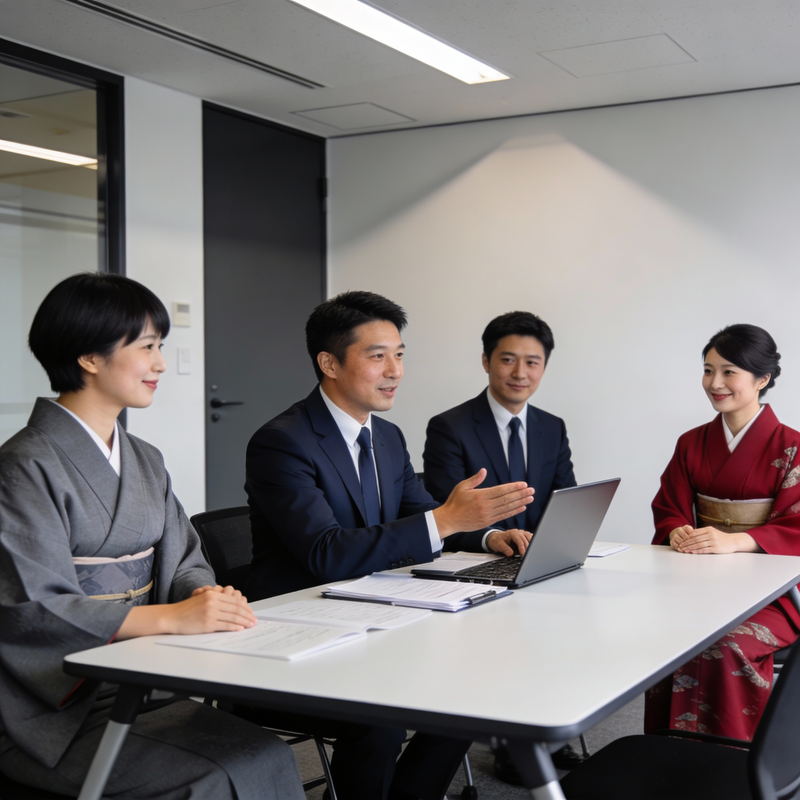
If you have recently arrived in Japan - or have interacted with Japanese people for some time - you may have felt a subtle sense of confusion:
Why do conversations feel so indirect?
Why is everyone consistently polite, smiling, and praising, yet it’s difficult to tell what they truly think?
People from various Asian cultures often notice this contrast. Some describe Japanese communication as overly careful or emotionally restrained, sometimes even mistaking it for insincerity.
But is this really about being fake - or is it something else entirely?
Politeness Without Deception: A Cultural Distinction
In Japanese society, there is a well-known distinction between honne (true feelings) and tatemae (what is expressed publicly). At first glance, this may resemble “saying one thing while thinking another,” but its purpose is not deception.
Rather, it serves to:
- Protect social harmony
- Prevent others from losing face
- Avoid unnecessary emotional friction
Similar ideas exist across Asia. In Chinese culture, concepts such as 客套 (kètào) - ritual politeness - and 面子 (miànzi) - face and social dignity - play comparable roles. What differs is how consistently and systematically these principles are applied in Japan.
In Japan, causing discomfort, embarrassment, or social awkwardness is often considered worse than softening the truth.
Geography as Behavioral Psychology
Japanese indirectness is not merely cultural preference - it is deeply shaped by environmental pressure.
Japan is a narrow island nation dominated by mountains and forests, leaving very little flat land suitable for habitation. As a result, the population is concentrated into extremely dense urban centers such as Tokyo, Osaka, and Yokohama.
Every day, millions of people commute in confined spaces, standing shoulder to shoulder on crowded trains where personal space barely exists.
From a behavioral psychology perspective, this creates a clear constraint:
when physical distance cannot be expanded, emotional distance must be regulated.
If everyone expressed frustration openly or communicated with blunt honesty, social conflict would be constant - occurring not yearly or monthly, but hourly.
Indirect speech, emotional restraint, and excessive politeness become adaptive strategies. They are not moral choices, but mechanisms for coexistence.
Why Saying Less Means Preserving More
Instead of directly saying,
“I disagree” or “I don’t like this,”
a Japanese speaker may say:
“Perhaps we could explore another option.”
The meaning remains intact, but the emotional impact is softened.
Across many Asian cultures, indirectness exists, but in Japan it is elevated to a shared social contract:
maintain the atmosphere, even at the cost of personal expression.
This is not dishonesty - it is prioritization.
Invitations That Are Not Invitations
A common cross-cultural misunderstanding involves social invitations.
In Japanese workplaces, phrases like:
“Shall we have lunch together sometime?”
may function as polite signals, not concrete plans.
The culturally appropriate response is often non-committal:
“Let me check my schedule.”
If the invitation is genuine, it will usually be repeated with clearer details. This pattern reflects the Japanese preference for mutual emotional safety before commitment.
Praise as Social Lubrication, Not Evaluation
Another major source of confusion is the frequent use of praise.
Compliments such as “You’re amazing,” “Great work,” or “That’s wonderful” appear generously - even for routine tasks. To outsiders, this may suggest high approval or recognition.
However, in Japanese communication, praise often serves a phatic function:
it opens conversations, eases tension, and signals respect.
As a result, a paradox emerges:
- Some individuals receive constant praise but little responsibility.
- Others are rarely praised verbally, yet gradually entrusted with critical tasks and decision-making roles.
In Japan, true evaluation is behavioral, not verbal.
“Oishii” and the Psychology of Courtesy
Food culture offers another revealing example.
When dining with Japanese people, it is common to hear “oishii” (“delicious”) repeated almost reflexively. This does not necessarily indicate a detailed judgment of taste.
Instead, saying “oishii” primarily acknowledges the effort of the host or cook. Criticizing food - especially directly - is considered socially damaging.
To understand real preferences, one must observe behavior:
- Do they finish the dish?
- Do they take more?
- Do they return to the restaurant?
In Japanese culture, words maintain harmony; actions reveal truth.
Ego, Humility, and Silent Evaluation
One of the most critical behavioral norms in Japan is the avoidance of an overt ego.
Competence is not demonstrated by self-promotion, but by results delivered quietly over time. Downplaying one’s abilities is not false modesty - it is an invitation for others to judge fairly.
Public self-assertion can make others feel threatened, compared, or uncomfortable, which disrupts group equilibrium.
Final Reflection
What often appears to outsiders as excessive politeness or emotional distance is, in fact, a highly refined system of collective emotional management.
Japanese communication prioritizes:
- Social stability over personal expression
- Atmosphere over assertion
- Action over words
Understanding this does not require adopting it fully - but it allows one to interpret interactions more accurately and respond with cultural intelligence.
In Japan, listen to compliments with appreciation - but read meaning through responsibility, trust, and behavior over time.
What is your perspective on indirect communication across Asian cultures?
Feel free to share your thoughts below.
 Explore more on these topics






















 Guest Blogging: The Definitive Guide

 Top Trending Topics
 Share This
 Link copied!
 Recently Updated News
 thực chiến - Kiến tạo tương lai cho các nhà sáng tạo nội dung.