




Token Bills: The "Cost Shock" After the AI Boom in Companies
Last updated: March 25, 2026 Read in fullscreen view


 Recommended for you
- 06 Mar 2026
 Next-Generation AI Agents Explained: OpenClaw, NanoClaw, IronClaw and the Rise of Agent Architectures 342/379
 - 05 Oct 2025 The New Facebook Algorithm: A Paradigm Shift in Content Discovery 260/322
- 21 Dec 2023 Top 12 Low-Code Platforms To Use in 2024 202/1497
- 02 Oct 2022 The Real Factors Behind Bill Gates’ Success: Luck, Skills, or Connections? 176/548
- 29 Oct 2024 Top AI Tools and Frameworks You’ll Master in an Artificial Intelligence Course 176/580
- 01 Dec 2025 Manufacturing 4.0: AI Agents Enabling Self-Optimizing Production Systems 166/225
- 03 Oct 2025 Top CMS Trends 2026: The Future of Digital Content Management 158/187
- 23 Dec 2024 Garbage In, Megabytes Out (GIMO): How to Rise Above AI Slop and Create Real Signal 155/208
- 09 Jul 2024 What Is Artificial Intelligence and How Is It Used Today? 155/408
- 16 Oct 2025 AI Inference Explained Simply: What Developers Really Need to Know 153/187
- 02 Dec 2025 The Question That Shook Asia: What Happens When We Ask AI to Choose Between a Mother and a Wife? 146/182
- 05 Jun 2025 How AI-Driven Computer Vision Is Changing the Face of Retail Analytics 146/269
- 12 Jan 2026 Why YouTube Content Is the New Resume: Building Trust and Expertise Even Without Views 136/163
- 06 Nov 2025 Top 10 AI Development Companies in the USA to Watch in 2026 135/208
- 31 Dec 2025 10 Skills to Make You "Irreplaceable" in the Next 3 Years (even if AI changes everything) 133/162
- 18 Jul 2024 The 8 Best ways to Innovate your SAAS Business Model in 2024 131/386
- 06 Dec 2025 Enterprise Operations 2.0: Why AI Agents Are Replacing Traditional Automation 130/174
- 20 Dec 2025 The Future of IT Consulting: Key Trends for 2026–2030 129/169
- 06 Nov 2025 DataOps: The Next Frontier in Agile Data Management 129/188
- 26 Mar 2026 What Is a System Integrator (SI)? Why the Software Subscription Model Is Becoming the New Standard 122/155
- 25 Nov 2025 How AI Agents Are Redefining Enterprise Automation and Decision-Making 121/179
- 24 Mar 2026 AI for Financial Reconciliation: Automating Finance Operations in 2026 120/145
- 18 Dec 2025 EOS as a Business Operating System: Powerful, but Not Always Plug-and-Play 119/172
- 09 Oct 2025 Data, Users, APIs: The 3 Pillars of Effective Digital Transformation 115/154
- 04 Mar 2026 CRM Trends Shaping Customer Engagement in 2026 112/139
- 29 Jan 2026 Why Headless Commerce Is Shaping the Future of the Online Store 112/137
- 12 Apr 2025 How to Ask Powerful Questions Like Socrates 111/146
- 25 Dec 2025 What Is Algorithmic Fairness? Who Determines the Value of Content: Humans or Algorithms? 111/153
- 01 Jul 2025 The Hidden Costs of Not Adopting AI Agents: Risk of Falling Behind 111/259
- 20 Feb 2025 How Machine Learning is Shaping the Future of Digital Advertising 110/232
- 15 Apr 2024 Weights & Biases: The AI Developer Platform 110/301
- 27 Jul 2024 Positive Psychology in the Digital Age: Future Directions and Technologies 102/528
- 16 Aug 2022 What is a Headless CMS? 100/386
- 02 Dec 2024 The Intersection of AI and Business Analytics: Key Concepts to Master in Your Business Analytics Course 100/395
- 16 Aug 2022 What is a Headless CMS? 100/386
- 03 Jan 2024 Why Partnership is important for Growth? 98/256
- 21 Nov 2025 The Rise of AgentOps: How Enterprises Are Managing and Scaling AI Agents 96/151
- 27 Aug 2025 How AI Consulting Is Driving Smarter Diagnostics and Hospital Operations 96/196
- 10 Nov 2025 Multi-Modal AI Agents: Merging Voice, Text, and Vision for Better CX 95/208
- 16 Sep 2022 Examples Of Augmented Intelligence In Today’s Workplaces Shaping the Business as Usual 95/531
- 12 Jan 2026 Companies Developing Custom AI Models for Brand Creative: Market Landscape and Use Cases 95/127
- 16 Sep 2022 Examples Of Augmented Intelligence In Today’s Workplaces Shaping the Business as Usual 95/531
- 11 Oct 2022 Why choose Billable Viable Product (BVP) over Minimum Viable Product (MVP) 94/436
- 16 Mar 2023 10 Reasons to Choose a Best-of-Breed Tech Stack 94/306
- 09 Oct 2024 Are Expensive CRM Systems Really Worth It? 94/188
- 24 Dec 2024 Artificial Intelligence and Cybersecurity: Building Trust in EFL Tutoring 92/262
- 21 Aug 2024 What is Singularity and Its Impact on Businesses? 92/551
- 20 Aug 2025 What Is Agentic AI? The Next Phase of Artificial Intelligence 92/251
- 06 May 2025 How Machine Learning Is Transforming Data Analytics Workflows 91/288
- 25 Sep 2024 Enhancing Decision-Making Skills with an MBA: Data-Driven Approaches for Business Growth 91/297
- 17 Oct 2025 MLOps vs AIOps: What’s the Difference and Why It Matters 91/202
- 25 Jan 2025 The Decline of Traditional SaaS and the Rise of AI-first Applications 89/193
- 18 Jan 2024 Self-healing code is the future of software development 89/306
- 09 Sep 2025 Aligning BI Dashboards with KPIs: A Business + Data Collaboration Guide 87/175
- 07 Nov 2025 Online vs. Offline Machine Learning Courses in South Africa: Which One Should You Pick? 84/151
- 23 Jun 2025 AI Avatars in the Metaverse: How Digital Beings Are Redefining Identity and Social Interaction 84/271
- 12 May 2025 Tech for Non-Techies: How to Understand IT Without Writing a Single Line of Code 83/135
- 22 May 2025 Role of Self-Service in CRM: Customer & Partner Portals for Automation 80/163
- 24 Aug 2022 7 Ways to Improve Software Maintenance 78/381
- 04 Oct 2023 The Future of Work: Harnessing AI Solutions for Business Growth 77/356
- 30 Jul 2024 The Future of IT Consulting: Trends and Opportunities 77/285
- 18 Aug 2024 The Future of Web Development: Emerging Trends and Technologies Every Developer Should Know 76/271
- 28 Nov 2025 How AI Will Transform Vendor Onboarding and Seller Management in 2026 76/206
- 31 Dec 2022 The New Normal for Software Development 75/428
- 31 Dec 2023 Software Development Outsourcing Trends to Watch Out for in 2024 75/304
- 22 Nov 2024 The Role of AI in Enhancing Business Efficiency and Decision-Making 74/268
- 10 Sep 2024 Leading Remote Teams in Hybrid Work Environments 71/214
- 22 Sep 2025 Why AI Is Critical for Accelerating Drug Discovery in Pharma 70/185
- 27 Feb 2025 How AI Agents are Changing Software Development? 70/302
- 19 Dec 2023 How AI is Transforming Software Development? 68/361
- 03 Nov 2023 Why Is Billable Viable Product An Alternative To Minimum Viable Product? 67/258
- 24 Oct 2025 AI Agents in SaaS Platforms: Automating User Support and Onboarding 67/137
- 21 Apr 2025 Agent AI in Multimodal Interaction: Transforming Human-Computer Engagement 64/259
- 09 Oct 2024 Short-Form Video Advertising: The Secret to Captivating Your Audience 63/195
- 05 Aug 2024 Affordable Tech: How Chatbots Enhance Value in Healthcare Software 59/289
- 15 Aug 2025 Quantum Technology: Global Challenges and Opportunities for Innovators 57/186
- 29 Aug 2025 How AI Is Transforming Modern Management Science 56/123
- 03 Jul 2022 Occam’s Razor and the Art of Software Design 52/554
- 10 Sep 2024 AI in Email Marketing: Personalization and Automation 50/227
- 31 Dec 2022 Future of Software Development Trends and Predictions 44/195
As AI becomes more widely used inside organizations, companies are starting to track “tokens” - the unit used to measure AI usage costs - to control spending and optimize their investments.
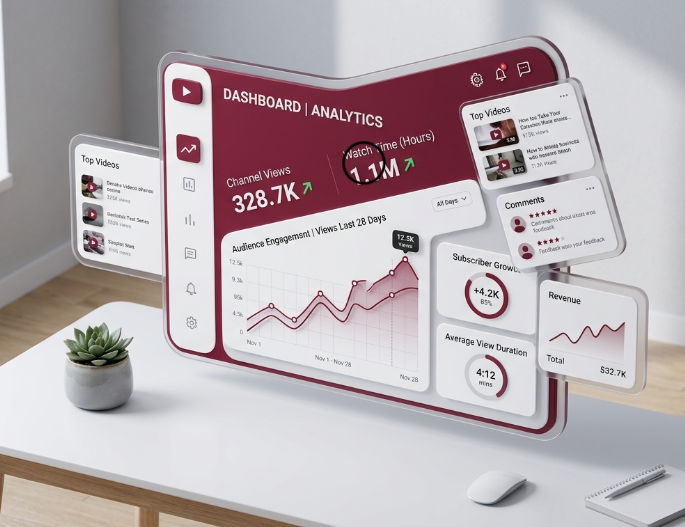
According to The Wall Street Journal, in companies that are early adopters of AI, a new metric is appearing on internal dashboards: the number of tokens employees consume.
Automation platform Zapier is a good example. The company has built its own dashboard to track how employees use AI, focusing on how many tokens are “burned” during their work.
TOKENS: THE NEW “COST METER” OF THE AI ERA
Simply put, a token is a unit that measures how much computing work an AI system uses to process a request. For language models, a rough estimate is about 1,000 tokens for 750 words of text.
However, when AI is used for more complex tasks - like writing code, generating videos or audio, or running AI agents that work for days - token usage can increase significantly.
The key point is: every token has a real cost.
What feels like an “instant AI response” to users is actually powered by large data centers working continuously behind the scenes. These systems process requests and generate results through an expensive but invisible process.
Because of this, token costs have become a separate line item in internal financial reports. Tracking tokens is not just about managing expenses - it is also becoming a way to measure work efficiency.
Brandon Sammut, Head of AI Transformation at Zapier, says this cost is now clearly tracked in financial reports. While AI can help with tasks like customer support or closing sales, every bit of value it creates comes with a cost that must be calculated.
Although token prices tend to decrease over time, newer and more powerful AI models are often more expensive. At the same time, AI usage inside companies is growing rapidly, so total costs can still be high.
Some companies use a pay-as-you-go model, while others sign enterprise contracts with token limits per employee.
Right now, many companies are still encouraging employees to use AI. But more advanced organizations are going further: they use token tracking not just for cost control, but also to evaluate performance.
AI PRODUCTIVITY MUST COME WITH REAL VALUE
Using AI is not simply about “the more, the better.” Companies are starting to ask an important question: does the number of tokens used actually create enough value?
At Zapier, if one employee uses five times more tokens than others, managers will take a closer look. That person could be a “superstar” using AI to create outstanding results - or someone using AI inefficiently.
From this data, companies can identify “best practices” to scale across teams, as well as “bad patterns” that need to be corrected through training.
Brian Jabarian, a researcher at the University of Chicago Booth School of Business, says companies must measure token usage if they want to truly understand AI’s impact.
In the past, many believed that simply adopting AI would automatically increase productivity. In reality, things are more complex.
For example, a company might save money by using AI in hiring. But if AI selects the wrong candidates, the company may end up spending more to fix the mistake.
When AI is used across hundreds of thousands of employees, token-related issues become a core factor that directly affects financial performance.
Some employees may also misunderstand the goal, thinking that using more AI means being more productive. But what really matters is not how many tokens are used - it is what value those tokens create.
A striking example comes from cloud platform Vercel. A senior engineer deployed a team of AI agents to analyze a research paper and build a new infrastructure service in just one day - something that could take weeks or months manually.
The cost? Around $10,000 in tokens.
CEO Guillermo Rauch compares giving employees “unlimited token budgets” to handing them a “fuel hose” - extremely powerful, but risky if not controlled.
TOKEN MANAGEMENT: FROM COST CONTROL TO LONG-TERM STRATEGY
Facing rising costs, many companies are now building systems to manage AI usage more carefully.
At startup Kumo AI, token usage has been tracked per engineer since early on. Co-founder Hema Raghavan says top engineers use AI like a “team of junior assistants,” helping them work much more efficiently.
In some cases, engineers can even go on vacation while their AI agents continue working.
However, Raghavan emphasizes that token costs should not be viewed in isolation - they must be considered as part of the overall research and development budget.
In the near future, it may become normal for an employee to be called in for a discussion if their token usage suddenly spikes.
In some situations, higher token usage can actually lead to better-optimized code, which reduces cloud infrastructure costs - creating bigger savings in the long run.
From a product perspective, Mark Hull, founder of Exceeds AI, says most of his customers are still focused on spreading AI adoption across their organizations. More advanced companies have started measuring AI return on investment (ROI), but not yet at the individual employee level.
In the future, companies will likely set clear rules for token usage - such as limiting which AI models can be used for specific tasks. AI itself may even help optimize this, automatically choosing the best model to balance cost and performance.
Hull shared that he once used Claude Code to build three workflows with about 300,000 lines of code, costing around $2,000 in tokens. He later rolled it out to his 15-person company.
The result: costs spiked within 48 hours, forcing him to introduce usage limits.
Still, high costs are not always bad. According to Vercel’s CEO, the employees who use the most tokens are often the most productive. In his view, spending $10,000 in a single day could save millions in the long run.
However, as AI becomes more common, companies will also face the risk of misuse - such as employees using tokens for personal projects, side startups, or non-work purposes.
In the near future, being called in to explain a sudden increase in token usage may simply become part of everyday corporate life.
 Explore more on these topics


























 Guest Blogging: The Definitive Guide

 Top Trending Topics
 Share This
 Link copied!
 Recently Updated News