




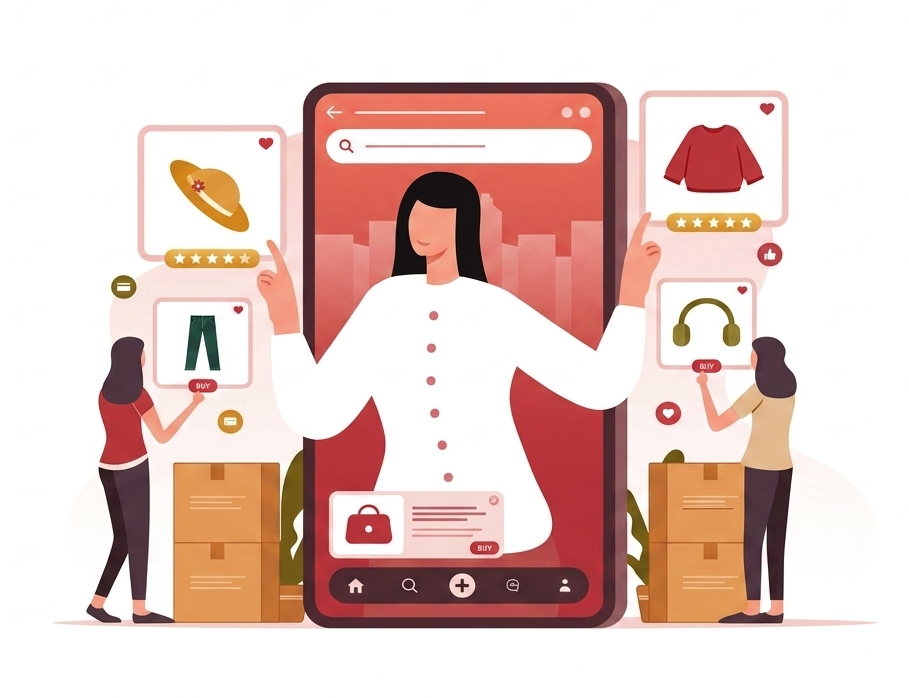
How Product Videos Improve Buyer Confidence in WooCommerce Stores
Last updated: June 05, 2026 Read in fullscreen view


 Recommended for you
- 05 Oct 2025
 The New Facebook Algorithm: A Paradigm Shift in Content Discovery 286/348
 - 12 Jan 2026 A-Roll, B-Roll, and Jump Cuts: Three Core Concepts Every Video Creator Must Understand 228/283
- 21 Dec 2023 Top 12 Low-Code Platforms To Use in 2024 217/1514
- 10 Sep 2024 Complete Green Screen Setup Guide for Webcam Creators 208/275
- 14 Jan 2026 Why YouTube Channels Like “Monkey Explained” Use a Monkey as a Recurring Character 185/217
- 01 Dec 2025 Manufacturing 4.0: AI Agents Enabling Self-Optimizing Production Systems 175/236
- 03 Oct 2025 Top CMS Trends 2026: The Future of Digital Content Management 165/196
- 25 Mar 2026 Token Bills: The "Cost Shock" After the AI Boom in Companies 163/186
- 31 Dec 2025 10 Skills to Make You "Irreplaceable" in the Next 3 Years (even if AI changes everything) 160/192
- 20 Dec 2025 The Future of IT Consulting: Key Trends for 2026–2030 157/200
- 26 Mar 2026 What Is a System Integrator (SI)? Why the Software Subscription Model Is Becoming the New Standard 144/178
- 06 Nov 2025 DataOps: The Next Frontier in Agile Data Management 139/198
- 18 Jul 2024 The 8 Best ways to Innovate your SAAS Business Model in 2024 136/391
- 18 Dec 2025 EOS as a Business Operating System: Powerful, but Not Always Plug-and-Play 132/185
- 01 Jun 2024 Top AI Video Tools for 2026 — Updated with 2025’s Quick Edit & Text-to-Video Trends 124/525
- 04 Mar 2026 CRM Trends Shaping Customer Engagement in 2026 117/145
- 18 Sep 2024 What is Cognitive Friction? 116/195
- 20 Feb 2025 How Machine Learning is Shaping the Future of Digital Advertising 114/236
- 28 Nov 2025 Best Kentico CMS Development Practices for Agile Software Teams 112/166
- 16 Aug 2022 What is a Headless CMS? 111/397
- 16 Aug 2022 What is a Headless CMS? 111/397
- 27 Jul 2024 Positive Psychology in the Digital Age: Future Directions and Technologies 109/538
- 10 Aug 2024 Odoo vs. Lark: A Comprehensive Comparison 109/938
- 12 Mar 2026 Beyond the Box: The Strategic Evolution of Unboxing Content in 2026 109/129
- 09 Oct 2024 Are Expensive CRM Systems Really Worth It? 104/199
- 02 Dec 2024 The Intersection of AI and Business Analytics: Key Concepts to Master in Your Business Analytics Course 103/398
- 03 Jan 2024 Why Partnership is important for Growth? 102/260
- 16 Sep 2022 Examples Of Augmented Intelligence In Today’s Workplaces Shaping the Business as Usual 99/536
- 16 Sep 2022 Examples Of Augmented Intelligence In Today’s Workplaces Shaping the Business as Usual 99/536
- 11 Oct 2022 Why choose Billable Viable Product (BVP) over Minimum Viable Product (MVP) 98/440
- 18 Jan 2024 Self-healing code is the future of software development 95/312
- 09 Sep 2025 Aligning BI Dashboards with KPIs: A Business + Data Collaboration Guide 95/183
- 20 Aug 2025 What Is Agentic AI? The Next Phase of Artificial Intelligence 95/255
- 18 Dec 2025 Event Marketing vs. Field Marketing: What’s the Difference and Why It Matters for Modern Businesses 95/162
- 25 Sep 2024 Enhancing Decision-Making Skills with an MBA: Data-Driven Approaches for Business Growth 94/301
- 25 Jan 2025 The Decline of Traditional SaaS and the Rise of AI-first Applications 93/198
- 23 Jun 2025 AI Avatars in the Metaverse: How Digital Beings Are Redefining Identity and Social Interaction 90/277
- 06 Jan 2025 How FlexClip AI Makes Video Editing Easier 88/267
- 30 Jul 2024 The Future of IT Consulting: Trends and Opportunities 84/296
- 31 Dec 2023 Software Development Outsourcing Trends to Watch Out for in 2024 82/312
- 22 Nov 2024 The Role of AI in Enhancing Business Efficiency and Decision-Making 81/276
- 18 Aug 2024 The Future of Web Development: Emerging Trends and Technologies Every Developer Should Know 79/274
- 03 Nov 2023 Why Is Billable Viable Product An Alternative To Minimum Viable Product? 78/269
- 31 Dec 2022 The New Normal for Software Development 76/429
- 10 Sep 2024 Leading Remote Teams in Hybrid Work Environments 76/220
- 27 Feb 2025 How AI Agents are Changing Software Development? 74/311
- 19 Dec 2023 How AI is Transforming Software Development? 73/366
- 09 Oct 2024 Short-Form Video Advertising: The Secret to Captivating Your Audience 68/200
- 27 May 2026 Best 5 Software Development Companies Ideal for Early-Stage Startups 67/94
- 01 Jul 2025 Stop Wasting Content - Turn Long Videos into Viral Clips in Minutes 62/210
- 15 Aug 2025 Quantum Technology: Global Challenges and Opportunities for Innovators 62/194
- 02 Sep 2024 Toolzoon Review: Features, Benefits, and Essential Tools for Enhanced Productivity 61/303
- 10 Sep 2024 AI in Email Marketing: Personalization and Automation 55/232
- 31 Dec 2022 Future of Software Development Trends and Predictions 48/199
- 21 Oct 2024 Simplify Your Workflow with an AI Summary Generator 46/226
Have you ever added a product to your cart, then hesitated because you weren’t completely sure what you were buying? Most online shoppers have.
You find a product that looks great. The photos are clean. The description sounds convincing. Everything seems fine. Then doubt creeps in.
What does it actually look like in real life? How big is it? Does it work the way the seller claims? Just like that, the browser tab gets closed. This happens thousands of times every day across eCommerce stores.
The challenge isn’t always pricing. It isn’t even a competition. More often than store owners realize, it’s confidence. Buyers need a little more reassurance before they spend their money. That’s exactly why WooCommerce Product Videos have become such a valuable part of modern online selling.
A good product video can answer questions before they’re asked. It can remove uncertainty. And sometimes, it can be the final push that turns a curious visitor into a paying customer.
Confidence Gap Every Online Store Faces
Think about a physical store for a moment. A customer can pick up a product. Turn it around. Feel its weight. Test its buttons. Ask questions.
Online shopping doesn’t offer those advantages. Instead, customers are left making decisions based on a few images and a block of text. That’s not always enough.
I recently came across a WooCommerce store selling premium coffee grinders. The product photography looked fantastic. Professional lighting. Multiple angles. Clean design.
But sales weren’t where the owner expected them to be. Then they added a simple video. Nothing fancy.
Just a short demonstration showing how the grinder worked, how loud it was, and what the finished coffee grounds looked like. Conversions improved. Why? Because customers finally got answers to questions that the product photos couldn’t provide.
Why Videos Feel More Trustworthy Than Images
People trust what they can see. Actually, they trust what they can see in action. A static image shows a product. A video shows proof. That’s a big difference.
When shoppers watch a product being used in real-world situations, they immediately gain more confidence in their purchase decision. Videos can help demonstrate:
- Product size
- Texture and materials
- Setup process
- Key features
- Product durability
- Real-world performance
Instead of imagining how something works, customers see it working. That reduces risk in their minds.
Rise of WooCommerce Product Videos
A few years ago, product videos were mostly used by larger brands with bigger marketing budgets. Not anymore. Today, WooCommerce store owners can easily add videos directly into product galleries, product pages, and even image sliders.
Customers now expect richer shopping experiences. In many industries, video content has shifted from a “nice extra” to something buyers actively seek before making a purchase. Especially for products that are:
- Expensive
- Technical
- Fashion-related
- Home improvement products
- Electronics
- Fitness equipment
The more complex the product, the more valuable the video becomes.
Lo-fi Professionalism Is Winning
Many brands assume product videos need expensive cameras, elaborate lighting setups, and agency-level production. That’s not always true.
One of the biggest content trends today is Lo-fi Professionalism. The idea is simple. Videos should be professional enough to build trust, but authentic enough to feel real.
Customers have become surprisingly good at spotting overly polished marketing content. Sometimes, a straightforward product demonstration filmed by a knowledgeable team member performs better than a high-budget commercial.
Why? Because it feels honest. It feels human. Buyers connect with that. A slightly imperfect video can often generate more trust than a perfectly scripted one. Funny how that works.
Shorts vs Long-Form Videos: What Buyers Actually Want
The video marketing landscape has changed dramatically over the last few years. Attention spans are shorter. Competition is higher. Consumers are consuming more content than ever before.
This has created an interesting debate. Should brands focus on Shorts? Or long-form videos? The truth is that both formats serve different purposes.
Short-Form Videos Grab Attention
Platforms like:
- YouTube Shorts
- TikTok
- Instagram Reels
have trained users to consume content quickly. Very quickly. A customer scrolling through their feed may only give you three seconds. Maybe less. That’s why Unboxing Video Shorts have become so effective. They deliver instant visual proof. Customers see:
- Packaging quality
- Product appearance
- First impressions
- Key features
All within seconds. These quick videos work particularly well for generating interest and product discovery.
Long-Form Videos Build Confidence
Short videos attract attention. Longer videos close sales. When buyers are seriously considering a purchase, they often want more information. They search for:
- Product reviews
- Comparisons
- Tutorials
- Demonstrations
This is where YouTube continues to dominate. People rarely open TikTok to research a product in depth. But they constantly search YouTube before making purchasing decisions.
Smart WooCommerce stores use both formats. Short-form content creates awareness. Long-form content removes doubts. Together, they create a stronger customer journey.
YouTube vs TikTok: Different Jobs, Different Results
Many store owners ask which platform matters most. The answer isn’t really one or the other. They’re solving different problems.
TikTok excels at discovery. YouTube excels at validation. TikTok introduces products to people who weren’t looking for them. YouTube helps customers confirm they are making the right decision.
Suppose you’re running a WooCommerce store, understanding that distinction is important. One platform creates curiosity. The other creates confidence. Confidence is what drives conversions.
How AI Assistants Are Changing Product Video Creation
Creating video content used to be expensive. Very expensive. Today, things are changing fast. AI assistants now help businesses create better content without dramatically increasing production costs.
We’re not talking about replacing creativity. We’re talking about removing repetitive work. AI can help with:
- Script generation
- Caption creation
- Voiceovers
- Editing suggestions
- Thumbnail optimization
- Audience analysis
This allows smaller WooCommerce businesses to compete with much larger brands. A one-person store can now produce content at a scale that would’ve been impossible a few years ago. That’s a pretty big shift.
Infinite Versioning: The New Video Marketing Advantage
One emerging trend that deserves attention is Infinite Versioning. Traditionally, marketers would create one video and distribute it everywhere. Now? AI models enable the generation of multiple variations from a single source video. For example:
- Different introductions
- Different product angles
- Different calls-to-action
- Different languages
- Different audience segments
Instead of one product video, a business might create twenty. Or fifty. Maybe hundreds. Each version is tailored to a specific audience.
This approach allows marketers to continuously test what resonates with buyers and improve performance over time. It’s becoming one of the most exciting developments in video marketing.
Small Details That Increase Buyer Confidence
Not every video needs to be complicated. In fact, some of the most effective product videos are surprisingly simple. Customers often want answers to basic questions. Such as:
- What does the product look like from every angle?
- How does it sound?
- How large is it compared to everyday objects?
- How easy is the setup?
- What comes inside the box?
Answer those questions clearly, and confidence grows naturally. No aggressive sales tactics needed. No exaggerated claims. Just clarity and clarity sells.
Future of WooCommerce Product Videos
Video commerce is still evolving. Fast. AI-generated presenters are becoming more realistic. Interactive product demonstrations are becoming more common. Personalized video experiences are increasingly appearing across eCommerce platforms.
But despite all the technological advances, the goal remains the same. Build trust. Reduce uncertainty. Help customers make informed decisions. That’s what product videos have always done. The tools may change. The platforms may change. Customer psychology doesn’t.
Conclusion
At its core, successful eCommerce isn’t really about products. It’s about confidence. Customers buy when they feel certain. They buy when they trust what they’re seeing. They buy when their questions have been answered before they even ask them.
That’s why WooCommerce Product Videos have become such a powerful sales tool. Because in a crowded online marketplace, the brands that build confidence usually win.
 Explore more on these topics


























 Guest Blogging: The Definitive Guide

 Top Trending Topics
 Share This
 Link copied!
 Recently Updated News