




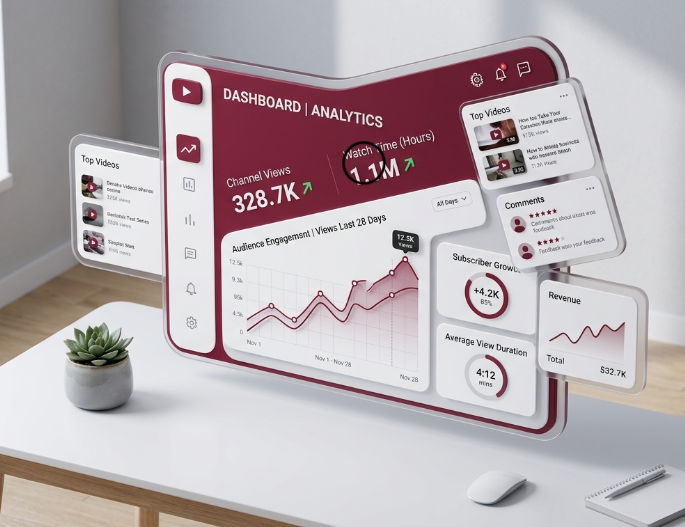
What is VidIQ? Pros, Cons, and Controversial Perspectives on VidIQ
Last updated: June 03, 2026 Read in fullscreen view


 Recommended for you
- 01 Jan 2026
 Youtube 2026 updates: 8 new features every creator should know 341/456
 - 02 Oct 2025 The YouTube Algorithm Has Changed: Why Your Old Strategy No Longer Works in 2025 198/395
- 25 Nov 2025 FaceSearchEngine.com Review: Can It Really Find Someone with Just a Photo? 167/270
- 12 Jan 2026 Why YouTube Content Is the New Resume: Building Trust and Expertise Even Without Views 154/183
- 19 Oct 2021 Software development life cycles 144/822
- 12 Apr 2025 How to Ask Powerful Questions Like Socrates 141/176
- 01 Nov 2025 Best AI Writing Tools in 2025 for Bloggers, Marketers, & Creators 133/194
- 04 Oct 2021 Product Validation: The Key to Developing the Best Product Possible 131/439
- 13 Oct 2021 Outsourcing Software Development: MVP, Proof of Concept (POC) and Prototyping. Which is better? 129/607
- 07 Oct 2025 Case Study: Using the “Messaging House” Framework to Build a Digital Transformation Roadmap 127/207
- 19 Jan 2026 What are Niche Edits, and How Do They Affect SEO? 127/165
- 17 Sep 2024 JPGConverters.com Review: Fast, Reliable, & User-Friendly Image Conversion 113/344
- 12 Oct 2022 14 Common Reasons Software Projects Fail (And How To Avoid Them) 112/677
- 12 Aug 2024 Understanding Google Analytics in Mumbai: A Beginner's Guide 110/217
- 28 Jul 2022 POC, Prototypes, Pilots and MVP: What Are the Differences? 109/850
- 31 Aug 2022 What are the best practices for software contract negotiations? 97/371
- 12 Dec 2021 Zero Sum Games Agile vs. Waterfall Project Management Methods 96/510
- 05 Sep 2023 The Cold Start Problem: How to Start and Scale Network Effects 94/292
- 05 Mar 2021 How do you minimize risks when you outsource software development? 91/424
- 01 Mar 2024 (AI) Artificial Intelligence Terms Every Beginner Should Know 85/419
- 21 Jul 2025 AI for Marketing: Create Content That Drives Results 85/147
- 22 May 2025 Role of Self-Service in CRM: Customer & Partner Portals for Automation 84/167
- 06 Mar 2024 [SemRush] What Are LSI Keywords & Why They Don‘t Matter 82/284
- 23 Sep 2024 5 best URL Shorteners to Elevate your SEO Strategy 82/288
- 02 Nov 2023 Why Your Website’s Continuous Updates Aren’t Boosting Domain Authority 79/282
- 01 Dec 2023 Laws of Project Management 79/394
- 07 Aug 2024 7 Advantages of the Image to Text Converter Tool for Business Entities 78/217
- 18 Jul 2021 How To Ramp Up An Offshore Software Development Team Quickly 76/668
- 04 Oct 2022 Which ERP implementation strategy is right for your business? 70/430
- 01 May 2024 Warren Buffett’s Golden Rule for Digital Transformation: Avoiding Tech Overload 69/277
- 28 Oct 2022 Build Operate Transfer (B.O.T) Model in Software Outsourcing 60/470
- 03 Jul 2022 Occam’s Razor and the Art of Software Design 56/558
- 08 Jan 2024 Ask Experts: Explicitation/Implicitation and Elicitation; two commonly used but barely unraveled concepts 55/436
Definition
VidIQ is a widely used, YouTube-certified growth tool designed to help content creators perform keyword research, analyze competitors, and optimize video performance. While this tool is excellent at transforming analytical data into actionable insights, it requires a learning curve and can sometimes provide overly generic or "clickbaity" suggestions.
- Keyword Research: A tool that suggests keywords with data on search volume and competition levels.
- SEO Score: Evaluates the "optimization" of your video while you are uploading it.
- Competitor Tracking: Monitors metrics of other channels to compare performance.
- Trend Alerts: Notifies you about hot topics within your specific niche.
- AI Coach/Generator: Uses AI to write titles, descriptions, and suggest content ideas.
Pros
- Effective Keyword Research: Provides highly accurate search volume and competition data specific to YouTube, helping your content rank higher in search results.
- Competitor Tracking: You can easily analyze which topics are generating high "views per hour" on other channels in your niche, helping you learn and build successful content.
- AI Support: Built-in AI tools analyze your channel's specific data to suggest relevant video ideas, write scripts, and draft titles.
- Convenient Browser Extension: Provides real-time data overlays seamlessly within the YouTube Studio interface.
- Free Plan Available: You can test essential features before deciding to subscribe to a paid plan.
Cons
- Cost of Premium Features: In-depth analytics, comprehensive AI content generation, and unlimited keyword research are locked behind paid plans, which can be expensive for new or non-monetized creators.
- Generic AI Titles: Some users find that AI-generated titles are often repetitive, too clickbait-focused, or inconsistent with their actual content strategy.
- Imperfect Scoring System: Automated scoring metrics for thumbnails and titles are sometimes inaccurate, occasionally undervaluing videos that are already highly successful.
- Overwhelming Interface: The sheer volume of data and feature options can be distracting or overwhelming for beginners.
Objective Advice
VidIQ is an "assistant," not a "wizard."
- Use it when: You are stuck for ideas, need to compare keywords, or want to quickly check for basic errors (such as missing tags or end screens).
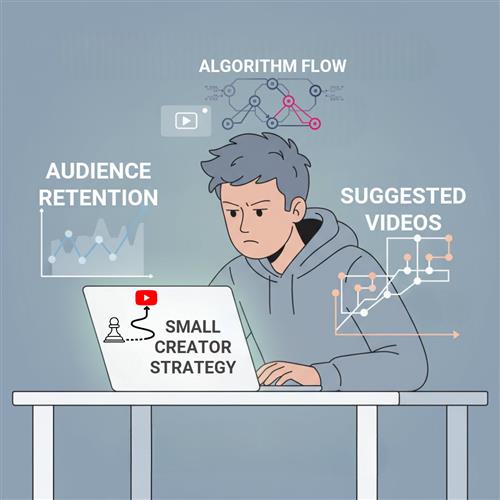
- Do not use it when: You believe that simply installing this tool will automatically increase your views. The YouTube algorithm prioritizes viewer behavior (watch time, click-through rate), and no tool can replace high-quality content.
Controversial Viewpoints
There are two opposing schools of thought regarding the actual effectiveness of VidIQ.
Perspective A: "VidIQ is the key to growth"
- Argument: VidIQ provides data that standard YouTube Analytics does not show clearly (e.g., SEO score, keyword performance). For beginners, this tool helps them understand the "rules of the game" of the algorithm and how to craft titles that attract clicks (CTR).
Perspective B: "VidIQ is a 'placebo' tool"
-
Argument: Many YouTube SEO experts argue that:
- Data is not entirely accurate: The "Volume" or "Competition" numbers are estimates based on their own proprietary algorithms, not direct data from Google/YouTube. Many argue these metrics are not reliable enough for major strategic decisions.
- Focusing on technique, forgetting content: Some users over-optimize for keywords, leading them to neglect core content quality - the only thing that truly retains viewers (Retention).
- Cost vs. Value: For premium paid plans, many creators argue that the money should be invested in equipment or content promotion rather than a monthly fee for a tool just to optimize titles.
FAQ - Frequently Asked Questions about VidIQ
Will VidIQ cause my channel to be penalized?
No. VidIQ is an official YouTube-certified partner, so using it is completely safe and compliant with the terms of service.
Should I use the Free or Paid version?
If you are just starting, use the Free version to grasp the SEO mindset. The Paid version is only truly necessary when you have a stable audience and need deeper analytics to scale your channel.
Do I need to follow the VidIQ SEO score 100%?
No. The SEO score is a reference tool. Engaging content (a compelling Thumbnail and Title) remains far more important than forcing an SEO score of 100/100.
Is the "Search Volume" metric in VidIQ actual data from Google/YouTube?
VidIQ does not have direct access to Google's real-time database (actual search volume). They use predictive models based on historical data and search patterns. Therefore, this figure should be understood as a "relative proportion" rather than an absolute number.
Why is the "Competition" metric in VidIQ often misleading?
VidIQ assesses competition based on the number of videos using that keyword and their growth velocity. However, it often ignores "Channel Authority" (your channel might be small, but your video could still rank highly due to relevance). Relying too much on this metric can cause you to miss "niche" opportunities that are trending.
Does Competitor Tracking really help, or does it just create a "comparison trap"?
Tracking competitors is good for inspiration on formats. But if you are obsessed with "doing what they do" just because they are successful, you will fall into the "Content Mimicry" trap. The YouTube algorithm prioritizes originality. You should use VidIQ to find "content gaps" (where competitors haven't done it yet or haven't done it thoroughly) instead of just counting their views.
How to combine VidIQ data with YouTube Analytics (YTA) effectively?
Don't use VidIQ for long-term planning. Use YTA (data provided by YouTube) to know what your viewers enjoy. Then, use VidIQ to scale those topics into related keywords you haven't touched yet.
Does using the "AI Title Generator" make your video seem "bland"?
VidIQ's AI optimizes based on potential click-through rate (CTR). However, if thousands of users use the same AI filter, your titles will look identical to your competitors'. The creativity lies in taking the AI's suggestion and then "humanizing" it (adding emotion, personal curiosity) into the title.
Do VidIQ's "Trend Alerts" really help you catch trends effectively?
Trend Alerts only signal that a topic is heating up. But if you create content about that trend without a "Unique Angle," you will get lost among thousands of other videos also "riding the trend." Ask yourself: "Why should viewers watch my video instead of the ones from larger channels doing the same topic?"
If VidIQ is the best tool, why doesn't everyone who uses it succeed?
Because VidIQ solves the problem of "Discoverability," while "Retention" is your job. A perfectly SEO-optimized video (100/100 score) will still fail miserably if the content inside is boring or does not solve the viewer's problem.
Can "Over-optimization" become counterproductive?
If your title and thumbnail are too "forced" (in the style of extreme clickbait that VidIQ suggests), viewers may click but bounce immediately (low retention rate). The YouTube algorithm will identify this as "junk" content and stop recommending it immediately.
 Explore more on these topics
























 Guest Blogging: The Definitive Guide

 Top Trending Topics
 Share This
 Link copied!
 Recently Updated News