




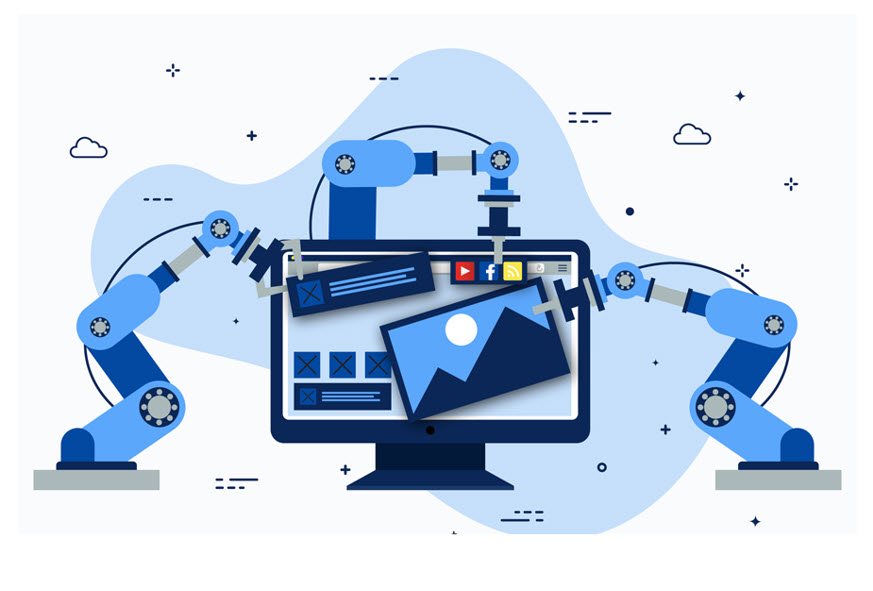
How Machine Learning is Shaping the Future of Digital Advertising
Last updated: November 28, 2025 Read in fullscreen view


 Recommended for you
- 06 Mar 2026
 Next-Generation AI Agents Explained: OpenClaw, NanoClaw, IronClaw and the Rise of Agent Architectures 361/401
 - 05 Oct 2025 The New Facebook Algorithm: A Paradigm Shift in Content Discovery 294/356
- 21 Dec 2023 Top 12 Low-Code Platforms To Use in 2024 221/1520
- 23 Dec 2025 Microsoft Power Automate vs. n8n: What’s the Real Difference? 217/347
- 14 Aug 2024 From Steel to Software: The Reluctant Evolution of Japan's Tech Corporates 203/749
- 29 Oct 2024 Top AI Tools and Frameworks You’ll Master in an Artificial Intelligence Course 189/594
- 13 Oct 2025 Dora AI: Turn Prompts Into Pixel-Perfect Websites-No Code, No Limits 182/245
- 01 Dec 2025 Manufacturing 4.0: AI Agents Enabling Self-Optimizing Production Systems 179/240
- 02 Dec 2025 The Question That Shook Asia: What Happens When We Ask AI to Choose Between a Mother and a Wife? 176/216
- 05 Jun 2025 How AI-Driven Computer Vision Is Changing the Face of Retail Analytics 171/295
- 31 Dec 2025 10 Skills to Make You "Irreplaceable" in the Next 3 Years (even if AI changes everything) 169/203
- 25 Mar 2026 Token Bills: The "Cost Shock" After the AI Boom in Companies 167/190
- 23 Dec 2024 Garbage In, Megabytes Out (GIMO): How to Rise Above AI Slop and Create Real Signal 166/220
- 03 Oct 2025 Top CMS Trends 2026: The Future of Digital Content Management 166/199
- 09 Jul 2024 What Is Artificial Intelligence and How Is It Used Today? 165/423
- 12 Dec 2025 FlexClip AI Video Magic Review: Professional AI-Powered Video Editing 163/207
- 20 Dec 2025 The Future of IT Consulting: Key Trends for 2026–2030 163/206
- 16 Oct 2025 AI Inference Explained Simply: What Developers Really Need to Know 163/197
- 24 Mar 2026 AI for Financial Reconciliation: Automating Finance Operations in 2026 157/188
- 06 Dec 2025 Enterprise Operations 2.0: Why AI Agents Are Replacing Traditional Automation 153/197
- 26 Mar 2026 What Is a System Integrator (SI)? Why the Software Subscription Model Is Becoming the New Standard 151/185
- 28 Oct 2025 The Future of Real Estate: Key Trends and Essential Lessons in Digital Transformation 150/222
- 06 Nov 2025 DataOps: The Next Frontier in Agile Data Management 141/200
- 21 Apr 2026 Vibe Coding vs. Expert Shopify Development: What AI Tools Can (and Can't) Do? 139/164
- 18 Jul 2024 The 8 Best ways to Innovate your SAAS Business Model in 2024 137/392
- 25 Nov 2025 How AI Agents Are Redefining Enterprise Automation and Decision-Making 134/192
- 31 Jul 2025 Top WooCommerce Pre-Order Plugins with Countdown & Discounts 129/226
- 16 Oct 2024 7 Game-Changing Features of InstaDoodle: The Ultimate AI Doodle Video Maker 129/198
- 25 Dec 2025 What Is Algorithmic Fairness? Who Determines the Value of Content: Humans or Algorithms? 129/174
- 29 Jan 2026 Why Headless Commerce Is Shaping the Future of the Online Store 124/151
- 15 Apr 2024 Weights & Biases: The AI Developer Platform 120/311
- 22 Dec 2025 The Role of Automotive Software in Building Smarter Vehicles 117/162
- 04 Mar 2026 CRM Trends Shaping Customer Engagement in 2026 117/148
- 29 Nov 2021 Memorandum of Understanding (MOU) for Partnership Agreements 114/685
- 17 Oct 2025 MLOps vs AIOps: What’s the Difference and Why It Matters 114/226
- 01 Jul 2025 The Hidden Costs of Not Adopting AI Agents: Risk of Falling Behind 113/262
- 16 Aug 2022 What is a Headless CMS? 113/399
- 16 Aug 2022 What is a Headless CMS? 113/399
- 27 Jul 2024 Positive Psychology in the Digital Age: Future Directions and Technologies 110/539
- 16 Dec 2025 Reducing Cognitive Friction in Software Development: A Guide to Faster, Happier Teams 107/181
- 02 Dec 2024 The Intersection of AI and Business Analytics: Key Concepts to Master in Your Business Analytics Course 105/400
- 10 Nov 2025 Multi-Modal AI Agents: Merging Voice, Text, and Vision for Better CX 104/218
- 27 Aug 2025 How AI Consulting Is Driving Smarter Diagnostics and Hospital Operations 103/203
- 12 Jan 2026 Companies Developing Custom AI Models for Brand Creative: Market Landscape and Use Cases 103/135
- 21 Nov 2025 The Rise of AgentOps: How Enterprises Are Managing and Scaling AI Agents 102/159
- 03 Jan 2024 Why Partnership is important for Growth? 102/260
- 20 Dec 2021 What is Hybrid Mobile App Development? 102/504
- 07 Nov 2022 Why Design Thinking can save the outsourcing industry 101/293
- 16 Sep 2022 Examples Of Augmented Intelligence In Today’s Workplaces Shaping the Business as Usual 99/536
- 16 Sep 2022 Examples Of Augmented Intelligence In Today’s Workplaces Shaping the Business as Usual 99/536
- 15 May 2025 AI Consulting for Small Businesses: How to Leverage AI for Growth & Efficiency 98/291
- 11 Oct 2022 Why choose Billable Viable Product (BVP) over Minimum Viable Product (MVP) 98/440
- 21 Aug 2024 What is Singularity and Its Impact on Businesses? 98/560
- 24 Dec 2024 Artificial Intelligence and Cybersecurity: Building Trust in EFL Tutoring 98/268
- 05 Aug 2024 Revisiting the Mistake That Halted Japan's Software Surge 97/444
- 09 Sep 2025 Aligning BI Dashboards with KPIs: A Business + Data Collaboration Guide 97/185
- 07 Nov 2025 Online vs. Offline Machine Learning Courses in South Africa: Which One Should You Pick? 97/169
- 18 Jan 2024 Self-healing code is the future of software development 96/313
- 25 Sep 2024 Enhancing Decision-Making Skills with an MBA: Data-Driven Approaches for Business Growth 95/302
- 20 Aug 2025 What Is Agentic AI? The Next Phase of Artificial Intelligence 95/255
- 23 Jun 2025 AI Avatars in the Metaverse: How Digital Beings Are Redefining Identity and Social Interaction 94/281
- 06 May 2025 How Machine Learning Is Transforming Data Analytics Workflows 94/291
- 25 Jan 2025 The Decline of Traditional SaaS and the Rise of AI-first Applications 93/198
- 30 Jul 2024 The Future of IT Consulting: Trends and Opportunities 88/300
- 28 Nov 2025 How AI Will Transform Vendor Onboarding and Seller Management in 2026 88/218
- 24 Oct 2025 AI Agents in SaaS Platforms: Automating User Support and Onboarding 87/158
- 31 Dec 2023 Software Development Outsourcing Trends to Watch Out for in 2024 86/316
- 22 Sep 2025 Why AI Is Critical for Accelerating Drug Discovery in Pharma 82/197
- 22 Nov 2024 The Role of AI in Enhancing Business Efficiency and Decision-Making 81/276
- 04 Oct 2023 The Future of Work: Harnessing AI Solutions for Business Growth 80/361
- 18 Aug 2024 The Future of Web Development: Emerging Trends and Technologies Every Developer Should Know 79/274
- 03 Nov 2023 Why Is Billable Viable Product An Alternative To Minimum Viable Product? 79/270
- 31 Dec 2022 The New Normal for Software Development 76/429
- 10 Sep 2024 Leading Remote Teams in Hybrid Work Environments 76/220
- 27 Feb 2025 How AI Agents are Changing Software Development? 74/312
- 19 Dec 2023 How AI is Transforming Software Development? 74/367
- 21 Apr 2025 Agent AI in Multimodal Interaction: Transforming Human-Computer Engagement 71/266
- 27 May 2026 Best 5 Software Development Companies Ideal for Early-Stage Startups 71/98
- 09 Oct 2024 Short-Form Video Advertising: The Secret to Captivating Your Audience 69/201
- 05 Aug 2024 Affordable Tech: How Chatbots Enhance Value in Healthcare Software 64/295
- 15 Aug 2025 Quantum Technology: Global Challenges and Opportunities for Innovators 63/197
- 06 Dec 2024 Steps For Integrating Sustainable Practices Into Business Operations 61/210
- 29 Aug 2025 How AI Is Transforming Modern Management Science 60/128
- 17 Mar 2025 Integrating Salesforce with Yardi: A Guide to Achieving Success in Real Estate Business 60/267
- 10 Sep 2024 AI in Email Marketing: Personalization and Automation 58/235
- 25 Jun 2026 Vercel: The "Secret Weapon" for Modern, High-Performance Web Deployment 49/57
- 31 Dec 2022 Future of Software Development Trends and Predictions 48/199
- 06 Nov 2025 Top AI Development Companies in the USA to Watch in 2026 19/260
- 03 Dec 2025 Templafy Features Explained: The Ultimate Guide to Streamlined Content Management 14/184
Imagine if an ad could show you precisely what you need when you need it. This is slowly becoming a reality due to advancements in machine learning. In the past, marketers experienced significant inefficiency when trying to target specific audiences.
Now, with the advancement of machine learning, the whole repetitive process is changing. Businesses can now target audiences more efficiently and accurately through ad automation and machine learning.
The amount of relevant data gained through these methods goes beyond anything available in the past, drastically improving ROI.
In this article, we will discuss how digital advertising is changing due to machine learning and its implications for the future.
Personalized Advertising
The best use of AI or ML targets consumers' behavior and tailors the suit to the most suitable resources for expending. In traditional advertising, marketers had the daunting task of folding through an astronomical number of resources and collating them.
However, With AI sentinels such as Google Ads and Facebook, marketers can sit back. Advertisers can relish in a sophisticated system that currently takes all the headaches of planning advertising campaigns by targeting potential consumers. People see ads no matter where they go as long as they are online.
There is no escaping them. Such advertising, which follows a person with the help of cookies, yields a higher return on investment.
Predictive Analytics
Predictive analytics lets companies anticipate and track customer engagement based on prior consumer activity. Users’ prior actions can be interpreted through machine learning algorithms’ analysis of historical data.
This knowledge empowers a business to modify its advertising efforts in advance. For example, predictive analytics used by e-commerce platforms suggests items to users based on their past orders.
Marketers can identify which advertisements yielded the desired results and reduce the budget for lesser-performing ones while increasing spending on the top ads. This increases accuracy and subsequently boosts the effectiveness of the advertisement.
Programmatic Advertising
With the assistance of Programmatic advertising, the power to purchase advertisements is simplified through machine learning. Advertisements can be purchased with real-time bidding (RTB), which allows the instant auction of ad slots within milliseconds.
Advertisers are no longer required to place bids because algorithms analyze user information and determine the best spots to display ads. This automatically improves advertiser’s operating efficiency, helps them save money, and allows the ads to be targeted to the users who will find them most relevant.
Dynamic creatives form of advertising is where ads change and are tailored to suit the user’s location, preferred contact device, and other personal parameters, which can also be done with programmatic advertising.
Chatbots and AI-Powered Customer Engagement
As they are based on neural networks, chatbots can interact with customers instantly. These powered-by-AI assistants receive user info and utilize it to make ad suggestions.
Businesses place chatbots on their websites and social media pages to increase customer interaction and sales. These bots can study the structures of conversations and improve their understanding of interaction as they grow older.
This technology is beneficial in enhancing consumer satisfaction and helping marketers appreciate the complex nature of their target audiences.
Voice Search Optimization
As voice support features from Alexa and Siri gain traction, they require new approaches to digital advertisement optimization. Machine learning allows advertisers to understand NLP and change how they work.
Voice users will search differently from how they type, as their queries are longer and more detailed. Advertisers can use machine learning tools to grasp the most common patterns of voice searches and edit the advertisement’s content to fit the user’s expectations.
This allows users to get immediate answers to their questions and enhances the search and ad service’s efficiency.
Fraud Detection and Brand Safety
Ad fraud involves bots that click on ads, resulting in fake views or impressions. Once again, machine learning helps in fraud detection by studying traffic patterns. Algorithms can differentiate bot activities from genuine human user participation. Hence, marketers ensure they will only be billed for actual actions.
Mainly, machine learning improves brand safety by monitoring the advertisements’ contextual environments to ensure that they do not appear next to materials that may be offensive or inappropriate. This helps maintain the brand image and control advertising costs.
Enhancing SEO and Content Marketing
The use of machine learning tools affects the algorithms of search engines, which, in turn, influence online advertising methods online advertising methods. The user's intent is most important for search engines as they reward relevant content corresponding to the audience's demand.
Advertisers employ machine learning to track searches, select the best-performing words, and boost the effectiveness of marketing content. For example, businesses in online retailing, especially those that use the WooCommerce Call for Price feature, can deploy AI to determine the most probable time to engage consumers to ask for the price of the products, which will enhance the conversion strategies.
AI services assist with generating marketing texts, tracking interaction metrics, and optimizing visibility through more advanced SEO techniques.
Hyper-Personalized Email Marketing
Email marketing is one of the most crucial marketing tools and has proven practical. Targeted users are always segmented, and personalized recommendations based on their profiles are sent to boost engagement.
Further, machine learning monitors the open rates, the click-through rates, and the purchase activity to alter email content dynamically. Consequently, better and more relevant offers can be provided to subscribers, greatly enhancing conversion rates.
AI-driven A/B testing allows marketers to optimize subject lines, photos, and copy to improve engagement.
Dynamic Pricing Strategies
Through AI, price adjustments can be made when there are shifts in demand, competitor pricing, or customer behavior. This is known as dynamic pricing. With e-commerce stores, AI is increasingly used to analyze the market and propose suitable pricing suggestions.
Travel agencies are a good example of this, as they alter flight and hotel prices based on user search behavior and past bookings. With these customized discounts offered to hand-picked clients depending on what they buy, retailers maximize their income while keeping their customers happy.
Future of Machine Learning in Digital Advertising
The future of digital advertising will depend on the development of machine learning. Advertisers can understand customer patterns further with the new generations of AI models.
The introduction of augmented reality (AR) advertisements, AI-created content, and real-time customization will transform the advertising world. Companies willing to utilize machine learning will be able to outperform their rivals by providing winning campaigns that are precise to the point.
Conclusion
An unprecedented shift to artificial intelligence in digital marketing advertising has resulted from machine learning. The era of bespoke services where automation and even AI-assisted chatbots modified everything for optimum engagement is here, with most of the work done by machine learning.
With the projections above, it is evident that technology complexity will increase, and the elasticity and strategies utilized by marketers and advertisers will also increase. Implementing machine learning in marketing advertisement strategies will render more efficient, engaging ads and enhance return on investment, thus optimizing the ever-evolving digital world.
Inam Ullah Dar
Content writer
Inam Ullah Dar is a content writer by passion and profession. He started his journey with Motif Creatives. He primarily writes for guest post articles falling under various niches. The main area of his interest and expertise is Web design & Digital marketing. He enjoys reading and writing about healthcare, mindfulness, and well-being to educate people about being happier and lively. His work has been published on many high-authority websites. He believes that writing is an effective way to communicate at better levels.
- Email: info@motifcreatives.co
- Website: https://motifcreatives.co/
- Facebook: https://www.facebook.com/CreativesMotif
- Twitter: https://twitter.com/CreativesMotif
- LinkedIn: https://www.linkedin.com/company/motifcreatives
- Pinterest: https://www.pinterest.com/motifcreatives/
- YouTube: https://www.youtube.com/@motifcreatives5870/featured
 Explore more on these topics































 Guest Blogging: The Definitive Guide

 Top Trending Topics
 Share This
 Link copied!
 Recently Updated News