

What Is Agentic AI? The Next Phase of Artificial Intelligence
Last updated: November 07, 2025 Read in fullscreen view


 Recommended for you
- 06 Mar 2026
 Next-Generation AI Agents Explained: OpenClaw, NanoClaw, IronClaw and the Rise of Agent Architectures 382/423
 - 05 Oct 2025 The New Facebook Algorithm: A Paradigm Shift in Content Discovery 309/373
- 21 Dec 2023 Top 12 Low-Code Platforms To Use in 2024 233/1535
- 23 Dec 2025 Microsoft Power Automate vs. n8n: What’s the Real Difference? 225/361
- 14 Aug 2024 From Steel to Software: The Reluctant Evolution of Japan's Tech Corporates 214/762
- 31 Dec 2025 10 Skills to Make You "Irreplaceable" in the Next 3 Years (even if AI changes everything) 205/241
- 02 Oct 2022 The Real Factors Behind Bill Gates’ Success: Luck, Skills, or Connections? 198/574
- 29 Oct 2024 Top AI Tools and Frameworks You’ll Master in an Artificial Intelligence Course 193/600
- 02 Dec 2025 The Question That Shook Asia: What Happens When We Ask AI to Choose Between a Mother and a Wife? 189/231
- 05 Jun 2025 How AI-Driven Computer Vision Is Changing the Face of Retail Analytics 179/303
- 25 Mar 2026 Token Bills: The "Cost Shock" After the AI Boom in Companies 174/202
- 09 Jul 2024 What Is Artificial Intelligence and How Is It Used Today? 174/437
- 20 Dec 2025 The Future of IT Consulting: Key Trends for 2026–2030 173/217
- 23 Dec 2024 Garbage In, Megabytes Out (GIMO): How to Rise Above AI Slop and Create Real Signal 171/228
- 03 Oct 2025 Top CMS Trends 2026: The Future of Digital Content Management 171/206
- 16 Oct 2025 AI Inference Explained Simply: What Developers Really Need to Know 169/203
- 26 Mar 2026 What Is a System Integrator (SI)? Why the Software Subscription Model Is Becoming the New Standard 168/203
- 09 Jan 2022 How to Bridge the Gap Between Business and IT? 167/374
- 30 Oct 2022 How Much Does MVP Development Cost in 2023? 163/425
- 06 Dec 2025 Enterprise Operations 2.0: Why AI Agents Are Replacing Traditional Automation 163/207
- 28 Oct 2025 The Future of Real Estate: Key Trends and Essential Lessons in Digital Transformation 158/230
- 21 Apr 2026 Vibe Coding vs. Expert Shopify Development: What AI Tools Can (and Can't) Do? 150/177
- 19 Oct 2021 Software development life cycles 148/828
- 18 Jul 2024 The 8 Best ways to Innovate your SAAS Business Model in 2024 142/399
- 04 Oct 2021 Product Validation: The Key to Developing the Best Product Possible 137/448
- 25 Nov 2025 How AI Agents Are Redefining Enterprise Automation and Decision-Making 136/194
- 13 Oct 2021 Outsourcing Software Development: MVP, Proof of Concept (POC) and Prototyping. Which is better? 135/617
- 01 Sep 2022 Facts Chart: Why Do Software Projects Fail? 135/731
- 25 Dec 2025 What Is Algorithmic Fairness? Who Determines the Value of Content: Humans or Algorithms? 134/180
- 31 Jul 2025 Top WooCommerce Pre-Order Plugins with Countdown & Discounts 133/232
- 07 Oct 2025 Case Study: Using the “Messaging House” Framework to Build a Digital Transformation Roadmap 132/212
- 10 Apr 2021 RFP vs POC: Why the proof of concept is replacing the request for proposal 129/459
- 07 Jul 2021 The 5 Levels of IT Help Desk Support 126/606
- 28 Jul 2022 POC, Prototypes, Pilots and MVP: What Are the Differences? 126/873
- 15 Apr 2024 Weights & Biases: The AI Developer Platform 123/314
- 20 Feb 2025 How Machine Learning is Shaping the Future of Digital Advertising 120/245
- 29 Nov 2021 Memorandum of Understanding (MOU) for Partnership Agreements 120/696
- 17 Oct 2025 MLOps vs AIOps: What’s the Difference and Why It Matters 119/236
- 22 Dec 2025 The Role of Automotive Software in Building Smarter Vehicles 119/166
- 01 Jul 2025 The Hidden Costs of Not Adopting AI Agents: Risk of Falling Behind 118/267
- 12 Oct 2022 14 Common Reasons Software Projects Fail (And How To Avoid Them) 117/683
- 16 Aug 2022 What is a Headless CMS? 116/403
- 27 Jul 2024 Positive Psychology in the Digital Age: Future Directions and Technologies 114/544
- 12 Aug 2024 Understanding Google Analytics in Mumbai: A Beginner's Guide 113/220
- 16 Dec 2025 Reducing Cognitive Friction in Software Development: A Guide to Faster, Happier Teams 111/188
- 03 Dec 2025 IT Outsourcing Solutions Explained: What, How, Why, When 108/140
- 12 Jan 2026 Companies Developing Custom AI Models for Brand Creative: Market Landscape and Use Cases 108/142
- 02 Dec 2024 The Intersection of AI and Business Analytics: Key Concepts to Master in Your Business Analytics Course 108/404
- 10 Nov 2025 Multi-Modal AI Agents: Merging Voice, Text, and Vision for Better CX 107/223
- 21 Nov 2025 The Rise of AgentOps: How Enterprises Are Managing and Scaling AI Agents 107/164
- 27 Aug 2025 How AI Consulting Is Driving Smarter Diagnostics and Hospital Operations 106/206
- 21 Aug 2024 What is Singularity and Its Impact on Businesses? 105/568
- 03 Jan 2024 Why Partnership is important for Growth? 104/263
- 20 Dec 2021 What is Hybrid Mobile App Development? 104/508
- 07 Nov 2022 Why Design Thinking can save the outsourcing industry 103/297
- 01 May 2023 Understanding Business as Usual (BAU) and How to Transition 103/1230
- 05 Aug 2024 Revisiting the Mistake That Halted Japan's Software Surge 103/452
- 16 Feb 2021 Choose Outsourcing for Your Non Disclosure Agreement (NDA) 102/272
- 15 May 2025 AI Consulting for Small Businesses: How to Leverage AI for Growth & Efficiency 102/295
- 24 Dec 2024 Artificial Intelligence and Cybersecurity: Building Trust in EFL Tutoring 101/271
- 16 Sep 2022 Examples Of Augmented Intelligence In Today’s Workplaces Shaping the Business as Usual 101/538
- 05 Sep 2023 The Cold Start Problem: How to Start and Scale Network Effects 101/300
- 08 Nov 2022 4 tips for meeting tough deadlines when outsourcing projects to software vendor 100/392
- 11 Oct 2022 Why choose Billable Viable Product (BVP) over Minimum Viable Product (MVP) 99/441
- 18 Jan 2024 Self-healing code is the future of software development 99/317
- 23 Jun 2025 AI Avatars in the Metaverse: How Digital Beings Are Redefining Identity and Social Interaction 99/289
- 07 Nov 2025 Online vs. Offline Machine Learning Courses in South Africa: Which One Should You Pick? 99/172
- 12 Dec 2021 Zero Sum Games Agile vs. Waterfall Project Management Methods 98/513
- 31 Aug 2022 What are the best practices for software contract negotiations? 98/372
- 07 Aug 2022 Things to Consider When Choosing a Technology Partner 97/380
- 05 Mar 2021 How do you minimize risks when you outsource software development? 96/432
- 22 Nov 2024 The Role of AI in Enhancing Business Efficiency and Decision-Making 96/291
- 10 Jul 2025 Building AI-Driven Knowledge Graphs from Unstructured Data 96/261
- 06 May 2025 How Machine Learning Is Transforming Data Analytics Workflows 96/295
- 25 Sep 2024 Enhancing Decision-Making Skills with an MBA: Data-Driven Approaches for Business Growth 95/304
- 30 Jul 2024 The Future of IT Consulting: Trends and Opportunities 94/309
- 25 Jan 2025 The Decline of Traditional SaaS and the Rise of AI-first Applications 93/199
- 24 Oct 2025 AI Agents in SaaS Platforms: Automating User Support and Onboarding 91/162
- 31 Dec 2023 Software Development Outsourcing Trends to Watch Out for in 2024 91/322
- 06 Mar 2024 [SemRush] What Are LSI Keywords & Why They Don‘t Matter 90/294
- 28 Nov 2025 How AI Will Transform Vendor Onboarding and Seller Management in 2026 90/220
- 01 Mar 2024 (AI) Artificial Intelligence Terms Every Beginner Should Know 88/425
- 22 Sep 2025 Why AI Is Critical for Accelerating Drug Discovery in Pharma 87/202
- 03 Nov 2023 Why Is Billable Viable Product An Alternative To Minimum Viable Product? 86/280
- 09 Feb 2023 The Challenge of Fixed-Bid Software Projects 86/336
- 04 Oct 2023 The Future of Work: Harnessing AI Solutions for Business Growth 83/364
- 01 Dec 2023 Laws of Project Management 82/397
- 18 Aug 2024 The Future of Web Development: Emerging Trends and Technologies Every Developer Should Know 80/275
- 31 Dec 2022 The New Normal for Software Development 77/431
- 18 Jul 2021 How To Ramp Up An Offshore Software Development Team Quickly 77/669
- 10 Sep 2024 Leading Remote Teams in Hybrid Work Environments 76/221
- 03 Nov 2022 Top questions and answers you must know before ask for software outsourcing 75/360
- 04 Oct 2022 Which ERP implementation strategy is right for your business? 75/439
- 27 Feb 2025 How AI Agents are Changing Software Development? 74/315
- 19 Dec 2023 How AI is Transforming Software Development? 74/367
- 27 May 2026 Best 5 Software Development Companies Ideal for Early-Stage Startups 73/104
- 21 Apr 2025 Agent AI in Multimodal Interaction: Transforming Human-Computer Engagement 72/268
- 16 Apr 2021 Insightful Business Technology Consulting at TIGO 72/527
- 06 Mar 2021 4 things you need to do before getting an accurate quote for your software development 71/770
- 20 Nov 2022 Software Requirements Are A Communication Problem 71/314
- 03 May 2024 The Iceberg of Ignorance 71/501
- 09 Oct 2024 Short-Form Video Advertising: The Secret to Captivating Your Audience 71/203
- 01 May 2024 Warren Buffett’s Golden Rule for Digital Transformation: Avoiding Tech Overload 70/278
- 07 Oct 2022 Digital Transformation: Become a Technology Powerhouse 69/316
- 05 Oct 2021 Shiny Object Syndrome: Why Your Business Isn't "Going Digital" 67/449
- 15 Aug 2025 Quantum Technology: Global Challenges and Opportunities for Innovators 67/206
- 05 Aug 2024 Affordable Tech: How Chatbots Enhance Value in Healthcare Software 66/300
- 28 Oct 2022 Build Operate Transfer (B.O.T) Model in Software Outsourcing 64/475
- 10 Sep 2024 AI in Email Marketing: Personalization and Automation 62/239
- 17 Mar 2025 Integrating Salesforce with Yardi: A Guide to Achieving Success in Real Estate Business 62/271
- 06 Dec 2024 Steps For Integrating Sustainable Practices Into Business Operations 62/211
- 01 May 2023 CTO Interview Questions 61/398
- 29 Aug 2025 How AI Is Transforming Modern Management Science 61/130
- 08 Jan 2024 Ask Experts: Explicitation/Implicitation and Elicitation; two commonly used but barely unraveled concepts 60/443
- 09 Mar 2022 Consultant Implementation Pricing 55/270
- 25 Jun 2026 Vercel: The "Secret Weapon" for Modern, High-Performance Web Deployment 51/61
- 01 Mar 2023 How do you deal with disputes and conflicts that may arise during a software consulting project? 50/211
- 31 Dec 2022 Future of Software Development Trends and Predictions 49/200
- 17 Mar 2025 IT Consultants in Digital Transformation 44/136
- 06 Nov 2025 Top AI Development Companies in the USA to Watch in 2026 30/321
- 03 Dec 2025 Templafy Features Explained: The Ultimate Guide to Streamlined Content Management 21/192
- 24 Mar 2026 AI for Financial Reconciliation: Automating Finance Operations in 2026 6/198
- 04 Mar 2026 CRM Trends Shaping Customer Engagement in 2026 1/153
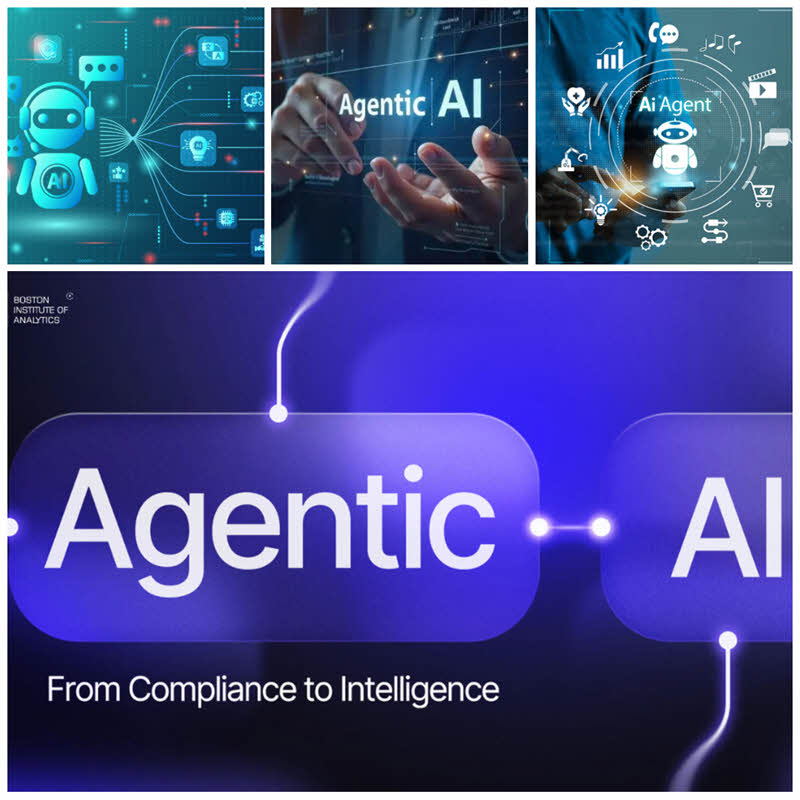
Artificial Intelligence is evolving beyond traditional boundaries, giving rise to a new paradigm known as Agentic AI — intelligent systems that can think, plan, and act autonomously. Unlike reactive AI, Agentic AI brings initiative and adaptability, enabling machines to make decisions, set goals, and learn from their environments. This article explores the foundations, architecture, and real-world applications of Agentic AI while guiding you toward the right Agentic AI course to prepare for the future of autonomous intelligence.
With artificial intelligence now a prominent feature in our world, we witness the emergence of a new model of AI that will let us define new boundaries and activities beyond those we have presently. This new model is referred to as Agentic AI, and it represents a fundamental expansion beyond our surroundings of reactive and task-based type AI. For those who wish to explore the next level of this emerging technology and may like to learn to use or understand Agentic AI, an Agentic AI Course could support your next steps.
This comprehensive article will map out the fundamental aspects of Agentic AI, its fundamental features and characteristics, how it might be used in different industries, the challenges of Agentic AI, and why we should engage in understanding this new model of artificial intelligence, both as individuals and organizations. In addition, we will provide guidance on identifying an adequate Agentic AI course that can help develop these required skills in preparation for an advanced technology future.
Understanding the Limitations of Traditional AI
Before we dive into the nuances of Agentic AI, it is important to appreciate the constraints of traditional AI systems. Nearly all of today's AI models, even complex deep learning ones, are reactive e. AI systems are trained with a great deal of data to perform a definable task, such as recognition of image, words or predictions. They are not planning or autonomous and lack the ability to integrate the relevant contextual factors in a dynamic environment to act independently or proactively.
Typically, traditional AIs need human intervention to define goals, decompose tasks, and monitor progress. Traditional AI systems are great at performing instructions given to them, but they struggle with especially unique situations by acting or moving without prior instructions. Agentic AI is a more advanced type of intelligence (performance, autonomy, proactivity) enabled by agentic AI-driven processes to define problems and solution tasking.
Defining Agentic AI: Intelligence with Initiative
Simply put, Agentic AI is made up of systems of AI capable of not strictly relying on a human, who would provide step-by-step instructions, to complete a task. Agentic AI systems have the perception to assess their surroundings, are able to set goals, are capable of properly envisioning a plan, act to implement the plan, and achieve a goal without direct control by humans. Agentic AI systems are designed to be dealer agents that learn and improve their performance while trying to reach a goal, with engagement or interaction in the environment.
Key appearances that distinguish Agentic AI from traditional AI include:
- Autonomy: The ability to act independently, decide, and take action without the need for constant human control.
- Goal-Oriented Behaviour: The ability to set and accomplish goals.
- Planning and Reasoning: The ability to plan, predict, and think about the best way to accomplish a goal.
- Perception and Interaction: The ability to monitor the environment through sensors or data streams and effectively engage with it.
- Learning and Adaptation: The ability to learn, adapt to variations in the environment, and continually improve performance through experience.
- Memory and Contextual Awareness: The ability to remember information about previous experiences and use it to inform future choices.
- Agency: The feeling of agency in accomplishing goals and not being a compliant follower of human commands.
The Architecture of an Intelligent Agent
While the detailed constructions of Agentic AI systems can vary, they normally incorporate numerous key components:
- Perception Module: The responsibility for perceiving and interpreting the information being received from the environment. This may mean analysing visual input, natural language input, outputs from sensors, or some other representation of information.
- Knowledge Base: A knowledge base of the world, the agent's intended outcomes and plans, its abilities. The knowledge may be either static or continually kept up to date via learning.
- Planning and Reasoning Module: The agent's intelligence core that is responsible for content, establishing goals, developing plans, making decisions, and reasoning about the consequences of actions.
- Action Module: The responsibility for carrying out the plans as actions in the environment. This could involve controlling physical robots, developing data, writing templates, or interfacing with other programmed systems.
- Learning Module: The role that provides mechanisms for the agent to learn by experience, update its knowledge, and improve its planning and decision making from experience.
Why Agentic AI is the Next Phase of Artificial Intelligence?
Agentic AI characterizes a significant development in the field for numerous key reasons:
- Solving Complex Problems: One key advantage of Agentic AI is that it brings an entirely new approach to tackle complicated real-world problems. Agency gives AI the ability to reason and plan in uncertain and dynamic situations in a way that is not possible for traditional task-specific AI agents.
- Automation of Knowledge Work: Agentic AI can also automate complex cognitive tasks beyond just automating routine physical tasks. The essentially modern form of work allows professionals to focus on creative and strategic work rather than more routine work.
- Personalized and Adaptive Systems: A key area for advancing capabilities using Agentic AI is in personalization and adaptive systems that can learn user’s individual preferences and behaviours. In principle, it leads to a more relevant and personal experience.
- Exploration and Discovery: Agents that operate autonomously can be and have been deployed in dangerous and challenging environments where it is difficult or impossible for humans to access. This has obvious implications for research and exploration in fields such as scientific research and space exploration.
- Enhanced Efficiency and Productivity: By automating complex processes and making smart decisions, Agentic AI will have an impact on efficiency and productivity in a range of human industries.
Applications of Agentic AI Across Industries
The possible applications of Agentic AI are vast and distance across numerous sectors:
- Healthcare: Autonomous diagnostic agents, personalized treatment planning, robotic surgeries with greater autonomy, drug discovery and clinical trial development.
- Finance: Algorithmic trading with adaptive strategies, fraud detection and prevention, personalized financial and investment advising, risk management.
- Manufacturing: Robots with intelligence to automate complex assembly processes, predictive maintenance and smart supply chain integration, quality control.
- Logistics and Transportation: Autonomous transportation vehicles (cars, trucks, drones), intelligent traffic management systems, optimized delivery routes, warehouse automation.
- Education: Personalized learning platforms that adapt to the individual learner's demonstrated needs, intelligent tutoring systems, automated assessment and automated feedback.
- Customer Service: Autonomous virtual assistants capable of handling complex inquiries and resolving issues without human intervention.
- Scientific Research: Autonomous virtual assistant systems that handle complex requests and issues without human intervention. Autonomous research assistant systems for data analysis, conception of hypotheses, and design of experimental approaches.
- Security and Defence: Autonomous surveillance systems, automated threat detection and responses, intelligent cybersecurity agent systems.
What to Look for in an Effective Agentic AI Course?
When picking an Agentic AI Course, consider the succeeding factors to ensure you gain a inclusive and valuable learning experience:
- Curriculum: Is the course comprehensive in terms of fundamental principles regarding Agentic AI, such as perception, planning, reasoning, learning, and acting? Is it comprehensive in terms of its coverage of different architectures and approaches to building intelligent agents?
- Hands-on Experience: Are there practical exercises, projects, or experiments to help you apply what you learn and develop practical skills?
- Instructors: Are the instructor’s experts in AI, who have experience with Agentic AI research and development?
- Tools and Technologies: Are the instructor’s experts in AI, who have experience with Agentic AI research and development?
- Real-World Case Studies: Are there lessons learned and real-world applications of Agentic AI people and organizations using AI?
- Ethical Considerations: Are there lessons learned and real-world applications of Agentic AI people and organizations using AI?
- Level of Difficulty: Does the course meet your current knowledge and experience level in AI?
- Learning Format: Does the course offer a learning format that suits your needs, such as online, in-person, or blended learning?
- Community and Support: Does the course provide a learning format that meets your needs, e.g., online, in-person or blended?
Final Thoughts: Embracing the Age of Autonomous Intelligence
Agentic AI will change everything we think we know about artificial intelligence. It is a primitive evolution of intelligent agents that go beyond reactive systems to autonomous, proactive intelligent agents.
Agentic AI has the potential to tackle complex problems, automate knowledge work, and produce personalized experiences in ways that make previous generation AI appear trivial. There are obvious challenges with respect to potential unsafe uses and ethical usages as well as the related challenges of assuring control. However, the forensic and ever operational capabilities for Agentic AI are real.
Anyone hoping to take advantage of the next chapter in artificial intelligence and develop Agentic AI would be remiss to overlook the importance and value of Agentic AI education. You can enroll in an Agentic AI Course and be set n get all of the foundational learning and practical skills to prepare you for this new information about reinforcement learning move.
As we continue to develop the promise of autonomous intelligence, agentic agents will pave the way for a new ontology that will redefine the world of work through transformative and powerful vector-based knowledge dissemination. We are entering into an age where intelligent agents will play a fundamental role in our lives, and those who engage with the evolution of AI to the Agentic level will lead the way.
 Explore more on these topics





























 Guest Blogging: The Definitive Guide

 Top Trending Topics
 Share This
 Link copied!
 Recently Updated News
 thực chiến - Kiến tạo tương lai cho các nhà sáng tạo nội dung.