


How AI Is Transforming Modern Management Science
Last updated: September 01, 2025 Read in fullscreen view


 Recommended for you
- 01 Aug 2024
 The Standish Group report 83.9% of IT projects partially or completely fail 813/2636
 - 06 Mar 2026 Next-Generation AI Agents Explained: OpenClaw, NanoClaw, IronClaw and the Rise of Agent Architectures 366/406
- 05 Oct 2025 The New Facebook Algorithm: A Paradigm Shift in Content Discovery 302/364
- 13 Apr 2024 Lessons on Teamwork and Leadership from Chinese story book "Journey to the West" 276/1370
- 21 Dec 2023 Top 12 Low-Code Platforms To Use in 2024 227/1528
- 29 Oct 2024 Top AI Tools and Frameworks You’ll Master in an Artificial Intelligence Course 190/597
- 02 Nov 2021 What is Terms of Reference (ToR)? 184/1763
- 02 Dec 2025 The Question That Shook Asia: What Happens When We Ask AI to Choose Between a Mother and a Wife? 183/225
- 31 Dec 2025 10 Skills to Make You "Irreplaceable" in the Next 3 Years (even if AI changes everything) 179/213
- 05 Jun 2025 How AI-Driven Computer Vision Is Changing the Face of Retail Analytics 175/299
- 20 Dec 2025 The Future of IT Consulting: Key Trends for 2026–2030 170/213
- 25 Mar 2026 Token Bills: The "Cost Shock" After the AI Boom in Companies 170/196
- 09 Jul 2024 What Is Artificial Intelligence and How Is It Used Today? 170/432
- 23 Dec 2024 Garbage In, Megabytes Out (GIMO): How to Rise Above AI Slop and Create Real Signal 169/224
- 03 Oct 2025 Top CMS Trends 2026: The Future of Digital Content Management 168/202
- 16 Oct 2025 AI Inference Explained Simply: What Developers Really Need to Know 163/197
- 09 Jan 2022 How to Bridge the Gap Between Business and IT? 163/367
- 30 Oct 2022 How Much Does MVP Development Cost in 2023? 158/419
- 06 Dec 2025 Enterprise Operations 2.0: Why AI Agents Are Replacing Traditional Automation 158/202
- 26 Mar 2026 What Is a System Integrator (SI)? Why the Software Subscription Model Is Becoming the New Standard 156/190
- 18 Jul 2024 The 8 Best ways to Innovate your SAAS Business Model in 2024 140/397
- 25 Nov 2025 How AI Agents Are Redefining Enterprise Automation and Decision-Making 135/193
- 01 Sep 2022 Facts Chart: Why Do Software Projects Fail? 134/730
- 25 Dec 2025 What Is Algorithmic Fairness? Who Determines the Value of Content: Humans or Algorithms? 130/175
- 07 Dec 2023 12 project management myths to avoid 127/320
- 10 Apr 2021 RFP vs POC: Why the proof of concept is replacing the request for proposal 124/452
- 15 Apr 2024 Weights & Biases: The AI Developer Platform 121/312
- 23 Jun 2024 Best Practices for Managing Project Escalations 120/326
- 20 Feb 2025 How Machine Learning is Shaping the Future of Digital Advertising 118/241
- 01 Jul 2025 The Hidden Costs of Not Adopting AI Agents: Risk of Falling Behind 117/266
- 01 Mar 2024 10 Project Management Myths 116/291
- 16 Aug 2022 What is a Headless CMS? 115/401
- 17 Oct 2025 MLOps vs AIOps: What’s the Difference and Why It Matters 114/227
- 07 Jul 2021 The 5 Levels of IT Help Desk Support 112/592
- 27 Jul 2024 Positive Psychology in the Digital Age: Future Directions and Technologies 112/541
- 03 Apr 2022 Microsoft Solutions Framework (MSF) 110/1457
- 02 May 2022 What Is RAID in Project Management? (With Pros and Cons) 110/967
- 02 Dec 2024 The Intersection of AI and Business Analytics: Key Concepts to Master in Your Business Analytics Course 108/404
- 10 Nov 2025 Multi-Modal AI Agents: Merging Voice, Text, and Vision for Better CX 105/220
- 27 Aug 2025 How AI Consulting Is Driving Smarter Diagnostics and Hospital Operations 105/205
- 21 Nov 2025 The Rise of AgentOps: How Enterprises Are Managing and Scaling AI Agents 104/161
- 12 Jan 2026 Companies Developing Custom AI Models for Brand Creative: Market Landscape and Use Cases 104/137
- 12 Aug 2022 What is End-to-end project management? 104/613
- 03 Jan 2024 Why Partnership is important for Growth? 103/261
- 03 Dec 2025 IT Outsourcing Solutions Explained: What, How, Why, When 103/135
- 21 Aug 2024 What is Singularity and Its Impact on Businesses? 100/562
- 02 Nov 2022 Difference between Change Management and Project Management 100/332
- 16 Feb 2021 Choose Outsourcing for Your Non Disclosure Agreement (NDA) 100/270
- 08 Nov 2022 4 tips for meeting tough deadlines when outsourcing projects to software vendor 99/391
- 11 Oct 2022 Why choose Billable Viable Product (BVP) over Minimum Viable Product (MVP) 99/441
- 16 Sep 2022 Examples Of Augmented Intelligence In Today’s Workplaces Shaping the Business as Usual 99/536
- 15 May 2025 AI Consulting for Small Businesses: How to Leverage AI for Growth & Efficiency 99/292
- 24 Dec 2024 Artificial Intelligence and Cybersecurity: Building Trust in EFL Tutoring 99/269
- 20 Aug 2025 What Is Agentic AI? The Next Phase of Artificial Intelligence 99/260
- 07 Nov 2025 Online vs. Offline Machine Learning Courses in South Africa: Which One Should You Pick? 98/170
- 03 Jan 2023 Organizing your agile teams? Think about M.A.T (Mastery, Autonomy, Purpose) 98/497
- 18 Jan 2024 Self-healing code is the future of software development 98/315
- 23 Jun 2025 AI Avatars in the Metaverse: How Digital Beings Are Redefining Identity and Social Interaction 96/284
- 25 Sep 2024 Enhancing Decision-Making Skills with an MBA: Data-Driven Approaches for Business Growth 95/304
- 06 May 2025 How Machine Learning Is Transforming Data Analytics Workflows 94/291
- 07 Aug 2022 Things to Consider When Choosing a Technology Partner 94/377
- 25 Jan 2025 The Decline of Traditional SaaS and the Rise of AI-first Applications 93/198
- 09 May 2022 Build one to throw away vs Second-system effect: What are differences? 91/403
- 30 Jul 2024 The Future of IT Consulting: Trends and Opportunities 91/305
- 31 Dec 2023 Software Development Outsourcing Trends to Watch Out for in 2024 90/320
- 10 Apr 2024 The Parking Lot Method: Unlocking a Simple Secret to Supercharge Your Productivity 90/612
- 24 Oct 2025 AI Agents in SaaS Platforms: Automating User Support and Onboarding 90/161
- 28 Nov 2025 How AI Will Transform Vendor Onboarding and Seller Management in 2026 89/219
- 10 Jul 2025 Building AI-Driven Knowledge Graphs from Unstructured Data 89/251
- 22 May 2022 What are common mistakes that new or inexperienced managers make? 87/368
- 09 Feb 2023 The Challenge of Fixed-Bid Software Projects 86/335
- 01 Aug 2022 Is planning "set it and forget it" or "set it and check it"? 85/386
- 01 May 2023 Understanding Business as Usual (BAU) and How to Transition 84/1210
- 14 Jun 2022 Example and Excel template of a RACI chart in Software Development 84/961
- 17 Oct 2021 Does Fast Tracking increase project cost? 84/469
- 03 Nov 2023 Why Is Billable Viable Product An Alternative To Minimum Viable Product? 83/274
- 18 Dec 2023 The Cone of Uncertainty in Scrum & Requirement Definition 83/819
- 22 Sep 2025 Why AI Is Critical for Accelerating Drug Discovery in Pharma 83/198
- 22 Nov 2024 The Role of AI in Enhancing Business Efficiency and Decision-Making 82/277
- 04 Oct 2023 The Future of Work: Harnessing AI Solutions for Business Growth 81/362
- 18 Feb 2026 "Hit and Run" Project Management: Balancing Speed with Sustainability 81/108
- 18 Aug 2024 The Future of Web Development: Emerging Trends and Technologies Every Developer Should Know 80/275
- 18 Oct 2021 Key Elements to Ramping Up a Large Team 80/1342
- 07 Jul 2022 Managing Project Execution Terms 78/487
- 10 Sep 2024 Leading Remote Teams in Hybrid Work Environments 76/220
- 31 Dec 2022 The New Normal for Software Development 76/430
- 19 Dec 2023 How AI is Transforming Software Development? 74/367
- 03 Nov 2022 Top questions and answers you must know before ask for software outsourcing 74/359
- 27 Feb 2025 How AI Agents are Changing Software Development? 74/313
- 21 Apr 2025 Agent AI in Multimodal Interaction: Transforming Human-Computer Engagement 72/268
- 27 May 2026 Best 5 Software Development Companies Ideal for Early-Stage Startups 72/100
- 16 Apr 2021 Insightful Business Technology Consulting at TIGO 71/526
- 03 May 2024 The Iceberg of Ignorance 71/500
- 20 Nov 2022 Software Requirements Are A Communication Problem 70/313
- 09 Oct 2024 Short-Form Video Advertising: The Secret to Captivating Your Audience 70/202
- 06 Mar 2021 4 things you need to do before getting an accurate quote for your software development 69/767
- 27 Jan 2020 Should a project manager push developers to work more hours due to mistakes of manager schedule setting? 68/509
- 15 May 2022 20 Common Mistakes Made by New or Inexperienced Project Managers 68/351
- 07 Oct 2022 Digital Transformation: Become a Technology Powerhouse 67/314
- 24 Nov 2023 The project management paradox: Achieving MORE by doing LESS 66/296
- 05 Aug 2024 Affordable Tech: How Chatbots Enhance Value in Healthcare Software 66/298
- 05 Jun 2023 Fractional, Part-Time (virtual) or Interim CTO: Who Will Cover Your Business Needs? 66/209
- 02 Dec 2021 3 Ways to Avoid Scope Creep in IT Consulting 65/274
- 02 Jun 2024 Reviving Ancient Wisdom: The Spiritual Side of Project Management 65/330
- 05 Oct 2021 Shiny Object Syndrome: Why Your Business Isn't "Going Digital" 65/446
- 15 Aug 2025 Quantum Technology: Global Challenges and Opportunities for Innovators 65/203
- 06 Jun 2022 Change Management at the Project Level 64/370
- 20 Jul 2022 Software Myths and Realities 63/1009
- 26 Sep 2024 Successful Project Management Techniques You Need to Look Out For 63/460
- 30 Nov 2023 Project Managers, Focus on Outcomes — Not Deliverables 62/224
- 10 Sep 2024 AI in Email Marketing: Personalization and Automation 60/237
- 01 May 2023 CTO Interview Questions 60/396
- 13 Jan 2020 Quiz: Test your understanding project cost management 57/705
- 10 May 2022 Levels of Teamwork 56/251
- 21 Jun 2024 Dead Horses and the Escalation of Commitment 52/191
- 09 Mar 2022 Consultant Implementation Pricing 51/265
- 01 Mar 2023 How do you deal with disputes and conflicts that may arise during a software consulting project? 50/211
- 31 Dec 2022 Future of Software Development Trends and Predictions 48/199
- 06 Nov 2025 Top AI Development Companies in the USA to Watch in 2026 44/288
- 17 Mar 2025 IT Consultants in Digital Transformation 43/134
- 24 Mar 2026 AI for Financial Reconciliation: Automating Finance Operations in 2026 2/194
- 04 Mar 2026 CRM Trends Shaping Customer Engagement in 2026 1/150
Are you looking for the ways AI is transforming modern management science? Do you want to know whether AI can make your business more secure or not? Do you want to integrate AI into your business, but don’t know how it can help? All your questions are answered in this detailed and to-the-point blog, we have prepared. Let’s explore.
7 Ways AI can Transform Modern Management Science
AI has proven to be revolutionary in every field it has stepped into. In education, it made learning easier and efficient. In logistics, companies saw quick growth with streamlined workflows due to AI integration. And now it is transforming modern management science by enhancing customer relationship management, streamlining supply chain management, providing next-gen security to businesses, and more. Let's take a look at the ways AI can and is transforming modern management science.
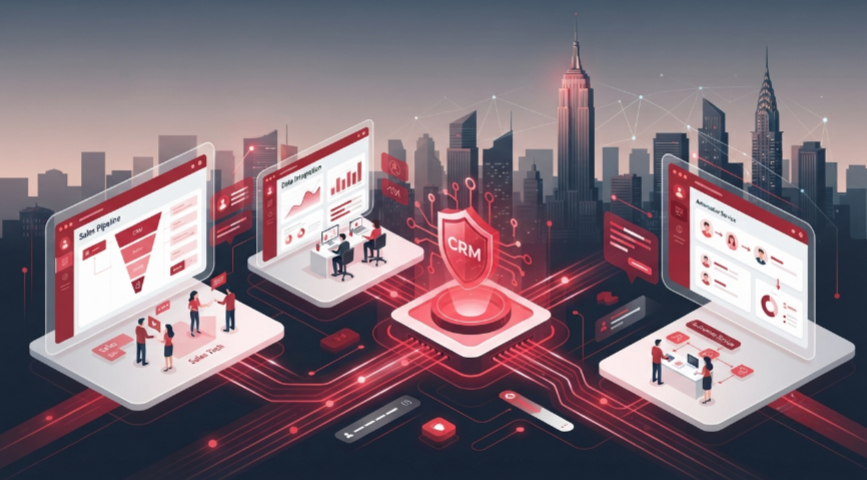
1. Enhanced Customer Relationship Management (CRM)
Customer relationship management is now transforming with AI, helping businesses build stronger connections with customers. Companies that integrate CRM tools and AI have streamlined communications and organized customer information. It helps them provide insights, predict customer preferences, and automate daily tasks. You build a data-driven approach with AI-powered CRM tools that help both customers and businesses connect well.
Customers are attracted more towards organizations that provide a more personalized experience compared to those that don't. You can deliver customized content after analyzing customer data that helps in improving engagement and conversion rates of your business. Along with that, AI can also reduce resolution time by predicting customer needs. You can implement this approach across different channels, like in person, in-app, online, or through social media.
2. Help with Market Research
Businesses are getting revolutionized as AI is transforming market research every day. It is helping companies to get deeper insights into the market, industry trends, and customer behavior. AI analyzes huge datasets in seconds, which might take hours for a human researcher to do, helping companies make more informed decisions and stay ahead of the curve. There are AI tools that monitor competitors and predict market trends before they emerge.
Organizations around the world use artificial intelligence to analyze social media conversations and understand customers' sentiment about a certain product, service, or brand. Apart from that, there are AI tools that track user behavior and understand their purchasing patterns and predict future behavior, allowing businesses to refine their marketing strategies. With AI tools, businesses can also turn customer audio or video interviews into an actionable data set.
3. Streamlines Supply Chain Management
Most organizations around the world use artificial intelligence or simply integrate AI tools or modules into their supply chain management system to improve decision-making and boost operational efficiency. AI has simplified processing a huge amount of datasets in real-time, optimizing logistics, and anticipating market trends for businesses. AI also performs scheduling and routing effectively based on changing conditions.
Artificial intelligence combined with supply chain management offers various advantages, including improved procurement, reduced disruptions, streamlined workflows through automation, and better end-to-end visibility and transparency. The use of Internet of Things (IoT) devices across supply chain operations helps AI get access to more data. Other benefits of AI in supply chain optimization include lowered operating costs, reduction of errors and wastes, etc.
4. Better Training and Staff Support
AI plays a crucial role in employee upskilling and round-the-clock staff support by identifying skill gaps, creating customized learning methods, providing data, and answering queries. Workers can fix problems faster than ever, improve first-time fix rates, and enhance operational efficiency with AI. When it comes to training, AI can identify the skill gaps among workers and provide knowledge retention to fill the gaps.
There are AI tools that offer tailored learning recommendations based on industry needs and employee career goals. Artificial intelligence is also used in recommending certifications and courses to employees who are transitioning to tech-driven roles. Most of the organizations enhance learning outcomes with machine learning models that provide a personalized learning experience and adapt training material in real-time.
5. Next-Gen Predictive Maintenance
Unexpected equipment failure is a common cause in industries. It causes significant downtime and leaves a big hole in the company's pocket. AI can significantly reduce the recurrence of such failures using sensor data and historical maintenance records. Most of the organizations also use artificial intelligence to develop failure mode and effect analysis (FMEA) models, which reduces the time and effort required to build these models.
AI-powered predictive maintenance is two steps ahead of traditional condition monitoring techniques. It employs different approaches that proactively measure the equipment failures before they happen, reducing the maintenance cost. Businesses also improve their operational efficiency with AI-powered predictive maintenance, maximizing return on investment. Artificial intelligence can also effectively allocate resources based on data.
6. Improved Decision-Making and Strategy
Decision-making and building a strategy require thorough research and analysis, which is really time and resource-consuming. With AI implementation into decision-making and strategy, the whole process has become faster than ever. Large and complex datasets are now analyzed within seconds with the help of AI, allowing businesses to make smarter decisions. It will even enable companies to take proper action by predicting future trends.
AI improves decision-making and strategy in multiple ways, including decision support, where it helps humans take accurate steps based on predictive or descriptive analysis of human behavior. Then comes decision augmentation, where AI recommends multiple steps to choose from based on diagnostic analysis. And lastly comes decision automation, where AI makes decisions for humans, which improves scalability and speed in decision-making.
7. Revolutionary Fraud Detection and Cybersecurity
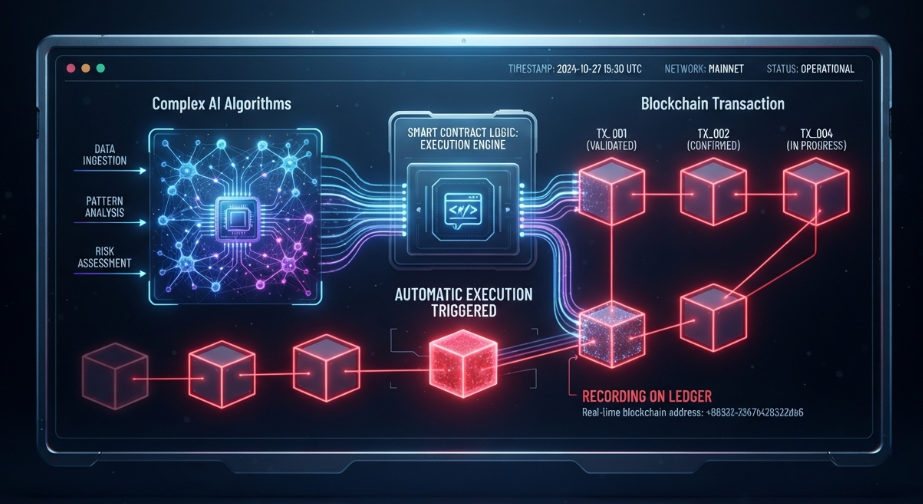
Artificial intelligence has made proactive fraud detection possible. It analyzes transaction patterns in real-time and detects any type of suspicious activity to prevent data breaches and reduce financial losses. AI is also helping organizations upgrade their security strategies by identifying vulnerabilities to tackle cyberattacks and protect sensitive data. AI with network security monitoring analyzes network traffic and predicts upcoming cyber threats.
AI-powered fraud detection has evolved from rule-based systems that only triggered when the rules were broken to machine learning and behavioral analysis, which was a revolution. It detected and prevented fraud by just recognizing patterns. And now we are protected by advanced AI equipped with deep learning and neural networks that analyze a large number of complex patterns to detect anomalies and prevent fraud.
Conclusion
There is no doubt that AI is transformative when it comes to modern management science. The way it is changing the digital landscape of business management is an absolute revolution. With AI integration, businesses are more secure and are experiencing increased customer acquisition and conversion rates. If you want to integrate AI into your business, you will require vetted AI developers with expertise and experience. In the end, we can say that AI is no longer a futuristic concept or luxury but a core necessity that businesses can rely on to grow.
| About the Author | Yash | Tech nerds | Yash is the Founder of Serviots and tech nerds who often keeps himself busy in solving complex business problems with code. He leads the charge in developing cutting-edge tech solutions on the top of modern tech stacks and platforms. With a solid foundation as a software engineer, he has spent 11+ years honing his expertise in programming, now he is helping businesses around the world transform their businesses with the advent of technology innovation. When he is not coding, you will find him juggling with latest innovations and sharpening his hands indoor games. |
 Explore more on these topics
























 Guest Blogging: The Definitive Guide

 Top Trending Topics
 Share This
 Link copied!
 Recently Updated News
 thực chiến - Kiến tạo tương lai cho các nhà sáng tạo nội dung.