





The Fundamental Salesforce SMS Integration Guide
Last updated: October 18, 2025 Read in fullscreen view


 Recommended for you
- 05 Oct 2025
 The New Facebook Algorithm: A Paradigm Shift in Content Discovery 265/327
 - 21 Dec 2023 Top 12 Low-Code Platforms To Use in 2024 208/1504
- 23 Dec 2025 Microsoft Power Automate vs. n8n: What’s the Real Difference? 203/327
- 21 Sep 2023 Abraham Wald and the Missing Bullet Holes 181/883
- 14 Aug 2024 From Steel to Software: The Reluctant Evolution of Japan's Tech Corporates 175/720
- 03 Oct 2025 Top CMS Trends 2026: The Future of Digital Content Management 162/191
- 25 Mar 2026 Token Bills: The "Cost Shock" After the AI Boom in Companies 152/172
- 31 Dec 2025 10 Skills to Make You "Irreplaceable" in the Next 3 Years (even if AI changes everything) 148/178
- 20 Dec 2025 The Future of IT Consulting: Key Trends for 2026–2030 146/186
- 19 Oct 2021 Software development life cycles 143/821
- 18 Jul 2024 The 8 Best ways to Innovate your SAAS Business Model in 2024 132/387
- 28 Oct 2025 The Future of Real Estate: Key Trends and Essential Lessons in Digital Transformation 131/202
- 26 Mar 2026 What Is a System Integrator (SI)? Why the Software Subscription Model Is Becoming the New Standard 128/161
- 13 Oct 2021 Outsourcing Software Development: MVP, Proof of Concept (POC) and Prototyping. Which is better? 126/602
- 21 Apr 2026 Vibe Coding vs. Expert Shopify Development: What AI Tools Can (and Can't) Do? 124/148
- 12 May 2026 Top 6 AI AR/VR Filter Tools for Mind-Blowing Videos and Photos in 2026 122/142
- 04 Oct 2021 Product Validation: The Key to Developing the Best Product Possible 122/430
- 31 Jul 2025 Top WooCommerce Pre-Order Plugins with Countdown & Discounts 122/218
- 07 Oct 2025 Case Study: Using the “Messaging House” Framework to Build a Digital Transformation Roadmap 121/200
- 23 May 2022 4 Strategies of Odoo ERP Implementation 118/411
- 22 Dec 2025 The Role of Automotive Software in Building Smarter Vehicles 116/158
- 04 Mar 2026 CRM Trends Shaping Customer Engagement in 2026 116/143
- 13 Jan 2025 Why Businesses Are Choosing Microsoft Dynamics 365 Business Central Over NetSuite 110/241
- 20 Feb 2025 How Machine Learning is Shaping the Future of Digital Advertising 110/232
- 10 Aug 2024 Odoo vs. Lark: A Comprehensive Comparison 108/934
- 12 Oct 2022 14 Common Reasons Software Projects Fail (And How To Avoid Them) 108/673
- 12 Aug 2024 Understanding Google Analytics in Mumbai: A Beginner's Guide 106/213
- 27 Jul 2024 Positive Psychology in the Digital Age: Future Directions and Technologies 105/533
- 16 Aug 2022 What is a Headless CMS? 105/391
- 28 Nov 2025 Best Kentico CMS Development Practices for Agile Software Teams 105/159
- 16 Dec 2025 Reducing Cognitive Friction in Software Development: A Guide to Faster, Happier Teams 104/176
- 21 Jan 2026 Best Manufacturing ERP Software in India 104/140
- 29 Nov 2021 Memorandum of Understanding (MOU) for Partnership Agreements 102/670
- 03 Jan 2024 Why Partnership is important for Growth? 101/259
- 02 Dec 2024 The Intersection of AI and Business Analytics: Key Concepts to Master in Your Business Analytics Course 101/396
- 28 Jul 2022 POC, Prototypes, Pilots and MVP: What Are the Differences? 100/840
- 20 Dec 2021 What is Hybrid Mobile App Development? 98/497
- 16 Sep 2022 Examples Of Augmented Intelligence In Today’s Workplaces Shaping the Business as Usual 98/534
- 07 Nov 2022 Why Design Thinking can save the outsourcing industry 95/286
- 12 Dec 2021 Zero Sum Games Agile vs. Waterfall Project Management Methods 95/509
- 31 Aug 2022 What are the best practices for software contract negotiations? 95/366
- 11 Oct 2022 Why choose Billable Viable Product (BVP) over Minimum Viable Product (MVP) 94/436
- 20 Aug 2025 What Is Agentic AI? The Next Phase of Artificial Intelligence 94/253
- 18 Jan 2024 Self-healing code is the future of software development 93/310
- 15 Jun 2022 ERP Implementation Strategies: Big Bang and Phased rollout 92/603
- 25 Sep 2024 Enhancing Decision-Making Skills with an MBA: Data-Driven Approaches for Business Growth 92/299
- 05 Sep 2023 The Cold Start Problem: How to Start and Scale Network Effects 91/288
- 25 Jan 2025 The Decline of Traditional SaaS and the Rise of AI-first Applications 90/195
- 05 Aug 2024 Revisiting the Mistake That Halted Japan's Software Surge 87/434
- 05 Mar 2021 How do you minimize risks when you outsource software development? 86/419
- 23 Jun 2025 AI Avatars in the Metaverse: How Digital Beings Are Redefining Identity and Social Interaction 85/272
- 09 Sep 2024 How AI Rewriting Can Improve Your Content’s SEO Performance 83/280
- 22 May 2025 Role of Self-Service in CRM: Customer & Partner Portals for Automation 82/165
- 30 Jul 2024 The Future of IT Consulting: Trends and Opportunities 80/290
- 06 Mar 2024 [SemRush] What Are LSI Keywords & Why They Don‘t Matter 79/281
- 19 Jul 2022 Odoo vs Sage Comparison 79/385
- 01 Dec 2023 Laws of Project Management 78/393
- 18 Aug 2024 The Future of Web Development: Emerging Trends and Technologies Every Developer Should Know 77/272
- 22 Nov 2024 The Role of AI in Enhancing Business Efficiency and Decision-Making 77/272
- 31 Dec 2022 The New Normal for Software Development 76/429
- 31 Dec 2023 Software Development Outsourcing Trends to Watch Out for in 2024 75/304
- 10 Sep 2024 Leading Remote Teams in Hybrid Work Environments 75/218
- 27 Feb 2025 How AI Agents are Changing Software Development? 73/310
- 18 Jul 2021 How To Ramp Up An Offshore Software Development Team Quickly 73/665
- 19 Dec 2023 How AI is Transforming Software Development? 72/365
- 03 Nov 2023 Why Is Billable Viable Product An Alternative To Minimum Viable Product? 71/262
- 04 Oct 2022 Which ERP implementation strategy is right for your business? 70/430
- 17 Jun 2021 What is IT-business alignment? 70/442
- 01 May 2024 Warren Buffett’s Golden Rule for Digital Transformation: Avoiding Tech Overload 69/277
- 03 May 2024 The Iceberg of Ignorance 68/496
- 09 Oct 2024 Short-Form Video Advertising: The Secret to Captivating Your Audience 66/198
- 22 May 2026 $10/Month for Website Hosting: Is It Enough to Reach 10,000 Monthly Visits? 65/78
- 27 May 2026 Best 5 Software Development Companies Ideal for Early-Stage Startups 61/87
- 02 Oct 2025 Why Digital Transformation Fails: ERP Lessons, Outsourcing Strategies, and Adaptive Development Insights 60/101
- 06 Dec 2024 Steps For Integrating Sustainable Practices Into Business Operations 60/209
- 02 Sep 2024 Toolzoon Review: Features, Benefits, and Essential Tools for Enhanced Productivity 60/301
- 05 Oct 2021 Shiny Object Syndrome: Why Your Business Isn't "Going Digital" 59/440
- 17 Mar 2025 Integrating Salesforce with Yardi: A Guide to Achieving Success in Real Estate Business 58/265
- 26 Sep 2024 Successful Project Management Techniques You Need to Look Out For 57/454
- 28 Oct 2022 Build Operate Transfer (B.O.T) Model in Software Outsourcing 57/467
- 29 May 2026 The Role of IoT in Modern Insurance App Development 53/63
- 02 Jan 2022 ERP Implementation Cost and Duration—A Tale of Two Companies (Part 2) 52/315
- 04 Jan 2022 Freedom of ERP Deployment Choice—A Tale of Two Companies (Part 4) 51/270
- 03 Jan 2022 ERP System Scalability—A Tale of Two Companies (Part 3) 50/348
- 10 Sep 2024 AI in Email Marketing: Personalization and Automation 50/227
- 09 Oct 2023 Case Study: Amazon's Evolution in Retail 47/334
- 31 Dec 2022 Future of Software Development Trends and Predictions 46/197
- 21 Oct 2024 Simplify Your Workflow with an AI Summary Generator 45/225
- 25 Jun 2026 Vercel: The "Secret Weapon" for Modern, High-Performance Web Deployment 45/50
- 01 Jan 2022 Planning for Successful ERP Implementation Projects (Part 1) 40/261
- 01 May 2023 Understanding Business as Usual (BAU) and How to Transition 34/1154
- 12 Sep 2024 Be Water, My Friend: Fluidity, Flow & Going With the Flow 28/197
- 03 Dec 2025 Templafy Features Explained: The Ultimate Guide to Streamlined Content Management 4/173
In today’s digitally connected era, there is no dearth of communication tools that can be leveraged to engage customers in an efficient way. Yet, text messaging via an SMS App is not just considered to be relevant but also one of the most effective ones. With a significantly high open rate, greater penetration effect, and reach, SMS has become a preferred channel of communication for organizations across different sectors. Organizations that have leveraged the capabilities of Salesforce have an edge over others as they can consider integrating Salesforce with an SMS App. Such a Salesforce messaging App has advanced capabilities that can take customer communication to a new level.
All You Require Knowing About Salesforce SMS Integration?
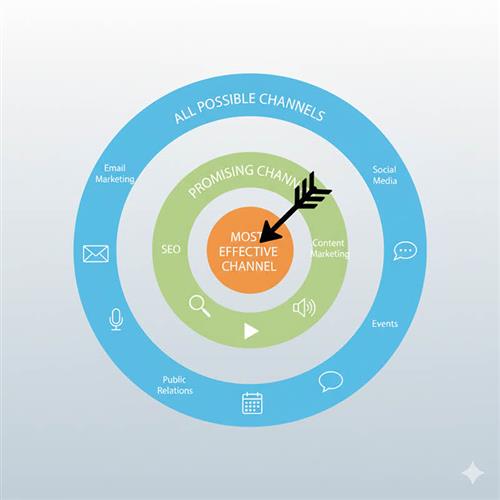
Integrating SMS with Salesforce has been a game-changer for organizations. In fact, organizations have started leveraging it as a marketing channel for reaching out to their customers in the quickest and most effective way. Besides sending bulk messages to their prospects and existing customers, businesses can keep track of their campaigns. Apart from this, this integration can assist businesses augment customer engagement, increase sales and optimize customer service.
What is the Significance of Using this Integration?
Customers usually keep their phones within their reach. So, they’re more likely to read your message. Unlike emails, such messages are less formal, which helps build a more personal connection with your audience. Listed below are some reasons why SMS integration can be a robust tool for any business:
- High Visibility: Text messages are more likely to be read by recipients unlike emails which usually tend to get buried in a crowded inbox. SMS messages are hard to ignore as they prompt immediate attention, whereas emails can be skipped over. This makes SMS appropriate for time-sensitive information. Moreover, with their concise format, messages are likely to be read and absorbed quickly. This makes it a perfect choice for busy people.
- Personalized and Instant: Capturing your attention of your audience can be challenging in today's world. SMS offers a direct and personal way to connect with people by delivering your message instantly. Since texts are delivered and opened instantly, recipients are able to connect with them easily. Additionally, SMS easily complements other channels, helping organizations build a more integrated marketing strategy. By cutting through the noise, SMS stands out from the competition.
- Tracking Campaigns: Tracking Campaigns: With a data-based approach, organizations can track performances, regulate strategies, and generate greater ROI. By aligning insights with the immediacy of SMS messaging, this integration makes this process seamless. With its fast response rate, and the ability to modify, SMS is a must-have tool, which every marketer should possess in their arsenal.
How to Draw Maximum Value Out of Salesforce SMS Integration?
After learning how to set up this integration, users should learn to make the most of this integration by following some simple tips:
- Keep Your Messages Concise: Keeping messages within the set limit enables users to reach and engage with customers quickly.
- Use Powerful Call-To-Actions: Make sure to make the call-to-action very convincing and detail what you expect out of your recipients.
- Segment Your Audience: A significant benefit of SMS marketing is the ability to segregate the contact list into segments. This ensures that every group receives tailored messages as per their interests. This ensures communication stays impactful.
Why Should Businesses Leverage Salesforce SMS Integration?
This integration offers a range of benefits for businesses by combining the power of Salesforce’s CRM capabilities with the urgency of text messaging. Listed below are few of them:
- Augmented Customer Engagement: One of the compelling benefits of an SMS for Salesforce App is its high open and reply rate. By leveraging such an App, businesses can engage with their customers in real time via reminders, updates and personalized offers.
- Real-Time Communication: The immediacy of text messages is the reason why it is preferred by businesses for sending messages that are time-sensitive, confirmation of appointments, urgent notifications, delivery updates and more.
- Personalization: Data stored in Salesforce can be used by businesses to personalize campaigns. This makes every message impactful and more appropriate.
- Workflow Efficiency: By integrating easily into Salesforce workflows, SMS can help organizations automate redundant tasks. This saves time and empowers businesses to communicate consistently.
- Optimized Lead Conversion: When SMS is implemented into Salesforce lead management, sales teams can respond to prospects, deliver updates, and foster strong relationships. This finally accelerates the sales cycle.
- Enhanced Customer Support: By using a Salesforce SMS App, support teams can offer quick verdicts, share updates in real-time, and send feedback. This not just streamlines communication but also decreases the work pressure on call centers, which augments overall customer satisfaction.
- Analytics and Tracking: Within Salesforce reports and dashboards, businesses can track the performance of SMS such as conversion rates. This assists in drawing smart insights to refine and augment communication strategies.
- Cost-efficiency: SMS is a reasonably priced and scalable alternative to outmoded channels such as phone calls. This generates strong ROI while ensuring low costs.
- Seamless Omnichannel Experience: SMS for Salesforce enable organizations to create a unified flow of communication across various channels. This ensures clients experience a consistent and connected experience.
- Gain an Edge: By leveraging SMS with Salesforce, businesses can deliver faster, personalized, and efficient communication. This provides them with an edge over counterparts who rely completely on phone and emails.
Final Words
Integrated into Salesforce with ease, these Apps provide hassle-free connectivity, allowing you to send and receive messages within the platform. Compared to other channels of communication, SMS continues to grow as a robust and powerful channel of communication. By incorporating Salesforce integrated SMS solutions into your marketing strategy, businesses can connect with their customers to drive business growth.
 Explore more on these topics


























 Guest Blogging: The Definitive Guide

 Top Trending Topics
 Share This
 Link copied!
 Recently Updated News