

The Hidden Risk of Talent Retention: Why Not Every High Performer Is Good for Your Organization
Last updated: September 26, 2025 Read in fullscreen view


 Recommended for you
- 01 Aug 2024
 The Standish Group report 83.9% of IT projects partially or completely fail 808/2630
 - 13 Apr 2024 Lessons on Teamwork and Leadership from Chinese story book "Journey to the West" 271/1363
- 13 Oct 2025 Mastering the Dynamic Squad Model: A Modern Approach to Agile Teams 216/430
- 02 Nov 2021 What is Terms of Reference (ToR)? 180/1758
- 18 Oct 2020 How to use the "Knowns" and "Unknowns" technique to manage assumptions 168/1263
- 23 Oct 2024 The Achilles Heel of Secure Software: When “Best-in-Class” Security Still Leads to System Collapse 146/197
- 19 Oct 2021 Software development life cycles 145/823
- 04 Oct 2021 Product Validation: The Key to Developing the Best Product Possible 134/442
- 13 Oct 2021 Outsourcing Software Development: MVP, Proof of Concept (POC) and Prototyping. Which is better? 130/608
- 23 Sep 2021 INFOGRAPHIC: Top 9 Software Outsourcing Mistakes 129/552
- 07 Oct 2025 Case Study: Using the “Messaging House” Framework to Build a Digital Transformation Roadmap 127/207
- 18 Aug 2022 What are the consequences of poor requirements with software development projects? 126/394
- 07 Dec 2023 12 project management myths to avoid 121/313
- 11 Jan 2024 What are the Benefits and Limitations of Augmented Intelligence? 120/606
- 13 Dec 2020 Move fast, fail fast, fail-safe 120/461
- 01 Oct 2020 Fail fast, learn faster with Agile methodology 119/1193
- 23 Jun 2024 Best Practices for Managing Project Escalations 119/324
- 28 Jul 2022 POC, Prototypes, Pilots and MVP: What Are the Differences? 116/858
- 06 Feb 2021 Why fail fast and learn fast? 116/594
- 12 Oct 2022 14 Common Reasons Software Projects Fail (And How To Avoid Them) 116/681
- 01 Mar 2024 10 Project Management Myths 114/288
- 12 Aug 2024 Understanding Google Analytics in Mumbai: A Beginner's Guide 112/219
- 02 May 2022 What Is RAID in Project Management? (With Pros and Cons) 110/963
- 03 Apr 2022 Microsoft Solutions Framework (MSF) 109/1453
- 12 Aug 2022 What is End-to-end project management? 102/610
- 14 Mar 2024 Why should you opt for software localization from a professional agency? 102/241
- 14 Oct 2021 Advantages and Disadvantages of Time and Material Contract (T&M) 99/997
- 12 Dec 2021 Zero Sum Games Agile vs. Waterfall Project Management Methods 98/512
- 03 Jan 2023 Organizing your agile teams? Think about M.A.T (Mastery, Autonomy, Purpose) 98/497
- 02 Nov 2022 Difference between Change Management and Project Management 98/330
- 19 Sep 2025 The Paradoxes of Scrum Events: When You “Follow the Ritual” but Lose the Value 98/143
- 31 Aug 2022 What are the best practices for software contract negotiations? 97/371
- 28 Dec 2021 8 types of pricing models in software development outsourcing 96/530
- 05 Sep 2023 The Cold Start Problem: How to Start and Scale Network Effects 95/293
- 05 Mar 2021 How do you minimize risks when you outsource software development? 93/426
- 17 Feb 2022 Prioritizing Software Requirements with Kano Analysis 90/394
- 09 May 2022 Build one to throw away vs Second-system effect: What are differences? 90/402
- 10 Apr 2024 The Parking Lot Method: Unlocking a Simple Secret to Supercharge Your Productivity 89/611
- 19 Oct 2021 Is gold plating good or bad in project management? 88/919
- 08 Oct 2022 KPI - The New Leadership 87/696
- 22 May 2022 What are common mistakes that new or inexperienced managers make? 85/366
- 06 Mar 2024 [SemRush] What Are LSI Keywords & Why They Don‘t Matter 85/287
- 01 Aug 2022 Is planning "set it and forget it" or "set it and check it"? 85/384
- 14 Jun 2022 Example and Excel template of a RACI chart in Software Development 84/958
- 10 Nov 2022 Poor Code Indicators and How to Improve Your Code? 84/301
- 17 Oct 2021 Does Fast Tracking increase project cost? 84/469
- 10 Dec 2023 Pain points of User Acceptance Testing (UAT) 83/544
- 18 Dec 2023 The Cone of Uncertainty in Scrum & Requirement Definition 82/818
- 01 Dec 2023 Laws of Project Management 80/395
- 18 Oct 2021 Key Elements to Ramping Up a Large Team 80/1342
- 12 Mar 2024 How do you create FOMO in software prospects? 78/252
- 07 Jul 2022 Managing Project Execution Terms 77/484
- 18 Feb 2026 "Hit and Run" Project Management: Balancing Speed with Sustainability 77/103
- 18 Jul 2021 How To Ramp Up An Offshore Software Development Team Quickly 76/668
- 01 Mar 2023 Bug Prioritization - What are the 5 levels of priority? 75/304
- 19 Apr 2021 7 Most Common Time-Wasters For Software Development 72/617
- 04 Oct 2022 Which ERP implementation strategy is right for your business? 71/432
- 01 May 2024 Warren Buffett’s Golden Rule for Digital Transformation: Avoiding Tech Overload 70/278
- 31 Oct 2021 Tips to Fail Fast With Outsourcing 70/461
- 27 Jan 2020 Should a project manager push developers to work more hours due to mistakes of manager schedule setting? 68/509
- 15 May 2022 20 Common Mistakes Made by New or Inexperienced Project Managers 67/350
- 02 Dec 2021 3 Ways to Avoid Scope Creep in IT Consulting 65/274
- 24 Nov 2023 The project management paradox: Achieving MORE by doing LESS 65/295
- 06 Jun 2022 Change Management at the Project Level 63/369
- 05 Jan 2024 Easy ASANA tips & tricks for you and your team 63/262
- 02 Jun 2024 Reviving Ancient Wisdom: The Spiritual Side of Project Management 63/327
- 05 Jun 2023 Fractional, Part-Time (virtual) or Interim CTO: Who Will Cover Your Business Needs? 63/206
- 20 Jul 2022 Software Myths and Realities 63/1005
- 28 Oct 2022 Build Operate Transfer (B.O.T) Model in Software Outsourcing 62/472
- 26 Sep 2024 Successful Project Management Techniques You Need to Look Out For 62/459
- 30 Nov 2023 Project Managers, Focus on Outcomes — Not Deliverables 61/222
- 26 Nov 2024 Harnessing Time Management Skills for Remote Team Effectiveness 60/281
- 13 Jan 2020 Quiz: Test your understanding project cost management 56/704
- 10 May 2022 Levels of Teamwork 55/250
- 26 Dec 2023 Improving Meeting Effectiveness Through the Six Thinking Hats 54/330
- 21 Jun 2024 Dead Horses and the Escalation of Commitment 51/190
- 06 Nov 2019 How to Access Software Project Size? 49/307
A Common Misconception in Management
Myth:“Top talent is the most valuable asset – we must retain them at all costs.”
In reality, being “talented” does not always mean being good for the organization.
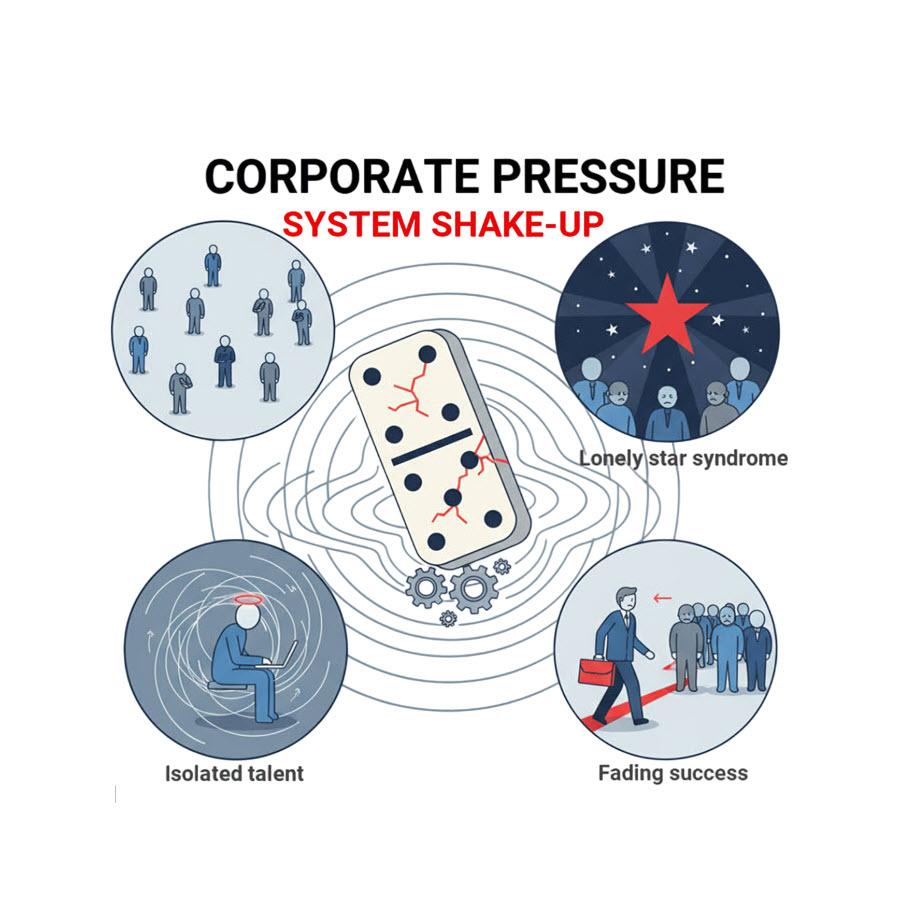
A single misaligned Domino piece — the bigger and heavier it is — the more it shakes the entire system.
Let’s take a closer look at three types of “high performers” that many leaders unknowingly hold on to, only to pay the price later:
1. Technically strong but lacking team spirit
They excel as individual contributors, solving problems quickly and flawlessly.
Yet, they fail to transfer knowledge, mentor others, or build connections.
They neither coach nor share, creating invisible walls around their expertise.
2. Exceptionally outstanding, but disrupting team balance
Their brilliance is so overwhelming that others feel overshadowed, hesitant to contribute.
Accustomed to the mindset: “I can do it faster alone”, they unintentionally diminish their teammates’ efforts.
The culture of “collaboration” gets replaced by “the best do it all.”
3. Highly capable but with weak organizational commitment
They deliver remarkable achievements, but their heart is not with the company.
When facing challenges, they withdraw; when tempted by better offers, they leave without hesitation.
Just as the organization begins to count on them, everything resets: new recruitment, onboarding, retraining.
Result: Loss of time, loss of trust, and loss of morale for those who remain. (employee turnover risk, disengagement ripple effect)
Conclusion
What leaders truly need are people who combine competence, commitment, and the ability to uplift the entire team.
A sustainable organization is not built on a few “bright stars,” but on a collective moving in the same direction, grounded in shared values.
In your current team, how many “talented but isolated” individuals do you have, and how many are “talented and collaborative”?
 Explore more on these topics



























 Guest Blogging: The Definitive Guide

 Top Trending Topics
 Share This
 Link copied!
 Recently Updated News