
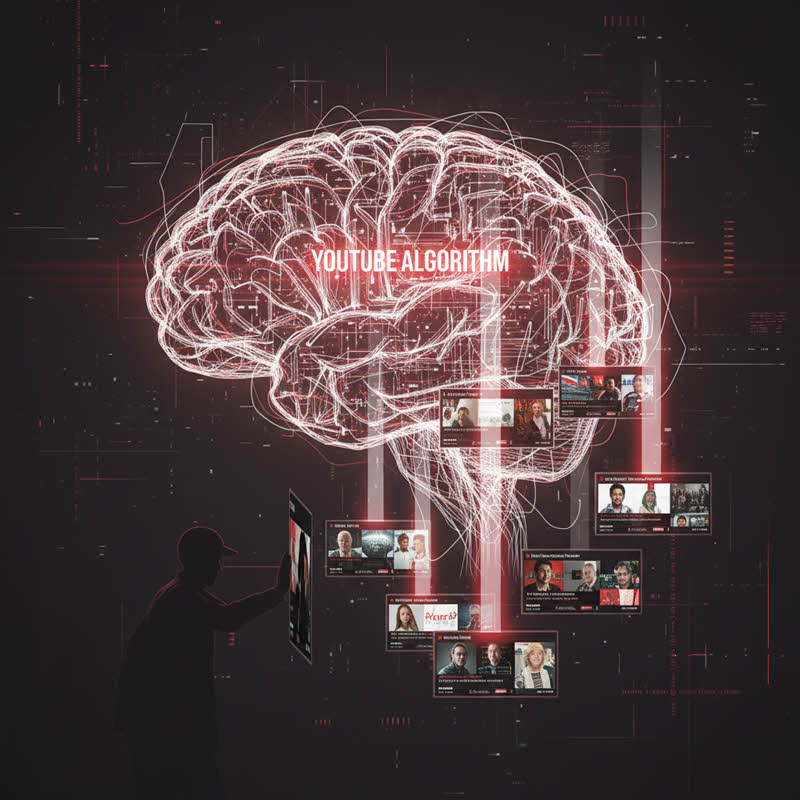
Why Doesn't YouTube Recommend Your Videos? Here's the Truth
Last updated: September 30, 2025 Read in fullscreen view


 Recommended for you
- 01 Jan 2026
 Youtube 2026 updates: 8 new features every creator should know 345/460
 - 12 Jan 2026 A-Roll, B-Roll, and Jump Cuts: Three Core Concepts Every Video Creator Must Understand 256/311
- 10 Sep 2024 Complete Green Screen Setup Guide for Webcam Creators 221/288
- 02 Oct 2025 The YouTube Algorithm Has Changed: Why Your Old Strategy No Longer Works in 2025 202/399
- 14 Jan 2026 Why YouTube Channels Like “Monkey Explained” Use a Monkey as a Recurring Character 196/229
- 18 Oct 2020 How to use the "Knowns" and "Unknowns" technique to manage assumptions 168/1263
- 01 Jun 2024 Top AI Video Tools for 2026 — Updated with 2025’s Quick Edit & Text-to-Video Trends 132/534
- 23 Sep 2021 INFOGRAPHIC: Top 9 Software Outsourcing Mistakes 129/552
- 18 Aug 2022 What are the consequences of poor requirements with software development projects? 126/394
- 12 Mar 2026 Beyond the Box: The Strategic Evolution of Unboxing Content in 2026 121/142
- 11 Jan 2024 What are the Benefits and Limitations of Augmented Intelligence? 120/606
- 13 Dec 2020 Move fast, fail fast, fail-safe 120/461
- 01 Oct 2020 Fail fast, learn faster with Agile methodology 119/1193
- 06 Feb 2021 Why fail fast and learn fast? 116/594
- 14 Mar 2024 Why should you opt for software localization from a professional agency? 102/241
- 14 Oct 2021 Advantages and Disadvantages of Time and Material Contract (T&M) 99/997
- 28 Dec 2021 8 types of pricing models in software development outsourcing 96/530
- 17 Feb 2022 Prioritizing Software Requirements with Kano Analysis 90/394
- 06 Jan 2025 How FlexClip AI Makes Video Editing Easier 89/269
- 19 Oct 2021 Is gold plating good or bad in project management? 88/919
- 08 Oct 2022 KPI - The New Leadership 87/696
- 10 Nov 2022 Poor Code Indicators and How to Improve Your Code? 84/301
- 10 Dec 2023 Pain points of User Acceptance Testing (UAT) 83/544
- 12 Mar 2024 How do you create FOMO in software prospects? 78/252
- 01 Mar 2023 Bug Prioritization - What are the 5 levels of priority? 75/304
- 19 Apr 2021 7 Most Common Time-Wasters For Software Development 72/617
- 31 Oct 2021 Tips to Fail Fast With Outsourcing 70/461
- 01 Jul 2025 Stop Wasting Content - Turn Long Videos into Viral Clips in Minutes 66/219
- 05 Jan 2024 Easy ASANA tips & tricks for you and your team 63/262
- 26 Dec 2023 Improving Meeting Effectiveness Through the Six Thinking Hats 54/330
- 06 Nov 2019 How to Access Software Project Size? 49/307
YouTube is not a classroom where you just memorize theories from online courses and expect success. It’s a fierce battleground—a playground that demands more than fancy content or big budgets. Winning here requires multiple skills: understanding the algorithm, optimizing titles and thumbnails, analyzing data, and reading audience behavior. Like a silent entrepreneur, you need tactics, strategy, and relentless persistence to push forward step by step, not luck or shortcuts.
The Pain of Being a YouTuber
Have you ever felt this?
You pour your heart and soul into a video:
- Well-structured script, high-quality content
- A thumbnail polished down to the last pixel
- Carefully researched titles, descriptions, and tags
And yet, after publishing:
- 10 hours later: just a few dozen views
- After one full day: only a few hundred views
- Then the video quietly disappears into oblivion
You start to wonder:
- Does YouTube “hate” small channels?
- Is my video being hidden or blocked from getting views?
The truth is: no video is “hated,” and no channel is personally blocked.
But yes—some videos never get recommended simply because they fail to meet the hidden signals that YouTube’s algorithm looks for.
The Core Principle of YouTube Recommendations
Here’s the first thing you need to understand:
- YouTube does not distribute views equally across all channels.
- The system only picks the most relevant videos for each user at the exact moment they come online.
- The single goal: keep people on YouTube as long as possible.
Key signals YouTube watches:
- Click-Through Rate (CTR): Do people actually click your title + thumbnail?
- Watch Time: How long do they stay? Do they finish or drop off early?
- Next Action: After watching, do they leave YouTube or continue with another video?
- User Satisfaction: Machine learning tracks if viewers are happy (through likes, shares, saves, etc.).
🔴If your video isn’t getting recommended, it means people in the first 24–48 hours didn’t respond well.
Part 1 – 4 Reasons Why Videos Don’t Get Recommended
1. Viewer Intent Mismatch
Example: You make a video called “How to Learn English Effectively in 2025.”
- Viewers expect quick, simple, practical tips.
- But your content is academic, lengthy, with few examples.
- Result: people leave after 10 seconds → low retention → poor rating from YouTube.
- Understand Viewer Intent (Do they want entertainment, quick hacks, or deep learning?).
- Make sure thumbnail + title match the actual content.
- If you promise “quick tips,” deliver within the first 30 seconds.
2. High CTR but Low Retention
- Your thumbnail is too tempting, so lots of people click.
- But the content fails to hold attention.
- Result: views drop sharply → distribution stops.
- Don’t “trick” viewers with misleading thumbnails.
- Reset attention every 30–60 seconds (cuts, examples, questions).
- Use curiosity-driven titles, but avoid extreme clickbait.
3. Failing the 24–48 Hour Test
- YouTube first shows your video to a small test audience.
- If they click, watch long, and interact → distribution expands.
- If they drop off and don’t engage → the video dies early.
- Publish during peak hours (check Analytics).
- Boost initial views via Facebook, Telegram, Discord, etc.
- Prepare and test thumbnail + title before uploading.
4. Lack of Semantic Signals
- Content too broad or unclear.
- Vague title, weak description, no keywords.
- Transcript lacks repetition of key terms.
- AI doesn’t know who to recommend the video to.
- State clearly in the first 15 seconds: “This video is for X audience, about Y topic.”
- Title, description, and tags must include clear topic keywords.
- Write a 300–500 word description with semantic keywords.
Part 2 – Hidden Signals & Quality Score
5. Internal Quality Score
YouTube has an invisible score you never see:
- Do viewers return to your channel?
- Do they share your videos?
- Do they continue watching more of your content?
- Do they save videos for later?
🟢 These “post-view” signals matter a lot.
6. Channel History Affects the Present
- If you’ve posted misleading, clickbait, or inconsistent content in the past…
- YouTube reduces your channel’s “trust profile.”
- Result: new videos struggle to get distributed, even if they’re high quality.
7. Missing Viewer Journey Design
YouTube isn’t just about making good videos. It’s about designing the journey:
- Compelling thumbnail → they click
- Opening matches expectations → they stay
- Tight script, no fluff → they watch until the end
- Smart video suggestions → they keep watching
- Depth of content → they return to your channel
🟢 Every step adds hidden “trust points” to your channel.
Conclusion: YouTube is Not Random Luck
If your videos aren’t recommended, it’s not punishment—it’s because:
- You misread viewer intent
- You failed to hold attention
- You didn’t pass the 24-hour test
- The algorithm couldn’t “understand” your video
- Your channel quality score is too low
Final Advice
YouTube isn’t about random creativity.
It’s about understanding people, the algorithm, and yourself.
You need consistency, patience, and strategy.
Once your system is built right, recommendations will come naturally—not by luck, but by design.
✅ YouTube SEO Checklist – Optimize Before & After Publishing
1. Research & Planning
- Define Viewer Intent (entertainment, quick tips, hacks).
- Pick a focused topic.
- List main + semantic keywords.
- Outline script to re-engage viewers every 30–60 sec.
2. Title
- Place main keyword at/near the start.
- Keep it short (60–70 characters).
- Be intriguing but not misleading.
- Use numbers, years, or emotional triggers.
3. Thumbnail
- High-contrast background.
- Bold text (3–5 words).
- Face, emotion, or memorable symbol.
- Avoid misleading clickbait.
4. Description
- 300–500 words.
- Repeat main keyword naturally 2–3 times.
- Add semantic/LSI keywords.
- Include CTA (“Subscribe,” “Watch next video”).
- Add timestamps.
5. Tags
- 1–2 main keywords.
- 5–10 related phrases (e.g., “YouTube algorithm 2025,” “why videos aren’t recommended”).
- Add GEO keywords for local targeting.
6. Script & Content
- First 15 seconds: state who it’s for + what value.
- Reset attention every 30–60 sec.
- Soft CTA inside video (subscribe, share).
- End with next video suggestion.
7. Technical SEO
- Filename includes keyword.
- Add captions/subtitles.
- Add hashtags (#YouTubeTips #SEO #GrowChannel).
8. Launch & Promotion
- Publish at peak time.
- Share on social media & groups.
- Add to playlist.
- Reply to comments within 24h.
9. Post-Publish Monitoring
- Track CTR, Watch Time, Retention.
- If CTR low → test new thumbnail/title.
- If Retention low → analyze drop-off chart.
- Update description + tags after 1 week.
10. Long-Term Channel Health
- Post consistently (weekly or bi-weekly).
- Build video series for watch-through.
- Track Returning Viewers, Shares, Saves.
- Avoid irrelevant or misleading uploads.
 Explore more on these topics





















 Guest Blogging: The Definitive Guide

 Top Trending Topics
 Share This
 Link copied!
 Recently Updated News