



Semantic SEO: How to Create a Glossary That Boosts Your Page to the Top Fast
Last updated: September 30, 2025 Read in fullscreen view


 Recommended for you
- 21 Sep 2023
 Abraham Wald and the Missing Bullet Holes 181/883
 - 18 Oct 2020 How to use the "Knowns" and "Unknowns" technique to manage assumptions 163/1257
- 19 Oct 2021 Software development life cycles 143/821
- 13 Oct 2021 Outsourcing Software Development: MVP, Proof of Concept (POC) and Prototyping. Which is better? 126/602
- 04 Oct 2021 Product Validation: The Key to Developing the Best Product Possible 122/430
- 07 Oct 2025 Case Study: Using the “Messaging House” Framework to Build a Digital Transformation Roadmap 121/200
- 19 Jan 2026 What are Niche Edits, and How Do They Affect SEO? 119/157
- 11 Jan 2024 What are the Benefits and Limitations of Augmented Intelligence? 119/605
- 13 Dec 2020 Move fast, fail fast, fail-safe 117/456
- 18 Aug 2022 What are the consequences of poor requirements with software development projects? 116/384
- 06 Feb 2021 Why fail fast and learn fast? 113/588
- 01 Oct 2020 Fail fast, learn faster with Agile methodology 112/1186
- 12 Oct 2022 14 Common Reasons Software Projects Fail (And How To Avoid Them) 108/673
- 12 Aug 2024 Understanding Google Analytics in Mumbai: A Beginner's Guide 106/213
- 19 Apr 2024 What is Skills-Based Approach & Why Does it Matter? 101/257
- 14 Mar 2024 Why should you opt for software localization from a professional agency? 100/239
- 28 Jul 2022 POC, Prototypes, Pilots and MVP: What Are the Differences? 100/840
- 23 Sep 2021 INFOGRAPHIC: Top 9 Software Outsourcing Mistakes 98/521
- 12 Dec 2021 Zero Sum Games Agile vs. Waterfall Project Management Methods 95/509
- 31 Aug 2022 What are the best practices for software contract negotiations? 95/366
- 14 Oct 2021 Advantages and Disadvantages of Time and Material Contract (T&M) 92/985
- 05 Sep 2023 The Cold Start Problem: How to Start and Scale Network Effects 91/288
- 05 Mar 2021 How do you minimize risks when you outsource software development? 86/419
- 28 Dec 2021 8 types of pricing models in software development outsourcing 86/520
- 08 Oct 2022 KPI - The New Leadership 85/692
- 05 Sep 2024 The Inverted Approach: A Guide to Identifying Software Risks with Reverse Brainstorming 83/341
- 09 Sep 2024 How AI Rewriting Can Improve Your Content’s SEO Performance 83/280
- 08 May 2024 Time Unlocked: Mastering the Pomodoro Technique Against Parkinson's Law 80/327
- 23 Sep 2024 5 best URL Shorteners to Elevate your SEO Strategy 79/284
- 06 Mar 2024 [SemRush] What Are LSI Keywords & Why They Don‘t Matter 79/281
- 10 Nov 2022 Poor Code Indicators and How to Improve Your Code? 79/296
- 01 Dec 2023 Laws of Project Management 78/393
- 19 Oct 2021 Is gold plating good or bad in project management? 78/909
- 10 Dec 2023 Pain points of User Acceptance Testing (UAT) 77/535
- 02 Nov 2023 Why Your Website’s Continuous Updates Aren’t Boosting Domain Authority 76/279
- 17 Feb 2022 Prioritizing Software Requirements with Kano Analysis 75/379
- 18 Jul 2021 How To Ramp Up An Offshore Software Development Team Quickly 73/665
- 19 Apr 2021 7 Most Common Time-Wasters For Software Development 72/617
- 04 Oct 2022 Which ERP implementation strategy is right for your business? 70/430
- 01 May 2024 Warren Buffett’s Golden Rule for Digital Transformation: Avoiding Tech Overload 69/277
- 01 Mar 2023 Bug Prioritization - What are the 5 levels of priority? 68/297
- 12 Mar 2024 How do you create FOMO in software prospects? 67/240
- 31 Oct 2021 Tips to Fail Fast With Outsourcing 65/456
- 05 Jan 2024 Easy ASANA tips & tricks for you and your team 60/258
- 26 Sep 2024 Successful Project Management Techniques You Need to Look Out For 57/454
- 28 Oct 2022 Build Operate Transfer (B.O.T) Model in Software Outsourcing 57/467
- 26 Dec 2023 Improving Meeting Effectiveness Through the Six Thinking Hats 53/329
- 06 Nov 2019 How to Access Software Project Size? 39/296
- 12 Sep 2024 Be Water, My Friend: Fluidity, Flow & Going With the Flow 28/197
In today’s highly competitive SEO landscape, simply “stuffing keywords” is no longer enough to make your content stand out. Instead, smart SEO professionals are turning to semantic keyword optimization and the use of glossary tables to enhance content value, boost visibility on Google, and improve the reader experience.
In this article, we will share best practices for creating effective glossary tables: from selecting terms and providing concise explanations to integrating internal links. You will learn how to turn a simple glossary into a powerful tool for driving traffic, keeping readers engaged, and optimizing SEO for in-depth content.
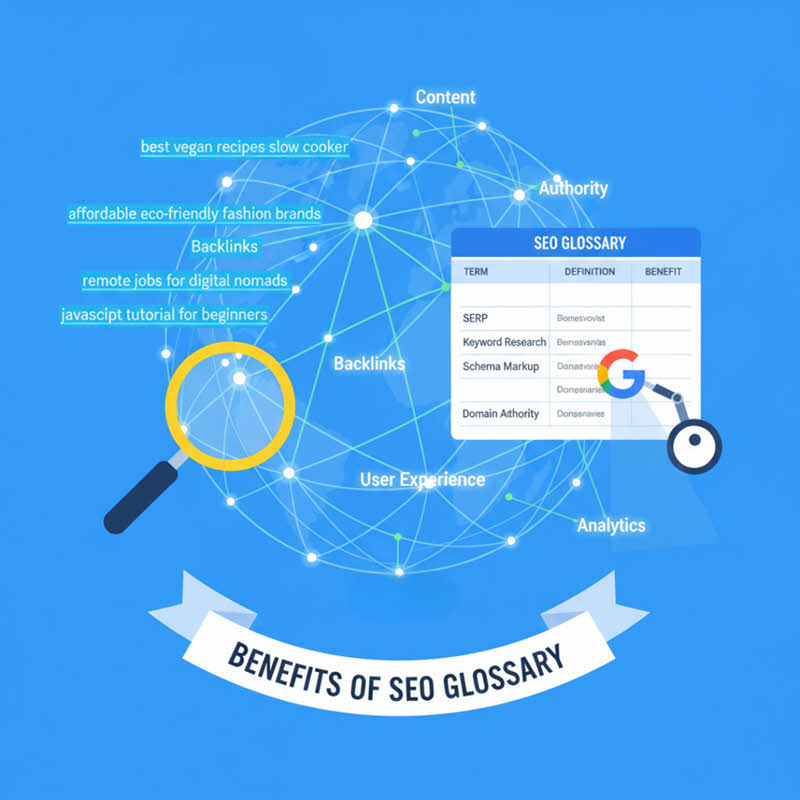
1. SEO Benefits (Organic Search)
Advantages:
- Increase semantic relevance: Google increasingly prioritizes understanding context and relationships between keywords. A well-structured glossary helps Google recognize your content as more authoritative and comprehensive.
- Improve long-tail keyword coverage: Including terms in a glossary allows your page to rank for more related long-tail queries.
- Structured content signals: Glossary tables are a form of structured content, making it easier for Google to understand and index information.
Disadvantages / Risks:
- Keyword stuffing: If a glossary is merely a long list of keywords without context, Google may downgrade the content quality.
- Thin content risk: Glossaries without explanations or context add little value for readers, potentially harming page experience and time on page.
- Not a substitute for quality content: Effective SEO still relies on engaging content that solves user problems. Glossaries are supportive tools, not the main driver.
2. Reader Experience
- Quick understanding: A glossary with concise explanations and illustrative examples increases value and keeps readers engaged longer.
- Optimized UX: Industry-specific readers appreciate detailed glossaries, while general audiences may feel overwhelmed if it is too long or technical.
- Internal linking potential: Each term can link to detailed articles, improving internal linking, helping Google crawl your site better, and boosting traffic.
3. How to Do It Effectively
If you want your glossary to truly enhance SEO, follow these recommendations:
- Explain each term rather than just listing: Increases user engagement and reading time.
- Use proper HTML formatting:
<table>or<dl>(definition list) allows Google to recognize it as a glossary. - Internal linking: Link each term to relevant in-depth articles.
- Optimize UX: For long glossaries, add collapse/expand functionality to avoid overwhelming readers.
- Choose terms wisely: Prioritize long-tail, semantic, or trending keywords in your niche.
4. Sample Glossary
A sample SEO-friendly glossary that is both Google-optimized and reader-friendly may include:
- Term: Can optionally include an internal link to a detailed article.
- Definition: A short, clear explanation.
- Example or context (Optional)
| Term | Definition | Example / Context |
|---|---|---|
| Keyword Research | The process of researching and selecting suitable keywords for your content. | Example: Using Google Keyword Planner to find long-tail keywords. |
| On-page SEO | Optimizing content, titles, meta descriptions, and page structure to improve ranking. | Example: Optimizing H1/H2 tags and naturally including related keywords. |
| Backlink | Links from other websites pointing to your page to increase authority. | Example: Guest posts, sharing articles on industry forums. |
| Semantic Keywords | Keywords related semantically to help Google better understand the topic. | Example: “Digital marketing” can be associated with “SEO” and “content marketing.” |
Conclusion
- Glossary tables can boost keyword visibility and semantic SEO when done correctly.
- Their greatest value lies in helping both readers and Google better understand the content—not in “keyword stuffing.”
- This approach also enhances internal linking, indirectly improving traffic and reader experience.
 Explore more on these topics



























 Guest Blogging: The Definitive Guide

 Top Trending Topics
 Share This
 Link copied!
 Recently Updated News