


Virtual Data Rooms for Enterprises: The Secure Backbone of Modern Deals
Last updated: October 18, 2025 Read in fullscreen view


 Recommended for you
- 17 Jul 2023
 What Is SSL? A Simple Explanation Even a 10-Year-Old Can Understand 183/278
 - 20 Mar 2022 What is a Multi-Model Database? Pros and Cons? 167/1391
- 18 Oct 2020 How to use the "Knowns" and "Unknowns" technique to manage assumptions 163/1257
- 05 Jul 2020 What is Sustaining Software Engineering? 123/1468
- 13 Nov 2021 What Is Bleeding Edge Technology? Are bleeding edge technologies cheaper? 122/690
- 03 Jul 2022 What is the difference between Project Proposal and Software Requirements Specification (SRS) in software engineering? 121/1162
- 11 Jan 2024 What are the Benefits and Limitations of Augmented Intelligence? 119/605
- 13 Dec 2020 Move fast, fail fast, fail-safe 117/456
- 18 Aug 2022 What are the consequences of poor requirements with software development projects? 116/384
- 06 Feb 2021 Why fail fast and learn fast? 113/588
- 01 Oct 2020 Fail fast, learn faster with Agile methodology 112/1186
- 03 Jan 2026 The Hidden Rules of IT Project Tendering: Laws, Principles, and Caveats You Must Know 112/134
- 22 Sep 2022 Why is it important to have a “single point of contact (SPoC)” on an IT project? 101/1092
- 14 Mar 2024 Why should you opt for software localization from a professional agency? 100/239
- 23 Sep 2021 INFOGRAPHIC: Top 9 Software Outsourcing Mistakes 98/521
- 30 Jan 2022 What Does a Sustaining Engineer Do? 94/729
- 10 Apr 2022 What is predictive analytics? Why it matters? 94/275
- 14 Oct 2021 Advantages and Disadvantages of Time and Material Contract (T&M) 92/985
- 31 Dec 2021 What is a Data Pipeline? 91/296
- 25 Apr 2021 What is outstaffing? 86/356
- 28 Dec 2021 8 types of pricing models in software development outsourcing 86/520
- 08 Oct 2022 KPI - The New Leadership 85/692
- 10 Nov 2022 Poor Code Indicators and How to Improve Your Code? 79/296
- 19 Oct 2021 Is gold plating good or bad in project management? 78/909
- 01 Mar 2023 What is Unit Testing? Pros and cons of Unit Testing? 77/503
- 10 Dec 2023 Pain points of User Acceptance Testing (UAT) 77/535
- 13 Jan 2024 The “Rule of Law” in Software Projects: Engineering Principles That Govern Successful Development 76/98
- 17 Feb 2022 Prioritizing Software Requirements with Kano Analysis 75/379
- 19 Apr 2021 7 Most Common Time-Wasters For Software Development 72/617
- 01 Mar 2023 Bug Prioritization - What are the 5 levels of priority? 68/297
- 12 Mar 2024 How do you create FOMO in software prospects? 67/240
- 31 Oct 2021 Tips to Fail Fast With Outsourcing 65/456
- 05 Jan 2024 Easy ASANA tips & tricks for you and your team 60/258
- 26 Dec 2023 Improving Meeting Effectiveness Through the Six Thinking Hats 53/329
- 06 Nov 2019 How to Access Software Project Size? 39/296
In today’s deal-driven world, secure collaboration is non-negotiable. Whether you’re managing an M&A deal, investor due diligence, or internal audits, data protection can make—or break—trust.
That’s why Virtual Data Rooms (VDRs) have become the go-to solution for enterprises to securely share, track, and control access to sensitive documents.
Unlike regular cloud drives, VDRs are built for enterprise-grade security, compliance, and speed.
1. What Is a Virtual Data Room (VDR)?
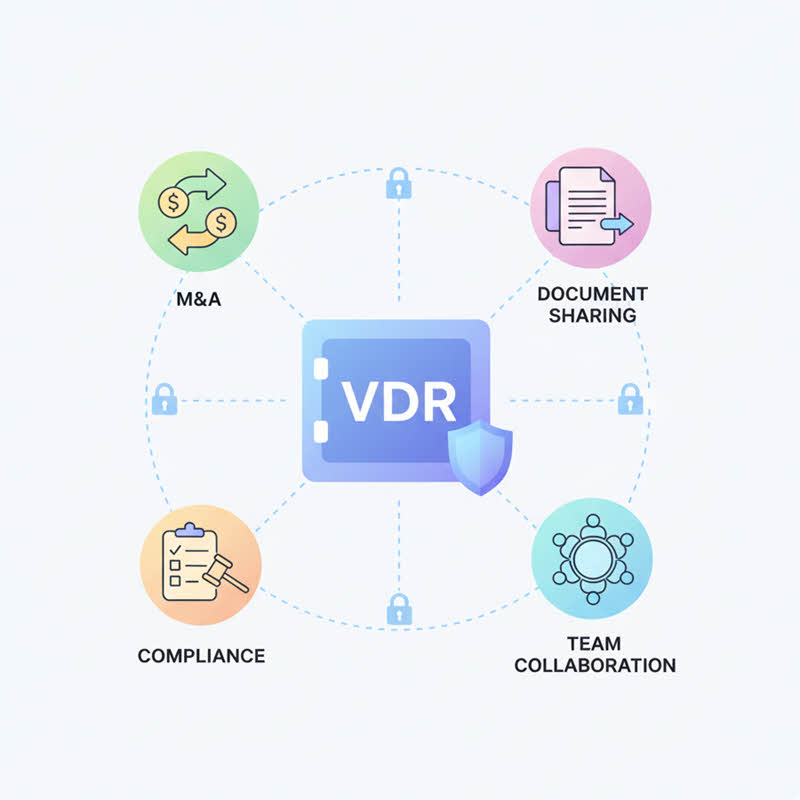
A Virtual Data Room (VDR) is a secure online repository used to store, share, and manage confidential documents during high-stakes business processes - such as mergers and acquisitions (M&A), fundraising, audits, and contract negotiations.
Unlike traditional cloud storage, a VDR provides bank-grade encryption, granular access control, and detailed activity tracking, ensuring that only authorized users can view or download sensitive files.
2. Why Enterprises Need Virtual Data Rooms
Enterprises handle massive volumes of confidential information—financial statements, intellectual property, client contracts, and internal reports. Using standard cloud drives (like Google Drive or Dropbox) might be convenient, but not compliant with enterprise-grade security or due diligence requirements.
Here’s why more companies are turning to VDRs:
- 🔒 Enhanced Security: End-to-end encryption, multi-factor authentication, and user permission management.
- 🧩 Compliance & Audit Trails: Meet regulations such as GDPR, HIPAA, or SOC 2 with automatic document logging.
- 🤝 Efficient Collaboration: Enable internal teams, investors, and third parties to work together without risking data leaks.
- ⚡ Faster Deal Execution: Simplify due diligence by granting instant access to relevant files instead of endless email exchanges.
3. Key Features to Look For in a VDR Solution
When selecting a VDR for enterprise use, consider the following capabilities:
| Feature | Description |
|---|---|
| Granular User Permissions | Control who can view, download, or edit each document. |
| Watermarking & DRM | Prevent unauthorized distribution or screenshots. |
| Audit Logs | Track every access and activity for legal compliance. |
| AI-Powered Search | Quickly locate specific data across thousands of documents. |
| Integration | Connect with ERP, CRM, or workflow automation tools. |
4. Enterprise Use Cases of Virtual Data Rooms
- Mergers & Acquisitions (M&A): Centralize due diligence documents and streamline investor access.
- Fundraising & IPO Preparation: Securely share financial data with potential investors.
- Legal and Compliance Reviews: Maintain traceable access to sensitive contracts and regulatory files.
- Partnership Negotiations: Exchange confidential information across teams and organizations efficiently.
5. How VDRs Support Digital Transformation
In a digital-first world, data is the lifeblood of every enterprise. VDRs act as a trust layer between stakeholders, bridging security and collaboration.
Modern VDRs even integrate with AI tools to automate document classification, redaction, and sentiment analysis—reducing manual workloads and improving accuracy.
6. Choosing the Right Vendor
When evaluating VDR providers such as Intralinks focus on these criteria:
- Security certifications (ISO 27001, SOC 2 Type II)
- Global data centers and uptime SLAs
- Customer support and onboarding assistance
- Scalability for enterprise document volumes
There are many providers such as ShareVault, Datasite, SecureDocs, Firmex, iDeals VDR, Citrix ShareFile, Ansarada, Intralinks, and others. You can refer to the detailed comparison table below for more information.
Top Global Virtual Data Room (VDR) Providers for Enterprises
| Provider | Country of Origin | Description |
|---|---|---|
| iDeals | United Kingdom | A leading global VDR solution designed for M&A, fundraising, and due diligence. Known for its intuitive UI and strong data protection standards. |
| Intralinks | United States | One of the oldest and most trusted enterprise-grade VDR providers. Widely used in complex global transactions and financial institutions. |
| Datasite (formerly Merrill DatasiteOne) | United States | Enterprise-focused VDR platform tailored for large-scale M&A, IPOs, and corporate restructuring with AI-powered analytics and reporting tools. |
| Ansarada | Australia | AI-enhanced VDR built to simplify deal preparation, due diligence, and compliance with smart insights and risk analysis tools. |
| Firmex | Canada | Popular among mid-sized companies for secure due diligence, compliance, and internal data management. Offers flexible pricing and strong support. |
| ShareVault | United States | Trusted by Fortune 500 firms for secure document sharing and audit trails. Specializes in M&A, licensing, and clinical trials. ISO 27001 certified. |
| SecureDocs | United States | Simple, affordable VDR platform focusing on startups and SMBs. Known for transparent pricing, quick setup, and built-in audit logs. |
| Citrix ShareFile | United States | Originally a secure file-sharing platform by Citrix, now includes VDR functionality for enterprise collaboration and compliance management. |
-
Security:
Prioritize robust security measures such as end-to-end encryption, granular access controls, and comprehensive data protection mechanisms to safeguard sensitive business information. -
User Interface:
Choose a platform with an intuitive, clean, and responsive interface. A well-designed UI minimizes user frustration and reduces the learning curve for both internal teams and external partners. -
Collaboration Tools:
Ensure the VDR supports seamless communication and document collaboration features—like real-time commenting, version control, and task tracking—to streamline teamwork across departments and stakeholders. -
Customization:
Opt for solutions that allow visual and functional customization. Being able to apply your company’s branding and workflow preferences reinforces professionalism and improves user engagement. -
Pricing:
Evaluate different pricing models (subscription, per-user, or per-project) to ensure scalability and cost-effectiveness. Align the chosen plan with your organization’s budget and expected usage volume. -
Support and Training:
Reliable customer support and accessible training resources are crucial for a smooth onboarding experience. Check whether the provider offers multilingual assistance, onboarding sessions, and detailed documentation. -
Training Adaptability & Cultural Fit:
Assess how easily your team can be trained to use the VDR platform and how well it aligns with your organization’s existing workflows, digital maturity, and working habits. A platform that adapts to your corporate culture—not the other way around—will ensure higher adoption rates and long-term productivity.
7. Final Thoughts
A Virtual Data Room isn’t just a secure file storage system—it’s a strategic asset for enterprises aiming to accelerate deals, strengthen compliance, and protect their digital assets.
In a business environment where trust equals value, implementing a robust VDR platform is no longer optional—it’s essential.
 Explore more on these topics






















 Guest Blogging: The Definitive Guide

 Top Trending Topics
 Share This
 Link copied!
 Recently Updated News