




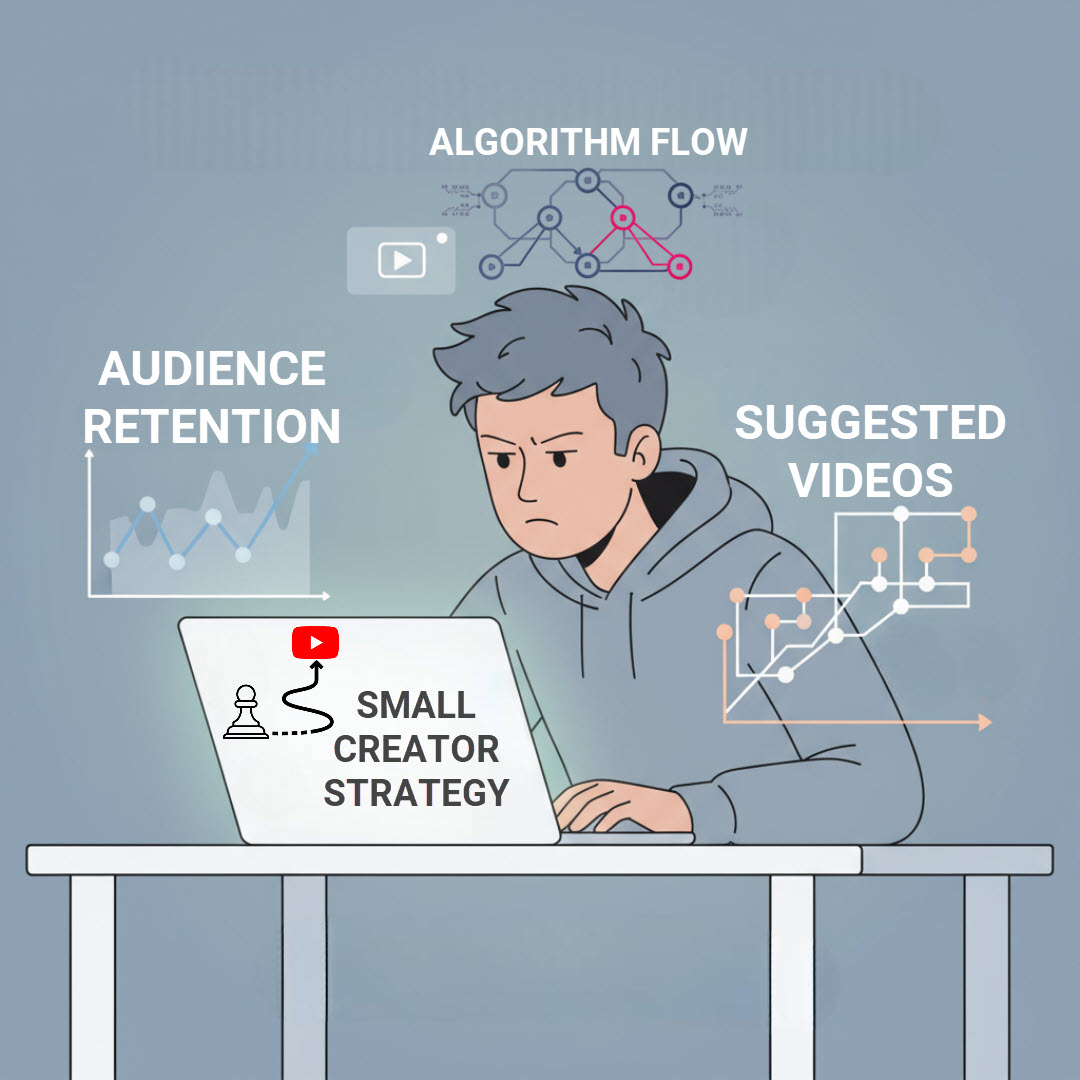
The YouTube Algorithm Has Changed: Why Your Old Strategy No Longer Works in 2025
Last updated: October 16, 2025 Read in fullscreen view


 Recommended for you
- 01 Jan 2026
 Youtube 2026 updates: 8 new features every creator should know 345/460
 - 05 Oct 2025 The New Facebook Algorithm: A Paradigm Shift in Content Discovery 294/356
- 12 Jan 2026 A-Roll, B-Roll, and Jump Cuts: Three Core Concepts Every Video Creator Must Understand 256/311
- 10 Sep 2024 Complete Green Screen Setup Guide for Webcam Creators 221/288
- 21 Dec 2023 Top 12 Low-Code Platforms To Use in 2024 221/1520
- 14 Jan 2026 Why YouTube Channels Like “Monkey Explained” Use a Monkey as a Recurring Character 196/229
- 31 Dec 2025 10 Skills to Make You "Irreplaceable" in the Next 3 Years (even if AI changes everything) 169/203
- 18 Oct 2020 How to use the "Knowns" and "Unknowns" technique to manage assumptions 168/1263
- 25 Mar 2026 Token Bills: The "Cost Shock" After the AI Boom in Companies 167/190
- 03 Oct 2025 Top CMS Trends 2026: The Future of Digital Content Management 166/199
- 20 Dec 2025 The Future of IT Consulting: Key Trends for 2026–2030 163/206
- 26 Mar 2026 What Is a System Integrator (SI)? Why the Software Subscription Model Is Becoming the New Standard 151/185
- 19 Oct 2021 Software development life cycles 145/823
- 18 Jul 2024 The 8 Best ways to Innovate your SAAS Business Model in 2024 137/392
- 04 Oct 2021 Product Validation: The Key to Developing the Best Product Possible 134/442
- 01 Jun 2024 Top AI Video Tools for 2026 — Updated with 2025’s Quick Edit & Text-to-Video Trends 132/534
- 13 Oct 2021 Outsourcing Software Development: MVP, Proof of Concept (POC) and Prototyping. Which is better? 130/608
- 23 Sep 2021 INFOGRAPHIC: Top 9 Software Outsourcing Mistakes 129/552
- 07 Oct 2025 Case Study: Using the “Messaging House” Framework to Build a Digital Transformation Roadmap 127/207
- 18 Aug 2022 What are the consequences of poor requirements with software development projects? 126/394
- 12 Mar 2026 Beyond the Box: The Strategic Evolution of Unboxing Content in 2026 121/142
- 13 Dec 2020 Move fast, fail fast, fail-safe 120/461
- 11 Jan 2024 What are the Benefits and Limitations of Augmented Intelligence? 120/606
- 01 Oct 2020 Fail fast, learn faster with Agile methodology 119/1193
- 04 Mar 2026 CRM Trends Shaping Customer Engagement in 2026 117/148
- 06 Feb 2021 Why fail fast and learn fast? 116/594
- 12 Oct 2022 14 Common Reasons Software Projects Fail (And How To Avoid Them) 116/681
- 28 Jul 2022 POC, Prototypes, Pilots and MVP: What Are the Differences? 116/858
- 20 Feb 2025 How Machine Learning is Shaping the Future of Digital Advertising 116/238
- 16 Aug 2022 What is a Headless CMS? 113/399
- 12 Aug 2024 Understanding Google Analytics in Mumbai: A Beginner's Guide 112/219
- 27 Jul 2024 Positive Psychology in the Digital Age: Future Directions and Technologies 110/539
- 02 Dec 2024 The Intersection of AI and Business Analytics: Key Concepts to Master in Your Business Analytics Course 105/400
- 14 Mar 2024 Why should you opt for software localization from a professional agency? 102/241
- 03 Jan 2024 Why Partnership is important for Growth? 102/260
- 16 Sep 2022 Examples Of Augmented Intelligence In Today’s Workplaces Shaping the Business as Usual 99/536
- 14 Oct 2021 Advantages and Disadvantages of Time and Material Contract (T&M) 99/997
- 12 Dec 2021 Zero Sum Games Agile vs. Waterfall Project Management Methods 98/512
- 11 Oct 2022 Why choose Billable Viable Product (BVP) over Minimum Viable Product (MVP) 98/440
- 31 Aug 2022 What are the best practices for software contract negotiations? 97/371
- 28 Dec 2021 8 types of pricing models in software development outsourcing 96/530
- 18 Jan 2024 Self-healing code is the future of software development 96/313
- 05 Sep 2023 The Cold Start Problem: How to Start and Scale Network Effects 95/293
- 25 Sep 2024 Enhancing Decision-Making Skills with an MBA: Data-Driven Approaches for Business Growth 95/302
- 20 Aug 2025 What Is Agentic AI? The Next Phase of Artificial Intelligence 95/255
- 23 Jun 2025 AI Avatars in the Metaverse: How Digital Beings Are Redefining Identity and Social Interaction 94/281
- 25 Jan 2025 The Decline of Traditional SaaS and the Rise of AI-first Applications 93/198
- 05 Mar 2021 How do you minimize risks when you outsource software development? 93/426
- 17 Feb 2022 Prioritizing Software Requirements with Kano Analysis 90/394
- 06 Jan 2025 How FlexClip AI Makes Video Editing Easier 89/269
- 30 Jul 2024 The Future of IT Consulting: Trends and Opportunities 88/300
- 19 Oct 2021 Is gold plating good or bad in project management? 88/919
- 08 Oct 2022 KPI - The New Leadership 87/696
- 31 Dec 2023 Software Development Outsourcing Trends to Watch Out for in 2024 86/316
- 06 Mar 2024 [SemRush] What Are LSI Keywords & Why They Don‘t Matter 85/287
- 10 Nov 2022 Poor Code Indicators and How to Improve Your Code? 84/301
- 10 Dec 2023 Pain points of User Acceptance Testing (UAT) 83/544
- 22 Nov 2024 The Role of AI in Enhancing Business Efficiency and Decision-Making 81/276
- 01 Dec 2023 Laws of Project Management 80/395
- 03 Nov 2023 Why Is Billable Viable Product An Alternative To Minimum Viable Product? 79/270
- 18 Aug 2024 The Future of Web Development: Emerging Trends and Technologies Every Developer Should Know 79/274
- 12 Mar 2024 How do you create FOMO in software prospects? 78/252
- 10 Sep 2024 Leading Remote Teams in Hybrid Work Environments 76/220
- 31 Dec 2022 The New Normal for Software Development 76/429
- 18 Jul 2021 How To Ramp Up An Offshore Software Development Team Quickly 76/668
- 01 Mar 2023 Bug Prioritization - What are the 5 levels of priority? 75/304
- 19 Dec 2023 How AI is Transforming Software Development? 74/367
- 27 Feb 2025 How AI Agents are Changing Software Development? 74/312
- 19 Apr 2021 7 Most Common Time-Wasters For Software Development 72/617
- 04 Oct 2022 Which ERP implementation strategy is right for your business? 71/432
- 31 Oct 2021 Tips to Fail Fast With Outsourcing 70/461
- 01 May 2024 Warren Buffett’s Golden Rule for Digital Transformation: Avoiding Tech Overload 70/278
- 09 Oct 2024 Short-Form Video Advertising: The Secret to Captivating Your Audience 69/201
- 01 Jul 2025 Stop Wasting Content - Turn Long Videos into Viral Clips in Minutes 66/220
- 05 Jan 2024 Easy ASANA tips & tricks for you and your team 63/262
- 28 Oct 2022 Build Operate Transfer (B.O.T) Model in Software Outsourcing 62/472
- 10 Sep 2024 AI in Email Marketing: Personalization and Automation 58/235
- 26 Dec 2023 Improving Meeting Effectiveness Through the Six Thinking Hats 54/330
- 06 Nov 2019 How to Access Software Project Size? 49/307
- 31 Dec 2022 Future of Software Development Trends and Predictions 48/199
If you’ve ever spent 20 hours making a video that barely gets 100 views, while other creators blow up with content that looks effortless — you’re not alone.
It’s not because your videos are bad. It’s because YouTube’s algorithm has changed, and most creators are still playing by 2022 rules in a YouTube growth 2025 world.
This article breaks down what’s really happening, how the algorithm treats small creators today, and a small creator strategy that’s helping channels grow consistently — even in a platform flooded with AI-generated videos.
1. Why the Old YouTube Advice No Longer Works
Most of the YouTube tips floating around are based on how the platform worked years ago — when search was a major discovery tool and information alone was enough to grow a channel.
That era is over.
- YouTube Search used to drive 30% of discovery.
- Today, it’s closer to 5%.
People no longer find your videos by typing low competition keywords. Instead, they see your content through the video suggestions feed or while scrolling their homepage.
Think about your own habits: When was the last time you searched for something on YouTube? Most of your watching comes from recommendations and suggested videos, not search results.
That’s where the game is played now.
2. Competing on the Homepage: The New Battlefield
When your video appears on someone’s homepage, it’s sitting next to channels with millions of subscribers — creators your audience already loves and trusts.
That means:
- Your thumbnail must grab attention mid-scroll.
- Your title must create curiosity strong enough to beat the video beside it.
You’re not competing for keywords anymore. You’re competing for attention.
This is where YouTube thumbnail tricks and YouTube hook tips make all the difference. A scroll-stopping thumbnail and a powerful opening hook can determine whether someone chooses your video or skips it completely.
3. The Flood of AI Content (and Why Tutorials Are Dying)
AI has completely changed the content landscape. The amount of video uploaded to YouTube will triple in the next five years.
If your channel only shares information — tutorials, explainers, or list videos — you’re being replaced.
Knowledge is no longer scarce. Anyone can ask AI for personalized advice at 4 a.m.
So the question becomes:
How do you stand out when knowledge isn’t rare anymore?
The answer lies in who you are, not what you teach. Viewers now follow creators for personality, storytelling, and emotional connection — not just for facts.
4. The Algorithm Is Running Experiments — Not Ignoring You
Here’s what most small creators miss:
When your video suddenly gets more views — say, 500 instead of your usual 50 — that’s not random luck.
That’s the algorithm running an experiment.
It gives your video extra impressions, watches how people respond, then pauses to process the data.
If you post another video with a similar topic and tone, the algorithm picks up where it left off.
If you switch from “gaming” to “cooking,” it gets confused — and resets your progress.
That’s why audience consistency matters more than ever. You’re not just uploading videos — you’re training the algorithm to understand who your content is for.
The key to sustainable YouTube content momentum is to build familiarity and predictability for both your audience and the algorithm.
5. What the Algorithm Actually Cares About
Forget clickbait. Forget keyword stuffing.
In 2025, retention optimization is everything.
YouTube’s latest A/B testing focuses on how long people stay, not just whether they click.
Here’s how retention works step by step:
- Thumbnail – must stop the scroll.
- Title – must build curiosity and promise value.
- Hook (first 30 seconds) – must confirm that promise.
- Delivery – must keep that promise throughout.
If any of these fail, the viewer leaves — and the algorithm notices.
You don’t need perfection. You just need to be good enough not to be dismissed.
Each element only needs to work well enough to lead viewers to the next.
Do this repeatedly, and you’ll reach what I call escape velocity — the point where YouTube starts promoting your content regularly instead of randomly.
6. The “Valley of Death” Phase: Why Most Creators Quit
Every creator experiences the Valley of Death — the silent period between algorithm tests.
You upload. You wait. Nothing happens.
This doesn’t mean failure. It often means YouTube is still processing your data.
Use this time wisely:
- Create your next videos.
- Study retention graphs.
- Analyze your weak hooks and titles.
Most creators give up here. The ones who make it treat the waiting as training time, not wasted time.
7. How to Become the Algorithm’s Favorite Type of Small Creator
It all comes down to three key elements working together:
-
Predictable Audience
– Serve the same type of viewer consistently.
– Help the algorithm recognize who loves your content. -
Consistent Value Delivery
– Be known for one kind of value: education, entertainment, or inspiration.
– Don’t confuse the system by jumping across niches. -
Retention Optimization
– Focus on keeping viewers until the end.
– The longer they stay, the more valuable you become to YouTube.
Creators who master these three — across 20–30 videos — stop being treated like experiments.
They become trusted sources of engagement for a specific audience.
That’s when true YouTube content momentum begins.
8. The Game Has Changed — But You Can Still Win
The 2025 YouTube algorithm isn’t your enemy. It’s just different.
It rewards creators who are:
- Consistent
- Focused
- Retention-driven
You don’t need viral luck.
You need strategic momentum — a repeatable small creator strategy that helps the algorithm understand your audience, your value, and your promise.
You’ll still fail sometimes. You’ll have flops. That’s part of the process.
But the creators who succeed understand this truth:
The game has changed.
That doesn’t mean you can’t win.
You just need to understand the algorithm changes YouTube has gone through — and play accordingly.
 Explore more on these topics





























 Guest Blogging: The Definitive Guide

 Top Trending Topics
 Share This
 Link copied!
 Recently Updated News