

Why is it important to have a “single point of contact (SPoC)” on an IT project?
Last updated: November 22, 2022 Read in fullscreen view


 Recommended for you
- 01 Aug 2024
 The Standish Group report 83.9% of IT projects partially or completely fail 795/2615
 - 13 Apr 2024 Lessons on Teamwork and Leadership from Chinese story book "Journey to the West" 262/1350
- 17 Jul 2023 What Is SSL? A Simple Explanation Even a 10-Year-Old Can Understand 190/285
- 02 Nov 2021 What is Terms of Reference (ToR)? 177/1755
- 20 Mar 2022 What is a Multi-Model Database? Pros and Cons? 171/1397
- 18 Oct 2020 How to use the "Knowns" and "Unknowns" technique to manage assumptions 167/1261
- 30 Oct 2022 How Much Does MVP Development Cost in 2023? 156/417
- 09 Jan 2022 How to Bridge the Gap Between Business and IT? 152/355
- 01 Sep 2022 Facts Chart: Why Do Software Projects Fail? 130/725
- 03 Jul 2022 What is the difference between Project Proposal and Software Requirements Specification (SRS) in software engineering? 128/1169
- 05 Jul 2020 What is Sustaining Software Engineering? 126/1471
- 13 Nov 2021 What Is Bleeding Edge Technology? Are bleeding edge technologies cheaper? 126/694
- 23 Sep 2021 INFOGRAPHIC: Top 9 Software Outsourcing Mistakes 125/548
- 18 Aug 2022 What are the consequences of poor requirements with software development projects? 122/390
- 11 Jan 2024 What are the Benefits and Limitations of Augmented Intelligence? 119/605
- 13 Dec 2020 Move fast, fail fast, fail-safe 119/460
- 23 Jun 2024 Best Practices for Managing Project Escalations 118/323
- 06 Feb 2021 Why fail fast and learn fast? 116/592
- 01 Oct 2020 Fail fast, learn faster with Agile methodology 115/1189
- 10 Apr 2021 RFP vs POC: Why the proof of concept is replacing the request for proposal 115/442
- 01 Mar 2024 10 Project Management Myths 109/283
- 02 May 2022 What Is RAID in Project Management? (With Pros and Cons) 107/954
- 03 Apr 2022 Microsoft Solutions Framework (MSF) 103/1446
- 14 Mar 2024 Why should you opt for software localization from a professional agency? 102/241
- 12 Aug 2022 What is End-to-end project management? 102/609
- 07 Jul 2021 The 5 Levels of IT Help Desk Support 102/578
- 30 Jan 2022 What Does a Sustaining Engineer Do? 99/734
- 10 Apr 2022 What is predictive analytics? Why it matters? 99/280
- 16 Feb 2021 Choose Outsourcing for Your Non Disclosure Agreement (NDA) 98/268
- 08 Nov 2022 4 tips for meeting tough deadlines when outsourcing projects to software vendor 98/388
- 14 Oct 2021 Advantages and Disadvantages of Time and Material Contract (T&M) 98/992
- 03 Dec 2025 IT Outsourcing Solutions Explained: What, How, Why, When 98/130
- 03 Jan 2023 Organizing your agile teams? Think about M.A.T (Mastery, Autonomy, Purpose) 97/494
- 02 Nov 2022 Difference between Change Management and Project Management 94/326
- 31 Dec 2021 What is a Data Pipeline? 93/298
- 07 Aug 2022 Things to Consider When Choosing a Technology Partner 92/375
- 28 Dec 2021 8 types of pricing models in software development outsourcing 92/526
- 25 Apr 2021 What is outstaffing? 90/360
- 09 May 2022 Build one to throw away vs Second-system effect: What are differences? 88/399
- 08 Oct 2022 KPI - The New Leadership 87/696
- 10 Apr 2024 The Parking Lot Method: Unlocking a Simple Secret to Supercharge Your Productivity 86/607
- 01 Aug 2022 Is planning "set it and forget it" or "set it and check it"? 85/382
- 19 Oct 2021 Is gold plating good or bad in project management? 84/915
- 22 May 2022 What are common mistakes that new or inexperienced managers make? 84/365
- 09 Feb 2023 The Challenge of Fixed-Bid Software Projects 83/332
- 17 Feb 2022 Prioritizing Software Requirements with Kano Analysis 83/387
- 10 Nov 2022 Poor Code Indicators and How to Improve Your Code? 82/299
- 17 Oct 2021 Does Fast Tracking increase project cost? 81/461
- 10 Dec 2023 Pain points of User Acceptance Testing (UAT) 80/541
- 18 Dec 2023 The Cone of Uncertainty in Scrum & Requirement Definition 80/815
- 14 Jun 2022 Example and Excel template of a RACI chart in Software Development 79/952
- 01 Mar 2023 What is Unit Testing? Pros and cons of Unit Testing? 78/504
- 07 Dec 2023 12 project management myths to avoid 78/270
- 07 Jul 2022 Managing Project Execution Terms 76/483
- 18 Oct 2021 Key Elements to Ramping Up a Large Team 76/1336
- 18 Feb 2026 "Hit and Run" Project Management: Balancing Speed with Sustainability 75/101
- 03 Nov 2022 Top questions and answers you must know before ask for software outsourcing 73/358
- 19 Apr 2021 7 Most Common Time-Wasters For Software Development 72/617
- 12 Mar 2024 How do you create FOMO in software prospects? 72/246
- 01 Mar 2023 Bug Prioritization - What are the 5 levels of priority? 71/300
- 16 Apr 2021 Insightful Business Technology Consulting at TIGO 69/524
- 27 Jan 2020 Should a project manager push developers to work more hours due to mistakes of manager schedule setting? 68/509
- 31 Oct 2021 Tips to Fail Fast With Outsourcing 68/459
- 10 Jul 2025 Building AI-Driven Knowledge Graphs from Unstructured Data 68/230
- 06 Mar 2021 4 things you need to do before getting an accurate quote for your software development 65/762
- 20 Nov 2022 Software Requirements Are A Communication Problem 65/307
- 02 Dec 2021 3 Ways to Avoid Scope Creep in IT Consulting 65/274
- 15 May 2022 20 Common Mistakes Made by New or Inexperienced Project Managers 64/347
- 24 Nov 2023 The project management paradox: Achieving MORE by doing LESS 63/293
- 07 Oct 2022 Digital Transformation: Become a Technology Powerhouse 63/310
- 05 Jun 2023 Fractional, Part-Time (virtual) or Interim CTO: Who Will Cover Your Business Needs? 62/205
- 20 Jul 2022 Software Myths and Realities 61/1002
- 06 Jun 2022 Change Management at the Project Level 61/367
- 01 May 2023 CTO Interview Questions 60/395
- 05 Jan 2024 Easy ASANA tips & tricks for you and your team 60/258
- 26 Sep 2024 Successful Project Management Techniques You Need to Look Out For 60/457
- 02 Jun 2024 Reviving Ancient Wisdom: The Spiritual Side of Project Management 59/322
- 30 Nov 2023 Project Managers, Focus on Outcomes — Not Deliverables 55/216
- 10 May 2022 Levels of Teamwork 55/250
- 13 Jan 2020 Quiz: Test your understanding project cost management 55/701
- 26 Dec 2023 Improving Meeting Effectiveness Through the Six Thinking Hats 54/330
- 09 Mar 2022 Consultant Implementation Pricing 49/261
- 21 Jun 2024 Dead Horses and the Escalation of Commitment 48/186
- 01 Mar 2023 How do you deal with disputes and conflicts that may arise during a software consulting project? 47/207
- 06 Nov 2019 How to Access Software Project Size? 45/303
- 17 Mar 2025 IT Consultants in Digital Transformation 41/131
What does Wikipedia say:
“A point of contact (POC) or single point of contact (SPOC) is a person or a department serving as the coordinator or focal point of information concerning an activity or program. A POC is used in many cases where information is time-sensitive and accuracy is important.
Why Clients Need One Point Of Contact?
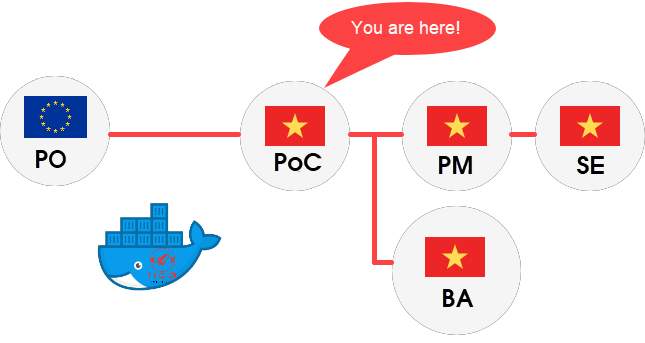
We always tell our clients that it is important for the project to have a single point of contact on their side, a Project Manager if you will. I have become so used to this idea that I don’t think about it any more until one of our clients recently asked “why do you need a single POC and why can’t you work directly with our staff who will be using the system on a daily basis”?. I struggled to find a good explanation at the time but I have thought about it since, and realized that it is not that we don’t want to work with end users, we don't necessarily want to build for their unique workflow. The system needs to come together as a whole to move a team, an organization move forward and the project manager helps make that happen. Building upon this thought, I decided to list some of the qualities I think are needed in a Project Manager or a Coordinator. Of course this is my opinion and you may have additional or different things.
Before listing the attributes of a project lead or project manager or a project coordinator (choose a title based on the size of your project, organization etc.), let’s examine what he or she does on a project:
- Coordinates all internal activities related to a project, attends ALL meetings (yes! all if possible), and helps remove “knowledge” bottlenecks.
- Serves as the primary liaison with our team so we know who to go to if we have a question.
- Reports the progress of the overall project to Executive Sponsor / Management, securing final approvals on changes to budgets or timeline.
- Builds his/her knowledge as a user to support end users once the project transitions into maintenance mode.
- Depending on his or her motivation, interest, availability and/or role in the organization, this person is often in the perfect position to become an administrator to help the organization with lower level customization requests.
Now that we have discussed some of the activities that go with the role, lets list some key attributes to help you identify such an individual in your team:
- One of the most important criteria is this person’s access to the management and the ability to build consensus within the team.
- Ability to articulate the organization’s mission, and high-level knowledge of work areas (programmatic knowledge).
- Understand the overall vision of the proposed system. This is important so the system being developed is in line with the organizational goals and will move the enterprise forward, not be built for one or two users only.
- Goes without saying that this individual should be well organized; be disciplined; and be detail and action oriented.
- Be positive - if he or she doesn’t believe in the project, they can’t expect others to follow.
- Likes to learn new processes, new technologies and loves change.
- Has enough time to dedicate to a project. In most smaller organizations there is not a dedicated Project Manager which is understandable, however you can’t expect this to be the fourth responsibility for someone. It takes time and effort to ensure a successful implementation, so it is important to give this person the best chance at succeeding by giving enough room in the day to execute on this requirement.
A good project manager can make all the difference. They can minimize risks by engaging users early and often. They can save time and money by streamlining communication with the technology partner, speeding up project delivery. In a smaller organization they can “convert” to a system administrator and reduce ongoing maintenance costs. Contrary to popular belief this individual does not be an expert at the technology being implemented. In fact it may even bog down the process and shift the focus to technology more than on the people and process.
Examples Of PoC
Technical support associate
A technical support associate is similar to a customer service associate, but with higher-level expertise in the company's products or services. They're a POC that helps customers with several technical issues and can provide tips, troubleshooting or other approaches to solve problems for customers. The main aim of this role is to address the issues for customers and ensure they receive a product or service that's satisfactory to them.
Example of PoC: IT Comtor (or Bridge Engineer - BrSE)
Comtor or IT Comtor is a term referring to a Japanese interpreter specializing in the field of information technology (IT), in which Comtor standing for the word Communicator, meaning communicator, communicator. Thus, the Comtor profession is a short, easy-to-remember way of calling Japanese interpreters specialized in IT.
Are you an IT Comtor who orients to become BrSE but does not have much knowledge and experience in this field?
At TIGO, we have the solution for you. With an extremely detailed training schedule and documentation on professional skills, working skills and enthusiastic support by Japanese PMs and top senior BrSE at TIGO, you will thrive not only in knowledge but also practical experiences in the projects.
We believe that with your effort to learn and work, you will be able to become such BrSE as the members in our current team.
WHAT WE DO:
- Act as an interpreter in internal meetings and meetings with Japanese customers.
- Communicate directly with customers via email, skype, viber to adjust, agree on requirements, and report periodic work.
- Translate documents for projects
- Perform a number of tasks related to project management.
WHO YOU ARE:
- Have Japanese proficiency.
- Have experience working as an IT Comtor and have the orientation to develop a BrSE.
- Be able to process information and identify problems quickly.
- Have good communication skills.
- Have a high sense of responsibility and team work spirit
- Be able to give constructive comments to improve the quality of work with managers.
- Candidates with project management experience are favorable.
Key Takeaways
To summarize, a single point of contact doesn’t mean you are just employing an individual but in my case anyway it does mean you will have a single contact and reference point who will ensure you get the best service and solutions appropriate to you. If that means third parties should be used then these will be discussed and managed to the same high standards you would expect. As people will know I am not somebody who is afraid to challenge nor accept things just because “that’s the way they are” and these beliefs are practiced in the same way with vendors and therefore you get the Considered IT Solutions you deserve and can rely on.
Via TIGO Outsourcing
 Explore more on these topics





























 Guest Blogging: The Definitive Guide

 Top Trending Topics
 Share This
 Link copied!
 Recently Updated News