




6 Japanese Life Principles That Quietly Transform You
Last updated: October 21, 2025 Read in fullscreen view


 Recommended for you
- 02 Nov 2023
 Unlocking Success with The Amoeba Management Model: Key Lessons, Pros & Cons, and Finding the Perfect Fit 390/1084
 - 09 Sep 2022 Kaizen, Kaikaku and Kakushin – what’s the difference? 388/3475
- 24 Nov 2022 Genba Genbutsu Genjitsu (3Gs), (Go to the Genba & see for yourself!) 303/3322
- 01 Dec 2023 What is Amoeba Management? 300/1299
- 10 Nov 2021 5S methodology - the SECRET to Japanese SUCCESS 284/2034
- 07 Mar 2023 Japan’s Unusual Farming Strategy: Renting Land and Leaving It Fallow for 5 Years — Here’s the Truth… 225/356
- 03 Jan 2024 What is the Ringi process? 215/1236
- 01 Mar 2022 The Toyota Way Management Principles 170/986
- 29 Jan 2026 Honne and Tatemae: Why Do Japanese People Seem Excessively Polite and Indirect? 160/184
- 09 Sep 2022 What is 5 Whys (Five Whys)? 150/1126
- 02 Feb 2022 Yokoten: Best Practice Sharing from a success 148/1579
- 31 Dec 2025 26 Things You Should Do Now to Prepare for 2026 147/195
- 01 Apr 2022 Ishikawa (fishbone) diagram in software project management 146/3346
- 29 Aug 2022 Difference between Kaizen and Innovation 142/1050
- 19 Sep 2022 Jidoka in Software Development and Odoo ERP/MRP 137/689
- 06 Jun 2022 HEIJUNKA: The art of leveling production 133/757
- 02 Feb 2026 “Embodied AI” – When Artificial Intelligence Can “Sense” and Interact with the Physical World 130/164
- 01 Jan 2023 How To Use Poka-Yoke (Mistake Proofing) Technique To Improve Software Quality 124/785
- 27 Aug 2022 Kaizen - Culture of Continuous Improvement and Lean Thinking 121/1018
- 17 Mar 2023 Reduce waste in software development with 3M model: Muda, Mura, Muri 113/1087
- 15 Jul 2022 Hansei Methodology: Continuously Engaging People in Improvement 113/874
- 13 Jul 2022 Applying the business mantra "HORENSO" to Achieve 360-degree Communication 111/1074
- 15 Apr 2022 Total Quality Management (TQM) - Japanese-style management approach to quality improvement. 108/838
- 12 Mar 2022 The u-Japan concept 108/397
- 04 Mar 2024 Tree Ring Management: Take the Long Term View and Grow Your Business Slowly 107/553
- 12 Dec 2024 Danshari: A Japanese Minimalist Philosophy for Cleaner Code and Leaner IT Operations 95/182
- 05 Feb 2024 Ego and Attachment: Simplify Your Life Today 91/377
- 01 Jun 2020 Japan Business Review (JBR) 76/411
- 03 Feb 2024 "Kham Nhẫn" in Business: A Guide to Patience and Resilience 74/237
1. Ikigai – The Reason You Wake Up Every Morning
Ikigai means “a reason for being.” It’s what makes your life feel meaningful and worth living.
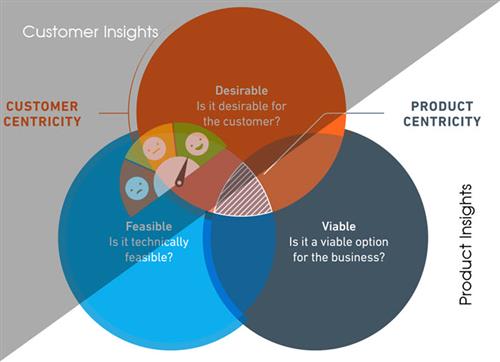
Your Ikigai lies at the intersection of four things:
- What you love
- What you’re good at
- What the world needs
- What you can get paid for
When you find your Ikigai, motivation comes naturally — not from pressure, but from purpose.
2. Kaizen – Getting 1% Better Every Day
You don’t need massive change to grow.
You just need small, consistent steps — every single day.
Ask yourself each morning:
“What can I do a little better than yesterday?”
That’s Kaizen. Progress that compounds quietly, until one day it looks like magic.
3. Shoshin – The Beginner’s Mind
In Zen philosophy, Shoshin reminds us to stay open and curious — like a child discovering the world.
“In the beginner’s mind, there are many possibilities. In the expert’s mind, there are few.” – Shunryu Suzuki
When we think we already know everything, we stop learning.
Stay curious. Stay humble. Stay new.
4. Hara Hachi Bu – Eat Until You’re 80% Full
The Japanese practice mindful eating by stopping before they feel completely full.
Eating to 80% keeps your body light and your mind clear.
Overeating, on the other hand, makes you sluggish — and that laziness often spills into your mindset.
Discipline at the table builds discipline in life.
5. Shinrin-Yoku – Forest Bathing
Shinrin means “forest,” yoku means “bath.”
Together, they mean immersing yourself in nature.
Take a walk in the woods, a quiet park, or simply sit under a tree.
Breathe deeply. Listen.
You’re not escaping the world — you’re reconnecting with it.
6. Wabi-Sabi – Beauty in Imperfection
Wabi-Sabi is the art of seeing beauty in what’s simple, imperfect, and transient.
A cracked cup, an old wooden bench, a rainy morning — they all have their quiet charm.
Life doesn’t have to be perfect to be meaningful.
It just has to be real.
That’s the essence of Japanese wisdom — and a timeless reminder for modern life.
 Explore more on these topics




























 Guest Blogging: The Definitive Guide

 Top Trending Topics
 Share This
 Link copied!
 Recently Updated News
 thực chiến - Kiến tạo tương lai cho các nhà sáng tạo nội dung.