


Levels of Teamwork
Published on: May 10, 2022
Last updated: December 17, 2022 Read in fullscreen view
Last updated: December 17, 2022 Read in fullscreen view

 Recommended for you
- 01 Aug 2024
 The Standish Group report 83.9% of IT projects partially or completely fail 788/2605
 - 13 Apr 2024 Lessons on Teamwork and Leadership from Chinese story book "Journey to the West" 249/1334
- 15 Feb 2024 What is a Cut-Over in Software Development? 190/1517
- 02 Nov 2021 What is Terms of Reference (ToR)? 166/1742
- 18 Oct 2020 How to use the "Knowns" and "Unknowns" technique to manage assumptions 163/1257
- 02 Nov 2023 Differences between software walkthrough, review, and inspection 157/2299
- 08 Dec 2021 What Are The 4 Types of Maintenance Strategies? 140/1328
- 11 Oct 2021 10 Myths About Low-End Project Management Software 124/463
- 13 Oct 2021 What is Bug Convergence? Why is it important for User Acceptance Testing (UAT)? 121/888
- 11 Jan 2024 What are the Benefits and Limitations of Augmented Intelligence? 119/605
- 28 Oct 2023 The GOLDEN Rules of Software Engineering 117/691
- 13 Dec 2020 Move fast, fail fast, fail-safe 117/456
- 18 Aug 2022 What are the consequences of poor requirements with software development projects? 116/384
- 06 Feb 2021 Why fail fast and learn fast? 113/588
- 23 Jun 2024 Best Practices for Managing Project Escalations 113/318
- 01 Oct 2020 Fail fast, learn faster with Agile methodology 112/1186
- 01 Mar 2024 10 Project Management Myths 104/276
- 02 May 2022 What Is RAID in Project Management? (With Pros and Cons) 104/947
- 02 May 2022 What Is RAID in Project Management? (With Pros and Cons) 104/947
- 03 Apr 2022 Microsoft Solutions Framework (MSF) 103/1445
- 02 Dec 2022 3 Levels of Quality in KANO Analysis Model 103/1279
- 13 May 2022 IT Training and Development: The most effective options for upskilling IT staff 102/1350
- 12 Aug 2022 What is End-to-end project management? 102/608
- 14 Mar 2024 Why should you opt for software localization from a professional agency? 100/239
- 23 Sep 2021 INFOGRAPHIC: Top 9 Software Outsourcing Mistakes 98/521
- 03 Jan 2023 Organizing your agile teams? Think about M.A.T (Mastery, Autonomy, Purpose) 96/493
- 14 Oct 2021 Advantages and Disadvantages of Time and Material Contract (T&M) 92/985
- 21 Oct 2025 Cloud-Native Development: Why It’s the Future of Enterprise IT 91/180
- 02 Nov 2022 Difference between Change Management and Project Management 88/320
- 05 May 2021 TIGO Magic Scale - PoC tool for you to apply dichotomous thinking before submitting RFP 88/420
- 09 May 2022 Build one to throw away vs Second-system effect: What are differences? 85/396
- 08 Oct 2022 KPI - The New Leadership 85/692
- 28 Dec 2021 8 types of pricing models in software development outsourcing 85/519
- 10 Apr 2024 The Parking Lot Method: Unlocking a Simple Secret to Supercharge Your Productivity 84/603
- 18 Dec 2023 The Cone of Uncertainty in Scrum & Requirement Definition 80/814
- 01 Aug 2022 Is planning "set it and forget it" or "set it and check it"? 79/376
- 10 Nov 2022 Poor Code Indicators and How to Improve Your Code? 79/296
- 22 May 2022 What are common mistakes that new or inexperienced managers make? 78/359
- 17 Oct 2021 Does Fast Tracking increase project cost? 78/451
- 19 Oct 2021 Is gold plating good or bad in project management? 78/909
- 14 Oct 2021 Stream Story - Low land stream or fast moving stream? 77/703
- 10 Dec 2023 Pain points of User Acceptance Testing (UAT) 77/535
- 07 Dec 2023 12 project management myths to avoid 75/267
- 14 Jun 2022 Example and Excel template of a RACI chart in Software Development 75/947
- 17 Feb 2022 Prioritizing Software Requirements with Kano Analysis 75/379
- 07 Jul 2022 Managing Project Execution Terms 74/481
- 18 Oct 2021 Key Elements to Ramping Up a Large Team 74/1331
- 18 Feb 2026 "Hit and Run" Project Management: Balancing Speed with Sustainability 74/100
- 01 Feb 2024 How long does it take to develop software? 73/283
- 19 Apr 2021 7 Most Common Time-Wasters For Software Development 72/617
- 01 Mar 2023 Bug Prioritization - What are the 5 levels of priority? 68/297
- 12 Mar 2024 How do you create FOMO in software prospects? 67/240
- 27 Jan 2020 Should a project manager push developers to work more hours due to mistakes of manager schedule setting? 67/508
- 31 Oct 2021 Tips to Fail Fast With Outsourcing 65/456
- 15 May 2022 20 Common Mistakes Made by New or Inexperienced Project Managers 63/345
- 02 Dec 2021 3 Ways to Avoid Scope Creep in IT Consulting 62/271
- 01 Oct 2020 Handling tight project deadlines as a business analyst 61/390
- 20 Jul 2022 Software Myths and Realities 60/1001
- 05 Jan 2024 Easy ASANA tips & tricks for you and your team 60/258
- 24 Nov 2023 The project management paradox: Achieving MORE by doing LESS 59/289
- 06 Jun 2022 Change Management at the Project Level 58/364
- 05 Jun 2023 Fractional, Part-Time (virtual) or Interim CTO: Who Will Cover Your Business Needs? 58/200
- 02 Jun 2024 Reviving Ancient Wisdom: The Spiritual Side of Project Management 58/314
- 26 Sep 2024 Successful Project Management Techniques You Need to Look Out For 57/454
- 13 Jan 2020 Quiz: Test your understanding project cost management 55/701
- 26 Dec 2023 Improving Meeting Effectiveness Through the Six Thinking Hats 53/329
- 30 Nov 2023 Project Managers, Focus on Outcomes — Not Deliverables 52/213
- 03 Nov 2022 Questions and answers about Kano Model 48/943
- 21 Jun 2024 Dead Horses and the Escalation of Commitment 45/183
- 06 Nov 2019 How to Access Software Project Size? 39/296
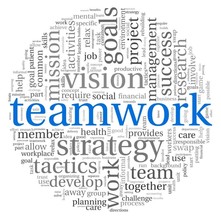
Now teamwork is a common buzzword in most organizations, but there is often a disconnect between what the parties involved thinks that means.
The 5 levels of teamwork are…
- Communication: In this sense, I am talking about broadcasting what you plan to do. General communication is, of course, required at all levels. At this level of teamwork, though, the point is that there is only communication, and no other activity.
- Coordination: This is where two people or groups try to resolve potential conflicts as they each work on their goals.
- Compromise: Each team member gives a little to get a little.
- Cooperation: Working together so each team gets closer to their own goals.
- Collaboration: A merging of goals to create a joint, aligned effort
The highest level is the Collaborative Teams. The members here value high levels of communication, with pride in performing exceptional work. In observing such a team, you will hear things like:
- We understand the rules rules and follow them, because we helped develop them and know they are important. .
- Company policy must be adapted to fit changing conditions.
- We each perform our work in a way that complements the work of others.
- Different people do the things that best fit their strengths, but we always consider how to optimize the end result.
- It’s important to continually adapt and improve the way things are done.
- We love asking questions, because that’s how we learn and improve together.
- If someone asks for help, we figure out how and when we can be most helpful to them and our team.
- When mistakes happen, we learn from them.
- We take great pride in our work.
A Collaborative team which thinks this way might work in an industry-leading company that states their purpose like this: Creating premier properties. Building lasting relationships.
[{"displaySettingInfo":"[{\"isFullLayout\":false,\"layoutWidthRatio\":\"\",\"isFaqLayout\":false,\"isIncludedCaption\":false,\"faqLayoutTheme\":\"1\",\"isSliderLayout\":false}]"},{"articleSourceInfo":"[{\"sourceName\":\"\",\"sourceValue\":\"\"}]"},{"privacyInfo":"[{\"isOutsideVietnam\":false}]"},{"tocInfo":"[{\"isEnabledTOC\":true,\"isAutoNumbering\":false,\"isShowKeyHeadingWithIcon\":false}]"}]
Via
{content}
 Explore more on these topics





















 Guest Blogging: The Definitive Guide

 Top Trending Topics
 Share This
 Link copied!
 Recently Updated News