



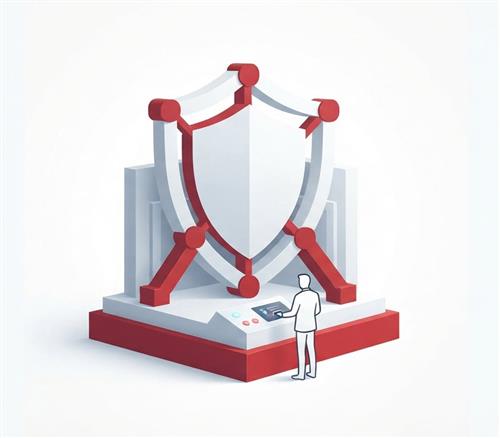
Goodness in the Wrong Place Becomes Evil. Evil in the Right Place Becomes Good
Last updated: October 21, 2025 Read in fullscreen view


 Recommended for you
- 02 Nov 2023
 Unlocking Success with The Amoeba Management Model: Key Lessons, Pros & Cons, and Finding the Perfect Fit 368/1054
 - 09 Sep 2022 Kaizen, Kaikaku and Kakushin – what’s the difference? 356/3430
- 24 Nov 2022 Genba Genbutsu Genjitsu (3Gs), (Go to the Genba & see for yourself!) 268/3274
- 10 Nov 2021 5S methodology - the SECRET to Japanese SUCCESS 267/2014
- 01 Dec 2023 What is Amoeba Management? 256/1249
- 03 Jan 2024 What is the Ringi process? 200/1216
- 07 Mar 2023 Japan’s Unusual Farming Strategy: Renting Land and Leaving It Fallow for 5 Years — Here’s the Truth… 185/308
- 18 Oct 2024 The Dark Side of Japan’s Work Culture 149/200
- 01 Mar 2022 The Toyota Way Management Principles 148/960
- 23 Oct 2024 The Achilles Heel of Secure Software: When “Best-in-Class” Security Still Leads to System Collapse 140/189
- 01 Jul 2025 Southeast Asia Faces a Surge of “Fake AI Startups” 136/230
- 02 Feb 2022 Yokoten: Best Practice Sharing from a success 134/1558
- 01 Apr 2022 Ishikawa (fishbone) diagram in software project management 133/3322
- 21 Nov 2025 The Pressure of Short-Term Funding on Small-Budget IT Projects 129/159
- 09 Sep 2022 What is 5 Whys (Five Whys)? 121/1096
- 06 Jun 2022 HEIJUNKA: The art of leveling production 118/738
- 29 Jan 2026 Honne and Tatemae: Why Do Japanese People Seem Excessively Polite and Indirect? 118/142
- 19 Sep 2022 Jidoka in Software Development and Odoo ERP/MRP 115/665
- 29 Aug 2022 Difference between Kaizen and Innovation 112/1017
- 27 Aug 2022 Kaizen - Culture of Continuous Improvement and Lean Thinking 111/1003
- 31 Dec 2025 26 Things You Should Do Now to Prepare for 2026 109/155
- 18 Dec 2025 AI: Act Now or Wait Until You’re “Ready”? 106/144
- 15 Jul 2022 Hansei Methodology: Continuously Engaging People in Improvement 105/858
- 12 Mar 2022 The u-Japan concept 101/390
- 17 Mar 2023 Reduce waste in software development with 3M model: Muda, Mura, Muri 100/1070
- 01 Jan 2024 6 Japanese Life Principles That Quietly Transform You 99/224
- 13 Jul 2022 Applying the business mantra "HORENSO" to Achieve 360-degree Communication 99/1059
- 01 Jan 2023 How To Use Poka-Yoke (Mistake Proofing) Technique To Improve Software Quality 99/758
- 04 Mar 2024 Tree Ring Management: Take the Long Term View and Grow Your Business Slowly 99/543
- 15 Apr 2022 Total Quality Management (TQM) - Japanese-style management approach to quality improvement. 97/821
- 12 May 2024 The Pros and Cons of the Creator Economy in the Age of AI: Opportunities, Challenges, and the Gray Zone with the Gig Economy 97/366
- 12 Dec 2024 Danshari: A Japanese Minimalist Philosophy for Cleaner Code and Leaner IT Operations 92/175
- 19 Sep 2025 The Paradoxes of Scrum Events: When You “Follow the Ritual” but Lose the Value 91/136
- 05 Feb 2024 Ego and Attachment: Simplify Your Life Today 88/371
- 18 Sep 2024 11 Psychological Defense Mechanisms and How to Recognize Them 87/283
- 01 Jun 2020 Japan Business Review (JBR) 73/408
- 03 Feb 2024 "Kham Nhẫn" in Business: A Guide to Patience and Resilience 71/234
- 03 Feb 2024 "Kham Nhẫn" in Business: A Guide to Patience and Resilience 71/234
- 23 May 2024 Mastering AI: Sharpening the Axe in the Digital Age 66/332
A bowl of rice creates a benefactor, but a bushel of grain creates an enemy — the old saying never lies.
Don’t be too eager to pour out your whole heart.
Keep a little pride and compassion for yourself.
Remember, the coldest thing in the world is the human heart.”
Back then, I didn’t believe such things could happen.
If I helped someone, I would give my all — what could go wrong with that?
But as time passed, I met many people who made me truly understand the words “I never expected that.”
Yes, I helped them, treated them well whenever they asked for support.
My intentions were pure.
But the third or fourth time I refused, they turned against me, blaming me as if I had betrayed them.
Wait — was that ever my obligation? How absurd!
Yet when they did something for me, they calculated every gain and loss, weighing every little thing.
How disappointing, how bitterly ironic.
“Years spent building a temple — no one remembers.
One broken brick — the whole village knows.”
A great entrepreneur once uttered this verse when his life’s work collapsed overnight due to a single mistake, while his years of dedication were forgotten.
When you help someone, do it wisely.
Give them the fishing rod, not the fish.
Teach them to stand on their own, not to depend on you forever.
Giving is noble — but kindness must be placed in the right context.
There are people who exploit our goodness for selfish or even evil ends.
Kindness, though beautiful, can turn into a sharp blade that stabs our own heart if given to the wrong person.
And it hurts — deeply.
That’s why the old saying still stands:
“Goodness in the wrong place becomes evil.
Evil in the right place becomes goodness.”
- Confucius once said: “Human nature is inherently good.”
- Xunzi countered: “Human nature is inherently evil; goodness is learned and cultivated.”
- Sigmund Freud observed: “Humans are more moral than we think — yet also more immoral than we imagine.”
Were the Japanese militarists evil? Were the German Nazis evil?
Undeniably — yes.
But their evil was stopped by the U.S. and its allies, because it had gone beyond what the world could bear.
After that darkness was destroyed, both nations rebuilt themselves.
Japan and Germany became two of the most disciplined societies on Earth — their workplaces are among the most professional and exacting in the world. Today, 80% of the world’s high-quality products come from these two nations — which together make up only 20% of the globe.
Once labeled as history’s greatest villains, Japan and Germany are now among the most developed and generous contributors to global progress.
Their goodness is recognized and deeply appreciated by all humanity.
In other words — good and evil can transform into one another.
The Japanese and the Germans inherited discipline from their ancestors — from the spirit of the Samurai, from centuries of structured, principled living. Their descendants now thrive in a culture of order and precision — a society organized, strong, and united — like a pack of wolves.
 Explore more on these topics





























 Guest Blogging: The Definitive Guide

 Top Trending Topics
 Share This
 Link copied!
 Recently Updated News
