



How To Hold People Accountable for Portfolio Decision-making When Things are Uncertain?
Last updated: December 25, 2025 Read in fullscreen view


 Recommended for you
- 18 Oct 2020
 How to use the "Knowns" and "Unknowns" technique to manage assumptions 165/1259
 - 30 Oct 2022 How Much Does MVP Development Cost in 2023? 154/413
- 09 Jan 2022 How to Bridge the Gap Between Business and IT? 148/351
- 28 Oct 2025 The Future of Real Estate: Key Trends and Essential Lessons in Digital Transformation 135/206
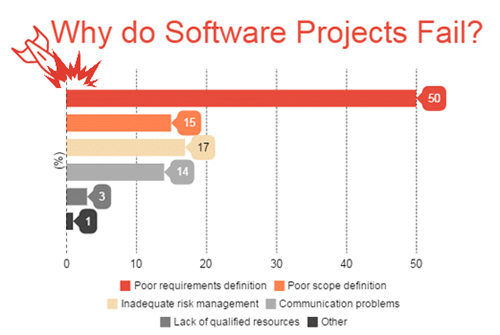
- 01 Sep 2022 Facts Chart: Why Do Software Projects Fail? 128/721
- 23 Sep 2021 INFOGRAPHIC: Top 9 Software Outsourcing Mistakes 123/546
- 26 Dec 2025 The Machiavelli Paradox: Why Ethical Leaders Sometimes Lose - and What Businesses Must Learn 120/188
- 11 Jan 2024 What are the Benefits and Limitations of Augmented Intelligence? 119/605
- 18 Aug 2022 What are the consequences of poor requirements with software development projects? 118/386
- 13 Dec 2020 Move fast, fail fast, fail-safe 118/457
- 06 Feb 2021 Why fail fast and learn fast? 114/590
- 01 Oct 2020 Fail fast, learn faster with Agile methodology 113/1187
- 10 Apr 2021 RFP vs POC: Why the proof of concept is replacing the request for proposal 111/438
- 29 Nov 2021 Memorandum of Understanding (MOU) for Partnership Agreements 104/672
- 19 Apr 2024 What is Skills-Based Approach & Why Does it Matter? 103/259
- 07 Jul 2021 The 5 Levels of IT Help Desk Support 102/578
- 14 Mar 2024 Why should you opt for software localization from a professional agency? 101/240
- 20 Dec 2021 What is Hybrid Mobile App Development? 98/497
- 08 Nov 2022 4 tips for meeting tough deadlines when outsourcing projects to software vendor 97/387
- 03 Dec 2025 IT Outsourcing Solutions Explained: What, How, Why, When 97/129
- 07 Nov 2022 Why Design Thinking can save the outsourcing industry 96/287
- 14 Oct 2021 Advantages and Disadvantages of Time and Material Contract (T&M) 95/988
- 16 Feb 2021 Choose Outsourcing for Your Non Disclosure Agreement (NDA) 95/265
- 07 Aug 2022 Things to Consider When Choosing a Technology Partner 88/371
- 08 Oct 2022 KPI - The New Leadership 87/694
- 28 Dec 2021 8 types of pricing models in software development outsourcing 87/521
- 05 Sep 2024 The Inverted Approach: A Guide to Identifying Software Risks with Reverse Brainstorming 85/343
- 22 May 2025 Role of Self-Service in CRM: Customer & Partner Portals for Automation 83/166
- 09 Feb 2023 The Challenge of Fixed-Bid Software Projects 83/332
- 10 Nov 2022 Poor Code Indicators and How to Improve Your Code? 81/298
- 08 May 2024 Time Unlocked: Mastering the Pomodoro Technique Against Parkinson's Law 80/327
- 10 Dec 2023 Pain points of User Acceptance Testing (UAT) 79/537
- 19 Oct 2021 Is gold plating good or bad in project management? 79/910
- 17 Feb 2022 Prioritizing Software Requirements with Kano Analysis 75/379
- 03 Nov 2022 Top questions and answers you must know before ask for software outsourcing 73/358
- 19 Apr 2021 7 Most Common Time-Wasters For Software Development 72/617
- 12 Mar 2024 How do you create FOMO in software prospects? 70/243
- 01 Mar 2023 Bug Prioritization - What are the 5 levels of priority? 69/298
- 16 Apr 2021 Insightful Business Technology Consulting at TIGO 69/523
- 10 Jul 2025 Building AI-Driven Knowledge Graphs from Unstructured Data 68/230
- 31 Oct 2021 Tips to Fail Fast With Outsourcing 66/457
- 16 Dec 2025 12 UNWRITTEN LAWS OF LIFE & WORK 64/85
- 20 Nov 2022 Software Requirements Are A Communication Problem 63/305
- 06 Mar 2021 4 things you need to do before getting an accurate quote for your software development 61/758
- 15 Aug 2025 Quantum Technology: Global Challenges and Opportunities for Innovators 60/191
- 06 Dec 2024 Steps For Integrating Sustainable Practices Into Business Operations 60/209
- 05 Jan 2024 Easy ASANA tips & tricks for you and your team 60/258
- 01 May 2023 CTO Interview Questions 60/395
- 07 Oct 2022 Digital Transformation: Become a Technology Powerhouse 59/306
- 26 Dec 2023 Improving Meeting Effectiveness Through the Six Thinking Hats 53/329
- 09 Mar 2022 Consultant Implementation Pricing 49/261
- 01 Mar 2023 How do you deal with disputes and conflicts that may arise during a software consulting project? 47/207
- 06 Nov 2019 How to Access Software Project Size? 42/299
- 17 Mar 2025 IT Consultants in Digital Transformation 41/131
- 03 Dec 2025 Templafy Features Explained: The Ultimate Guide to Streamlined Content Management 4/173
Most organizations don’t lack innovation ideas - they lack a clear way to place them where they belong. Why do some projects keep getting funded despite delivering little value? Why are potentially game-changing ideas often downsized in the name of “safety”?
In this article, we explore the Bread & Butter – Oysters – Pearls – White Elephants matrix as a practical lens for managing innovation portfolios. You’ll see the critical difference between projects that sustain today and those that shape tomorrow - and the common management traps that quietly kill breakthrough innovation.
As we go deeper, the article uses clear screenshots of the risk-versus-reward matrix to visualize each project type, decision logic, and accountability model - all aligned with the mindset of “keep it simple, but significant” to help you streamline your business, not complicate it.
The Bread & Butter – Oysters – Pearls – White Elephants Matrix
In innovation management, the greatest challenge is not a lack of ideas, but how resources and accountability are allocated when the future of a project is inherently uncertain.
Not all projects carry the same level of risk, value, or strategic importance-therefore, they should not be managed or evaluated using a single, uniform approach.
The Bread and Butter – Oysters – Pearls – White Elephants matrix was created to address this problem.
Its purpose is to classify R&D and New Product Development initiatives based on probability of success and value if successful, enabling organizations to apply the right management logic to the right type of project.
1. Why Innovation Projects Must Be Classified
Research and development projects operate in conditions of:
- Technological uncertainty
- Market uncertainty
- Cost and time uncertainty
When all projects are evaluated using traditional criteria such as:
- On-time delivery
- Staying within budget
- Meeting the original plan
…the result is often:
- High-risk projects being downsized to appear “safe”
- Managers avoiding breakthrough initiatives
- Organizations optimizing the present while sacrificing the future
This four-quadrant matrix helps organizations recognize the fundamental differences between project types, instead of forcing all innovation efforts into the same evaluation framework.
2. Bread and Butter: Sustaining the Present
Characteristics
- High probability of success
- Low to moderate value if successful
- Typically includes product improvements, cost reductions, and process optimization
Role
- Supports the company’s short-term health
- Ensures operational stability and predictable returns
Appropriate Management Approach
- Delivered on time
- Within budget
- Meets clearly defined objectives
➡️ These projects are well suited to traditional management and KPI-based accountability.
3. Oysters: Investing in the Future
Characteristics
- Low probability of success
- Very high value if successful
- Often involves new technologies, new business models, or disruptive offerings
Role
- Forms the foundation of long-term competitive advantage
- Creates future growth opportunities
Common Management Pitfall
When managed like Bread and Butter projects, organizations tend to:
- Reduce project scope to improve certainty
- Turn Oysters into “safe but insignificant” initiatives
- Discourage managers from taking on high-risk projects altogether
More Effective Accountability
- Fail early and fail cheaply: discover failure as soon and as inexpensively as possible
- Actively adjust scope versus probability of success
- Continuously align decisions with long-term strategic objectives, not just short-term KPIs
➡️ Accountability here is not about guaranteeing success, but about making sound decisions under uncertainty.
4. Pearls: When Risk Has Been De-Risked
Characteristics
- High probability of success
- High value if successful
- Often Oysters that have passed their most critical uncertainty thresholds
Role
- Bridges breakthrough innovation and commercialization
- Drives sustainable growth
Management Approach
- Can follow Bread and Butter-style discipline
-
But must avoid:
- Unrealistic expectations
- Excessive pressure that distorts the project’s value
➡️ Pearls require execution discipline, but also room to fully realize their potential.
5. White Elephants: Drains on Resources
Characteristics
- Low probability of success
- Low value even if successful
-
Often persist due to:
- Historical decisions
- Internal politics
- Long-standing but flawed assumptions
Problem
- Consume scarce resources
- Contribute little to either short-term performance or long-term strategy
Rational Management Response
- Reassess the true value of the project
- Be willing to terminate early
- Or restructure to meaningfully increase potential value
➡️ Good management is not just about execution-it is also about knowing when to stop.
6. The Human Dimension: Managing Failure
One of the biggest barriers to innovation is not technical complexity, but organizational psychology.
If:
- Failure is always equated with incompetence
- Participation in risky projects is never recognized
…then no one will volunteer for Oysters-the very projects that shape the company’s future.
A mature organization must:
- Distinguish between poor decision-making and failure caused by uncertainty
- Recognize and reward sound judgment, even when outcomes are negative
7. Final Thoughts
The Bread and Butter – Oysters – Pearls – White Elephants matrix is not a cosmetic classification tool for reports.
It is a decision-making framework for accountability in uncertain environments.
but because organizations apply the wrong management logic to the wrong type of project.
Understanding this matrix enables organizations to:
- Protect the present
- Cultivate the future
 Explore more on these topics




















 Guest Blogging: The Definitive Guide

 Top Trending Topics
 Share This
 Link copied!
 Recently Updated News