



Why Traditional Storytelling No Longer Works for YouTube Creators (And What to Do Instead)
Last updated: November 07, 2025 Read in fullscreen view


 Recommended for you
- 01 Jan 2026
 Youtube 2026 updates: 8 new features every creator should know 339/453
 - 12 Jan 2026 A-Roll, B-Roll, and Jump Cuts: Three Core Concepts Every Video Creator Must Understand 226/281
- 10 Sep 2024 Complete Green Screen Setup Guide for Webcam Creators 207/274
- 02 Oct 2025 The YouTube Algorithm Has Changed: Why Your Old Strategy No Longer Works in 2025 198/395
- 14 Jan 2026 Why YouTube Channels Like “Monkey Explained” Use a Monkey as a Recurring Character 173/205
- 18 Oct 2020 How to use the "Knowns" and "Unknowns" technique to manage assumptions 167/1261
- 12 Jan 2026 Why YouTube Content Is the New Resume: Building Trust and Expertise Even Without Views 153/182
- 08 Dec 2021 What Are The 4 Types of Maintenance Strategies? 147/1339
- 23 Oct 2024 The Achilles Heel of Secure Software: When “Best-in-Class” Security Still Leads to System Collapse 145/196
- 12 Apr 2025 How to Ask Powerful Questions Like Socrates 138/173
- 11 Oct 2021 10 Myths About Low-End Project Management Software 127/466
- 13 Oct 2021 What is Bug Convergence? Why is it important for User Acceptance Testing (UAT)? 125/894
- 23 Sep 2021 INFOGRAPHIC: Top 9 Software Outsourcing Mistakes 125/548
- 28 Oct 2023 The GOLDEN Rules of Software Engineering 125/699
- 18 Aug 2022 What are the consequences of poor requirements with software development projects? 122/390
- 11 Jan 2024 What are the Benefits and Limitations of Augmented Intelligence? 119/605
- 01 Jun 2024 Top AI Video Tools for 2026 — Updated with 2025’s Quick Edit & Text-to-Video Trends 119/520
- 13 Dec 2020 Move fast, fail fast, fail-safe 119/460
- 06 Feb 2021 Why fail fast and learn fast? 116/592
- 01 Oct 2020 Fail fast, learn faster with Agile methodology 115/1189
- 02 Dec 2022 3 Levels of Quality in KANO Analysis Model 110/1288
- 13 May 2022 IT Training and Development: The most effective options for upskilling IT staff 107/1358
- 12 Mar 2026 Beyond the Box: The Strategic Evolution of Unboxing Content in 2026 104/124
- 19 Apr 2024 What is Skills-Based Approach & Why Does it Matter? 103/259
- 14 Mar 2024 Why should you opt for software localization from a professional agency? 102/241
- 14 Oct 2021 Advantages and Disadvantages of Time and Material Contract (T&M) 98/992
- 19 Sep 2025 The Paradoxes of Scrum Events: When You “Follow the Ritual” but Lose the Value 93/138
- 28 Dec 2021 8 types of pricing models in software development outsourcing 92/526
- 05 May 2021 TIGO Magic Scale - PoC tool for you to apply dichotomous thinking before submitting RFP 89/421
- 06 Jan 2025 How FlexClip AI Makes Video Editing Easier 88/267
- 05 Sep 2024 The Inverted Approach: A Guide to Identifying Software Risks with Reverse Brainstorming 87/345
- 08 Oct 2022 KPI - The New Leadership 87/696
- 19 Oct 2021 Is gold plating good or bad in project management? 84/915
- 17 Feb 2022 Prioritizing Software Requirements with Kano Analysis 83/387
- 08 May 2024 Time Unlocked: Mastering the Pomodoro Technique Against Parkinson's Law 83/331
- 10 Nov 2022 Poor Code Indicators and How to Improve Your Code? 82/299
- 10 Dec 2023 Pain points of User Acceptance Testing (UAT) 80/541
- 14 Oct 2021 Stream Story - Low land stream or fast moving stream? 77/703
- 19 Apr 2021 7 Most Common Time-Wasters For Software Development 72/617
- 12 Mar 2024 How do you create FOMO in software prospects? 72/246
- 01 Mar 2023 Bug Prioritization - What are the 5 levels of priority? 71/300
- 31 Oct 2021 Tips to Fail Fast With Outsourcing 68/459
- 01 Jul 2025 Stop Wasting Content - Turn Long Videos into Viral Clips in Minutes 62/210
- 01 Oct 2020 Handling tight project deadlines as a business analyst 61/390
- 05 Jan 2024 Easy ASANA tips & tricks for you and your team 60/258
- 03 Jul 2022 Occam’s Razor and the Art of Software Design 55/557
- 26 Dec 2023 Improving Meeting Effectiveness Through the Six Thinking Hats 54/330
- 03 Nov 2022 Questions and answers about Kano Model 48/943
- 06 Nov 2019 How to Access Software Project Size? 45/303
7 Storytelling Mistakes That Are KILLING Small Creators
(And How to Fix Them for Viral Growth)
Storytelling is the ultimate growth hack for creators. Whether you’re making YouTube videos, TikToks, or Reels — the easiest way to make your content perform better is to tell better stories.
Most people don’t need to reinvent the wheel — they just need a few small tweaks. Here are the seven biggest storytelling mistakes that are silently killing your content and how to fix them.
1. Using the Old-Fashioned “Story Arc”
Remember the traditional story arc you learned in school?
Background → Conflict → Rising Action → Climax → Resolution
That’s great for Hollywood movies, but terrible for internet content.
Why?
Because attention spans have collapsed. The internet has compressed time — viewers expect momentum instantly. If your story takes two minutes to “get interesting,” 80% of your audience is gone.
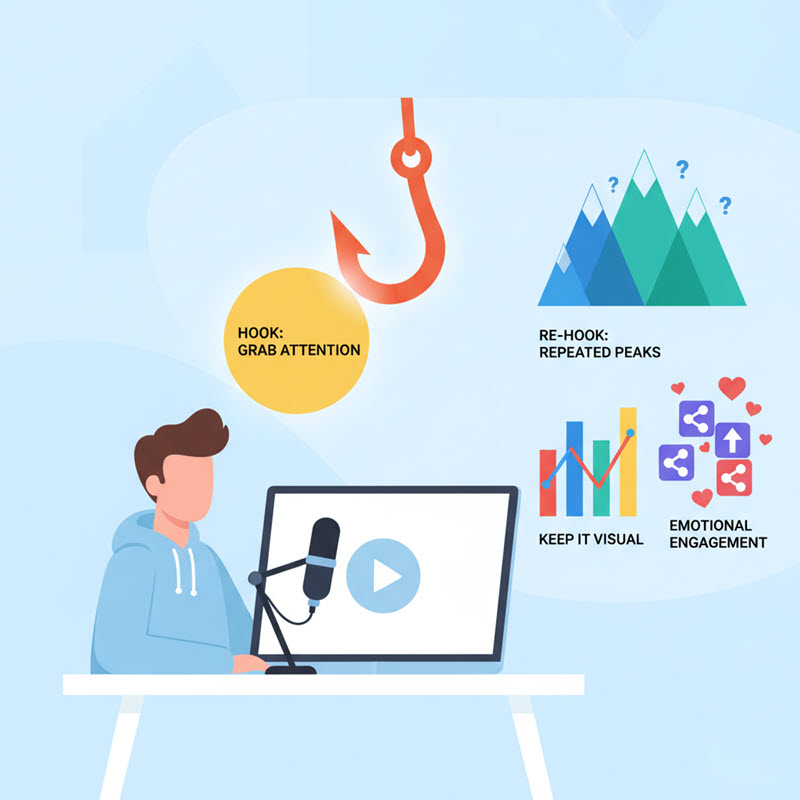
Start your video at 70% intensity, not zero. Hook them immediately, then spike intensity with the first conflict within the first minute.
From there, alternate tension and release every 2–5 minutes — like waves.
Each peak keeps attention; each release lets viewers breathe.
In short:
You can’t hold people captive anymore. You must earn their attention every few seconds.
2. Building Your Intro in the Wrong Order
Most beginners jumble the W’s — who, what, where, when, why, and how.
The traditional order (where → when → who → what → how → why) sounds boring:
“Last month, I was at a conference in Miami. The CEO of Disney spoke. He’s worried about the future of entertainment.”
The modern order flips that:
“The future of entertainment is about to change. The CEO of Disney is really worried — and he just said so in Miami.”
See the difference? The second one grabs attention immediately because it starts with what and why it matters to the viewer.
In today’s world, every sentence in your intro must fight to keep the viewer’s attention.
3. Forgetting to Re-Hook the Audience
Getting attention once is easy — keeping it is the real skill.
Callaway calls this “re-hooking.”
After your first big moment, don’t just resolve the tension and move on. Instead, open a new loop.
Example:
“Now that you’ve fixed your ad creatives, here’s the real problem — your targeting is broken.”
Each new mini-conflict keeps the viewer’s brain engaged. The goal is to make them “rebuy” their attention over and over again.
This is how you boost average view duration (AVD) — one of YouTube’s most powerful ranking signals.
4. Missing a Villain
Every story needs contrast. Heroes are boring without villains.
Your villain doesn’t have to be a person — it could be an idea, a system, or a habit.
If your channel is about startups, the villain might be “corporate bureaucracy.”
If it’s about fitness, it could be “lazy excuses.”
“They do this... but we do that.”
Define your villain clearly — it makes your hero (and your message) more powerful.
5. Not Giving the Viewer Something to Root For
The best stories make people care.
Your audience needs to see themselves in your story. The more relatable and human your hero is, the stronger the emotional connection.
If you’re teaching or inspiring, make sure your viewers feel like you’re on their side.
When people root for you — or for the movement you represent — they’ll stay longer and share more.
Optimism wins. Always.
6. Lacking “Atomic Shareability”
Here’s a big one. If someone can’t summarize your story in one sentence, it won’t spread.
Think of Paul Revere shouting:
“The British are coming!”
That’s atomic storytelling — short, punchy, and repeatable.
Simplify your message so anyone can retell it instantly.
Avoid jargon. Use metaphors.
Say it once like an expert, and again like you’re explaining it to a child.
That’s how your ideas go viral.
7. Not Painting the Picture
Finally, show, don’t just tell.
The human brain craves visuals. If your audience can’t see your point, they won’t feel it.
Whether it’s B-roll, on-screen text, or simple animations — visuals turn abstract ideas into emotional experiences.
If you’re working solo, consider collaborating with a great editor or motion designer.
A strong visual storyteller can elevate your words into a world your audience wants to live in.
Final Thoughts
The rules of storytelling have changed — not because people are dumber, but because the internet made us faster.
To succeed today:
- Hook fast.
- Re-hook often.
- Keep it visual.
- Give people something to feel and share.
Because at the end of the day, great storytelling isn’t about you.
It’s about making your audience say:
“That’s me.”
 Explore more on these topics






























 Guest Blogging: The Definitive Guide

 Top Trending Topics
 Share This
 Link copied!
 Recently Updated News