



DataOps: The Next Frontier in Agile Data Management
Last updated: November 28, 2025 Read in fullscreen view


 Recommended for you
- 05 Oct 2025
 The New Facebook Algorithm: A Paradigm Shift in Content Discovery 298/360
 - 12 Jun 2025 Rule-Based vs. Data-Driven Decision Making: The Critical Shift in Fintech and AI 238/363
- 21 Dec 2023 Top 12 Low-Code Platforms To Use in 2024 224/1525
- 01 Dec 2025 Manufacturing 4.0: AI Agents Enabling Self-Optimizing Production Systems 182/243
- 31 Dec 2025 10 Skills to Make You "Irreplaceable" in the Next 3 Years (even if AI changes everything) 175/209
- 25 Mar 2026 Token Bills: The "Cost Shock" After the AI Boom in Companies 170/196
- 20 Dec 2025 The Future of IT Consulting: Key Trends for 2026–2030 169/212
- 03 Oct 2025 Top CMS Trends 2026: The Future of Digital Content Management 168/202
- 26 Mar 2026 What Is a System Integrator (SI)? Why the Software Subscription Model Is Becoming the New Standard 155/189
- 01 Dec 2022 Difference between Set-based development and Point-based development 148/514
- 27 Oct 2020 8 principles of Agile Testing 143/1459
- 21 May 2022 "Fail Fast, Fail Often, Fail Forward" is the answer to Agile practices of software success 139/1188
- 18 Jul 2024 The 8 Best ways to Innovate your SAAS Business Model in 2024 138/395
- 10 Apr 2022 Agile self-organizing teams: What are they? How do they work? 135/696
- 29 Jan 2026 Why Headless Commerce Is Shaping the Future of the Online Store 125/152
- 16 Jul 2022 What are disadvantages of Agile Methodology? How to mitigate the disadvantages ? 123/519
- 03 Jul 2022 Manifesto for Agile Software Development 122/392
- 28 Nov 2023 Scrum Team Failure — Scrum Anti-Patterns Taxonomy 120/375
- 04 Mar 2026 CRM Trends Shaping Customer Engagement in 2026 117/148
- 20 Feb 2025 How Machine Learning is Shaping the Future of Digital Advertising 117/239
- 16 Aug 2022 What is a Headless CMS? 115/401
- 16 Aug 2022 What is a Headless CMS? 115/401
- 27 Jul 2024 Positive Psychology in the Digital Age: Future Directions and Technologies 112/541
- 02 Dec 2024 The Intersection of AI and Business Analytics: Key Concepts to Master in Your Business Analytics Course 108/404
- 16 Mar 2023 10 Reasons to Choose a Best-of-Breed Tech Stack 108/322
- 03 Jan 2024 Why Partnership is important for Growth? 103/261
- 08 Aug 2022 Difference between Power BI and Datazen 103/437
- 16 Sep 2022 Examples Of Augmented Intelligence In Today’s Workplaces Shaping the Business as Usual 99/536
- 11 Oct 2022 Why choose Billable Viable Product (BVP) over Minimum Viable Product (MVP) 99/441
- 16 Sep 2022 Examples Of Augmented Intelligence In Today’s Workplaces Shaping the Business as Usual 99/536
- 20 Aug 2025 What Is Agentic AI? The Next Phase of Artificial Intelligence 98/258
- 09 Sep 2025 Aligning BI Dashboards with KPIs: A Business + Data Collaboration Guide 98/186
- 20 Nov 2022 Agile working method in software and football 98/438
- 18 Jan 2024 Self-healing code is the future of software development 97/314
- 28 Jul 2025 Data Modernization for SMBs: Small Steps, Big Impact 97/250
- 23 Jun 2025 AI Avatars in the Metaverse: How Digital Beings Are Redefining Identity and Social Interaction 95/282
- 25 Sep 2024 Enhancing Decision-Making Skills with an MBA: Data-Driven Approaches for Business Growth 95/303
- 07 Oct 2020 How To Manage Expectations at Work (and Why It's Important) 94/432
- 25 Jan 2025 The Decline of Traditional SaaS and the Rise of AI-first Applications 93/198
- 30 Jul 2024 The Future of IT Consulting: Trends and Opportunities 89/301
- 31 Dec 2023 Software Development Outsourcing Trends to Watch Out for in 2024 89/319
- 24 Aug 2022 7 Ways to Improve Software Maintenance 88/391
- 01 Jun 2022 How Your Agile Development Team is Just Like a Football Team? 87/305
- 03 Nov 2023 Why Is Billable Viable Product An Alternative To Minimum Viable Product? 83/274
- 22 Nov 2024 The Role of AI in Enhancing Business Efficiency and Decision-Making 82/277
- 09 Oct 2022 Key Advantages and Disadvantages of Agile Methodology 80/784
- 18 Aug 2024 The Future of Web Development: Emerging Trends and Technologies Every Developer Should Know 79/274
- 10 Sep 2024 Leading Remote Teams in Hybrid Work Environments 76/220
- 31 Dec 2022 The New Normal for Software Development 76/430
- 19 Dec 2023 How AI is Transforming Software Development? 74/367
- 27 Feb 2025 How AI Agents are Changing Software Development? 74/313
- 12 Oct 2020 The Agile Manifesto - Principle #8 73/568
- 09 Oct 2024 Short-Form Video Advertising: The Secret to Captivating Your Audience 69/201
- 17 Mar 2025 Integrating Salesforce with Yardi: A Guide to Achieving Success in Real Estate Business 61/269
- 10 Sep 2024 AI in Email Marketing: Personalization and Automation 59/236
- 01 Mar 2022 Why Does Scrum Fail in Large Companies? 56/320
- 21 Oct 2022 Virtual meeting - How does TIGO save cost, reduce complexity and improve quality by remote communication? 51/241
- 10 Oct 2022 Should Your Business Go Agile? (Infographic) 51/175
- 02 Nov 2022 Frequently Asked Questions about Agile and Scrum 48/445
- 31 Dec 2022 Future of Software Development Trends and Predictions 48/199
- 13 Jul 2026 Why Every AI Initiative Needs Regular Audits 38/45
- 16 Dec 2025 How High-Speed File Transfer Solves Big Data Challenges in the Energy and Construction Sectors 26/34
| About the Author | Anand Subramanian | Technology expert and AI enthusiast |
Anand Subramanian is a technology expert and AI enthusiast currently leading the marketing function at Intellectyx, a Data, Digital, and AI solutions provider with over a decade of experience working with enterprises and government departments. |
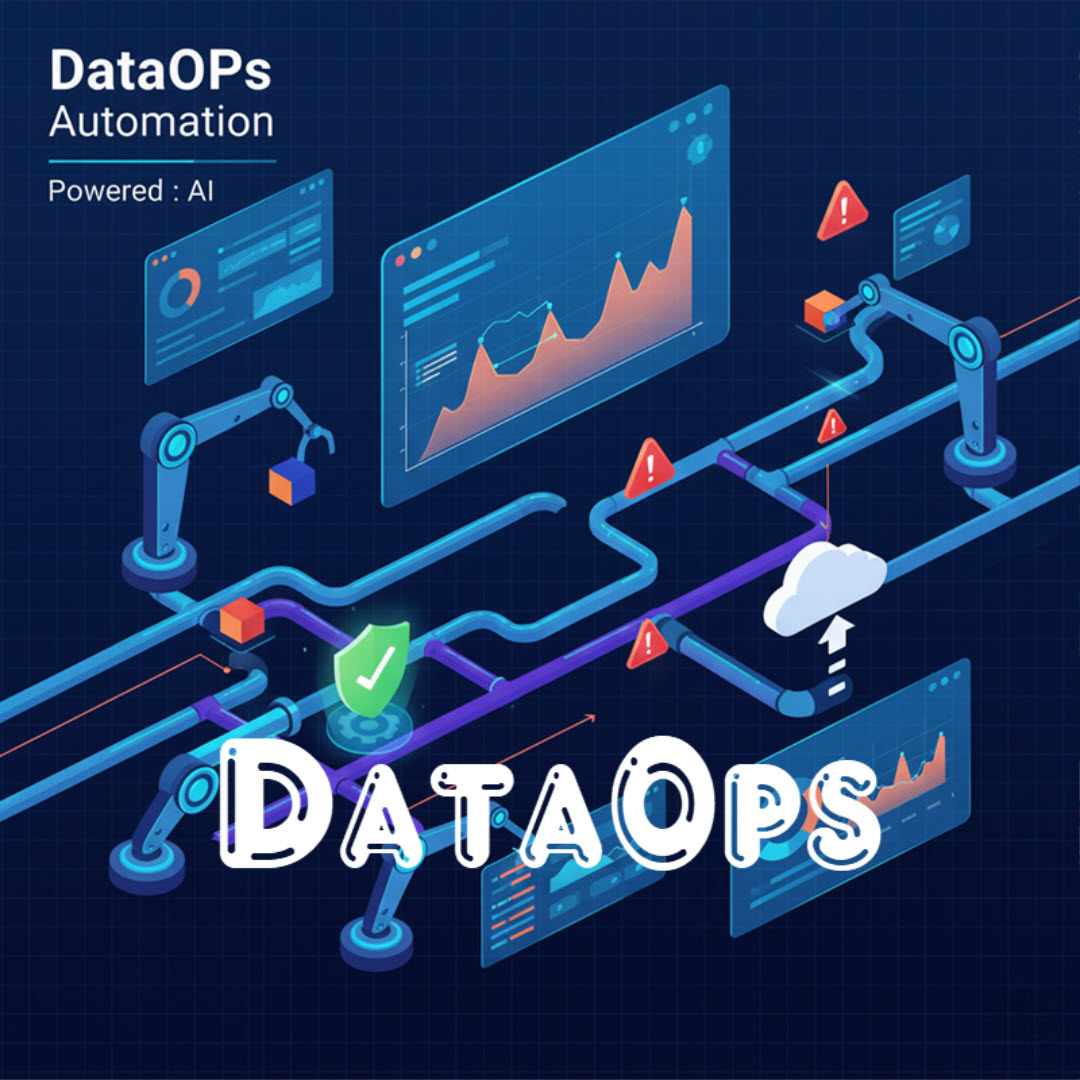
In today’s digital economy, data is the foundation of every competitive enterprise. But collecting massive amounts of data is not the problem anymore managing it with speed, accuracy, and adaptability is. This is where DataOps emerges as the next frontier in agile data management.
While DevOps transformed software development by connecting developers and operations into one continuous delivery pipeline, DataOps is doing the same for data. It brings together people, processes, and technology to accelerate how organizations collect, process, and deliver trusted data for analytics and decision-making.
If your organization still treats data as a project to “complete,” rather than a living product to continuously refine, DataOps can fundamentally change your trajectory.
What is DataOps?
DataOps is an agile, process-oriented methodology designed to improve the quality, speed, and collaboration in data analytics. It combines principles from DevOps, Agile, and Lean Manufacturing, applying them to the data lifecycle from ingestion and transformation to delivery and consumption.
In simple terms, DataOps enables your data teams to build, test, and deploy data pipelines continuously, just like developers release new versions of applications.
The goal is to create a culture of continuous delivery and improvement, where data moves seamlessly from source to decision without bottlenecks, silos, or manual intervention.
Why Traditional Data Management Fails Today
For years, organizations relied on centralized data warehouses and waterfall-style processes for analytics projects. A business team would request a report, analysts would gather and prepare the data, and IT would deploy dashboards weeks or months later.
This model might have worked when decisions could wait but not today.
- Business conditions change daily.
- Data sources multiply across SaaS, IoT, and cloud platforms.
- Stakeholders expect near real-time insights.
Traditional data pipelines, built for stability rather than agility, cannot keep up. Every schema change or new source leads to long delays. Analysts spend 70 to 80% of their time cleaning and preparing data instead of analyzing it.
DataOps eliminates that friction by applying automation, collaboration, and continuous integration principles to data management.
The Core Pillars of DataOps
To understand how DataOps delivers agility, let’s break it down into its core components:
1. Agility and Iteration
DataOps applies Agile methods such as short sprints, frequent feedback, and continuous improvement to data delivery. Instead of waiting months for a perfect dataset, teams deliver “data products” in incremental versions, refining them with real user feedback.
This makes data more responsive to business needs and dramatically reduces time to insight.
2. Automation Everywhere
Automation sits at the heart of DataOps. From data ingestion and transformation to testing and deployment, automation reduces human error, ensures consistency, and speeds up cycle times.
Tools like Apache Airflow, dbt, and DataKitchen enable CI/CD for data, automatically validating and promoting pipelines across environments.
3. Collaboration Across Teams
DataOps eliminates silos between data engineers, analysts, scientists, and business users. Everyone operates on shared goals, visibility, and accountability.
Teams collaborate in real time using unified workflows, shared repositories, and clear communication loops.
4. Monitoring and Quality Assurance
In DataOps, every pipeline is continuously tested and monitored. Data quality metrics such as accuracy, timeliness, and completeness are tracked as KPIs.
This proactive approach ensures that bad data doesn’t reach production dashboards, protecting the trust in every business decision.
5. Product Thinking for Data
Instead of treating data as a one-time deliverable, DataOps treats it as a product with users, lifecycle, and measurable value. This mindset shift pushes teams to focus on usability, maintainability, and scalability.
The Business Case for DataOps
The most powerful argument for DataOps is its impact on business outcomes. Organizations that adopt it see measurable results within months:
- Faster Time to Insight – Automated pipelines and continuous delivery reduce data provisioning time from weeks to hours.
- Improved Data Quality – Automated testing and monitoring eliminate inconsistencies early in the pipeline.
- Higher Agility – Data teams respond quickly to new requirements without overhauling systems.
- Better Collaboration – Business users and technical teams align on shared goals, improving adoption and satisfaction.
- Lower Operational Cost – Automation and standardization reduce the maintenance burden of manual data operations.
According to Gartner, companies that implement DataOps practices can reduce data-related cycle times by up to 90% and boost analytics efficiency by 30% or more.
Common Challenges in DataOps Adoption
Despite its potential, adopting DataOps requires overcoming key organizational and technical barriers:
- Cultural Resistance: Teams accustomed to traditional workflows may find agile experimentation uncomfortable. Leadership must champion a culture of iteration over perfection.
- Tooling Complexity: Integrating CI/CD tools, orchestration systems, and quality frameworks can be daunting without clear governance.
- Skill Gaps: Successful DataOps implementation requires professionals who understand both data engineering and DevOps principles.
- Governance vs. Agility: Balancing compliance and flexibility is critical. Without the right controls, rapid iteration can risk data integrity or security.
The key is to start small by piloting DataOps on a high-value, low-risk data product and scaling gradually.
Real-World Example: DataOps in Action
Consider a retail enterprise struggling with slow insights due to siloed data across marketing, supply chain, and e-commerce systems.
By adopting a DataOps framework, the company restructured its pipelines into modular, reusable data products. It implemented automated quality checks, version control, and real-time monitoring.
The results were immediate:
- Data pipeline deployment time dropped from 14 days to 2 days.
- Marketing campaign analytics improved from weekly updates to daily.
- Cross-functional collaboration between marketing and IT teams increased significantly.
This agility allowed the company to adjust pricing and inventory decisions in real time, improving margins during seasonal sales.
How to Get Started with DataOps
Transitioning to DataOps doesn’t require a massive overhaul; it requires a strategic, phased approach.
Step 1: Assess Your Current Data Maturity
Map your current data landscape, identify bottlenecks, and measure how long it takes to move from data ingestion to actionable insight.
Step 2: Define Clear Goals
Start with a single, measurable outcome such as reducing data refresh time, improving dashboard reliability, or cutting manual intervention.
Step 3: Assemble a Cross-Functional Team
Include data engineers, analysts, business users, and IT leaders. Diversity of perspectives is essential to create an iterative feedback loop.
Step 4: Automate Key Workflows
Implement automation tools for data validation, deployment, and monitoring. Even small wins here will demonstrate the ROI of DataOps.
Step 5: Measure and Communicate Success
Track and share KPIs such as data delivery speed, quality improvements, and adoption rates. Transparency builds momentum across teams.
The Future of DataOps
As organizations move toward AI-driven decision-making, DataOps will become a cornerstone of enterprise intelligence. Machine learning models, generative AI systems, and predictive analytics all rely on clean, timely, and contextual data.
Without DataOps, even the best AI strategies fail due to inconsistent pipelines or stale data.
In the coming years, expect to see AI-powered DataOps where machine learning automates pipeline optimization, anomaly detection, and governance enforcement.
DataOps is not just a methodology; it’s a mindset shift toward continuous intelligence, where businesses can respond to change as it happens.
The Takeaway: Make Data Work for You
The companies winning today are those that make decisions faster than their competitors. DataOps gives you that edge. It transforms your data ecosystem from rigid to adaptive, from fragmented to unified, and from reactive to predictive.
Your next step? Identify one critical data workflow in your organization that slows down decision-making. Turn it into your first DataOps pilot.
The sooner you start, the faster you’ll move from data management to data mastery and from data as a cost center to data as a growth engine.
Anand Subramanian
Technology expert and AI enthusiast
Anand Subramanian is a technology expert and AI enthusiast currently leading the marketing function at Intellectyx, a Data, Digital, and AI solutions provider with over a decade of experience working with enterprises and government departments.
 Explore more on these topics



























 Guest Blogging: The Definitive Guide

 Top Trending Topics
 Share This
 Link copied!
 Recently Updated News
 thực chiến - Kiến tạo tương lai cho các nhà sáng tạo nội dung.