




The pros and cons of the Centralized Enterprise Automation Operating model
Last updated: November 18, 2025 Read in fullscreen view


 Recommended for you
- 05 Oct 2025
 The New Facebook Algorithm: A Paradigm Shift in Content Discovery 265/327
 - 21 Dec 2023 Top 12 Low-Code Platforms To Use in 2024 208/1504
- 01 Dec 2025 Manufacturing 4.0: AI Agents Enabling Self-Optimizing Production Systems 166/225
- 03 Oct 2025 Top CMS Trends 2026: The Future of Digital Content Management 162/191
- 25 Mar 2026 Token Bills: The "Cost Shock" After the AI Boom in Companies 152/172
- 31 Dec 2025 10 Skills to Make You "Irreplaceable" in the Next 3 Years (even if AI changes everything) 148/178
- 20 Dec 2025 The Future of IT Consulting: Key Trends for 2026–2030 146/186
- 06 Nov 2025 DataOps: The Next Frontier in Agile Data Management 135/194
- 18 Jul 2024 The 8 Best ways to Innovate your SAAS Business Model in 2024 132/387
- 26 Mar 2026 What Is a System Integrator (SI)? Why the Software Subscription Model Is Becoming the New Standard 128/161
- 18 Dec 2025 EOS as a Business Operating System: Powerful, but Not Always Plug-and-Play 126/179
- 06 Nov 2023 How do you streamline requirement analysis and modeling? 124/361
- 04 Mar 2026 CRM Trends Shaping Customer Engagement in 2026 116/143
- 20 Jan 2021 Fail early, fail often, fail cheap, fail safe but always fail forward 113/927
- 20 Feb 2025 How Machine Learning is Shaping the Future of Digital Advertising 110/232
- 16 Aug 2022 What is a Headless CMS? 105/391
- 09 Oct 2022 Rapid Application Development Case Study - TIGO Consulting 105/702
- 16 Aug 2022 What is a Headless CMS? 105/391
- 27 Jul 2024 Positive Psychology in the Digital Age: Future Directions and Technologies 105/533
- 02 Nov 2021 [Case Study] Streamlined Data Reporting using Tableau 103/406
- 11 Nov 2021 What is an IT Self-service Portal? Why is it Important to Your Business? 101/548
- 03 Jan 2024 Why Partnership is important for Growth? 101/259
- 02 Dec 2024 The Intersection of AI and Business Analytics: Key Concepts to Master in Your Business Analytics Course 101/396
- 16 Sep 2022 Examples Of Augmented Intelligence In Today’s Workplaces Shaping the Business as Usual 98/534
- 16 Sep 2022 Examples Of Augmented Intelligence In Today’s Workplaces Shaping the Business as Usual 98/534
- 09 Oct 2024 Are Expensive CRM Systems Really Worth It? 97/191
- 20 Aug 2025 What Is Agentic AI? The Next Phase of Artificial Intelligence 94/253
- 11 Oct 2022 Why choose Billable Viable Product (BVP) over Minimum Viable Product (MVP) 94/436
- 18 Jan 2024 Self-healing code is the future of software development 93/310
- 25 Sep 2024 Enhancing Decision-Making Skills with an MBA: Data-Driven Approaches for Business Growth 92/299
- 25 Jan 2025 The Decline of Traditional SaaS and the Rise of AI-first Applications 90/195
- 09 Sep 2025 Aligning BI Dashboards with KPIs: A Business + Data Collaboration Guide 90/178
- 08 Feb 2024 Case Study: How and why I built Japan Dev? 89/294
- 23 Jun 2025 AI Avatars in the Metaverse: How Digital Beings Are Redefining Identity and Social Interaction 85/272
- 22 May 2025 Role of Self-Service in CRM: Customer & Partner Portals for Automation 82/165
- 30 Jul 2024 The Future of IT Consulting: Trends and Opportunities 80/290
- 02 Dec 2022 Success Story: Satsuki - Sales Management Software, back office app for School Subscription Management 78/317
- 18 Aug 2024 The Future of Web Development: Emerging Trends and Technologies Every Developer Should Know 77/272
- 22 Nov 2024 The Role of AI in Enhancing Business Efficiency and Decision-Making 77/272
- 31 Dec 2022 The New Normal for Software Development 76/429
- 20 Jan 2022 TIGO Self-Organization Practice: Change Management Workflow 76/547
- 03 Apr 2021 How digital asset management streamlines your content workflow? 76/404
- 31 Dec 2023 Software Development Outsourcing Trends to Watch Out for in 2024 75/304
- 10 Sep 2024 Leading Remote Teams in Hybrid Work Environments 75/218
- 03 Sep 2022 The secret of software success: Simplicity is the ultimate sophistication 74/278
- 27 Feb 2025 How AI Agents are Changing Software Development? 73/310
- 19 Dec 2023 How AI is Transforming Software Development? 72/365
- 03 Nov 2023 Why Is Billable Viable Product An Alternative To Minimum Viable Product? 71/262
- 13 Feb 2021 Why is TIGOSOFT a software house for Enterprise Application Development? 70/450
- 09 Oct 2024 Short-Form Video Advertising: The Secret to Captivating Your Audience 66/198
- 09 Jun 2022 Case Study: PRODUCT LAUNCH WITH AGILE METHODOLOGY 64/358
- 15 Aug 2025 Quantum Technology: Global Challenges and Opportunities for Innovators 60/190
- 21 Jun 2021 6 Useful Tips To Streamline Business Processes and Workflows 59/590
- 16 Jun 2022 Rapid Application Development (RAD): Pros and Cons 56/936
- 10 Sep 2024 AI in Email Marketing: Personalization and Automation 50/227
- 31 Dec 2022 Future of Software Development Trends and Predictions 46/197
In a world where enterprise systems grow more complex by the day, many organizations turn to the centralized enterprise automation model to regain clarity, control, and consistency. By consolidating tools, skills, and governance under a dedicated Enterprise Automation Team, businesses can streamline operations, reduce costs, and accelerate value delivery. Yet, while this model offers powerful benefits, it also raises questions about agility, scalability, and how to balance enterprise-wide priorities with local needs. This article explores when a centralized approach shines—and when it starts to strain.
The centralized model is probably the most popular, especially by midsize and “buy oriented” large organizations. The basic principles are quite simple: Recognizing the complexity of the challenge, organizations decide to centralize the responsibility of enterprise automation in order to optimize the technology portfolio and build up critical mass in terms of skills.
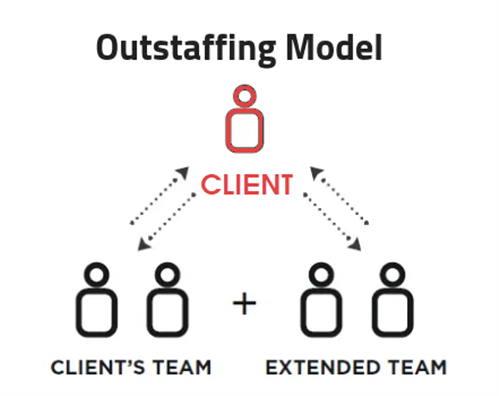
In essence, enterprise automation is centrally delivered by an Enterprise Automation Team (EAT) that’s fully in charge of the strategy, which includes selecting the appropriate set of tools. The EAT also acts as an “enterprise automation factory” (the strategy and factory aspects are at times the responsibilities of two distinct, albeit related, teams). When local teams have an enterprise automation issue to tackle, they “outsource” the implementation of the needed capabilities to the EAT. The local teams define what they need and the EAT provides the solutions.
In real life though, organizations often have more than one CoE, typically specialized by use case. For example, they might have a process automation CoE, an application integration CoE, a data integration CoE, and an API CoE, which of course complicates the matter
The pros of the centralized model
The centralized model is attractive to many CIOs and IT Leaders because of its benefits:
- Efficiency: A centralized “enterprise automation factory” can, overtime, become quite efficient. Enterprise automation is what they do day in/day out. Therefore, they get more and more familiar with the tools at their disposal, develop their own approaches and methodologies, learn a growing number of best practices, and develop reusable templates. Anecdotally, I have seen EATs improve their productivity quite significantly, in some cases up to 50%—just in their first year of operation.
- Economies of scale in technology and skills: An EAT will naturally try to avoid duplicate and overlapping technologies whenever possible. Although adopting a single enterprise automation tool would be unrealistic in most cases, the EAT can at least reduce the number of different products to what is strictly needed. This can help reduce, or at least keep under control, the EAT’s costs in terms of software licenses, maintenance, and cloud subscriptions, which in turn helps to contain the spread of skills. Moreover, by making those skills a shared resource, the chances of them sitting on their hands because of a lack of demand is minimized.
- Strong focus on governance and control: The EAT is the only enterprise automation factory in the organization. Therefore, they can apply consistent security, compliance, and quality of service policies across all the processes they implement. Similarly, they can adopt naming conventions, standardized patterns, reusable templates, and other mechanisms aimed to enforce development process and data governance policies. Moreover, the EAT can keep track of all the processes they implement, manage their life cycle, monitor their execution, and maintain and support them, thus having full control of the overall enterprise automation environment.
The cons of the centralized model
Although quite rational and optimized, the centralized mode isn’t immune to issues:
- Organizational bottlenecks: If the EAT is perceived as a capable and reliable factory, chances are that the demand for its services will grow to the point that it cannot respond to all the incoming requirements in a timely way. Thus, it has to set up bureaucratic processes and procedures to manage and prioritize the inflow of requests. In other words, at least in peak times, the EAT may become an organizational bottleneck, which would be the antithesis of the much-coveted business agility.
- Long time to value: No matter how efficient and large the EAT is, it will inevitably prioritize the most critical, impactful, or strongly-sponsored requirements, whilst second-tier needs will be postponed, perhaps indefinitely. This may lead to a long time-to-value for business initiatives that are associated with these second-tier requirements, which, in turn, generates frustration in the business side of the house and a no-holds barred fight over access to the EAT’s resources across different local units.
- Mostly targeting “enterprise” needs: The inevitable focus on the most critical requirements will imply that the EAT tends to target the most advanced “enterprise” class requirements, both in their tools selection and in the skills they’re building and hiring for. Therefore, the risk is that “local” requirements will be considered “second class” citizens that the EAT only addresses in their spare time. Moreover, since the EAT’s toolset is focused on the most demanding scenarios, it may prove to be “overkill” for these local, (often) less complex requirements. For example, this is what many RPA or classic ESB users are experiencing in situations where a low-code application platform or an iPaaS would be more suitable.
In the end, the main issue of the centralized model is its intrinsic lack of agility. It works fine when it comes to addressing end-to-end, enterprise-wide, enterprise automation requirements, but it’s not the ideal approach to support local, let alone individual, needs, which are often time-constrained and aren’t necessarily hyper complex.
When should you adopt the centralized model?
There are a couple of situations where the centralized model is a good fit, at least as a starting point:
- If your application portfolio mostly consists of packaged business/SaaS applications, you may have a significant number of application specialists, but a limited amount of enterprise automation skills scattered across different application teams. Therefore, it is more efficient to make these skills a shared resource.
- If your organization is concerned about costs, governance, and compliance, a centralized setup allows you to exert maximum control.
The federated model, discussed in a separate article, and the centralized models represent radically diverging ways of addressing enterprise automation requirements and needs, which reflect the different culture, skills, and business priorities of the organizations adopting them.
However, in real life, many organizations, even if they are formally committed to the centralized model, end up implementing a model somewhere in between the two extremes. In effect, very few, if any, large organizations are fully centralized. For example, the most technically astute local units may decide to bypass the EAT to speed up time to value or because they have very specific needs that the EAT cannot address. Even in the most tightly-controlled scenarios, the centralized model coexists with pockets of the federated approach.
This means that, in many cases, the theoretical centralized setup is a temporary state, because the only way for the EAT to regain some form of control over these pockets of the federated model is to move toward a "democratized approach" (local units perform the work, which is enabled and supported by a central team).
Head of Research, Future of the Enterprise @ Workato
 Explore more on these topics





















 Guest Blogging: The Definitive Guide
 Top Trending Topics
 Share This
 Link copied!
 Recently Updated News