



The Rise of AgentOps: How Enterprises Are Managing and Scaling AI Agents
Last updated: November 26, 2025 Read in fullscreen view


 Recommended for you
- 06 Mar 2026
 Next-Generation AI Agents Explained: OpenClaw, NanoClaw, IronClaw and the Rise of Agent Architectures 349/386
 - 29 Oct 2024 Top AI Tools and Frameworks You’ll Master in an Artificial Intelligence Course 183/587
- 02 Oct 2022 The Real Factors Behind Bill Gates’ Success: Luck, Skills, or Connections? 180/553
- 01 Dec 2025 Manufacturing 4.0: AI Agents Enabling Self-Optimizing Production Systems 166/227
- 09 Jul 2024 What Is Artificial Intelligence and How Is It Used Today? 163/416
- 23 Dec 2024 Garbage In, Megabytes Out (GIMO): How to Rise Above AI Slop and Create Real Signal 162/215
- 05 Jun 2025 How AI-Driven Computer Vision Is Changing the Face of Retail Analytics 159/282
- 16 Oct 2025 AI Inference Explained Simply: What Developers Really Need to Know 157/191
- 02 Dec 2025 The Question That Shook Asia: What Happens When We Ask AI to Choose Between a Mother and a Wife? 153/189
- 06 Nov 2025 Top 10 AI Development Companies in the USA to Watch in 2026 142/218
- 06 Dec 2025 Enterprise Operations 2.0: Why AI Agents Are Replacing Traditional Automation 138/182
- 06 Nov 2025 DataOps: The Next Frontier in Agile Data Management 135/194
- 25 Nov 2025 How AI Agents Are Redefining Enterprise Automation and Decision-Making 127/185
- 24 Mar 2026 AI for Financial Reconciliation: Automating Finance Operations in 2026 127/154
- 25 Dec 2025 What Is Algorithmic Fairness? Who Determines the Value of Content: Humans or Algorithms? 114/157
- 15 Apr 2024 Weights & Biases: The AI Developer Platform 114/305
- 01 Jul 2025 The Hidden Costs of Not Adopting AI Agents: Risk of Falling Behind 112/261
- 16 Aug 2022 What is a Headless CMS? 105/391
- 27 Aug 2025 How AI Consulting Is Driving Smarter Diagnostics and Hospital Operations 102/202
- 12 Jan 2026 Companies Developing Custom AI Models for Brand Creative: Market Landscape and Use Cases 100/132
- 16 Sep 2022 Examples Of Augmented Intelligence In Today’s Workplaces Shaping the Business as Usual 98/534
- 10 Nov 2025 Multi-Modal AI Agents: Merging Voice, Text, and Vision for Better CX 98/212
- 17 Oct 2025 MLOps vs AIOps: What’s the Difference and Why It Matters 97/208
- 21 Aug 2024 What is Singularity and Its Impact on Businesses? 94/554
- 24 Dec 2024 Artificial Intelligence and Cybersecurity: Building Trust in EFL Tutoring 93/263
- 06 May 2025 How Machine Learning Is Transforming Data Analytics Workflows 92/289
- 09 Sep 2025 Aligning BI Dashboards with KPIs: A Business + Data Collaboration Guide 90/178
- 07 Nov 2025 Online vs. Offline Machine Learning Courses in South Africa: Which One Should You Pick? 90/160
- 28 Nov 2025 How AI Will Transform Vendor Onboarding and Seller Management in 2026 81/211
- 04 Oct 2023 The Future of Work: Harnessing AI Solutions for Business Growth 77/356
- 22 Sep 2025 Why AI Is Critical for Accelerating Drug Discovery in Pharma 74/189
- 24 Oct 2025 AI Agents in SaaS Platforms: Automating User Support and Onboarding 72/143
- 21 Apr 2025 Agent AI in Multimodal Interaction: Transforming Human-Computer Engagement 67/262
- 05 Aug 2024 Affordable Tech: How Chatbots Enhance Value in Healthcare Software 60/290
- 15 Aug 2025 Quantum Technology: Global Challenges and Opportunities for Innovators 60/190
- 29 Aug 2025 How AI Is Transforming Modern Management Science 57/124
| About the Author | Anand Subramanian | Technology expert and AI enthusiast |
Anand Subramanian is a technology expert and AI enthusiast currently leading the marketing function at Intellectyx, a Data, Digital, and AI solutions provider with over a decade of experience working with enterprises and government departments. |
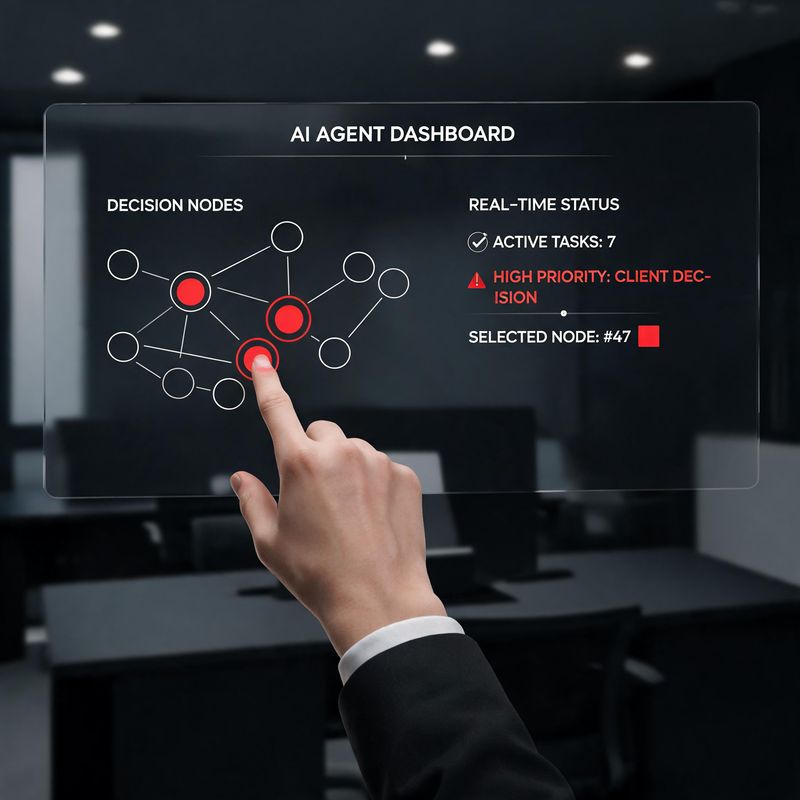
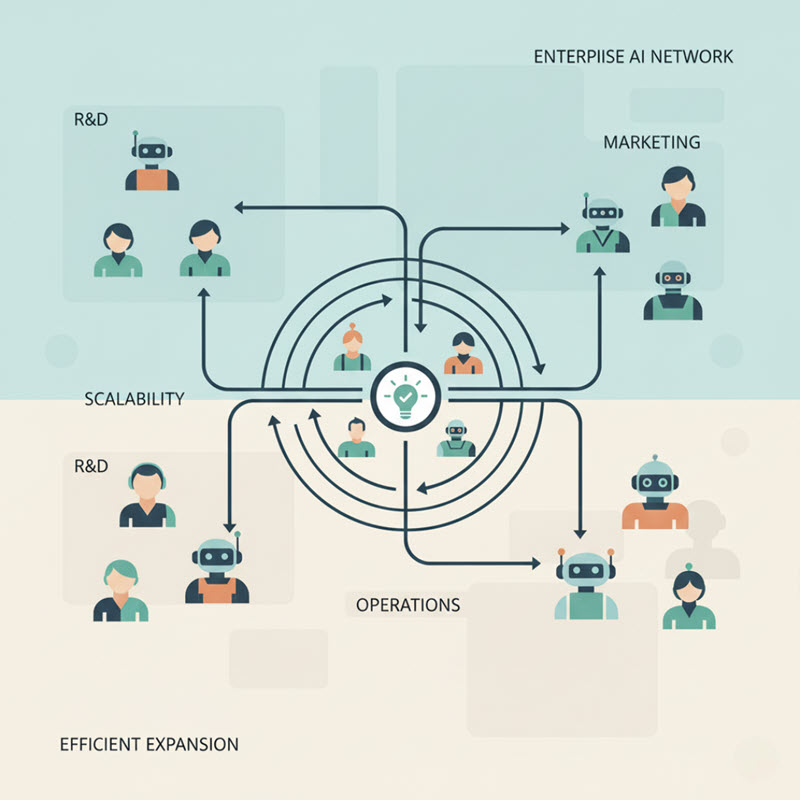
AI agents are evolving from isolated assistants into complex, interconnected systems capable of running entire business processes. What started as simple chatbots or automation tools has grown into a network of specialized agents that can collaborate, communicate, and adapt dynamically across an enterprise.
As enterprises deploy more AI agents across different functions, they face a new challenge: how to govern, monitor, and scale these intelligent systems efficiently. This is where AgentOps comes into play a discipline that combines operational rigor, governance, and automation to ensure enterprise AI runs smoothly and responsibly.
Why Enterprises Need AgentOps Now
As AI agent development accelerates, enterprises are realizing that managing these agents is fundamentally different from managing software applications or traditional automation scripts.
Unlike static workflows, AI agents are dynamic entities. They learn, interact, and make independent decisions based on context. Without proper oversight, this flexibility can lead to risks from data exposure and inconsistent behavior to compliance issues.
Here are three reasons why AgentOps is becoming essential:
1. Scale and Complexity
As the number of agents increases, so does the need for orchestration. Multiple agents might operate across customer service, marketing, finance, and supply chain functions. Coordinating them requires real-time visibility and control.
2. Governance and Compliance
Enterprises must ensure that agents act within predefined boundaries. AgentOps helps define roles, permissions, and ethical guidelines to maintain compliance and prevent misuse.
3. Performance Optimization
Like humans, agents can drift from their goals. Continuous monitoring ensures they deliver consistent results, learn effectively, and adapt to business objectives.
AgentOps ensures enterprises don’t just deploy agents, they deploy them responsibly and strategically.
AgentOps Architecture: The Foundation of Enterprise AI Governance
A robust AgentOps architecture typically includes three key layers:
1. Observation Layer
This layer captures every agent interaction, decision, and system event. It enables enterprises to analyze how agents perform across different contexts.
2. Orchestration Layer
This is where agents are coordinated. It manages agent-to-agent and agent-to-human interactions, ensuring collaboration without conflict.
3. Governance Layer
Here, enterprise policies, compliance checks, and ethical guidelines are enforced. It ensures that agents act within approved limits and that their decisions remain explainable and auditable.
Together, these layers form the backbone of scalable and trustworthy AI agent ecosystems.
From Pilot Projects to Enterprise-Grade AI Agent Deployments
In the early days, enterprises built isolated AI agents for specific use cases: customer support, analytics automation, or marketing optimization. But now, as adoption scales, organizations need to manage hundreds of agents working across departments.
For example:
- A retail enterprise may deploy AI agents for inventory forecasting, supplier communication, and customer engagement.
- A banking enterprise may have agents handling fraud detection, document processing, and personalized financial advice.
- A healthcare organization could use agents to analyze medical records, assist clinicians, and manage patient interactions.
AgentOps ensures these deployments stay aligned with business goals and compliance frameworks.
It’s no longer about building a single agent but managing an entire AI agent network that behaves predictably, securely, and ethically.
Key Benefits of Implementing AgentOps
Enterprises adopting AgentOps frameworks report several tangible benefits:
1. Operational Efficiency
Automated monitoring reduces manual oversight and speeds up agent lifecycle management.
2. Improved Compliance
Continuous policy enforcement ensures all agents follow enterprise standards and data governance rules.
3. Better Collaboration
Agents can seamlessly communicate across departments through shared protocols and orchestration systems.
4. Reduced Risk
Proactive detection of agent drift or rogue behavior minimizes compliance and security threats.
5. Continuous Learning
Feedback mechanisms ensure agents evolve intelligently without compromising stability.
AgentOps transforms AI from a series of isolated experiments into a coordinated, enterprise-wide strategy.
AgentOps and AI Governance: Two Sides of the Same Coin
AI governance focuses on ethical, transparent, and fair use of AI across the enterprise. AgentOps extends that mission into operational reality.
While governance sets the rules, AgentOps enforces them tracking behavior, ensuring compliance, and maintaining traceability. Together, they form a dual system of trust and control that enterprises need to safely scale intelligent automation.
Challenges in Adopting AgentOps
Despite its advantages, implementing AgentOps is not without hurdles:
- Tool Fragmentation: There’s no universal standard for monitoring or orchestrating AI agents yet.
- Skill Gaps: Enterprises need hybrid teams with knowledge in AI, DevOps, and compliance.
- Cultural Shifts: Teams must learn to collaborate with autonomous systems and trust AI-driven recommendations.
- Integration Overheads: Connecting AgentOps with existing enterprise systems (CRMs, ERPs, and data platforms) can be complex.
However, forward-thinking enterprises are addressing these challenges through specialized AI agent development company partnerships and cross-functional governance teams.
The Future of AgentOps: Toward Fully Autonomous Enterprises
In the coming years, AgentOps platforms will evolve into full-fledged AI command centers, providing real-time control, analytics, and optimization for every agent in the enterprise ecosystem.
Future capabilities may include:
- Self-healing agents that detect and correct their own errors.
- Cross-agent collaboration frameworks that allow dynamic teamwork.
- Predictive governance that identifies risks before they occur.
Enterprises that adopt AgentOps early will gain a competitive edge, building AI agents for enterprise ecosystems that are secure, scalable, and self-optimizing.
Final Thought: From Automation to Intelligence Management
AI agents are no longer side projects; they're becoming the core of enterprise operations. But with power comes responsibility.
AgentOps is the key to unlocking scalable, governed, and ethical AI. It allows enterprises to not only deploy intelligent agents but also manage them with the same precision, accountability, and agility expected of mission-critical systems.
As AI agents take on more roles across the business, AgentOps ensures they remain aligned, transparent, and trusted, shaping the foundation for truly intelligent enterprises.
Anand Subramanian
Technology expert and AI enthusiast
Anand Subramanian is a technology expert and AI enthusiast currently leading the marketing function at Intellectyx, a Data, Digital, and AI solutions provider with over a decade of experience working with enterprises and government departments.
 Explore more on these topics




























 Guest Blogging: The Definitive Guide

 Top Trending Topics
 Share This
 Link copied!
 Recently Updated News