
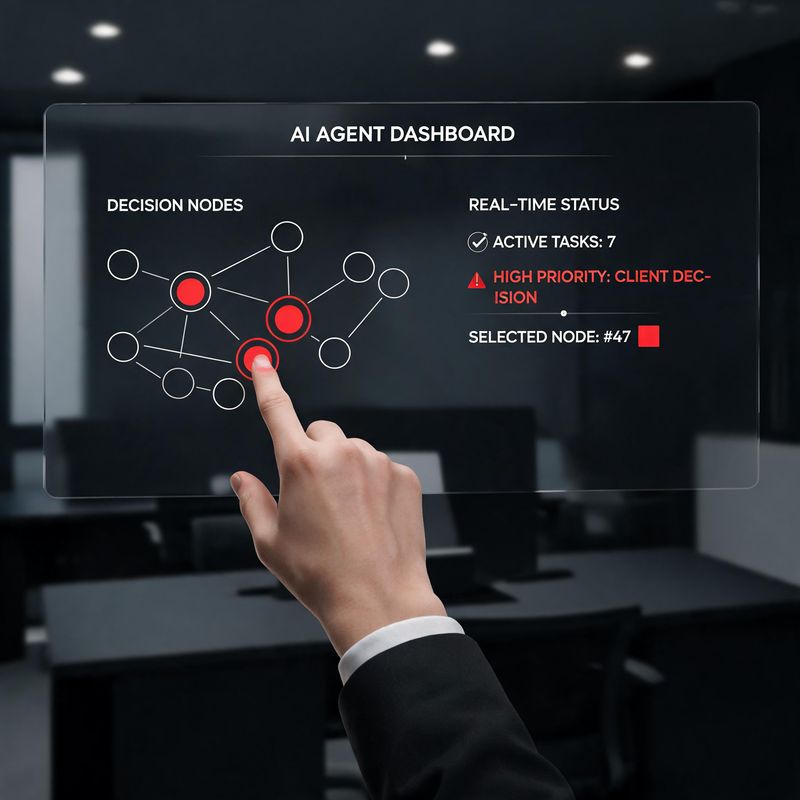

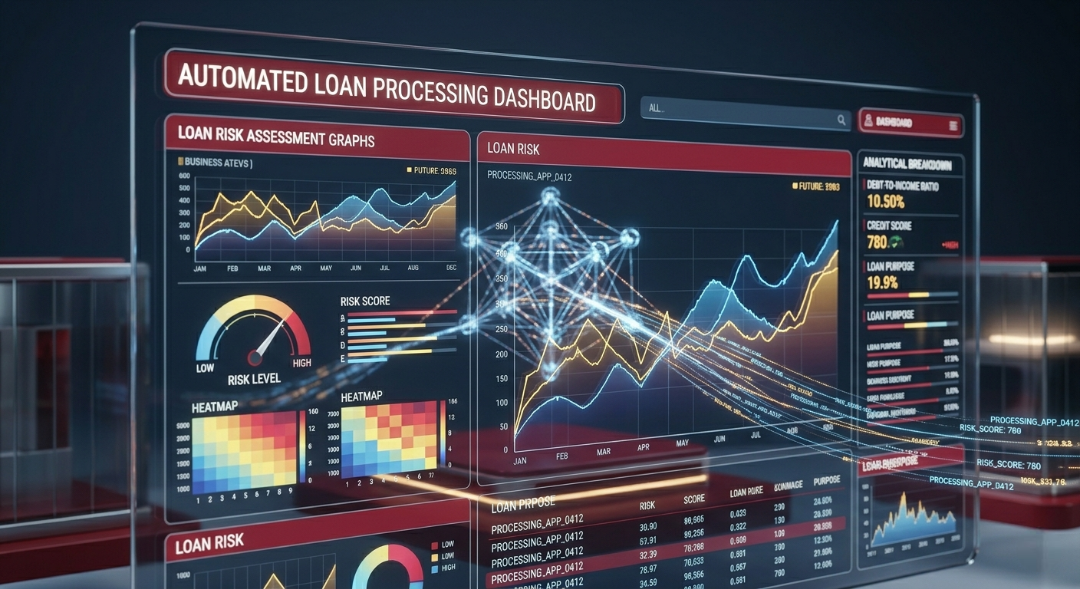

How AI Agents Are Redefining Enterprise Automation and Decision-Making
Last updated: November 26, 2025 Read in fullscreen view


 Recommended for you
- 06 Mar 2026
 Next-Generation AI Agents Explained: OpenClaw, NanoClaw, IronClaw and the Rise of Agent Architectures 345/382
 - 14 Jan 2026 How to Evaluate the Business and Productivity Software Company Seismic on RFP AI Agent Use Cases 246/296
- 29 Oct 2024 Top AI Tools and Frameworks You’ll Master in an Artificial Intelligence Course 183/587
- 01 Dec 2025 Manufacturing 4.0: AI Agents Enabling Self-Optimizing Production Systems 166/227
- 09 Jul 2024 What Is Artificial Intelligence and How Is It Used Today? 163/416
- 23 Dec 2024 Garbage In, Megabytes Out (GIMO): How to Rise Above AI Slop and Create Real Signal 161/214
- 05 Jun 2025 How AI-Driven Computer Vision Is Changing the Face of Retail Analytics 159/282
- 16 Oct 2025 AI Inference Explained Simply: What Developers Really Need to Know 156/190
- 02 Dec 2025 The Question That Shook Asia: What Happens When We Ask AI to Choose Between a Mother and a Wife? 153/189
- 06 Nov 2025 Top 10 AI Development Companies in the USA to Watch in 2026 142/218
- 06 Dec 2025 Enterprise Operations 2.0: Why AI Agents Are Replacing Traditional Automation 138/182
- 06 Nov 2025 DataOps: The Next Frontier in Agile Data Management 135/194
- 24 Mar 2026 AI for Financial Reconciliation: Automating Finance Operations in 2026 127/154
- 12 May 2026 Top 6 AI AR/VR Filter Tools for Mind-Blowing Videos and Photos in 2026 123/143
- 25 Dec 2025 What Is Algorithmic Fairness? Who Determines the Value of Content: Humans or Algorithms? 114/157
- 15 Apr 2024 Weights & Biases: The AI Developer Platform 114/305
- 01 Jul 2025 The Hidden Costs of Not Adopting AI Agents: Risk of Falling Behind 112/260
- 16 Aug 2022 What is a Headless CMS? 105/391
- 27 Aug 2025 How AI Consulting Is Driving Smarter Diagnostics and Hospital Operations 102/202
- 12 Jan 2026 Companies Developing Custom AI Models for Brand Creative: Market Landscape and Use Cases 99/131
- 16 Mar 2023 10 Reasons to Choose a Best-of-Breed Tech Stack 99/311
- 10 Nov 2025 Multi-Modal AI Agents: Merging Voice, Text, and Vision for Better CX 98/212
- 21 Nov 2025 The Rise of AgentOps: How Enterprises Are Managing and Scaling AI Agents 98/153
- 16 Sep 2022 Examples Of Augmented Intelligence In Today’s Workplaces Shaping the Business as Usual 98/534
- 17 Oct 2025 MLOps vs AIOps: What’s the Difference and Why It Matters 97/208
- 21 Aug 2024 What is Singularity and Its Impact on Businesses? 94/554
- 24 Dec 2024 Artificial Intelligence and Cybersecurity: Building Trust in EFL Tutoring 93/263
- 06 May 2025 How Machine Learning Is Transforming Data Analytics Workflows 92/289
- 08 Apr 2026 Top AI Agent Development Companies for Manufacturing Industry (2026) 92/120
- 07 Nov 2025 Online vs. Offline Machine Learning Courses in South Africa: Which One Should You Pick? 90/160
- 09 Sep 2025 Aligning BI Dashboards with KPIs: A Business + Data Collaboration Guide 90/178
- 24 Aug 2022 7 Ways to Improve Software Maintenance 83/386
- 28 Nov 2025 How AI Will Transform Vendor Onboarding and Seller Management in 2026 81/211
- 04 Oct 2023 The Future of Work: Harnessing AI Solutions for Business Growth 77/356
- 22 Sep 2025 Why AI Is Critical for Accelerating Drug Discovery in Pharma 74/189
- 24 Oct 2025 AI Agents in SaaS Platforms: Automating User Support and Onboarding 71/142
- 21 Apr 2025 Agent AI in Multimodal Interaction: Transforming Human-Computer Engagement 67/262
- 05 Aug 2024 Affordable Tech: How Chatbots Enhance Value in Healthcare Software 60/290
- 29 Aug 2025 How AI Is Transforming Modern Management Science 57/124
- 29 May 2026 The Role of IoT in Modern Insurance App Development 53/63
| About the Author | Anand Subramanian | Technology expert and AI enthusiast |
Anand Subramanian is a technology expert and AI enthusiast currently leading the marketing function at Intellectyx, a Data, Digital, and AI solutions provider with over a decade of experience working with enterprises and government departments. |
For decades, automation in enterprises has been about doing things faster, not necessarily smarter. From ERP systems to robotic process automation (RPA), the focus was clear: reduce manual work, increase throughput, and cut costs. But in today’s environment, efficiency alone doesn’t win. Enterprises need systems that can reason, decide, and adapt to constant change. They need intelligence that doesn’t just follow workflows, but improves them.
That’s where AI agents enter the picture. These digital entities are changing the very meaning of automation, from static scripts to dynamic, self-learning systems that can take action, collaborate, and make real decisions.
The result? A world where enterprise operations run on adaptive intelligence, not just repetitive logic.
From Rigid Workflows to Autonomous Decision-Makers
Traditional automation is rule-based. A task triggers an action, data flows through fixed steps, and outcomes are predictable until something goes off-script.
Imagine a purchase order that doesn’t match the expected vendor format or a sudden shift in customer demand. A rule-based system simply stops. It needs human intervention.
AI agents, however, don’t just execute instructions. They observe context, interpret the situation, and make choices. They can identify a missing field, infer what it should be, and continue the workflow, or even notify the right person with a summary of the issue. They don’t need to be told exactly what to do; they figure it out.
This autonomy marks a profound shift in how enterprises view automation. Instead of building endless workflows for every edge case, organizations can now rely on agents that learn, adjust, and respond much like human colleagues do.
Decision-Making as the New Frontier of Automation
AI agents go beyond speed and accuracy; they add judgment. They can analyze massive amounts of live data, reason about possible outcomes, and select the best course of action. That’s a big deal for enterprises that depend on timely, informed decisions.
Take a finance department: instead of waiting for end-of-month reports, an AI agent can continuously monitor expense patterns, flag anomalies, and recommend budget adjustments before overspending occurs.
Or consider customer success teams: agents can analyze support logs, detect signs of potential churn, and proactively offer solutions before issues escalate.
These aren’t just faster processes; they’re smarter ones. The agent doesn’t just follow a rule; it reasons based on business goals, data, and past performance.
Why Enterprises Are Moving Toward AI Agents Now
The timing isn’t a coincidence. Three big forces have made AI agents not just viable, but essential:
- Data has exploded and become more accessible.
Enterprises have spent years collecting structured and unstructured data. AI agents can now put that data to work, connecting insights across silos in real time. - AI models are now context-aware.
Thanks to advances in language and reasoning models, agents can understand context, business logic, and even intent, not just keywords or instructions. - Integration is no longer a barrier.
Modern APIs and secure cloud ecosystems allow AI agents to plug into CRMs, ERPs, data warehouses, and analytics tools with ease.
Together, these factors have unlocked a new operational model, one where automation becomes adaptive intelligence. Many organizations are partnering with an AI agent development company to design, train, and deploy these intelligent systems across business functions.
How AI Agents Transform Enterprise Functions
AI agents are not confined to one department; they’re reshaping entire business units.
Here’s how different enterprise teams are using them:
Finance and Procurement
Agents can monitor transactions, reconcile records, flag anomalies, and even communicate with suppliers automatically. They can detect duplicate payments, track spending trends, and draft summaries for auditors, all while maintaining compliance.
Supply Chain and Operations
In logistics, agents can track shipments, detect delays, reroute deliveries, and communicate status updates across the ecosystem. Instead of humans chasing updates, the system manages itself.
Marketing and Growth
Agents monitor campaign data, identify underperforming segments, and adjust bids or messaging in real time. They can generate content variants, test them, and analyze which one drives better conversions, autonomously.
Customer Success and Support
AI agents triage incoming tickets, prioritize them by urgency and impact, draft replies, and even escalate issues intelligently. They learn from customer tone, sentiment, and historical outcomes to improve future responses.
Each function gains not just efficiency, but decision power. The enterprise becomes faster, more responsive, and more data-driven, without additional human load.
Beyond Efficiency: Building Adaptive Decision Systems
The real revolution isn’t in automation; it’s in adaptability.
AI agents can learn from feedback. If a procurement agent’s vendor recommendation is overridden, it analyzes why and improves future choices. Over time, this creates a self-optimizing organization, one where decision quality improves continuously.
This capability turns enterprises into learning systems. Instead of coding new rules for every change in the business environment, AI agents adjust in real time.
That’s not futuristic; it’s already happening in advanced enterprises today.
Bridging the Gap Between Humans and Machines
A common fear is that AI agents will replace human jobs. But in reality, they redefine them.
By taking over routine, repetitive tasks, agents free employees to focus on higher-value work such as strategy, innovation, and relationship-building.
For instance:
- A financial analyst can spend time interpreting insights instead of gathering data.
- A customer success manager can focus on upselling instead of ticket triaging.
- A marketing strategist can refine messaging instead of manually analyzing metrics.
Humans and agents work together. The agent handles the grunt work and surface insights, while humans apply judgment, creativity, and empathy.
The result is not job loss; it’s job elevation.
Real Enterprise Gains: What the Numbers Show
Early adopters of AI agents are already seeing measurable benefits:
- 40% faster decision cycles due to real-time insights
- 30–50% reduction in manual processing times
- Significant accuracy gains in forecasting and anomaly detection
That trust is what separates true digital enterprises from those still stuck in workflow mode.
Challenges Enterprises Must Address
Despite the excitement, deploying AI agents isn’t plug-and-play.
Leaders need to consider:
- Data readiness: Agents are only as good as the data they learn from.
- Security and governance: They need clear boundaries, what can they access, and what’s off-limits?
- Transparency: Enterprises must ensure decisions made by agents are explainable and auditable.
- Change management: Teams must learn how to collaborate with agents effectively.
Forward-thinking organizations are already adopting an AI agent for enterprise approach to overcome these barriers and scale automation with confidence.
The Future: Decision-Making Becomes Autonomous
In the next few years, AI agents won’t just assist; they’ll coordinate.
Imagine:
- Sales, marketing, and operations agents collaborating to forecast demand and adjust supply in real time.
- Finance agents automatically reallocate budgets based on campaign performance.
- Customer success agents aligning retention strategies with product roadmaps.
This isn’t automation. It’s organizational intelligence, enterprises that think and act as a single adaptive system.
Final Thought: From Automation to Intelligence
The story of automation started with doing tasks faster. The story of AI agents is about making them smarter.
As enterprises adopt these systems, the focus shifts from “What can we automate?” to “What can we learn and improve automatically?” That’s the real power of AI agents, not replacing people but amplifying their intelligence.
We’re stepping into a future where enterprise decision-making becomes continuous, data-driven, and deeply human, because the machines finally understand what the business is trying to achieve.
Anand Subramanian
Technology expert and AI enthusiast
Anand Subramanian is a technology expert and AI enthusiast currently leading the marketing function at Intellectyx, a Data, Digital, and AI solutions provider with over a decade of experience working with enterprises and government departments.
 Explore more on these topics
























 Guest Blogging: The Definitive Guide

 Top Trending Topics
 Share This
 Link copied!
 Recently Updated News