



What Does ERP-Friendly Mean? A Practical Guide for Modern Enterprises
Last updated: December 15, 2025 Read in fullscreen view


 Recommended for you
- 20 Mar 2022
 What is a Multi-Model Database? Pros and Cons? 139/1331
 - 17 Jul 2023 What Is SSL? A Simple Explanation Even a 10-Year-Old Can Understand 137/228
- 21 Nov 2025 Top 8 Cloud Transformation Companies in USA in 2026 117/168
- 09 Jan 2022 How to Bridge the Gap Between Business and IT? 116/316
- 14 Aug 2024 From Steel to Software: The Reluctant Evolution of Japan's Tech Corporates 111/651
- 30 Oct 2022 How Much Does MVP Development Cost in 2023? 111/361
- 04 Feb 2026 Top Workflow Automation Services Driving Digital Transformation 105/137
- 01 Sep 2022 Facts Chart: Why Do Software Projects Fail? 99/686
- 05 Jul 2020 What is Sustaining Software Engineering? 97/1430
- 13 Nov 2021 What Is Bleeding Edge Technology? Are bleeding edge technologies cheaper? 91/648
- 21 Apr 2026 Vibe Coding vs. Expert Shopify Development: What AI Tools Can (and Can't) Do? 89/105
- 10 May 2023 Distinguishing Between Best Fit, Worst Fit, First Fit, and Last Fit 86/147
- 10 Apr 2021 RFP vs POC: Why the proof of concept is replacing the request for proposal 86/410
- 21 Aug 2023 30 Must-Know IT Consulting Buzzwords Explained 84/107
- 03 Jul 2022 What is the difference between Project Proposal and Software Requirements Specification (SRS) in software engineering? 82/1112
- 08 Nov 2022 4 tips for meeting tough deadlines when outsourcing projects to software vendor 76/360
- 22 Sep 2022 Why is it important to have a “single point of contact (SPoC)” on an IT project? 74/1049
- 02 Jan 2024 What is User Provisioning & Deprovisioning? 74/649
- 16 Mar 2023 10 Reasons to Choose a Best-of-Breed Tech Stack 72/283
- 30 Jan 2022 What Does a Sustaining Engineer Do? 72/703
- 03 Dec 2025 IT Outsourcing Solutions Explained: What, How, Why, When 71/99
- 07 Jul 2021 The 5 Levels of IT Help Desk Support 70/543
- 31 Dec 2021 What is a Data Pipeline? 69/273
- 10 Apr 2022 What is predictive analytics? Why it matters? 68/248
- 25 Apr 2021 What is outstaffing? 68/335
- 16 Feb 2021 Choose Outsourcing for Your Non Disclosure Agreement (NDA) 67/236
- 01 Mar 2024 (AI) Artificial Intelligence Terms Every Beginner Should Know 63/381
- 16 Apr 2021 Insightful Business Technology Consulting at TIGO 61/506
- 07 Aug 2022 Things to Consider When Choosing a Technology Partner 60/341
- 06 Jan 2026 Risk & Change Management Through the 3P Model 59/100
- 01 Mar 2023 What is Unit Testing? Pros and cons of Unit Testing? 58/483
- 22 May 2025 Role of Self-Service in CRM: Customer & Partner Portals for Automation 58/140
- 05 Aug 2024 Revisiting the Mistake That Halted Japan's Software Surge 57/400
- 24 Aug 2022 7 Ways to Improve Software Maintenance 57/360
- 03 Nov 2022 Top questions and answers you must know before ask for software outsourcing 55/338
- 09 Feb 2023 The Challenge of Fixed-Bid Software Projects 52/290
- 10 Jul 2025 Building AI-Driven Knowledge Graphs from Unstructured Data 48/209
- 07 Oct 2022 Digital Transformation: Become a Technology Powerhouse 43/288
- 08 Jan 2024 Ask Experts: Explicitation/Implicitation and Elicitation; two commonly used but barely unraveled concepts 41/415
- 06 Mar 2021 4 things you need to do before getting an accurate quote for your software development 40/729
- 09 Mar 2022 Consultant Implementation Pricing 40/251
- 01 May 2023 CTO Interview Questions 37/372
- 20 Nov 2022 Software Requirements Are A Communication Problem 36/276
- 01 Mar 2023 How do you deal with disputes and conflicts that may arise during a software consulting project? 35/195
- 17 Mar 2025 IT Consultants in Digital Transformation 25/109
Introduction
Most enterprises don’t fail at ERP because of the ERP itself.
They fail because of what they add around it.
Every new tool promises speed, flexibility, and better user experience. Yet over time, many organizations discover a hard truth: their ERP has become harder to trust, harder to upgrade, and harder to explain.
Is your ERP being empowered by ERP-friendly solutions-or slowly undermined by ERP-disruptive tools?
In this article, we break down the critical differences between ERP-friendly and ERP-disruptive approaches, going beyond definitions to what actually happens inside real ERP landscapes. You’ll see clear examples, visual diagrams, and screenshots that reveal:
- How clean ERP integrations look in practice
- Where data duplication and shadow systems start to appear
- Why some tools scale smoothly while others introduce hidden technical debt
By the end, you’ll be able to look at your own ERP ecosystem and ask the right question-is it built for long-term clarity, or short-term convenience?
What Is an ERP-Friendly Solution?
An ERP-friendly solution is designed to complement and extend the ERP system, not compete with it.
In simple terms
No conflicts, no unnecessary complexity, no breaking of the existing ERP setup.
- Integrates via standard APIs or certified connectors
- Treats ERP as the single source of truth
- Avoids deep core customizations
- Aligns with standard ERP processes and data models
- Remains stable during ERP upgrades
Business impact:
- Lower integration risk
- Cleaner system landscape
- Predictable long-term TCO
- Faster scaling and innovation
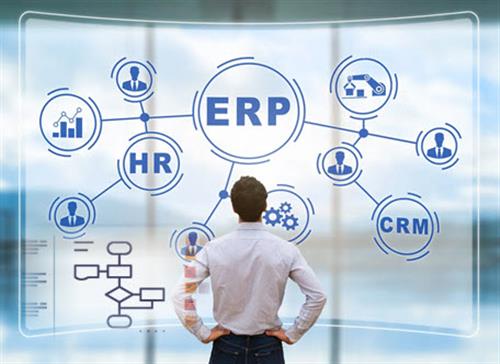
ERP-friendly is a non-official term used to describe systems, software, processes, or solutions that are designed to work smoothly with an ERP system - meaning they are easy to integrate, easy to operate, and do not disrupt the ERP’s standard logic.
ERP-Friendly Explained: How to Choose Software That Works Seamlessly with Your ERP
A solution is considered ERP-friendly when it has the following characteristics:
1. Easy ERP integration
- Provides standard APIs or ready-made connectors
- Supports major ERP platforms such as SAP, Oracle, Microsoft Dynamics, Odoo
- Does not require deep customization of the ERP core
2. Respects ERP master data
- Avoids duplicated or conflicting data
- Uses ERP as the single source of truth for master data (customers, products, pricing, etc.)
- Does not create a parallel “mini ERP” outside the main system
3. Does not complicate operations
- Eliminates double data entry
- Minimizes manual workarounds
- Fits standard ERP processes (Procure-to-Pay, Order-to-Cash, etc.)
4. Easy to upgrade and maintain
- Continues to work smoothly when the ERP is upgraded
- Minimizes dependency on custom code
- Aligns with the Clean Core strategy (especially relevant for SAP environments)
5. Friendly for both IT and business users
- IT teams: easy administration, clear logging, low operational risk
- Business users: intuitive UI that complements ERP rather than competing with it
Real-world examples of ERP-friendly solutions
| Scenario | ERP-friendly? |
|---|---|
| A quoting tool that pulls pricing and inventory directly from ERP | ✅ |
| A standalone inventory system that does not sync with ERP | ❌ |
| A digital signature solution integrated into ERP approval workflows | ✅ |
| A tool requiring manual Excel export/import | ❌ |
Why “ERP-friendly” matters to enterprises
- Prevents ERP system disruption
- Reduces long-term operating and maintenance costs
- Enables scalable digital ecosystems
- Supports sustainable digital transformation
→ Especially critical for organizations that have made significant investments in ERP platforms like SAP, Odoo or Oracle.
ERP-Friendly vs ERP-Disruptive: What Businesses Need to Know
When adopting new digital tools, many organizations focus on features and user experience-but overlook a critical question:
Will this solution strengthen our ERP, or silently undermine it?
This is where the difference between ERP-friendly and ERP-disruptive solutions becomes clear.
What is an ERP-Disruptive Solution?
An ERP-disruptive solution introduces fragmentation, duplication, or hidden complexity into the ERP ecosystem.
Common warning signs:
- Maintains its own master data separate from ERP
- Requires frequent manual data synchronization
- Forces heavy ERP core customization
- Breaks standard workflows or approval chains
- Becomes unstable after ERP upgrades
Business impact:
- ✘ Data inconsistency
- ✘ Rising maintenance and support costs
- ✘ Slower ERP upgrades
- ✘ Increased operational risk
Side-by-Side Comparison
| Aspect | ERP-Friendly | ERP-Disruptive |
|---|---|---|
| Integration approach | Standard APIs, connectors | Ad-hoc, custom, fragile |
| Master data ownership | ERP is system of record | Multiple competing sources |
| Customization | Minimal, clean-core aligned | Heavy core modifications |
| Upgrade readiness | High | Low |
| Long-term TCO | Controlled and predictable | Escalating and hidden |
Why This Distinction Matters
ERP systems are long-term strategic assets.
Choosing ERP-disruptive tools may deliver short-term wins-but often leads to:
- Shadow systems
- Process fragmentation
- Escalating technical debt
In contrast, ERP-friendly solutions protect ERP investments while enabling agility and innovation at the edge.
A Simple Rule of Thumb
If it makes ERP harder to maintain or explain-it’s ERP-disruptive.
 Explore more on these topics
04102024050214_thumb.jpg)

















 Guest Blogging: The Definitive Guide
 Top Trending Topics
 Share This
 Link copied!
 Recently Updated News