



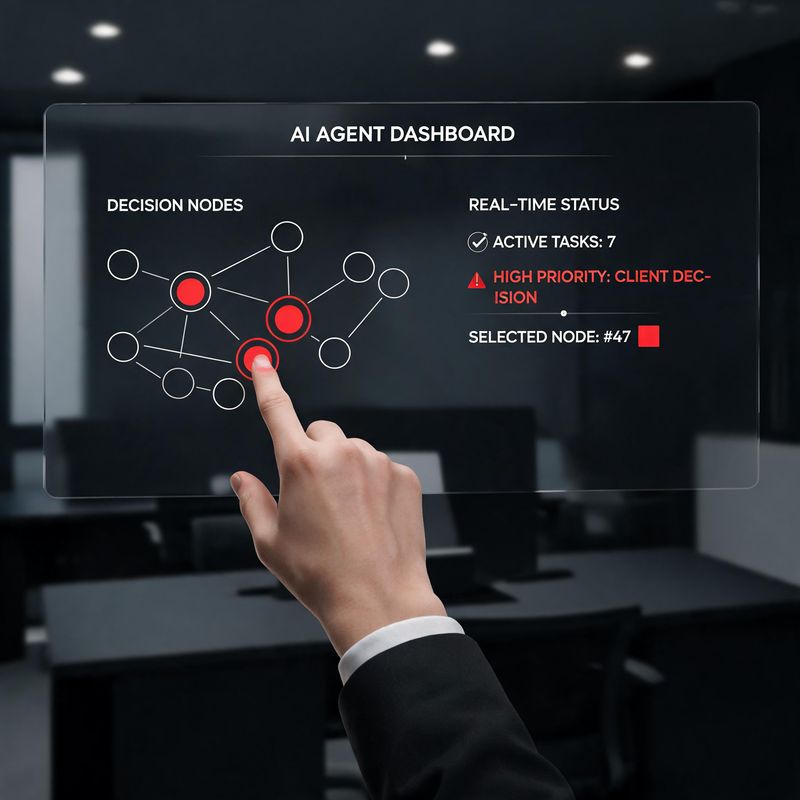

What is Cognitive Friction?
Published on: September 18, 2024
Last updated: December 18, 2025 Read in fullscreen view
Last updated: December 18, 2025 Read in fullscreen view

 Recommended for you
- 02 Jan 2024
 What is User Provisioning & Deprovisioning? 126/719
 - 10 Dec 2025 The Evolution of Isolation: The Global Rise of Hikikomori and Digital Withdrawal 100/123
- 01 Dec 2025 How UI/UX Design Accelerates Digital Transformation in Website Development 98/146
- 18 Dec 2025 Event Marketing vs. Field Marketing: What’s the Difference and Why It Matters for Modern Businesses 94/161
- 18 Sep 2024 11 Psychological Defense Mechanisms and How to Recognize Them 93/290
- 19 Mar 2022 Don't Make Me Think 92/334
- 08 Feb 2024 What is End User Efficiency? 88/571
- 03 Feb 2024 "Kham Nhẫn" in Business: A Guide to Patience and Resilience 71/234
- 27 May 2026 Best 5 Software Development Companies Ideal for Early-Stage Startups 67/93
- 02 Jun 2026 How Product Videos Improve Buyer Confidence in WooCommerce Stores 52/73
"Cognitive Friction" is a term primarily used in User Experience (UX) design and behavioral psychology.
Here is the breakdown of the concept in English:
1. Definition
Cognitive friction occurs when the interface of a product or a system does not match the user's mental model (their intuitive expectations of how things should work). It is the "mental resistance" a user feels when they have to stop and think about how to complete a task instead of doing it instinctively.
2. Key Characteristics
- Intuition vs. Reality: If you expect a button to perform Action A, but it performs Action B, you experience friction.
- Cognitive Load: High friction increases the "cognitive load," meaning your brain has to work harder and expend more energy to navigate the system.
3. Common Causes
- Ambiguous Icons: Using symbols that aren't universally understood (e.g., using a "star" icon for "download" instead of "favorite").
- Information Overload: Presenting too many choices or too much data at once, leading to "analysis paralysis."
- Hidden Navigation: Tucking important features away in deep sub-menus.
- Inconsistency: Having a layout that changes unpredictably from one page to the next.
4. Why It Matters
- User Frustration: Frequent friction leads to annoyance and a poor perception of the brand.
- Abandonment: In e-commerce, high cognitive friction during checkout is a leading cause of abandoned shopping carts.
- Efficiency: Lowering friction makes a tool feel "seamless" and "invisible," allowing users to focus on their goals rather than the tool itself.
Comparison Table: High vs. Low Friction
| Feature | Low Friction (Good UX) | High Friction (Bad UX) |
| Search Bar | Right at the top, clearly visible. | Hidden inside a "Tools" menu. |
| Forms | Auto-fills data and uses clear labels. | Asks for unnecessary info in a confusing order. |
| Error Messages | "Please enter a valid email." | "Error Code 4092x - Invalid Syntax." |
Interesting Fact: The term was popularized by Alan Cooper, a pioneer in interaction design, in his book "The Inmates Are Running the Asylum."
[{"displaySettingInfo":"[{\"isFullLayout\":false,\"layoutWidthRatio\":\"\",\"showBlogMetadata\":true,\"showAds\":true,\"showQuickNoticeBar\":true,\"includeSuggestedAndRelatedBlogs\":true,\"enableLazyLoad\":true,\"quoteStyle\":\"1\",\"bigHeadingFontStyle\":\"1\",\"postPictureFrameStyle\":\"2\",\"isFaqLayout\":false,\"isIncludedCaption\":false,\"faqLayoutTheme\":\"1\",\"isSliderLayout\":false}]"},{"articleSourceInfo":"[{\"sourceName\":\"\",\"sourceValue\":\"\"}]"},{"privacyInfo":"[{\"isOutsideVietnam\":false}]"},{"tocInfo":"[{\"isEnabledTOC\":true,\"isAutoNumbering\":false,\"isShowKeyHeadingWithIcon\":false}]"},{"bannerInfo":"[{\"isBannerBrightnessAdjust\":false,\"bannerBrightnessLevel\":\"\",\"isRandomBannerDisplay\":true}]"},{"termSettingInfo":"[{\"showTermsOnPage\":true,\"displaySequentialTermNumber\":true}]"}]
Via
{content}
 Explore more on these topics















26072024043639_thumb.jpg)














 Guest Blogging: The Definitive Guide

 Top Trending Topics
 Share This
 Link copied!
 Recently Updated News