


Unaligned Escalation Logic: A Silent Risk in Complex Organizations
Last updated: December 18, 2025 Read in fullscreen view


 Recommended for you
- 12 Jan 2026
 Why YouTube Content Is the New Resume: Building Trust and Expertise Even Without Views 161/190
 - 12 Apr 2025 How to Ask Powerful Questions Like Socrates 156/191
- 19 Oct 2021 Software development life cycles 145/823
- 04 Oct 2021 Product Validation: The Key to Developing the Best Product Possible 134/442
- 13 Oct 2021 Outsourcing Software Development: MVP, Proof of Concept (POC) and Prototyping. Which is better? 130/608
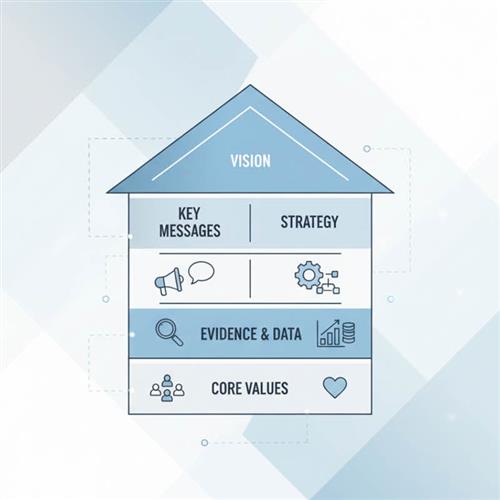
- 07 Oct 2025 Case Study: Using the “Messaging House” Framework to Build a Digital Transformation Roadmap 127/207
- 03 Jan 2026 The Hidden Rules of IT Project Tendering: Laws, Principles, and Caveats You Must Know 124/147
- 12 Oct 2022 14 Common Reasons Software Projects Fail (And How To Avoid Them) 116/681
- 28 Jul 2022 POC, Prototypes, Pilots and MVP: What Are the Differences? 116/858
- 12 Aug 2024 Understanding Google Analytics in Mumbai: A Beginner's Guide 112/219
- 12 Dec 2021 Zero Sum Games Agile vs. Waterfall Project Management Methods 98/512
- 31 Aug 2022 What are the best practices for software contract negotiations? 97/371
- 05 Sep 2023 The Cold Start Problem: How to Start and Scale Network Effects 95/293
- 05 Mar 2021 How do you minimize risks when you outsource software development? 93/426
- 04 Mar 2023 [Medium] Box-Ticking: The Management Strategy That’s Killing your Productivity 87/754
- 13 Jan 2024 The “Rule of Law” in Software Projects: Engineering Principles That Govern Successful Development 86/108
- 06 Mar 2024 [SemRush] What Are LSI Keywords & Why They Don‘t Matter 85/287
- 01 Dec 2023 Laws of Project Management 81/396
- 18 Jul 2021 How To Ramp Up An Offshore Software Development Team Quickly 76/668
- 04 Oct 2022 Which ERP implementation strategy is right for your business? 71/432
- 01 May 2024 Warren Buffett’s Golden Rule for Digital Transformation: Avoiding Tech Overload 70/278
- 28 Oct 2022 Build Operate Transfer (B.O.T) Model in Software Outsourcing 62/472
- 03 Jul 2022 Occam’s Razor and the Art of Software Design 57/559
When something goes wrong, speed and clarity matter more than tools.
Yet in many organizations, issues don’t escalate smoothly-not because people don’t care, but because the escalation logic itself is fragmented.
This is where Unaligned Escalation Logic quietly becomes a systemic risk.
What is Unaligned Escalation Logic?
Unaligned Escalation Logic occurs when teams use different rules to escalate the same issue.
Typical symptoms
- Different escalation thresholds for the same incident
- Conflicting responses between teams
- Unclear ownership during critical moments
Example
Customer Support escalates after the first complaint
Result: delay, confusion, and internal friction
How Does It Manifest in Real Operations?
1. Fragmented Rules
- Each department defines escalation independently
- No shared severity or impact framework
2. Broken Hand-offs
- Teams wait for others to act first
- Decisions bounce across functions
3. Inconsistent Risk Signals
- One team sees “medium”
- Another sees “critical”
4. System Deadlock
- Everyone follows their own logic
- No one owns the whole incident
Why Does It Matter?
Business impact
- Slower incident resolution
- Higher customer impact
- Increased operational and reputational risk
Organizational impact
- Blame instead of collaboration
- Decision-making under pressure becomes personal, not systemic
Hidden truth
but by misaligned response logic
HOW TO FIX (Optional Bottom Section for Infographic)
Align Escalation Logic in 5 Steps
1️⃣ Map existing escalation rules
2️⃣ Identify conflicts and overlaps
3️⃣ Define a unified severity × action matrix
4️⃣ Embed into tools and workflows
5️⃣ Review and simulate regularly
KEY DESIGN INSIGHT (Call-out Box)
Don’t design escalation by department
Design it by impact and response chain
REAL-WORLD RESULT (Proof Point)
📉 40% reduction in incident resolution time
🤝 Stronger cross-functional coordination
🎯 Clear accountability during crises
ONE-LINE TAKEAWAY (Footer)
Frequently Asked Questions
Q1: Can an organization have multiple escalation logics?
Yes-but they must fit within a shared framework with clear coordination rules.
Q2: Should escalation logic be automated?
Absolutely, especially in environments requiring fast detection and response.
Q3: Who should design escalation logic?
A cross-functional team involving operations, risk, and technology.
Q4: How can escalation logic be tested?
Through incident simulations and scenario-based drills.
 Explore more on these topics


























 Guest Blogging: The Definitive Guide

 Top Trending Topics
 Share This
 Link copied!
 Recently Updated News