

IT Governance, IT Management and IT Outsourcing: What’s the Difference?
Last updated: December 19, 2025 Read in fullscreen view


 Recommended for you
- 17 Oct 2022
 What is the difference between low-end, mid-end and high-end solutions of project management software? 185/1659
 - 05 Mar 2026 Top 7 Full-Cycle Web App Development Companies for Your Business in 2026 166/217
- 17 Mar 2026 How Much Does it Cost to Build an AI Agent in 2026 164/233
- 20 Jan 2022 Difference between Bug, Defect, Error, Fault & Failure 163/1526
- 21 Nov 2025 Top 8 Cloud Transformation Companies in USA in 2026 161/217
- 18 Mar 2022 Difference between Project Management and Management Consulting 157/517
- 08 Oct 2024 Vietnam: The Rising Star in Global Outsourcing – Trends and Costs for 2025 156/519
- 03 Aug 2022 What Are OLAs? SLAs vs OLAs vs UCs: What’s The Difference? 154/1246
- 11 Mar 2026 OEM, ODM, and OBM in Software Development: Choosing the Right Growth Path 147/174
- 07 Jul 2024 Top Fintech Companies in Vietnam Driving Innovation Across Digital Banking & Investment 144/280
- 01 Nov 2023 Difference between Vendor and Subcontractor 141/1209
- 07 Dec 2021 What's the difference between soft freeze, hard freeze and customization freeze? 137/1406
- 12 May 2021 The Real Cost Between Outsourcing IT vs In-House: A Quick Comparison 136/582
- 02 Feb 2026 What Is the Total Cost of Web Development for Small & Medium Businesses? 133/166
- 04 Feb 2026 Top Workflow Automation Services Driving Digital Transformation 133/168
- 17 Mar 2026 Top 10 Product Development Companies in Chennai 2026 (Updated) 132/149
- 16 Oct 2024 Building a Software Outsourcing Startup: Strategy Through Two Canvases 132/172
- 16 Feb 2026 Education App Development Cost in 2026: Benchmarks and Key Cost Drivers 129/187
- 21 Jun 2022 Difference between Quality and Grade 129/959
- 10 Mar 2021 The 7 Biggest Mistakes to Avoid Before Outsourcing a Web Development Project 126/360
- 21 Aug 2025 Top 30 Oldest IT Outsourcing Companies in Vietnam 125/230
- 15 Aug 2024 Digital Governance vs IT Governance: What’s the Difference and Why It Matters 124/200
- 05 Aug 2025 Why Doesn’t South Korea Outsource Its IT Projects Like Other Developed Countries? 124/230
- 06 Feb 2026 How Much Does a CPA Cost for a Small Business? 124/147
- 10 Apr 2022 Difference Between Forward and Backward Reasoning in AI 124/1860
- 11 Mar 2024 Why You Should Hire Odoo Developers from Vietnam to Customize Your ERP System 122/228
- 01 Jan 2023 Top Software Development Challenges in 2023 119/438
- 05 Jan 2022 What Outsourcing Engagement Model is Right For You? 119/431
- 10 Jan 2024 Facts Chart: Reasons for outsourcing 114/269
- 15 Sep 2022 CRM vs CDP: What's the difference? 114/416
- 15 Aug 2023 Production-Ready vs Feature-Complete: What’s the Difference? 114/368
- 21 Aug 2023 30 Must-Know IT Consulting Buzzwords Explained 113/141
- 02 May 2022 Difference between CapEx vs. OpEx: Two Ways to Finance Your Software Project 111/1738
- 19 Oct 2020 The hidden costs of outsourcing software development 111/579
- 05 May 2022 DAM vs. CMS: What's the difference? 107/603
- 01 Jan 2023 4 New IT Outsourcing Pricing Models to consider in 2023 106/481
- 01 Mar 2022 Top 5 reasons why outsourcing to Vietnam is a smart move 106/391
- 01 Jan 2024 What The World Is Flat Means to IT Outsourcing 104/272
- 09 Dec 2021 Customer Service vs Technical Support: What’s The Difference? 104/425
- 06 Jun 2024 Software Upgrade vs Software Update: What is the difference? 104/360
- 09 Sep 2022 Close Collaboration and Communication Can Overcome the Challenges of Distributed Teams 103/310
- 21 Oct 2021 Advantages and Disadvantages of IT Outsourcing 103/459
- 06 Jan 2026 Risk & Change Management Through the 3P Model 102/147
- 24 Nov 2025 Top Blockchain Companies in Vietnam 100/145
- 15 Dec 2025 What Does ERP-Friendly Mean? A Practical Guide for Modern Enterprises 99/143
- 10 May 2021 What are things you should look for in a good IT outsourcing company? 99/547
- 02 Nov 2021 Difference between an ESTIMATE and a QUOTE 99/454
- 24 Nov 2021 What is the Actual Cost of Hiring Cheap Developers? 98/494
- 03 Dec 2025 IT Outsourcing Solutions Explained: What, How, Why, When 98/130
- 31 Oct 2025 The True ROI of Software Development Outsourcing for Tech Startups 98/178
- 01 Sep 2019 Outsourcing Software To Vietnam: Facts, benefits and limitations 97/558
- 10 Nov 2021 PoC vs. Prototype vs. MVP: What’s the difference? 97/933
- 25 Jan 2022 What is the difference between Outsourcing and Outstaffing? 94/460
- 01 Jan 2023 Software Development Outsourcing Trends to Watch Out for in 2023 93/416
- 01 Jan 2023 Top 5 IT outsourcing countries in 2023 92/367
- 01 Apr 2021 IT Outsourcing to vietnam: Why It Is A Good Choice? 92/390
- 24 Nov 2021 What is the difference between off-the-shelf software and customized software? 90/571
- 15 Aug 2021 TIGO Rate Formula - Things the partners should know 90/620
- 15 Oct 2022 Project-based team model for one-off and pilot software development projects 87/915
- 13 Jan 2023 What are the Hourly Rates in Offshore Software Development? 86/327
- 12 Jan 2023 Top 10 Trustworthy IT Outsourcing Companies in Vietnam 86/368
- 01 Apr 2022 Dedicated Team vs. Extended Team: What’s the difference? 85/411
- 16 Dec 2021 Why outsource Python development of your project? 85/583
- 06 Feb 2024 What are benefits and drawbacks of co-creating solutions with your clients? 85/307
- 13 Oct 2021 Why Outsourcing Software Development Services Is Gaining Traction With Non-Technical Leaders? 84/399
- 19 Mar 2021 Selective Outsourcing of IT Functions - a new trend in business outsourcing 84/646
- 17 Jan 2024 What are the benefits and challenges of using multi-sourcing or single-sourcing strategies? 82/284
- 03 Oct 2020 Outsourcing Your MVP Development - Streamlined Solutions for future 81/507
- 14 Dec 2021 The Top 10 Problems with Outsourcing Implementation and How to Solve Them 81/477
- 03 Jan 2023 IT Outsourcing Costs: Is outsourcing really cost-effective? 81/291
- 02 Nov 2023 What are the pros and cons of iIT outsourcing? 78/291
- 01 Jun 2025 10 Sustainable & Unique IT Outsourcing Companies in Vietnam 76/158
- 04 Apr 2024 Unlock Vietnamese-Japanese outsourcing potential 75/309
- 04 Jan 2021 VIETNAM AS A BIG ATTRACTIVE DESTINATION IN THE FIELD OF OUTSOURCING 75/400
- 22 Mar 2022 8 Mistakes Marketing Agencies or Consulting Firms Make When Outsourcing Web Development 75/420
- 21 Aug 2022 Forbes: IT Outsourcing Hotspot: Vietnam, A Small But Mighty Powerhouse 74/329
- 28 Oct 2022 Expect the unexpected in 2023 - How Outsourcing Can Help? 74/278
- 03 Nov 2021 7 phases of Odoo Implementation and Development: Can they be outsourced? 74/498
- 03 Nov 2022 Top questions and answers you must know before ask for software outsourcing 73/358
- 01 Feb 2022 Outstaffing Vs. Outsourcing: What’s The Difference? 72/660
- 12 Oct 2021 Vietnam outsourcing path - the silk road connecting ASEAN with the developed countries (EU, US, Japan...) 71/412
- 06 Oct 2021 Intellectual property issues with outsourcing software development 71/456
- 02 May 2021 Outsourcing Software Development: Avoid 8 Mistakes 70/207
- 10 May 2021 Project Audit and Second Opinion Services 69/315
- 17 Oct 2020 How Outsourcing can Improve Time Management for Better Business 69/367
- 09 Jan 2021 How can outsourcing enable business agility? 68/258
- 01 Jan 2024 Hiring Tech Talents in Asia: An Overview of Skills, Costs, and Potential 68/228
- 30 Dec 2022 Top 6 Reasons to Partner with TIGOSOFT 67/312
- 15 Nov 2023 IT Staff Augmentation Types and the Best Choice for Your Business 66/279
- 01 Oct 2022 Vietnam is a favorite supply of IT outsourcing services to Japan 64/300
- 02 Mar 2021 Estimate the Cost of Software Development 63/427
- 01 Jan 2024 Tech Partnerships: Choosing the Right Software Outsourcing Firm in Vietnam 63/235
- 01 Jan 2024 12 reasons for software development outsourcing 62/267
- 25 Sep 2025 A Practical Guide to Secure Online Work for Outsourced Teams 62/157
- 11 Mar 2023 Common Pain Points in Software Development Outsourcing 62/327
- 01 May 2023 Streamline Your Business with Outsourcing 62/267
- 08 Aug 2021 Why Nearshore Software Development is better than In-House Development? 59/254
- 07 Nov 2024 Outsourcing Crisis Looming: Will Trump's Policies Transform the Global IT Landscape? 59/242
- 01 Jan 2024 Software Outsourcing Questions for 2024 58/207
- 01 Jan 2023 Why is Vietnam the Top IT Outsourcing Destination of 2023? 57/298
- 08 Feb 2022 Software Development: Fixed Cost or Opportunity Cost? 55/516
- 11 Jan 2024 Entering the Japanese Market: Stacking the Deck and Setting Expectations 53/205
- 16 Mar 2021 Outsource Data Engineering Services - TIGO Streamlined Solutions 51/307
- 08 Jan 2024 Outsourcing on an As-Needed Basis 51/216
- 31 Dec 2021 Outsourcing Software Development to mitigate the impact of COVID-19 50/373
- 01 Feb 2023 [InfoWorld] Is your outsourcer agile enough? 50/243
- 21 Oct 2022 Outsourcing Billable Rate 46/316
- 25 Nov 2021 Low-Cost Software Development: Buy Nice or Buy Twice? 44/408
- 03 Jun 2026 Enterprise Guide to Choosing the Right Enterprise Application Development Services 34/37
- 17 Jul 2026 Building a Marketplace That Attracts Both Buyers and Sellers 1/1
Introduction: Why This Confusion Persists
As organizations accelerate digital transformation, the boundaries between IT governance, IT management, and IT outsourcing are becoming increasingly blurred. Many companies treat them as interchangeable-or worse, assume outsourcing can replace governance or management altogether.
This misunderstanding often leads to loss of control, weak accountability, and strategic drift. To avoid these pitfalls, it is essential to understand how these three concepts differ, how they complement each other, and how they operate as distinct layers of responsibility within the IT operating model.
The Onion Model: IT as Layers of What–Why–How–When–Where
A useful way to clarify the differences is to view IT governance, IT management, and IT outsourcing as layers of an onion, each answering a different set of fundamental questions:
- Why & What → IT Governance
- How & When → IT Management
- Where & By Whom → IT Outsourcing
Each layer builds upon the previous one. Problems arise when organizations collapse these layers or allow outer layers to dominate inner ones.
IT Governance: Defining the Why and the What
IT governance sits at the core of the onion.
It defines:
- Why the organization invests in IT
- What outcomes IT must deliver to support business strategy
IT governance operates at the strategic and leadership level, ensuring that technology enables enterprise goals while managing risk and compliance.
Using frameworks such as COBIT, IT governance:
- Sets strategic direction and priorities for IT
- Establishes policies, decision rights, and accountability
- Ensures value realization from IT-enabled investments
- Manages risk, regulatory compliance, and resource optimization
In short, IT governance decides whether the organization is doing the right things-from a business and stakeholder perspective.
Crucially, IT governance cannot be outsourced away. While some activities can be supported externally, ownership and accountability must always remain internal.
IT Management: Executing the How and the When
Surrounding governance is the IT management layer.
If governance defines what should happen and why, IT management focuses on:
- How services are delivered
- When activities are executed and improved
Operating at the tactical and operational level, IT management translates strategic intent into day-to-day reality.
Guided by frameworks such as ITIL, IT management is responsible for:
- Planning, designing, transitioning, and operating IT services
- Managing people, processes, and tools
- Ensuring service availability, performance, and user satisfaction
- Driving continual service improvement
IT management answers the question:
“Are we doing things right, consistently and efficiently?”
Without strong IT management, even the best governance model remains theoretical.
IT Outsourcing: Deciding the Where and By Whom
IT outsourcing forms the outer layer of the onion.
Outsourcing addresses questions such as:
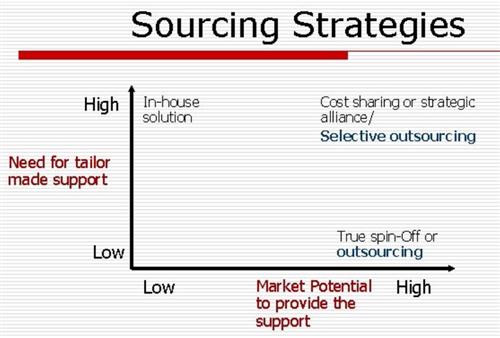
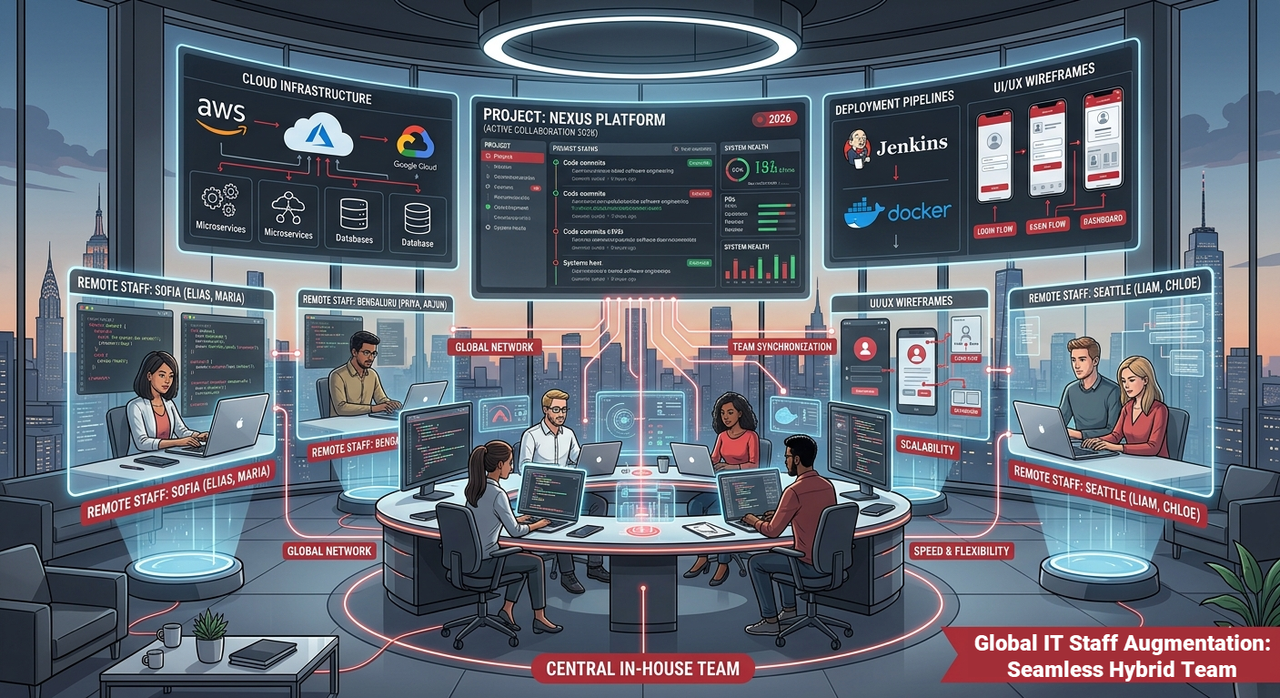
- Where services are delivered (in-house, nearshore, offshore)
- By whom they are delivered (internal teams or external providers)
Organizations outsource IT to:
- Access specialized expertise
- Reduce costs
- Increase scalability and flexibility
- Focus internal teams on core capabilities
However, outsourcing is not a function, nor a substitute for governance or management. It is a sourcing strategy that can be applied to parts of IT management-or, in limited cases, governance support activities.
The Critical Risk: Outsourcing Without Governance
Many organizations make a dangerous assumption:
that outsourcing IT also transfers responsibility.
In reality:
- You can outsource execution
- You cannot outsource accountability
When governance of the outsourcing relationship is weak, organizations risk:
- Vendor lock-in
- Loss of architectural and operational knowledge
- Poor documentation and opaque systems
- Strategic drift away from business goals
This is why strong governance over outsourcing itself is essential. Contracts, service models, KPIs, and escalation paths must be governed just as rigorously as internal IT operations.
Outsourcing Without Losing Control
Effective organizations design outsourcing models that preserve governance and strategic control.
Key principles include:
- Retaining ownership of IT strategy, architecture, and governance
- Using transparent, well-documented systems
- Avoiding proprietary, poorly documented platforms
- Favoring open standards, open-source software, and standardized APIs
With these principles in place, outsourcing becomes a strength rather than a risk-allowing organizations to switch providers, rebalance in-house capabilities, or insource again without disruption.
How the Layers Work Together
When properly aligned:
- IT Governance defines why and what
- IT Management defines how and when
- IT Outsourcing defines where and by whom
Each layer reinforces the others. Removing or weakening one layer destabilizes the entire structure.
Conclusion: Clarity Creates Control
IT governance, IT management, and IT outsourcing are not competing concepts-they are complementary layers of a single system.
Organizations that clearly separate and integrate these layers:
- Maintain strategic control
- Deliver reliable IT services
- Reduce risk and dependency
- Adapt more easily to change
In a digital world where complexity is unavoidable, clarity of roles is the foundation of control.
 Explore more on these topics


















 Guest Blogging: The Definitive Guide

 Top Trending Topics
 Share This
 Link copied!
 Recently Updated News