




Metaphors in Software Development: Making Complex Ideas Simple for Clients and Stakeholders
Last updated: August 19, 2025 Read in fullscreen view


 Recommended for you
- 01 Aug 2024
 The Standish Group report 83.9% of IT projects partially or completely fail 788/2605
 - 13 Apr 2024 Lessons on Teamwork and Leadership from Chinese story book "Journey to the West" 249/1334
- 02 Nov 2021 What is Terms of Reference (ToR)? 166/1742
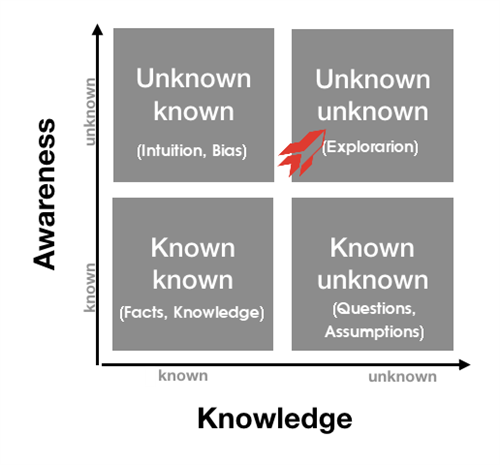
- 18 Oct 2020 How to use the "Knowns" and "Unknowns" technique to manage assumptions 163/1257
- 19 Oct 2021 Software development life cycles 143/821
- 18 Sep 2025 Pilot Projects Explained: What They Are and How to Use Them Effectively 130/186
- 13 Oct 2021 Outsourcing Software Development: MVP, Proof of Concept (POC) and Prototyping. Which is better? 126/602
- 04 Oct 2021 Product Validation: The Key to Developing the Best Product Possible 122/430
- 07 Oct 2025 Case Study: Using the “Messaging House” Framework to Build a Digital Transformation Roadmap 121/200
- 03 Jul 2022 What is the difference between Project Proposal and Software Requirements Specification (SRS) in software engineering? 121/1162
- 11 Jan 2024 What are the Benefits and Limitations of Augmented Intelligence? 119/605
- 13 Dec 2020 Move fast, fail fast, fail-safe 117/456
- 18 Aug 2022 What are the consequences of poor requirements with software development projects? 116/384
- 06 Feb 2021 Why fail fast and learn fast? 113/588
- 23 Jun 2024 Best Practices for Managing Project Escalations 113/318
- 31 Dec 2025 The Curse of Knowledge in Pre-Project Requirements 113/169
- 01 Oct 2020 Fail fast, learn faster with Agile methodology 112/1186
- 12 Oct 2022 14 Common Reasons Software Projects Fail (And How To Avoid Them) 108/673
- 12 Aug 2024 Understanding Google Analytics in Mumbai: A Beginner's Guide 106/213
- 01 Oct 2024 23 Overlooked Types of Non-Functional Requirements You Shouldn’t Ignore 105/147
- 01 Mar 2024 10 Project Management Myths 104/276
- 02 May 2022 What Is RAID in Project Management? (With Pros and Cons) 104/947
- 03 Apr 2022 Microsoft Solutions Framework (MSF) 103/1445
- 12 Aug 2022 What is End-to-end project management? 102/608
- 14 Mar 2024 Why should you opt for software localization from a professional agency? 100/239
- 28 Jul 2022 POC, Prototypes, Pilots and MVP: What Are the Differences? 100/840
- 23 Sep 2021 INFOGRAPHIC: Top 9 Software Outsourcing Mistakes 98/521
- 03 Jan 2023 Organizing your agile teams? Think about M.A.T (Mastery, Autonomy, Purpose) 96/493
- 12 Dec 2021 Zero Sum Games Agile vs. Waterfall Project Management Methods 95/509
- 31 Aug 2022 What are the best practices for software contract negotiations? 95/366
- 14 Oct 2021 Advantages and Disadvantages of Time and Material Contract (T&M) 92/985
- 05 Sep 2023 The Cold Start Problem: How to Start and Scale Network Effects 91/288
- 11 Jul 2022 Cost benefit analysis for software development 89/840
- 02 Nov 2022 Difference between Change Management and Project Management 88/320
- 05 Mar 2021 How do you minimize risks when you outsource software development? 86/419
- 28 Dec 2021 8 types of pricing models in software development outsourcing 86/520
- 08 Oct 2022 KPI - The New Leadership 85/692
- 09 May 2022 Build one to throw away vs Second-system effect: What are differences? 85/396
- 01 Mar 2024 (AI) Artificial Intelligence Terms Every Beginner Should Know 84/418
- 10 Apr 2024 The Parking Lot Method: Unlocking a Simple Secret to Supercharge Your Productivity 84/603
- 18 Dec 2023 The Cone of Uncertainty in Scrum & Requirement Definition 80/814
- 06 Mar 2024 [SemRush] What Are LSI Keywords & Why They Don‘t Matter 79/281
- 01 Aug 2022 Is planning "set it and forget it" or "set it and check it"? 79/376
- 10 Nov 2022 Poor Code Indicators and How to Improve Your Code? 79/296
- 22 May 2022 What are common mistakes that new or inexperienced managers make? 78/359
- 17 Oct 2021 Does Fast Tracking increase project cost? 78/451
- 19 Oct 2021 Is gold plating good or bad in project management? 78/909
- 01 Dec 2023 Laws of Project Management 78/393
- 10 Dec 2023 Pain points of User Acceptance Testing (UAT) 77/535
- 07 Dec 2023 12 project management myths to avoid 75/267
- 14 Jun 2022 Example and Excel template of a RACI chart in Software Development 75/947
- 17 Feb 2022 Prioritizing Software Requirements with Kano Analysis 75/379
- 07 Jul 2022 Managing Project Execution Terms 74/481
- 18 Oct 2021 Key Elements to Ramping Up a Large Team 74/1331
- 18 Feb 2026 "Hit and Run" Project Management: Balancing Speed with Sustainability 74/100
- 18 Jul 2021 How To Ramp Up An Offshore Software Development Team Quickly 73/665
- 19 Apr 2021 7 Most Common Time-Wasters For Software Development 72/617
- 17 Jun 2021 What is IT-business alignment? 70/442
- 04 Oct 2022 Which ERP implementation strategy is right for your business? 70/430
- 01 May 2024 Warren Buffett’s Golden Rule for Digital Transformation: Avoiding Tech Overload 69/277
- 01 Mar 2023 Bug Prioritization - What are the 5 levels of priority? 68/297
- 12 Mar 2024 How do you create FOMO in software prospects? 67/240
- 27 Jan 2020 Should a project manager push developers to work more hours due to mistakes of manager schedule setting? 67/508
- 31 Oct 2021 Tips to Fail Fast With Outsourcing 65/456
- 15 May 2022 20 Common Mistakes Made by New or Inexperienced Project Managers 63/345
- 02 Dec 2021 3 Ways to Avoid Scope Creep in IT Consulting 62/271
- 27 May 2026 Best 5 Software Development Companies Ideal for Early-Stage Startups 61/87
- 15 Aug 2025 Quantum Technology: Global Challenges and Opportunities for Innovators 60/190
- 20 Jul 2022 Software Myths and Realities 60/1001
- 05 Jan 2024 Easy ASANA tips & tricks for you and your team 60/258
- 24 Nov 2023 The project management paradox: Achieving MORE by doing LESS 59/289
- 06 Jun 2022 Change Management at the Project Level 58/364
- 05 Jun 2023 Fractional, Part-Time (virtual) or Interim CTO: Who Will Cover Your Business Needs? 58/200
- 02 Jun 2024 Reviving Ancient Wisdom: The Spiritual Side of Project Management 58/314
- 26 Sep 2024 Successful Project Management Techniques You Need to Look Out For 57/454
- 28 Oct 2022 Build Operate Transfer (B.O.T) Model in Software Outsourcing 57/467
- 13 Jan 2020 Quiz: Test your understanding project cost management 55/701
- 10 May 2022 Levels of Teamwork 54/249
- 26 Dec 2023 Improving Meeting Effectiveness Through the Six Thinking Hats 53/329
- 08 Jan 2024 Ask Experts: Explicitation/Implicitation and Elicitation; two commonly used but barely unraveled concepts 53/434
- 30 Nov 2023 Project Managers, Focus on Outcomes — Not Deliverables 52/213
- 21 Jun 2024 Dead Horses and the Escalation of Commitment 45/183
- 06 Nov 2019 How to Access Software Project Size? 39/296
- 14 Feb 2024 Early BA Engagement: “Earning” Pre-Project Work 28/194
One of the most important skills of a Business Analyst (BA) is the ability to translate technical language into something that clients and stakeholders can easily understand. Software technology is often complex, but through metaphors, a BA can help others visualize concepts more clearly.
Below are four common metaphors frequently used in the software industry.
1. Source Code Ownership: Land and House Metaphor
Metaphor: Source code is like land, while the software program is like the house built on it.
Meaning: Owning real estate doesn’t necessarily mean you own both the land and the house. Similarly, when a company purchases or licenses software, they may only have rights to use the program, not full ownership of the source code.
BA Application:
- Makes it easy to explain the difference between usage rights and intellectual property ownership.
- Helps stakeholders understand why a clear contract on source code is necessary to avoid confusion between “buying software” and “buying technology.”
2. Agile Development: Stepping into the Same River Twice
Metaphor: Heraclitus once said, “No man ever steps in the same river twice, for it’s not the same river and he is not the same man.”
Meaning: Agile development reflects this philosophy: everything is constantly changing—customer needs, technology, and even the development team. Each sprint is different from the previous one, because both the context and the people have evolved.
BA Application:
- Helps clients see that Agile is not “lack of planning” but continuous adaptation.
- Clarifies expectations that the product will gradually evolve rather than being perfect from the start.
3. Software Accretion: Oyster Farming Metaphor
Metaphor: Building software is like oyster farming, or the process of accretion—growing gradually by adding layers over time.
Meaning: Instead of creating a complex system all at once, you start with the simplest version that works (MVP – Minimum Viable Product), then continuously add new features.
BA Application:
- Helps stakeholders see that software development is about accumulation, layer by layer.
- Emphasizes the value of early release and feedback for real-world adjustments.
4. Tortoise and Hare: Long-term vs. Short-term Success
Metaphor: The fable of the tortoise and the hare shows that winning fast does not always mean winning sustainably.
Meaning: In software development, rushing like the hare (coding quickly, releasing fast but compromising quality) may bring short-term results, but it often leads to bugs and high maintenance costs. In contrast, moving steadily like the tortoise—focusing on continuous improvement—can deliver long-term success.
BA Application:
- Persuades stakeholders that development speed must be balanced with quality.
- Helps clients understand why investment in testing, documentation, and refactoring is as important as meeting deadlines.
Conclusion: The Power of Metaphors in Business Analysis
These metaphors not only help BAs translate complex ideas into everyday language but also build trust and stronger engagement with clients. From source code ownership, Agile adaptability, and incremental growth, to balancing speed and quality—all can be explained through familiar imagery.
Key Message: The more precise and relatable metaphors a BA uses, the easier it becomes for clients to understand, align, and collaborate effectively on software projects.
 Explore more on these topics




















 Guest Blogging: The Definitive Guide

 Top Trending Topics
 Share This
 Link copied!
 Recently Updated News