



AI: Act Now or Wait Until You’re “Ready”?
Last updated: December 22, 2025 Read in fullscreen view


 Recommended for you
- 06 Mar 2026
 Next-Generation AI Agents Explained: OpenClaw, NanoClaw, IronClaw and the Rise of Agent Architectures 352/392
 - 29 Oct 2024 Top AI Tools and Frameworks You’ll Master in an Artificial Intelligence Course 185/590
- 05 Jun 2025 How AI-Driven Computer Vision Is Changing the Face of Retail Analytics 165/288
- 02 Dec 2025 The Question That Shook Asia: What Happens When We Ask AI to Choose Between a Mother and a Wife? 165/201
- 23 Dec 2024 Garbage In, Megabytes Out (GIMO): How to Rise Above AI Slop and Create Real Signal 164/218
- 09 Jul 2024 What Is Artificial Intelligence and How Is It Used Today? 164/418
- 16 Oct 2025 AI Inference Explained Simply: What Developers Really Need to Know 162/196
- 21 Nov 2025 Top 8 Cloud Transformation Companies in USA in 2026 162/218
- 18 Oct 2024 The Dark Side of Japan’s Work Culture 159/213
- 06 Nov 2025 Top 10 AI Development Companies in the USA to Watch in 2026 153/229
- 06 Dec 2025 Enterprise Operations 2.0: Why AI Agents Are Replacing Traditional Automation 147/191
- 01 Jul 2025 Southeast Asia Faces a Surge of “Fake AI Startups” 147/242
- 24 Mar 2026 AI for Financial Reconciliation: Automating Finance Operations in 2026 146/176
- 23 Oct 2024 The Achilles Heel of Secure Software: When “Best-in-Class” Security Still Leads to System Collapse 145/196
- 21 Nov 2025 The Pressure of Short-Term Funding on Small-Budget IT Projects 133/163
- 04 Feb 2026 Top Workflow Automation Services Driving Digital Transformation 133/168
- 25 Nov 2025 How AI Agents Are Redefining Enterprise Automation and Decision-Making 132/190
- 15 Apr 2024 Weights & Biases: The AI Developer Platform 118/309
- 25 Dec 2025 What Is Algorithmic Fairness? Who Determines the Value of Content: Humans or Algorithms? 117/160
- 21 Aug 2023 30 Must-Know IT Consulting Buzzwords Explained 113/141
- 01 Jul 2025 The Hidden Costs of Not Adopting AI Agents: Risk of Falling Behind 113/262
- 17 Oct 2025 MLOps vs AIOps: What’s the Difference and Why It Matters 104/215
- 06 Jan 2026 Risk & Change Management Through the 3P Model 103/148
- 27 Aug 2025 How AI Consulting Is Driving Smarter Diagnostics and Hospital Operations 102/202
- 10 Nov 2025 Multi-Modal AI Agents: Merging Voice, Text, and Vision for Better CX 101/215
- 01 Nov 2025 From Miracle to Mirage: The Truth Behind “Vibe Coding” 100/151
- 12 Jan 2026 Companies Developing Custom AI Models for Brand Creative: Market Landscape and Use Cases 100/132
- 15 Dec 2025 What Does ERP-Friendly Mean? A Practical Guide for Modern Enterprises 99/143
- 21 Nov 2025 The Rise of AgentOps: How Enterprises Are Managing and Scaling AI Agents 99/154
- 21 Aug 2024 What is Singularity and Its Impact on Businesses? 95/556
- 24 Dec 2024 Artificial Intelligence and Cybersecurity: Building Trust in EFL Tutoring 95/265
- 19 Sep 2025 The Paradoxes of Scrum Events: When You “Follow the Ritual” but Lose the Value 93/138
- 06 May 2025 How Machine Learning Is Transforming Data Analytics Workflows 92/289
- 07 Nov 2025 Online vs. Offline Machine Learning Courses in South Africa: Which One Should You Pick? 92/163
- 01 Mar 2024 (AI) Artificial Intelligence Terms Every Beginner Should Know 85/419
- 28 Nov 2025 How AI Will Transform Vendor Onboarding and Seller Management in 2026 84/214
- 22 Sep 2025 Why AI Is Critical for Accelerating Drug Discovery in Pharma 82/197
- 04 Oct 2023 The Future of Work: Harnessing AI Solutions for Business Growth 78/359
- 24 Oct 2025 AI Agents in SaaS Platforms: Automating User Support and Onboarding 77/148
- 21 Apr 2025 Agent AI in Multimodal Interaction: Transforming Human-Computer Engagement 71/266
- 05 Aug 2024 Affordable Tech: How Chatbots Enhance Value in Healthcare Software 62/292
- 29 Aug 2025 How AI Is Transforming Modern Management Science 59/126
- 08 Jan 2024 Ask Experts: Explicitation/Implicitation and Elicitation; two commonly used but barely unraveled concepts 55/436
This is the real dilemma many organizations face today-especially in outsourcing countries and developing economies.
Above the waterline, leadership is excited about shiny “AI strategies.”
Below the surface, engineering teams are drowning in technical debt, legacy systems, and messy data.
And then comes the familiar question:
“Is AI safe yet?”
A more honest question would be:
“Will AI ever be 100% safe?”
The answer is no. Waiting for AI to be perfectly safe before acting is like waiting for calm seas before sailing. In competitive global markets, especially for outsourcing providers and developing countries, waiting too long means missing opportunities permanently.
So what’s the playbook to avoid “sinking”?
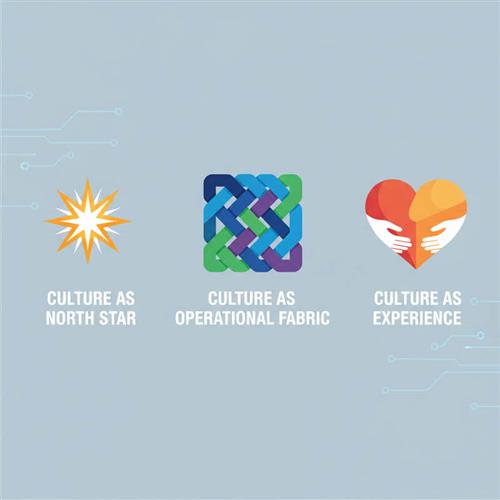
1. Don’t Treat AI as a Project. Treat It as a Culture
AI is not something you buy and immediately use.
It’s not a one-off project you can check off a list.
AI requires a culture that values clean data, transparency, and continuous improvement. According to AI readiness studies, cultural resistance and unclear objectives are among the biggest barriers to AI success-not technical capability alone.
If your foundation-the part below the waterline-is weak, AI won’t fix it. It will only accelerate dysfunction.
2. You Need a Real Architect (Not a Slide Maker)
AI value does not come from tools alone. It comes from architecture.
A real architect bridges the gap between ambitious AI visions and the operational reality of legacy systems, cost pressures, compliance constraints, and delivery commitments common in outsourcing environments.
Don’t build AI for demos. Build systems where AI can operate safely, reliably, and sustainably, even under real‑world constraints.
3. People & External Perspective Matter
Even if you can hire a full-time AI architect, it’s wise to bring outside viewpoints.
Most AI challenges aren’t purely technical-they’re organizational and cultural. In many companies, 70–80% of AI projects fail to deliver expected value because of poor application strategy, siloed data, and weak governance.
Don’t swim alone in the dark. An objective, experienced perspective will help you spot hidden icebergs before it’s too late.
4. Be Honest About Readiness and Risk
Only a small percentage of companies globally are truly ready to scale AI across the enterprise. For developing economies, the gap between ambition and readiness is often wider due to inherited systems and rapid growth pressures.
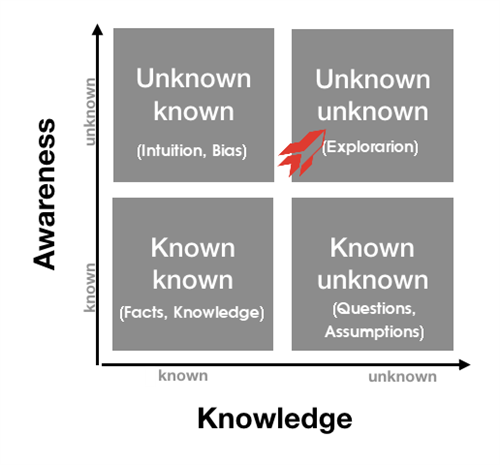
The right question is not:
“Is AI safe?”
But rather:
What Does This Mean in Practice?
Here’s the playbook to build AI safely and sustainably:
✔ Treat AI as ongoing culture change, not a point solution.
Invest in data quality, transparency, and open collaboration across teams.
✔ Build governance and risk frameworks early.
AI requires policies, audit trails, and bias detection-not just models.
✔ Don’t underestimate human factors.
Education, leadership alignment, and change management are key.
✔ Use pilot projects to learn-then scale.
Start with small, measurable use cases to build real experience.
Core Insight
AI success doesn’t start with technology.
It starts with prepared systems, data culture, and realistic expectations.
Do that, and you’ll be ready to sail-storms and all.
 Explore more on these topics























 Guest Blogging: The Definitive Guide

 Top Trending Topics
 Share This
 Link copied!
 Recently Updated News