



What is the difference between server-side rendering SSR and client-side rendering CSR?
Last updated: February 06, 2024 Read in fullscreen view


 Recommended for you
- 18 Oct 2020
 How to use the "Knowns" and "Unknowns" technique to manage assumptions 165/1259
 - 19 Oct 2021 Software development life cycles 143/821
- 13 Oct 2021 Outsourcing Software Development: MVP, Proof of Concept (POC) and Prototyping. Which is better? 128/604
- 04 Oct 2021 Product Validation: The Key to Developing the Best Product Possible 128/436
- 23 Sep 2021 INFOGRAPHIC: Top 9 Software Outsourcing Mistakes 123/546
- 07 Oct 2025 Case Study: Using the “Messaging House” Framework to Build a Digital Transformation Roadmap 123/203
- 18 Aug 2022 What are the consequences of poor requirements with software development projects? 119/387
- 11 Jan 2024 What are the Benefits and Limitations of Augmented Intelligence? 119/605
- 13 Dec 2020 Move fast, fail fast, fail-safe 118/458
- 06 Feb 2021 Why fail fast and learn fast? 114/590
- 01 Oct 2020 Fail fast, learn faster with Agile methodology 113/1187
- 12 Oct 2022 14 Common Reasons Software Projects Fail (And How To Avoid Them) 110/675
- 12 Aug 2024 Understanding Google Analytics in Mumbai: A Beginner's Guide 109/216
- 28 Jul 2022 POC, Prototypes, Pilots and MVP: What Are the Differences? 103/844
- 14 Mar 2024 Why should you opt for software localization from a professional agency? 102/241
- 31 Aug 2022 What are the best practices for software contract negotiations? 97/369
- 12 Dec 2021 Zero Sum Games Agile vs. Waterfall Project Management Methods 95/509
- 14 Oct 2021 Advantages and Disadvantages of Time and Material Contract (T&M) 95/988
- 05 Sep 2023 The Cold Start Problem: How to Start and Scale Network Effects 92/289
- 28 Dec 2021 8 types of pricing models in software development outsourcing 89/523
- 05 Mar 2021 How do you minimize risks when you outsource software development? 88/421
- 08 Oct 2022 KPI - The New Leadership 87/695
- 10 Nov 2022 Poor Code Indicators and How to Improve Your Code? 82/299
- 10 Jan 2024 Like for Like – how to preserves existing business and leverage technological advancement 81/502
- 06 Mar 2024 [SemRush] What Are LSI Keywords & Why They Don‘t Matter 80/282
- 10 Dec 2023 Pain points of User Acceptance Testing (UAT) 80/539
- 01 Dec 2023 Laws of Project Management 79/394
- 19 Oct 2021 Is gold plating good or bad in project management? 79/910
- 18 Jul 2021 How To Ramp Up An Offshore Software Development Team Quickly 75/667
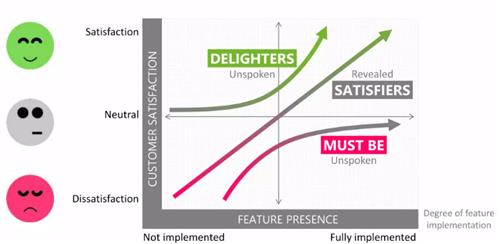
- 17 Feb 2022 Prioritizing Software Requirements with Kano Analysis 75/379
- 19 Apr 2021 7 Most Common Time-Wasters For Software Development 72/617
- 04 Oct 2022 Which ERP implementation strategy is right for your business? 70/430
- 12 Mar 2024 How do you create FOMO in software prospects? 70/243
- 01 May 2024 Warren Buffett’s Golden Rule for Digital Transformation: Avoiding Tech Overload 69/277
- 01 Mar 2023 Bug Prioritization - What are the 5 levels of priority? 69/298
- 31 Oct 2021 Tips to Fail Fast With Outsourcing 66/457
- 05 Jan 2024 Easy ASANA tips & tricks for you and your team 60/258
- 28 Oct 2022 Build Operate Transfer (B.O.T) Model in Software Outsourcing 57/467
- 26 Dec 2023 Improving Meeting Effectiveness Through the Six Thinking Hats 53/329
- 06 Nov 2019 How to Access Software Project Size? 42/299
In the world of web development, choosing the right rendering approach can significantly impact the user experience, search engine optimization (SEO), and the overall performance of your web application. Server-Side Rendering (SSR) and Client-Side Rendering (CSR) are two fundamental approaches, each with its own set of advantages and challenges. In this comprehensive guide, we will explore the differences between SSR and CSR, helping you make informed decisions for your web projects.
Server-Side Rendering (SSR)
- Initial Page Load: With SSR, the server generates the entire HTML for a web page and sends it to the client as a fully rendered page. This means that users receive a complete HTML document with content, ready to be displayed, on their initial request.
- SEO-Friendly: SSR is highly SEO-friendly because search engines can efficiently crawl and index the content. Since content is present in the initial HTML response, it’s easily discoverable by search engine bots.
- Performance: SSR offers a superior perceived performance. Users experience quicker content loading because the initial HTML is sent to the client, reducing the time required for content to appear on the screen. This is particularly advantageous for users on slower connections or devices.
- Complexity: Implementing SSR can be more complex because it involves server-side rendering frameworks and potentially more server-side code. However, the benefits often outweigh the added complexity.
- Server Load: SSR may place more load on the server because it has to generate HTML for each request. Scalability and server resources become crucial considerations.
Client-Side Rendering (CSR)
- Initial Page Load: In CSR, the server sends a minimal HTML document along with JavaScript files. The initial HTML typically contains placeholders for content. The actual content is loaded and rendered on the client-side by JavaScript.
- Dynamic Updates: CSR excels in enabling dynamic updates without full-page reloads. It’s ideal for single-page applications (SPAs) where content can change frequently without the need for complete page refreshes.
- Development Simplicity: CSR can be simpler to develop because much of the rendering logic is handled on the client-side using JavaScript frameworks like React, Angular, or Vue.js. This makes it an attractive option for many modern web applications.
- Server Load: CSR can reduce server load since the server primarily serves static assets and doesn’t need to generate HTML for each request. This can lead to cost savings and improved scalability.
- SEO Challenges: One of the key challenges with CSR is SEO. Search engines may struggle to index content that is loaded dynamically via JavaScript. However, this issue can be addressed with techniques like server-side rendering for specific pages.
The Hybrid Approach
For large sites, it’s often the case that specific areas of the site are suitable for pre-rendering, whilst others areas are either too dynamic or have too many pages for pre-rendering to be feasible.
|
Good for...
|
Not so good for...
|
|
|
The choice between SSR and CSR depends on your project’s specific requirements and goals. SSR is well-suited for content-heavy websites where SEO is critical and initial load performance matters. CSR, on the other hand, is ideal for dynamic, interactive web applications where content changes frequently without full-page reloads. Many modern web applications leverage both approaches, known as hybrid rendering, to harness the strengths of each method where appropriate. By carefully evaluating your project’s needs, you can make an informed decision that aligns with your development goals and user expectations.
FAQ
Q1: Is SSR suitable for all types of web applications?
A1: SSR is beneficial for applications that require SEO optimization and enhanced initial load times. However, it may not be the best choice for highly dynamic, real-time applications where client-side rendering (CSR) or a hybrid approach could be more suitable.
Q2: Does SSR replace client-side rendering (CSR)?
A2: No, SSR is not a complete replacement for CSR. In many cases, a hybrid approach that combines both CSR and SSR is ideal. SSR handles the initial page load, while CSR takes over for subsequent interactions, providing a smooth user experience.
Q3: Are there any performance trade-offs with SSR?
A3: While SSR improves initial load times, it can increase server load and complexity. Proper caching strategies and server optimization are crucial to mitigate these potential drawbacks.
Sources:
- https://medium.com
- https://dev.to
- https://kontent.ai
 Explore more on these topics






























 Guest Blogging: The Definitive Guide

 Top Trending Topics
 Share This
 Link copied!
 Recently Updated News