





The Decline of Traditional SaaS and the Rise of AI-first Applications
Last updated: January 25, 2025 Read in fullscreen view


 Recommended for you
- 06 Mar 2026
 Next-Generation AI Agents Explained: OpenClaw, NanoClaw, IronClaw and the Rise of Agent Architectures 175/185
 - 05 Oct 2025 The New Facebook Algorithm: A Paradigm Shift in Content Discovery 102/153
- 25 Mar 2026 Token Bills: The "Cost Shock" After the AI Boom in Companies 85/91
- 20 Mar 2022 What is a Multi-Model Database? Pros and Cons? 81/1251
- 02 Oct 2022 The Real Factors Behind Bill Gates’ Success: Luck, Skills, or Connections? 80/432
- 06 Nov 2025 Top 10 AI Development Companies in the USA to Watch in 2026 78/130
- 17 Jul 2023 What Is SSL? A Simple Explanation Even a 10-Year-Old Can Understand 77/158
- 06 Dec 2025 Enterprise Operations 2.0: Why AI Agents Are Replacing Traditional Automation 69/106
- 02 Dec 2025 The Question That Shook Asia: What Happens When We Ask AI to Choose Between a Mother and a Wife? 67/99
- 25 Nov 2025 How AI Agents Are Redefining Enterprise Automation and Decision-Making 64/118
- 29 Oct 2024 Top AI Tools and Frameworks You’ll Master in an Artificial Intelligence Course 64/451
- 16 Oct 2025 AI Inference Explained Simply: What Developers Really Need to Know 62/91
- 03 Oct 2025 Top CMS Trends 2026: The Future of Digital Content Management 61/83
- 03 Dec 2025 Templafy Features Explained: The Ultimate Guide to Streamlined Content Management 60/88
- 23 Dec 2024 Garbage In, Megabytes Out (GIMO): How to Rise Above AI Slop and Create Real Signal 59/105
- 01 Jul 2025 The Hidden Costs of Not Adopting AI Agents: Risk of Falling Behind 59/197
- 05 Jul 2020 What is Sustaining Software Engineering? 59/1368
- 09 Jul 2024 What Is Artificial Intelligence and How Is It Used Today? 59/293
- 21 Dec 2023 Top 12 Low-Code Platforms To Use in 2024 58/1315
- 24 Mar 2026 AI for Financial Reconciliation: Automating Finance Operations in 2026 54/58
- 31 Dec 2025 10 Skills to Make You "Irreplaceable" in the Next 3 Years (even if AI changes everything) 53/73
- 14 Aug 2024 From Steel to Software: The Reluctant Evolution of Japan's Tech Corporates 53/582
- 28 Nov 2025 How AI Will Transform Vendor Onboarding and Seller Management in 2026 50/107
- 20 Dec 2025 The Future of IT Consulting: Key Trends for 2026–2030 50/87
- 04 Mar 2026 CRM Trends Shaping Customer Engagement in 2026 50/55
- 22 Sep 2022 Why is it important to have a “single point of contact (SPoC)” on an IT project? 48/1005
- 18 Jul 2024 The 8 Best ways to Innovate your SAAS Business Model in 2024 47/295
- 20 Feb 2025 How Machine Learning is Shaping the Future of Digital Advertising 46/158
- 05 Jun 2025 How AI-Driven Computer Vision Is Changing the Face of Retail Analytics 45/164
- 13 Nov 2021 What Is Bleeding Edge Technology? Are bleeding edge technologies cheaper? 45/586
- 25 Dec 2025 What Is Algorithmic Fairness? Who Determines the Value of Content: Humans or Algorithms? 45/73
- 29 Nov 2021 Memorandum of Understanding (MOU) for Partnership Agreements 44/588
- 03 Jul 2022 What is the difference between Project Proposal and Software Requirements Specification (SRS) in software engineering? 44/1061
- 21 Nov 2025 The Rise of AgentOps: How Enterprises Are Managing and Scaling AI Agents 44/96
- 07 Nov 2022 Why Design Thinking can save the outsourcing industry 43/229
- 11 Oct 2022 Why choose Billable Viable Product (BVP) over Minimum Viable Product (MVP) 43/384
- 24 Dec 2024 Artificial Intelligence and Cybersecurity: Building Trust in EFL Tutoring 42/203
- 20 Dec 2021 What is Hybrid Mobile App Development? 41/427
- 31 Dec 2021 What is a Data Pipeline? 41/242
- 03 Nov 2023 Why Is Billable Viable Product An Alternative To Minimum Viable Product? 41/213
- 27 Jul 2024 Positive Psychology in the Digital Age: Future Directions and Technologies 40/451
- 07 Nov 2025 Online vs. Offline Machine Learning Courses in South Africa: Which One Should You Pick? 40/97
- 01 Mar 2023 What is Unit Testing? Pros and cons of Unit Testing? 39/458
- 25 Apr 2021 What is outstaffing? 38/303
- 23 Jun 2025 AI Avatars in the Metaverse: How Digital Beings Are Redefining Identity and Social Interaction 38/178
- 12 Jan 2026 Companies Developing Custom AI Models for Brand Creative: Market Landscape and Use Cases 38/54
- 10 Nov 2025 Multi-Modal AI Agents: Merging Voice, Text, and Vision for Better CX 37/138
- 17 Oct 2025 MLOps vs AIOps: What’s the Difference and Why It Matters 36/123
- 10 Sep 2024 Leading Remote Teams in Hybrid Work Environments 36/173
- 30 Jan 2022 What Does a Sustaining Engineer Do? 36/659
- 26 Mar 2026 What Is a System Integrator (SI)? Why the Software Subscription Model Is Becoming the New Standard 36/51
- 20 Aug 2025 What Is Agentic AI? The Next Phase of Artificial Intelligence 35/184
- 28 Oct 2025 The Future of Real Estate: Key Trends and Essential Lessons in Digital Transformation 34/88
- 10 Apr 2022 What is predictive analytics? Why it matters? 32/209
- 01 Mar 2024 (AI) Artificial Intelligence Terms Every Beginner Should Know 32/334
- 15 Apr 2024 Weights & Biases: The AI Developer Platform 32/216
- 03 Jan 2024 Why Partnership is important for Growth? 32/185
- 31 Dec 2023 Software Development Outsourcing Trends to Watch Out for in 2024 29/254
- 24 Oct 2025 AI Agents in SaaS Platforms: Automating User Support and Onboarding 29/95
- 06 May 2025 How Machine Learning Is Transforming Data Analytics Workflows 29/215
- 02 Dec 2024 The Intersection of AI and Business Analytics: Key Concepts to Master in Your Business Analytics Course 29/317
- 06 Dec 2024 Steps For Integrating Sustainable Practices Into Business Operations 29/170
- 27 Feb 2025 How AI Agents are Changing Software Development? 28/217
- 27 Aug 2025 How AI Consulting Is Driving Smarter Diagnostics and Hospital Operations 28/124
- 08 Jan 2024 Ask Experts: Explicitation/Implicitation and Elicitation; two commonly used but barely unraveled concepts 28/378
- 16 Aug 2022 What is a Headless CMS? 28/292
- 31 Dec 2022 The New Normal for Software Development 27/378
- 22 Sep 2025 Why AI Is Critical for Accelerating Drug Discovery in Pharma 27/107
- 04 Oct 2023 The Future of Work: Harnessing AI Solutions for Business Growth 27/301
- 09 Oct 2024 Short-Form Video Advertising: The Secret to Captivating Your Audience 26/154
- 16 Sep 2022 Examples Of Augmented Intelligence In Today’s Workplaces Shaping the Business as Usual 26/454
- 22 Nov 2024 The Role of AI in Enhancing Business Efficiency and Decision-Making 24/212
- 21 Aug 2024 What is Singularity and Its Impact on Businesses? 23/443
- 18 Aug 2024 The Future of Web Development: Emerging Trends and Technologies Every Developer Should Know 23/210
- 05 Aug 2024 Revisiting the Mistake That Halted Japan's Software Surge 23/364
- 30 Jul 2024 The Future of IT Consulting: Trends and Opportunities 22/215
- 10 Sep 2024 AI in Email Marketing: Personalization and Automation 20/195
- 21 Apr 2025 Agent AI in Multimodal Interaction: Transforming Human-Computer Engagement 20/208
- 19 Dec 2023 How AI is Transforming Software Development? 17/305
- 18 Jan 2024 Self-healing code is the future of software development 16/228
- 25 Sep 2024 Enhancing Decision-Making Skills with an MBA: Data-Driven Approaches for Business Growth 16/216
- 31 Dec 2022 Future of Software Development Trends and Predictions 14/154
- 29 Aug 2025 How AI Is Transforming Modern Management Science 12/57
- 05 Aug 2024 Affordable Tech: How Chatbots Enhance Value in Healthcare Software 6/213
The Decline of Traditional SaaS and the Rise of AI-first Applications
1. Shifting Technological Landscape
Artificial Intelligence (AI) is ushering in a new wave of innovation, marked by AI-first applications that are increasingly intelligent, capable of automating numerous processes, and making decisions that often surpass human efficiency in various domains.
Businesses are gradually moving away from traditional SaaS models to adopt AI-driven platforms that offer higher levels of personalization and deeper integration into operational workflows.
2. Limitations of Traditional SaaS
- Low Flexibility: Traditional SaaS solutions generally provide a one-size-fits-all experience, lacking the depth of customization required to address specific business needs.
- High Maintenance Costs: Organizations must continuously pay monthly or annual subscription fees, leading to a rising Total Cost of Ownership (TCO) over time.
- Limited Integration: Although many SaaS platforms offer open APIs, integrating multiple SaaS solutions often remains complex and resource-intensive.
3. AI-native Solutions – The Future of Enterprise Software
- Full Automation with AI: New AI platforms can automate tasks ranging from data entry and analysis to trend forecasting, reducing the dependency on human intervention.
- Generative AI for Personalization: AI technologies deliver highly tailored solutions that adapt to specific business needs, moving beyond the standardized offerings of traditional software.
- AI-as-a-Service (AIaaS): A new model is emerging where businesses can access AI services through APIs with far greater customization capabilities than conventional SaaS.
4. SaaS Evolution: Is It Truly “Dead”?
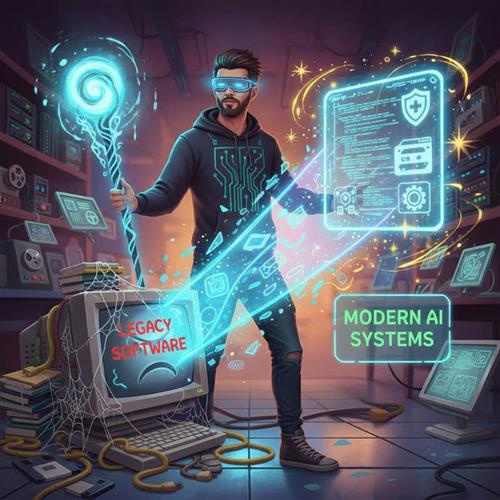
SaaS is not entirely obsolete but is evolving into AI-driven SaaS, where AI serves as the core enabler, making these platforms smarter, faster, and more responsive to user data.
Traditional SaaS companies must adapt by integrating AI into their offerings to remain competitive. Otherwise, they risk being outpaced by AI-first startups.
The Gray Zone: SaaS vs. AI-driven SaaS
The transition from SaaS to AI-driven SaaS reveals a nuanced gray zone where businesses must evaluate which approach aligns best with their operational goals and technological capabilities. Here are some critical considerations:
Overlap in Use Cases
Both traditional SaaS and AI-driven SaaS serve common business functions, such as Customer Relationship Management (CRM), Enterprise Resource Planning (ERP), and project management. However, AI-driven SaaS adds predictive analytics, automation, and personalization capabilities, offering a competitive edge.
Cost Implications
-
SaaS: Predictable subscription-based pricing but with potentially high long-term costs due to limited scalability and customization.
-
AI-driven SaaS: Higher initial investment in implementation and training but greater ROI through process efficiencies and automation.
Complexity and Integration
-
SaaS: Easier to implement but may struggle with integration across diverse systems.
-
AI-driven SaaS: Requires technical expertise for setup and integration but enables deeper system interconnectivity and adaptability.
Adoption Curve
-
SaaS: More accessible for organizations with limited tech expertise.
-
AI-driven SaaS: Demands a higher level of digital maturity, often involving change management and workforce upskilling.
Future-readiness
AI-driven SaaS is better positioned for future technological trends, such as real-time data-driven decision-making and hyper-personalization, making it an attractive option for forward-looking enterprises.
In this gray zone, businesses must carefully assess their priorities, resource availability, and long-term goals to determine the right approach. While SaaS remains a viable option for companies seeking simplicity and reliability, AI-driven SaaS is emerging as the preferred choice for those aiming to stay ahead in a rapidly evolving digital landscape.
Phạm Đình Trường
Technical Director, TIGO Solutions
 Explore more on these topics





















 Guest Blogging: The Definitive Guide

 Top Trending Topics
 Share This
 Link copied!
 Recently Updated News