



The Parking Lot Method: Unlocking a Simple Secret to Supercharge Your Productivity
Last updated: November 07, 2025 Read in fullscreen view


 Recommended for you
- 01 Aug 2024
 The Standish Group report 83.9% of IT projects partially or completely fail 788/2605
 - 05 Oct 2025 The New Facebook Algorithm: A Paradigm Shift in Content Discovery 265/327
- 13 Apr 2024 Lessons on Teamwork and Leadership from Chinese story book "Journey to the West" 250/1335
- 21 Dec 2023 Top 12 Low-Code Platforms To Use in 2024 210/1506
- 13 Oct 2025 Mastering the Dynamic Squad Model: A Modern Approach to Agile Teams 206/411
- 02 Nov 2021 What is Terms of Reference (ToR)? 166/1742
- 18 Oct 2020 How to use the "Knowns" and "Unknowns" technique to manage assumptions 163/1257
- 03 Oct 2025 Top CMS Trends 2026: The Future of Digital Content Management 163/193
- 25 Mar 2026 Token Bills: The "Cost Shock" After the AI Boom in Companies 154/175
- 20 Dec 2025 The Future of IT Consulting: Key Trends for 2026–2030 148/190
- 31 Dec 2025 10 Skills to Make You "Irreplaceable" in the Next 3 Years (even if AI changes everything) 148/178
- 19 Oct 2021 Software development life cycles 143/821
- 18 Jul 2024 The 8 Best ways to Innovate your SAAS Business Model in 2024 135/390
- 26 Mar 2026 What Is a System Integrator (SI)? Why the Software Subscription Model Is Becoming the New Standard 131/165
- 13 Oct 2021 Outsourcing Software Development: MVP, Proof of Concept (POC) and Prototyping. Which is better? 127/603
- 04 Oct 2021 Product Validation: The Key to Developing the Best Product Possible 125/433
- 23 Sep 2021 INFOGRAPHIC: Top 9 Software Outsourcing Mistakes 123/546
- 07 Oct 2025 Case Study: Using the “Messaging House” Framework to Build a Digital Transformation Roadmap 121/200
- 21 Jun 2022 Difference between Quality and Grade 120/950
- 11 Jan 2024 What are the Benefits and Limitations of Augmented Intelligence? 119/605
- 02 Jan 2024 What is User Provisioning & Deprovisioning? 119/710
- 13 Dec 2020 Move fast, fail fast, fail-safe 118/457
- 18 Aug 2022 What are the consequences of poor requirements with software development projects? 118/386
- 04 Mar 2026 CRM Trends Shaping Customer Engagement in 2026 117/145
- 06 Feb 2021 Why fail fast and learn fast? 113/588
- 23 Jun 2024 Best Practices for Managing Project Escalations 113/318
- 01 Oct 2020 Fail fast, learn faster with Agile methodology 112/1186
- 20 Feb 2025 How Machine Learning is Shaping the Future of Digital Advertising 111/233
- 31 Dec 2025 26 Things You Should Do Now to Prepare for 2026 110/156
- 12 Oct 2022 14 Common Reasons Software Projects Fail (And How To Avoid Them) 109/674
- 12 Aug 2024 Understanding Google Analytics in Mumbai: A Beginner's Guide 106/213
- 27 Jul 2024 Positive Psychology in the Digital Age: Future Directions and Technologies 105/533
- 16 Aug 2022 What is a Headless CMS? 105/391
- 02 May 2022 What Is RAID in Project Management? (With Pros and Cons) 105/948
- 01 Mar 2024 10 Project Management Myths 104/278
- 03 Apr 2022 Microsoft Solutions Framework (MSF) 103/1445
- 03 Jan 2024 Why Partnership is important for Growth? 102/260
- 12 Aug 2022 What is End-to-end project management? 102/608
- 28 Jul 2022 POC, Prototypes, Pilots and MVP: What Are the Differences? 101/842
- 02 Dec 2024 The Intersection of AI and Business Analytics: Key Concepts to Master in Your Business Analytics Course 101/396
- 14 Mar 2024 Why should you opt for software localization from a professional agency? 100/239
- 01 Jan 2024 6 Japanese Life Principles That Quietly Transform You 99/224
- 16 Sep 2022 Examples Of Augmented Intelligence In Today’s Workplaces Shaping the Business as Usual 98/534
- 11 Oct 2022 Why choose Billable Viable Product (BVP) over Minimum Viable Product (MVP) 96/438
- 03 Jan 2023 Organizing your agile teams? Think about M.A.T (Mastery, Autonomy, Purpose) 96/493
- 18 Jan 2024 Self-healing code is the future of software development 95/312
- 12 Dec 2021 Zero Sum Games Agile vs. Waterfall Project Management Methods 95/509
- 31 Aug 2022 What are the best practices for software contract negotiations? 95/366
- 20 Aug 2025 What Is Agentic AI? The Next Phase of Artificial Intelligence 94/253
- 25 Sep 2024 Enhancing Decision-Making Skills with an MBA: Data-Driven Approaches for Business Growth 93/300
- 14 Oct 2021 Advantages and Disadvantages of Time and Material Contract (T&M) 92/985
- 02 Nov 2022 Difference between Change Management and Project Management 92/324
- 05 Sep 2023 The Cold Start Problem: How to Start and Scale Network Effects 91/288
- 25 Jan 2025 The Decline of Traditional SaaS and the Rise of AI-first Applications 90/195
- 08 Oct 2022 KPI - The New Leadership 87/694
- 28 Dec 2021 8 types of pricing models in software development outsourcing 87/521
- 05 Mar 2021 How do you minimize risks when you outsource software development? 86/419
- 09 May 2022 Build one to throw away vs Second-system effect: What are differences? 85/396
- 23 Jun 2025 AI Avatars in the Metaverse: How Digital Beings Are Redefining Identity and Social Interaction 85/272
- 01 Aug 2022 Is planning "set it and forget it" or "set it and check it"? 84/381
- 04 Mar 2023 [Medium] Box-Ticking: The Management Strategy That’s Killing your Productivity 84/750
- 30 Jul 2024 The Future of IT Consulting: Trends and Opportunities 81/291
- 10 Nov 2022 Poor Code Indicators and How to Improve Your Code? 81/298
- 22 May 2022 What are common mistakes that new or inexperienced managers make? 80/361
- 17 Oct 2021 Does Fast Tracking increase project cost? 80/455
- 18 Dec 2023 The Cone of Uncertainty in Scrum & Requirement Definition 80/814
- 06 Mar 2024 [SemRush] What Are LSI Keywords & Why They Don‘t Matter 80/282
- 22 Nov 2024 The Role of AI in Enhancing Business Efficiency and Decision-Making 78/273
- 01 Dec 2023 Laws of Project Management 78/393
- 10 Dec 2023 Pain points of User Acceptance Testing (UAT) 78/536
- 19 Oct 2021 Is gold plating good or bad in project management? 78/909
- 18 Aug 2024 The Future of Web Development: Emerging Trends and Technologies Every Developer Should Know 77/272
- 31 Dec 2022 The New Normal for Software Development 76/429
- 31 Dec 2023 Software Development Outsourcing Trends to Watch Out for in 2024 75/304
- 07 Dec 2023 12 project management myths to avoid 75/267
- 14 Jun 2022 Example and Excel template of a RACI chart in Software Development 75/947
- 17 Feb 2022 Prioritizing Software Requirements with Kano Analysis 75/379
- 10 Sep 2024 Leading Remote Teams in Hybrid Work Environments 75/218
- 18 Feb 2026 "Hit and Run" Project Management: Balancing Speed with Sustainability 74/100
- 07 Jul 2022 Managing Project Execution Terms 74/481
- 18 Oct 2021 Key Elements to Ramping Up a Large Team 74/1331
- 18 Jul 2021 How To Ramp Up An Offshore Software Development Team Quickly 74/666
- 19 Dec 2023 How AI is Transforming Software Development? 73/366
- 27 Feb 2025 How AI Agents are Changing Software Development? 73/310
- 17 Dec 2025 Unaligned Escalation Logic: A Silent Risk in Complex Organizations 72/96
- 19 Apr 2021 7 Most Common Time-Wasters For Software Development 72/617
- 03 Nov 2023 Why Is Billable Viable Product An Alternative To Minimum Viable Product? 71/262
- 04 Oct 2022 Which ERP implementation strategy is right for your business? 70/430
- 01 May 2024 Warren Buffett’s Golden Rule for Digital Transformation: Avoiding Tech Overload 69/277
- 12 Mar 2024 How do you create FOMO in software prospects? 68/241
- 01 Mar 2023 Bug Prioritization - What are the 5 levels of priority? 68/297
- 27 Jan 2020 Should a project manager push developers to work more hours due to mistakes of manager schedule setting? 67/508
- 31 Oct 2021 Tips to Fail Fast With Outsourcing 66/457
- 09 Oct 2024 Short-Form Video Advertising: The Secret to Captivating Your Audience 66/198
- 15 May 2022 20 Common Mistakes Made by New or Inexperienced Project Managers 63/345
- 02 Dec 2021 3 Ways to Avoid Scope Creep in IT Consulting 62/271
- 20 Jul 2022 Software Myths and Realities 60/1001
- 24 Nov 2023 The project management paradox: Achieving MORE by doing LESS 60/290
- 05 Jan 2024 Easy ASANA tips & tricks for you and your team 60/258
- 05 Jun 2023 Fractional, Part-Time (virtual) or Interim CTO: Who Will Cover Your Business Needs? 60/203
- 15 Aug 2025 Quantum Technology: Global Challenges and Opportunities for Innovators 60/190
- 06 Jun 2022 Change Management at the Project Level 59/365
- 26 Nov 2024 Harnessing Time Management Skills for Remote Team Effectiveness 58/276
- 02 Jun 2024 Reviving Ancient Wisdom: The Spiritual Side of Project Management 58/315
- 26 Sep 2024 Successful Project Management Techniques You Need to Look Out For 57/454
- 28 Oct 2022 Build Operate Transfer (B.O.T) Model in Software Outsourcing 57/467
- 13 Jan 2020 Quiz: Test your understanding project cost management 55/701
- 10 May 2022 Levels of Teamwork 54/249
- 26 Dec 2023 Improving Meeting Effectiveness Through the Six Thinking Hats 53/329
- 30 Nov 2023 Project Managers, Focus on Outcomes — Not Deliverables 52/213
- 10 Sep 2024 AI in Email Marketing: Personalization and Automation 50/227
- 21 Jun 2024 Dead Horses and the Escalation of Commitment 47/185
- 31 Dec 2022 Future of Software Development Trends and Predictions 46/197
- 06 Nov 2019 How to Access Software Project Size? 40/297
The Parking Lot Method is a simple way to manage time by organizing tasks more effectively. It helps you or your team create "parking lots" for tasks, projects, or ideas. This method improves focus by ensuring each task is managed without feeling overwhelmed by a long to-do list. It lets you prioritize better and boosts productivity by dealing with tasks in an organized way.
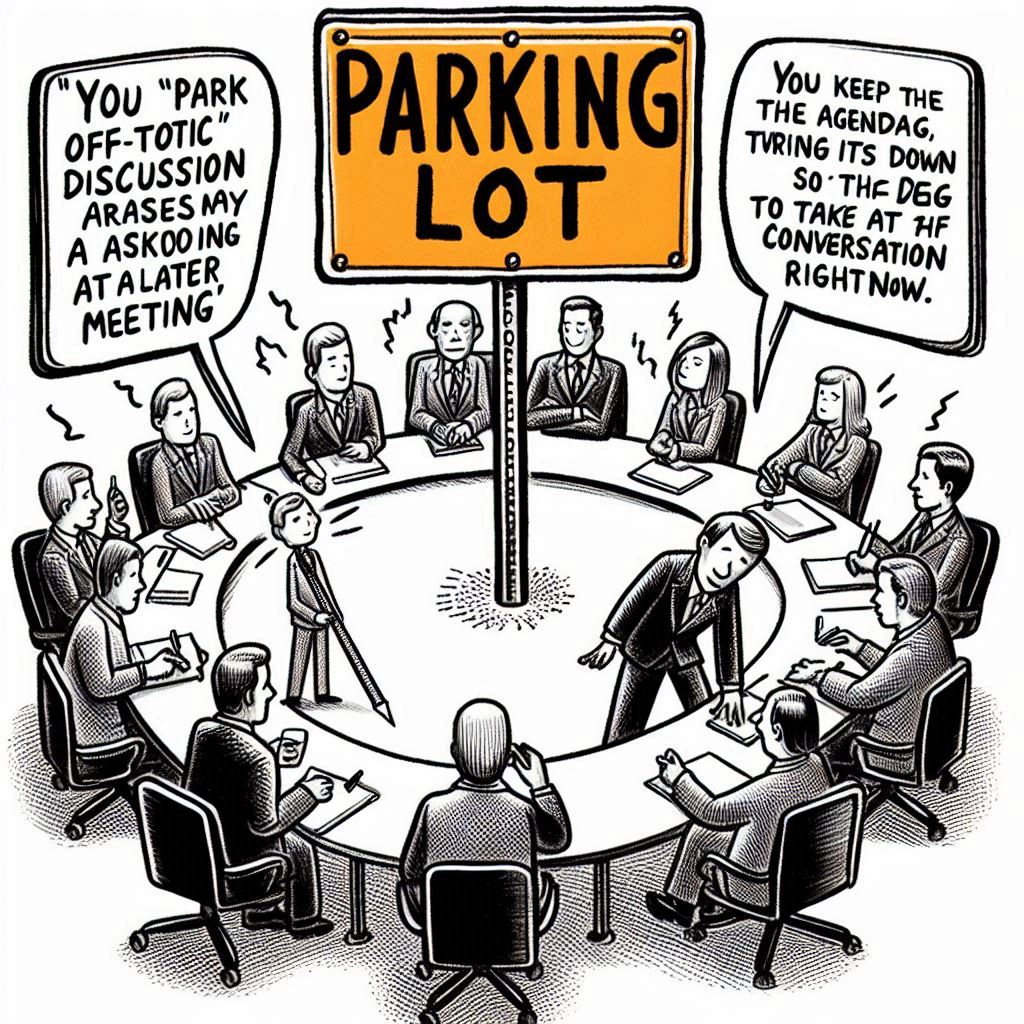
The Parking Lot Method is like a secret weapon for keeping meetings on point. This is how it operates: you "park" an off-topic discussion that arises during a meeting. This entails writing it down so that it may be discussed at a later meeting rather than allowing it to take over the conversation right now. You keep the agenda front and center by doing this, which facilitates more efficient and productive meetings.
When to Use the Parking Lot Method (Best Fit)
The parking lot method works well for:
- Busy professionals juggling multiple tasks or projects.
- Teams that need a structured way to manage workload.
- Individuals who easily get overwhelmed by cluttered to-do lists.
If you want a method that helps you stay organized and focus on one task at a time, this is a good fit. It’s especially useful in project management, business tasks, or even personal planning.
Pros and Cons of the Parking Lot Method
- Organizes tasks efficiently: You can break tasks into different categories (or "lots") for better management.
- Improves focus: You can concentrate on one task at a time without being distracted by other tasks.
- Prevents feeling overwhelmed: By separating tasks, you reduce the stress of having too many things to do at once.
- Overcompartmentalization: Breaking tasks into too many categories can make things overly complicated.
- Time management issues: It can be difficult to allocate the right amount of time to each task, which may lower productivity.
Best Practices for the Parking Lot Method
- Identify and list tasks: Make a list of everything you need to do.
- Categorize your tasks: Create separate "parking lots" for different types of tasks (e.g., urgent, ongoing, or low-priority).
- Assign time to each task: Decide when you will work on each task and stick to your schedule.
- Regularly review tasks: Make sure your task categories are up to date with current priorities.
Example of How It Works
Imagine a marketing professional managing different projects. They create "lots" for tasks like content creation, client communication, and campaign planning. By separating tasks into these categories, the marketer gains a clearer focus and manages time more effectively, boosting productivity.
Step-by-Step Guide to Using the Parking Lot Method
- List all tasks: Write down all the tasks you need to do.
- Categorize tasks: Group tasks into different categories (like urgent or long-term).
- Allocate time: Assign specific time slots for each group of tasks.
- Review and adjust: Regularly check and adjust your task list as priorities change.
Practical Tips for Success
- Prioritize deadlines: Work on time-sensitive tasks first to avoid missing deadlines.
- Stay flexible: Adjust your task categories as new priorities come up.
- Use tools: Task management apps can help you stay organized.
Do's and Don'ts
Do's:
- Prioritize urgent tasks.
- Use tools for better task management.
- Stay flexible with your categories.
Don'ts:
- Don’t make too many categories—keep it simple.
- Don’t forget to review and update your tasks regularly.
- Don’t spend too much time on a single task category.
Conclusion
The Parking Lot Method is a practical tool for improving productivity and organizing tasks. It helps you manage tasks without feeling overwhelmed, allows better focus, and promotes task prioritization. By following the best practices and staying flexible, you can use this method to achieve your goals more efficiently.
 Explore more on these topics

























 Guest Blogging: The Definitive Guide

 Top Trending Topics
 Share This
 Link copied!
 Recently Updated News