
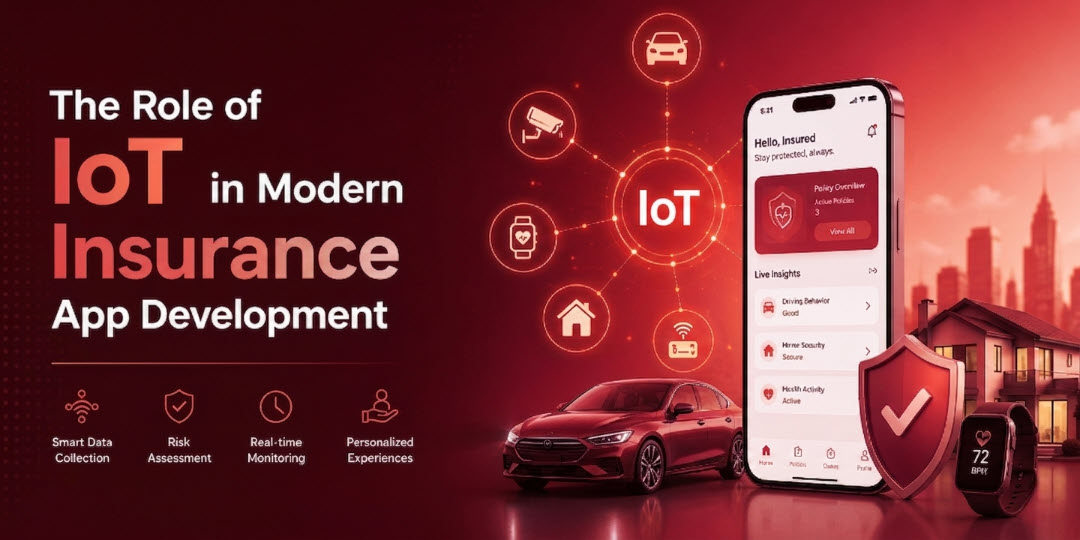
The Role of IoT in Modern Insurance App Development
Last updated: May 31, 2026 Read in fullscreen view


 Recommended for you
- 05 Oct 2025
 The New Facebook Algorithm: A Paradigm Shift in Content Discovery 268/330
 - 14 Jan 2026 How to Evaluate the Business and Productivity Software Company Seismic on RFP AI Agent Use Cases 247/297
- 12 Jun 2025 Rule-Based vs. Data-Driven Decision Making: The Critical Shift in Fintech and AI 213/334
- 21 Dec 2023 Top 12 Low-Code Platforms To Use in 2024 213/1509
- 02 Dec 2025 FIX vs. REST API: How to Choose the Right Integration Protocol for Modern Financial Systems 190/267
- 01 Dec 2025 Manufacturing 4.0: AI Agents Enabling Self-Optimizing Production Systems 167/228
- 05 Mar 2026 Top 7 Full-Cycle Web App Development Companies for Your Business in 2026 165/215
- 03 Oct 2025 Top CMS Trends 2026: The Future of Digital Content Management 164/194
- 17 Mar 2026 How Much Does it Cost to Build an AI Agent in 2026 161/230
- 25 Mar 2026 Token Bills: The "Cost Shock" After the AI Boom in Companies 154/175
- 20 Dec 2025 The Future of IT Consulting: Key Trends for 2026–2030 154/196
- 08 Oct 2024 Vietnam: The Rising Star in Global Outsourcing – Trends and Costs for 2025 153/516
- 31 Dec 2025 10 Skills to Make You "Irreplaceable" in the Next 3 Years (even if AI changes everything) 152/182
- 19 Oct 2021 Software development life cycles 143/821
- 07 Jul 2024 Top Fintech Companies in Vietnam Driving Innovation Across Digital Banking & Investment 141/275
- 11 Mar 2026 OEM, ODM, and OBM in Software Development: Choosing the Right Growth Path 140/166
- 26 Mar 2026 What Is a System Integrator (SI)? Why the Software Subscription Model Is Becoming the New Standard 137/171
- 06 Nov 2025 DataOps: The Next Frontier in Agile Data Management 136/195
- 06 Nov 2025 DataOps: The Next Frontier in Agile Data Management 136/195
- 18 Jul 2024 The 8 Best ways to Innovate your SAAS Business Model in 2024 136/391
- 12 May 2021 The Real Cost Between Outsourcing IT vs In-House: A Quick Comparison 133/579
- 02 Jan 2026 The Trust Paradox in Fintech: How Data Transparency Reduces User Anxiety in Financial Recovery 132/168
- 17 Mar 2026 Top 10 Product Development Companies in Chennai 2026 (Updated) 131/148
- 12 May 2026 Top 6 AI AR/VR Filter Tools for Mind-Blowing Videos and Photos in 2026 129/149
- 16 Oct 2024 Building a Software Outsourcing Startup: Strategy Through Two Canvases 128/168
- 04 Oct 2021 Product Validation: The Key to Developing the Best Product Possible 128/436
- 13 Oct 2021 Outsourcing Software Development: MVP, Proof of Concept (POC) and Prototyping. Which is better? 127/603
- 02 Feb 2026 What Is the Total Cost of Web Development for Small & Medium Businesses? 126/159
- 16 Feb 2026 Education App Development Cost in 2026: Benchmarks and Key Cost Drivers 126/184
- 10 Mar 2021 The 7 Biggest Mistakes to Avoid Before Outsourcing a Web Development Project 124/357
- 07 Oct 2025 Case Study: Using the “Messaging House” Framework to Build a Digital Transformation Roadmap 123/203
- 11 Mar 2024 Why You Should Hire Odoo Developers from Vietnam to Customize Your ERP System 122/228
- 06 Feb 2026 How Much Does a CPA Cost for a Small Business? 121/144
- 21 Aug 2025 Top 30 Oldest IT Outsourcing Companies in Vietnam 120/225
- 03 Apr 2026 Best 10 FinTech Software Development Companies for SaaS Products 120/141
- 29 Jan 2026 Why Headless Commerce Is Shaping the Future of the Online Store 118/143
- 01 Jan 2023 Top Software Development Challenges in 2023 118/437
- 04 Mar 2026 CRM Trends Shaping Customer Engagement in 2026 117/145
- 05 Aug 2025 Why Doesn’t South Korea Outsource Its IT Projects Like Other Developed Countries? 116/221
- 05 Jan 2022 What Outsourcing Engagement Model is Right For You? 116/428
- 10 Jan 2024 Facts Chart: Reasons for outsourcing 113/268
- 20 Feb 2025 How Machine Learning is Shaping the Future of Digital Advertising 111/233
- 12 Oct 2022 14 Common Reasons Software Projects Fail (And How To Avoid Them) 110/675
- 12 Aug 2024 Understanding Google Analytics in Mumbai: A Beginner's Guide 109/216
- 27 Jul 2024 Positive Psychology in the Digital Age: Future Directions and Technologies 107/535
- 19 Oct 2020 The hidden costs of outsourcing software development 107/575
- 01 Mar 2022 Top 5 reasons why outsourcing to Vietnam is a smart move 106/391
- 16 Aug 2022 What is a Headless CMS? 106/392
- 16 Aug 2022 What is a Headless CMS? 106/392
- 02 Dec 2024 The Intersection of AI and Business Analytics: Key Concepts to Master in Your Business Analytics Course 103/398
- 28 Jul 2022 POC, Prototypes, Pilots and MVP: What Are the Differences? 103/844
- 21 Oct 2021 Advantages and Disadvantages of IT Outsourcing 103/459
- 01 Jan 2023 4 New IT Outsourcing Pricing Models to consider in 2023 102/477
- 03 Jan 2024 Why Partnership is important for Growth? 102/260
- 09 Sep 2022 Close Collaboration and Communication Can Overcome the Challenges of Distributed Teams 101/308
- 16 Mar 2023 10 Reasons to Choose a Best-of-Breed Tech Stack 100/314
- 24 Nov 2025 Top Blockchain Companies in Vietnam 100/145
- 16 Sep 2022 Examples Of Augmented Intelligence In Today’s Workplaces Shaping the Business as Usual 99/535
- 16 Sep 2022 Examples Of Augmented Intelligence In Today’s Workplaces Shaping the Business as Usual 99/535
- 10 May 2021 What are things you should look for in a good IT outsourcing company? 99/544
- 11 Oct 2022 Why choose Billable Viable Product (BVP) over Minimum Viable Product (MVP) 98/440
- 31 Oct 2025 The True ROI of Software Development Outsourcing for Tech Startups 98/178
- 03 Dec 2025 IT Outsourcing Solutions Explained: What, How, Why, When 97/129
- 10 Feb 2026 8 FinTech Software Development Services That Drive Digital Transformation 97/140
- 31 Aug 2022 What are the best practices for software contract negotiations? 97/369
- 24 Nov 2021 What is the Actual Cost of Hiring Cheap Developers? 96/492
- 12 Dec 2021 Zero Sum Games Agile vs. Waterfall Project Management Methods 95/509
- 08 Apr 2026 Top AI Agent Development Companies for Manufacturing Industry (2026) 95/123
- 18 Jan 2024 Self-healing code is the future of software development 95/312
- 20 Aug 2025 What Is Agentic AI? The Next Phase of Artificial Intelligence 94/253
- 25 Sep 2024 Enhancing Decision-Making Skills with an MBA: Data-Driven Approaches for Business Growth 93/300
- 01 Jan 2023 Software Development Outsourcing Trends to Watch Out for in 2023 93/416
- 01 Sep 2019 Outsourcing Software To Vietnam: Facts, benefits and limitations 92/553
- 05 Sep 2023 The Cold Start Problem: How to Start and Scale Network Effects 92/289
- 25 Jan 2025 The Decline of Traditional SaaS and the Rise of AI-first Applications 91/196
- 01 Jan 2024 What The World Is Flat Means to IT Outsourcing 91/259
- 09 Sep 2025 Aligning BI Dashboards with KPIs: A Business + Data Collaboration Guide 91/179
- 01 Apr 2021 IT Outsourcing to vietnam: Why It Is A Good Choice? 90/388
- 01 Jan 2023 Top 5 IT outsourcing countries in 2023 88/363
- 15 Aug 2021 TIGO Rate Formula - Things the partners should know 88/618
- 23 Jun 2025 AI Avatars in the Metaverse: How Digital Beings Are Redefining Identity and Social Interaction 87/274
- 05 Mar 2021 How do you minimize risks when you outsource software development? 86/419
- 13 Jan 2023 What are the Hourly Rates in Offshore Software Development? 86/327
- 12 Jan 2023 Top 10 Trustworthy IT Outsourcing Companies in Vietnam 85/367
- 15 Oct 2022 Project-based team model for one-off and pilot software development projects 85/912
- 16 Dec 2021 Why outsource Python development of your project? 85/583
- 13 Oct 2021 Why Outsourcing Software Development Services Is Gaining Traction With Non-Technical Leaders? 84/399
- 24 Aug 2022 7 Ways to Improve Software Maintenance 83/386
- 19 Mar 2021 Selective Outsourcing of IT Functions - a new trend in business outsourcing 82/642
- 14 Dec 2021 The Top 10 Problems with Outsourcing Implementation and How to Solve Them 81/477
- 17 Jan 2024 What are the benefits and challenges of using multi-sourcing or single-sourcing strategies? 81/283
- 30 Jul 2024 The Future of IT Consulting: Trends and Opportunities 81/292
- 06 Mar 2024 [SemRush] What Are LSI Keywords & Why They Don‘t Matter 80/282
- 03 Oct 2020 Outsourcing Your MVP Development - Streamlined Solutions for future 80/506
- 26 May 2026 Cost Breakdown of Insurance App Development in 2026 80/94
- 31 Dec 2023 Software Development Outsourcing Trends to Watch Out for in 2024 79/308
- 01 Dec 2023 Laws of Project Management 78/393
- 22 Nov 2024 The Role of AI in Enhancing Business Efficiency and Decision-Making 78/273
- 18 Aug 2024 The Future of Web Development: Emerging Trends and Technologies Every Developer Should Know 77/272
- 02 Nov 2023 What are the pros and cons of iIT outsourcing? 77/290
- 03 Jan 2023 IT Outsourcing Costs: Is outsourcing really cost-effective? 77/287
- 31 Dec 2022 The New Normal for Software Development 76/429
- 18 Jul 2021 How To Ramp Up An Offshore Software Development Team Quickly 75/667
- 17 Jun 2021 What is IT-business alignment? 75/447
- 10 Sep 2024 Leading Remote Teams in Hybrid Work Environments 75/219
- 04 Apr 2024 Unlock Vietnamese-Japanese outsourcing potential 74/308
- 03 Nov 2021 7 phases of Odoo Implementation and Development: Can they be outsourced? 73/497
- 19 Dec 2023 How AI is Transforming Software Development? 73/366
- 27 Feb 2025 How AI Agents are Changing Software Development? 73/310
- 03 Nov 2022 Top questions and answers you must know before ask for software outsourcing 73/358
- 03 Nov 2023 Why Is Billable Viable Product An Alternative To Minimum Viable Product? 72/263
- 04 Jan 2021 VIETNAM AS A BIG ATTRACTIVE DESTINATION IN THE FIELD OF OUTSOURCING 72/397
- 01 Jun 2025 10 Sustainable & Unique IT Outsourcing Companies in Vietnam 72/154
- 06 Oct 2021 Intellectual property issues with outsourcing software development 71/456
- 04 Oct 2022 Which ERP implementation strategy is right for your business? 70/430
- 02 May 2021 Outsourcing Software Development: Avoid 8 Mistakes 70/207
- 22 Mar 2022 8 Mistakes Marketing Agencies or Consulting Firms Make When Outsourcing Web Development 70/415
- 21 Aug 2022 Forbes: IT Outsourcing Hotspot: Vietnam, A Small But Mighty Powerhouse 70/325
- 12 Oct 2021 Vietnam outsourcing path - the silk road connecting ASEAN with the developed countries (EU, US, Japan...) 69/410
- 01 May 2024 Warren Buffett’s Golden Rule for Digital Transformation: Avoiding Tech Overload 69/277
- 01 Jan 2024 Hiring Tech Talents in Asia: An Overview of Skills, Costs, and Potential 68/228
- 28 Oct 2022 Expect the unexpected in 2023 - How Outsourcing Can Help? 68/272
- 10 May 2021 Project Audit and Second Opinion Services 68/313
- 09 Jan 2021 How can outsourcing enable business agility? 68/258
- 17 Oct 2020 How Outsourcing can Improve Time Management for Better Business 66/364
- 15 Nov 2023 IT Staff Augmentation Types and the Best Choice for Your Business 66/278
- 09 Oct 2024 Short-Form Video Advertising: The Secret to Captivating Your Audience 66/198
- 02 Mar 2021 Estimate the Cost of Software Development 63/427
- 01 Oct 2022 Vietnam is a favorite supply of IT outsourcing services to Japan 63/299
- 11 Mar 2023 Common Pain Points in Software Development Outsourcing 62/326
- 01 Jan 2024 12 reasons for software development outsourcing 62/262
- 01 Jan 2024 Tech Partnerships: Choosing the Right Software Outsourcing Firm in Vietnam 61/233
- 01 May 2023 Streamline Your Business with Outsourcing 61/266
- 15 Aug 2025 Quantum Technology: Global Challenges and Opportunities for Innovators 60/191
- 07 Nov 2024 Outsourcing Crisis Looming: Will Trump's Policies Transform the Global IT Landscape? 59/242
- 08 Aug 2021 Why Nearshore Software Development is better than In-House Development? 59/254
- 13 May 2026 Real AI Use Cases in Banking and Financial Services 59/67
- 28 Oct 2022 Build Operate Transfer (B.O.T) Model in Software Outsourcing 57/467
- 01 Jan 2024 Software Outsourcing Questions for 2024 57/206
- 25 Sep 2025 A Practical Guide to Secure Online Work for Outsourced Teams 56/151
- 01 Jan 2023 Why is Vietnam the Top IT Outsourcing Destination of 2023? 56/297
- 19 Jun 2026 Who Offers AI Solutions Specifically Designed for Financial Services? Top Financial AI Companies in 2026 56/61
- 08 Feb 2022 Software Development: Fixed Cost or Opportunity Cost? 53/514
- 16 Mar 2021 Outsource Data Engineering Services - TIGO Streamlined Solutions 51/307
- 10 Sep 2024 AI in Email Marketing: Personalization and Automation 51/228
- 08 Jan 2024 Outsourcing on an As-Needed Basis 50/215
- 31 Dec 2021 Outsourcing Software Development to mitigate the impact of COVID-19 50/373
- 01 Feb 2023 [InfoWorld] Is your outsourcer agile enough? 49/242
- 31 Dec 2022 Future of Software Development Trends and Predictions 46/197
- 21 Oct 2022 Outsourcing Billable Rate 46/315
- 25 Nov 2021 Low-Cost Software Development: Buy Nice or Buy Twice? 44/406
- 03 Jun 2026 Enterprise Guide to Choosing the Right Enterprise Application Development Services 34/37
Risk management has consistently been a key part of the insurance trading business. But for decades, that sort of thing was primarily based on speculation; Insurance companies used demographic trends, historical facts, and normative assumptions for pricing plans. It is changing rapidly within current technology. Insurance companies can now use real-time device-generated statistics to make more intelligent, fair, and accurate choices thanks to the Internet of Things (IoT).
IoT devices, wearable fitness trackers, smart home devices, and connected vehicles are generating a constant stream of data that is changing the way coverage items are produced, priced, and provided.
What IoT Brings to the Insurance Table
The gap between perceived and actual risk is a real issue that insurers have always needed to address, and IoT is more than just technical jargon.
Traditional coverage pricing works like this: You give the insurance company some information about yourself, including your age, location, and vehicle model, and for them to determine your premiums entirely based on nothing but the behavior of those like you. Not intimate. It’s based on facts.
IoT completely changes the situation. The vehicle now informs the insurance company how to force you, saving them the trouble of guessing. The sensors track, so they won’t assess your home as liable for flooding. Your wearables track fitness information in real time without wanting them to rely on said records themselves.
Perhaps the biggest change in coverage in a century is the shift from assumption-based to evidence-based insurance.
Key Areas Where IoT Is Making An Impact
1. Telematics & Auto Insurance
One of the most developed IoT packages in insurance today is usage-based fully insured (UBI). Telematics equipment tracks driver behavior, including speed, braking patterns, angle, time of day driven, and typical mileage. They can be plugged into a phone app or connected to a vehicle’s OBD-II port.
Low premiums are an advantage for the right drivers. Risky drivers pay extra. It’s simple, and more importantly, it feels fair to customers.
Vehicle insurers using telematics have seen a quantifiable decline in claims, due in part to the fact that drivers regularly change their behavior when they are aware that they are under surveillance. So everyone wins.
2. Smart Home Devices & Property Insurance
For property insurers, IoT-enabled homes are an information gold mine. Smart locks, security cameras, leak detectors, and smoke alarms all produce consistent indicators that can help prevent damage before it happens.
For example, a water leak sensor that picks up moisture under a sink can send an immediate alert, potentially preventing hundreds of dollars of water loss before it ever starts.
The role of the insurer has been fundamentally rethought, shifting from reactive payer to active partner.
3. Wearables & Health Insurance
Smartwatches and fitness trackers from businesses like Apple, Garmin, and Fitbit collect oxygen levels, coronary heart rate, phases, sleep patterns, and comprehensive fitness information. Health insurance companies are increasingly developing software that incorporates this fact to trigger appropriate behavior or reduce racism.
Both parties benefit from the release. Policyholders who are in better shape have fewer injuries and are more engaged with their insurance company when they receive material benefits for walking more or getting better sleep. Alongside improvements in public health, customer retention also improves.
4. Commercial & Industrial IoT
IoT is not tied to customers. Industrial equipment within the industrial sector can use sensors for tracking temperature, vibration, and usage cycles to catch problems before they occur. For business interruption coverage, although failure of a system can result in large claims, it is essential.
Another application is fleet management, where GPS and telecommunications in industrial vehicles clearly help insurers assess the feasibility of entire fleets instead of individual drivers.
Why This Demands Specialized App Development
Without the right tools to access, analyze, and use this IoT information, every mile is confusing. App development gets expensive and complicated at this point.
Developing an IoT-integrated insurance application is not always the same as developing an everyday mobile application. It requires:
- Real-time information pipelines that can take streams from multiple devices simultaneously
- Edge computing capabilities that provide faster response times by processing information closer to the supply.
- Robust Protective Structures to Protect Non-Public Space, Conditioning, and Behavioral Facts.
- AI and ML are designed with the ability to detect irregularities, identify fraud, and achieve dynamic pricing.
- A seamless user takes pleasure in what clears up searching complex records for customers to identify and use
For this reason, it is important to work with a pro IoT app development company in this area. These are information infrastructure efforts with a user interface on top, no longer the easiest software projects.
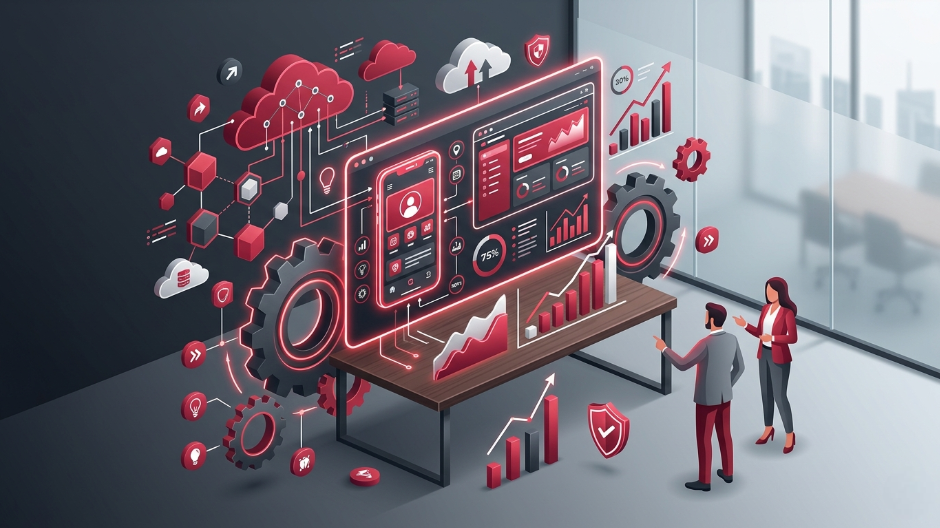
The Technical Stack Behind IoT-Powered Insurance Apps
Modern IoT-enabled insurance software typically relies on two layers of technology that interact:
1. Data Collection Layer
IoT devices and sensors store immature information (which includes GPS coordinates, heart rate, and sensor readings) and export it via protocols such as MQTT or CoAP, which can be turned into high-frequency and low-bandwidth transmission.
2. Cloud Infrastructure
This record is stored at scale through platforms that are AWS IoT Core, Google Cloud IoT, or Azure IoT Hub.
3. Analysis & AI Engine
To detect risky driving behaviors, predict fitness events, or identify intelligent fraud, system recognition algorithms filter raw records to extract a valid signals.
4. Application Layer
With an easy-to-use interface, the person-facing software provides policyholders with customized insights, top-of-the-class updates, alerts, and claims features.
Because each of those layers needs to be built with scalability, security, and reliability in mind, insurers are increasingly deciding on specialized coverage app improvement services rather than conventional motif development teams.
Data Privacy: The Challenge You Can’t Ignore
There are huge risks involved in storing this ton of personal information. Policyholders must be confident that their domestic activities, health data, data and patterns cannot be exploited or disclosed without permission.
Clear proposals for statistics collection, storage, and individual consent are established through regulations, including the CCPA in California and the GDPR in Europe. The use of transactional information in price selection is a concern for several legal guidelines, especially within the insurance industry.
Strong encryption every time in transit and at rest, open reasons for facts to influence pricing, granular fact checking, clean licensing strategy, and privacy through configuration are all capabilities of properly designed IoT-powered coverage applications.
To give up, insurance companies sell acceptance as truth. No matter how much better it is, the generation that betrays what it accepts as truth will no longer win the market.
What is Coming Next?
The interaction between IoT and insurance is still in its infancy. Some new trends to keep an eye on:
1. Parametric Insurance
Policies that pay out immediately in the event of an event detected by sensors, including a flood, do so without a claimant with faster, less luxurious, and much less contentiousness.
2. Embedded Insurance
Ensuring it is properly integrated into the product for sale. When you buy smartphones, you usually have a warranty or repair insurance with them. The propensity profile is managed in real-time by IoT information.
3. Prediction Risk Model
Insurance pricing will shift from actuarial spreadsheets to perfectly tailored plans as AI fashion becomes more adept at predicting character hazards with previously unheard of accuracy as IoT datasets grow richer.
Wrapping It Up
IoT in the insurance sector does something amazing: it personalizes contingency. Insurance companies can now base their pricing rules on your particular lifestyle, driving habits, and behavior in relation to popular statistical assumptions for primary time. This is better for policyholders who are responsible, safe, and healthy, and it makes the claims climate more sustainable for policyholders.
But as it can fully realize the promise, informing businesses in the insurance industry and extending cutting-edge software into the technical complexities of the connected device ecosystem is what makes data valuable, whether through telecom, health wearables, or smart home connectivity.
Whether it’s an IoT app development company agency that helps with the integration layer of devices or insurance app development services that target regulatory, UX, and claims workflows that make those products work for real customers, companies looking to expand in this area want partners who have industry expertise and depth of understanding.
The time is up. The data is flowing. The issue at hand is whether insurers and their reform peers can act quickly enough to meet today's conditions.
 Explore more on these topics


























 Guest Blogging: The Definitive Guide

 Top Trending Topics
 Share This
 Link copied!
 Recently Updated News