


The Three Pillars of Empiricism in Scrum
Last updated: December 20, 2025 Read in fullscreen view


 Recommended for you
- 18 Oct 2020
 How to use the "Knowns" and "Unknowns" technique to manage assumptions 167/1261
 - 25 Sep 2018 Applying Cognitive Linguistics to Multi-Stakeholder Communication in IT Projects 145/195
- 19 Oct 2021 Software development life cycles 144/822
- 21 May 2022 "Fail Fast, Fail Often, Fail Forward" is the answer to Agile practices of software success 138/1187
- 01 Dec 2022 Difference between Set-based development and Point-based development 138/501
- 10 Apr 2022 Agile self-organizing teams: What are they? How do they work? 131/690
- 04 Oct 2021 Product Validation: The Key to Developing the Best Product Possible 130/438
- 13 Oct 2021 Outsourcing Software Development: MVP, Proof of Concept (POC) and Prototyping. Which is better? 129/606
- 27 Oct 2020 8 principles of Agile Testing 127/1443
- 07 Oct 2025 Case Study: Using the “Messaging House” Framework to Build a Digital Transformation Roadmap 127/207
- 23 Sep 2021 INFOGRAPHIC: Top 9 Software Outsourcing Mistakes 125/548
- 18 Aug 2022 What are the consequences of poor requirements with software development projects? 122/390
- 03 Jul 2022 Manifesto for Agile Software Development 120/390
- 11 Jan 2024 What are the Benefits and Limitations of Augmented Intelligence? 119/605
- 13 Dec 2020 Move fast, fail fast, fail-safe 119/460
- 16 Jul 2022 What are disadvantages of Agile Methodology? How to mitigate the disadvantages ? 118/514
- 28 Nov 2023 Scrum Team Failure — Scrum Anti-Patterns Taxonomy 117/372
- 06 Feb 2021 Why fail fast and learn fast? 116/592
- 01 Oct 2020 Fail fast, learn faster with Agile methodology 115/1189
- 12 Oct 2022 14 Common Reasons Software Projects Fail (And How To Avoid Them) 112/677
- 12 Aug 2024 Understanding Google Analytics in Mumbai: A Beginner's Guide 110/217
- 28 Jul 2022 POC, Prototypes, Pilots and MVP: What Are the Differences? 109/850
- 14 Mar 2024 Why should you opt for software localization from a professional agency? 102/241
- 15 Jan 2026 ITIL vs PMP: What’s the Difference and Which One Should You Choose? 101/139
- 14 Oct 2021 Advantages and Disadvantages of Time and Material Contract (T&M) 98/992
- 31 Aug 2022 What are the best practices for software contract negotiations? 97/371
- 12 Dec 2021 Zero Sum Games Agile vs. Waterfall Project Management Methods 96/510
- 20 Nov 2022 Agile working method in software and football 96/436
- 05 Sep 2023 The Cold Start Problem: How to Start and Scale Network Effects 93/291
- 28 Dec 2021 8 types of pricing models in software development outsourcing 92/526
- 05 Mar 2021 How do you minimize risks when you outsource software development? 91/424
- 07 Oct 2020 How To Manage Expectations at Work (and Why It's Important) 91/428
- 08 Oct 2022 KPI - The New Leadership 87/696
- 01 Jun 2022 How Your Agile Development Team is Just Like a Football Team? 86/304
- 09 Sep 2022 Debunking 50+ Agile Scrum Interview Questions 86/530
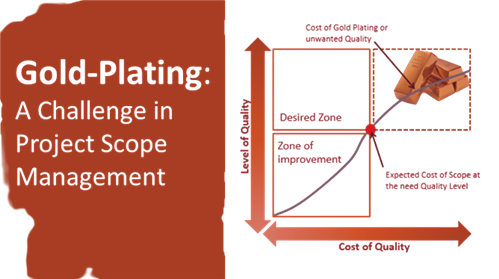
- 19 Oct 2021 Is gold plating good or bad in project management? 84/915
- 17 Feb 2022 Prioritizing Software Requirements with Kano Analysis 83/387
- 10 Nov 2022 Poor Code Indicators and How to Improve Your Code? 82/299
- 06 Mar 2024 [SemRush] What Are LSI Keywords & Why They Don‘t Matter 82/284
- 10 Dec 2023 Pain points of User Acceptance Testing (UAT) 80/541
- 01 Dec 2023 Laws of Project Management 79/394
- 07 Sep 2022 The Adaptive Scrum: Why Modified Agile Model? 79/433
- 17 Jun 2021 What is IT-business alignment? 79/451
- 09 Oct 2022 Key Advantages and Disadvantages of Agile Methodology 78/782
- 18 Jul 2021 How To Ramp Up An Offshore Software Development Team Quickly 76/668
- 12 Oct 2020 The Agile Manifesto - Principle #8 73/568
- 19 Apr 2021 7 Most Common Time-Wasters For Software Development 72/617
- 12 Mar 2024 How do you create FOMO in software prospects? 72/246
- 01 Mar 2023 Bug Prioritization - What are the 5 levels of priority? 71/300
- 04 Oct 2022 Which ERP implementation strategy is right for your business? 70/430
- 01 May 2024 Warren Buffett’s Golden Rule for Digital Transformation: Avoiding Tech Overload 69/277
- 31 Oct 2021 Tips to Fail Fast With Outsourcing 68/459
- 28 Oct 2022 Build Operate Transfer (B.O.T) Model in Software Outsourcing 60/470
- 05 Jan 2024 Easy ASANA tips & tricks for you and your team 60/258
- 06 Sep 2021 Scrum Flexibility: Navigating the Boundaries of Agile Modification 57/376
- 26 Dec 2023 Improving Meeting Effectiveness Through the Six Thinking Hats 54/330
- 01 Mar 2022 Why Does Scrum Fail in Large Companies? 54/318
- 21 Oct 2022 Virtual meeting - How does TIGO save cost, reduce complexity and improve quality by remote communication? 50/240
- 10 Oct 2022 Should Your Business Go Agile? (Infographic) 49/173
- 02 Nov 2022 Frequently Asked Questions about Agile and Scrum 47/444
- 06 Nov 2019 How to Access Software Project Size? 45/303
- 06 Mar 2024 Most Common Software Development Methodologies 44/206

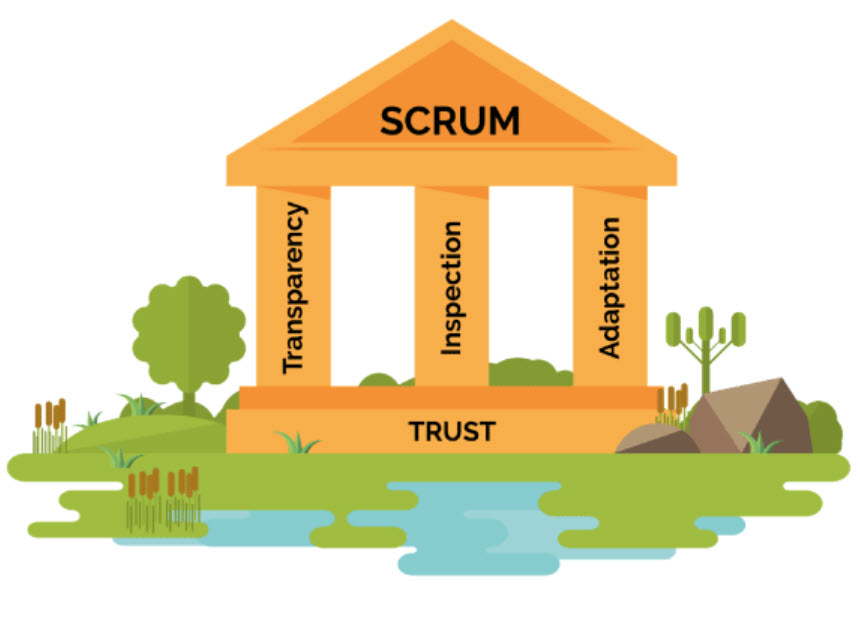
“Scrum is founded on empiricism and lean thinking. Empiricism asserts that knowledge comes from experience and making decisions based on what is observed. Lean thinking reduces waste and focuses on the essentials.”
The three pillars of empiricism
The three pillars of empiricism are as follows:
-
Transparency
This means presenting the facts as is. All people involved - the customer, the CEO, individual contributors - are transparent in their day-to-day dealings with others. They all trust each other, and they have the courage to keep each other abreast of good news as well as bad news. Everyone strives and collectively collaborates for the common organizational objective, and no one has any hidden agenda.
-
Inspection
Inspection in this context is not an inspection by an inspector or an auditor but an inspection by everyone on the Scrum Team. The inspection can be done for the product, processes, people aspects, practices, and continuous improvements. For example, the team openly and transparently shows the product at the end of each Sprint to the customer in order to gather valuable feedback. If the customer changes the requirements during inspection, the team does not complain but rather adapts by using this as an opportunity to collaborate with the customer to clarify the requirements and test out the new hypothesis.
“Transparency enables inspection. Inspection without transparency is misleading and wasteful.”
-
Adaptation
Adaptation in this context is about continuous improvement, the ability to adapt based on the results of the inspection. Everyone in the organization must ask this question regularly: Are we better off than yesterday? For profit-based organizations, the value is represented in terms of profit. The adaptation should eventually relay back to one of the reasons for adapting Agile - for example, faster time to market, increased return on investment through value - based delivery, reduced total cost of ownership through enhanced software quality, and improved customer and employee satisfaction.
Scrum works not because it has three roles, five events, and three artifacts but because it adheres to the underlying Agile principles of iterative, value-based incremental delivery by frequently gathering customer feedback and embracing change. This results in faster time to market, better delivery predictability, increased customer responsiveness, ability to change direction by managing changing priorities, enhanced software quality, and improved risk management.
Do you really need to follow all three Scrum pillars?
To put it briefly, you do. There's a lot to process here, but let's start with transparency. Of the three Scrum pillars, it is the most crucial. If the issue you are facing is unclear, you will undoubtedly inspect and adjust in the incorrect method, further straying from your intended course of action.
Sometimes, you can actually focus only on adapting—simply experimenting with some ideas and brainstorming new ways to develop the product. Then again, it will be necessary to carefully inspect and ask why you’re even trying something new. Maybe your team is bored with the current situation and needs a breath of fresh air?
As you can see, all three pillars are inseparable and strictly connected. You can’t have one without the others.
Working with scrum means developing a cutting-edge product to give your company a headstart on your competition. Scrum is sometimes used to manage projects: a predetermined scope is divided into iterations, and the scope is not intended to be changed while the project is being developed. Before development begins, while knowledge is at its lowest, all decisions are determined. In the event that new information is found throughout the development process, you can wind up wasting money and resources.
Important insights into the product, the market, and the customers that were discovered throughout development have also been purposefully overlooked because doing so would have required going against the original strategy.
Using empiricism and scrum well involves acting quickly to capitalize on learning for the benefit of your clients, business, and market position.
 Explore more on these topics








![Top 10 Vietnam IT Outsourcing Vendors [MOST UPDATED] - TIGO CONSULTING](/Uploads/Vietnam12012023111455_thumb.jpg "Best IT Outsourcing Companies in Vietnam with Reviews 2023")


















 Guest Blogging: The Definitive Guide

 Top Trending Topics
 Share This
 Link copied!
 Recently Updated News