


The Trust Paradox in Fintech: How Data Transparency Reduces User Anxiety in Financial Recovery
Last updated: January 03, 2026 Read in fullscreen view


 Recommended for you
- 02 Dec 2025
 FIX vs. REST API: How to Choose the Right Integration Protocol for Modern Financial Systems 230/315
 - 14 Aug 2024 From Steel to Software: The Reluctant Evolution of Japan's Tech Corporates 208/755
- 18 Oct 2024 The Dark Side of Japan’s Work Culture 178/237
- 12 Jan 2026 Why YouTube Content Is the New Resume: Building Trust and Expertise Even Without Views 167/196
- 12 Apr 2025 How to Ask Powerful Questions Like Socrates 162/197
- 01 Jul 2025 Southeast Asia Faces a Surge of “Fake AI Startups” 154/250
- 19 Oct 2021 Software development life cycles 148/828
- 23 Oct 2024 The Achilles Heel of Secure Software: When “Best-in-Class” Security Still Leads to System Collapse 147/198
- 21 Apr 2026 Vibe Coding vs. Expert Shopify Development: What AI Tools Can (and Can't) Do? 143/168
- 04 Oct 2021 Product Validation: The Key to Developing the Best Product Possible 136/444
- 13 Oct 2021 Outsourcing Software Development: MVP, Proof of Concept (POC) and Prototyping. Which is better? 132/613
- 07 Oct 2025 Case Study: Using the “Messaging House” Framework to Build a Digital Transformation Roadmap 128/208
- 03 Apr 2026 Best 10 FinTech Software Development Companies for SaaS Products 125/147
- 28 Jul 2022 POC, Prototypes, Pilots and MVP: What Are the Differences? 122/866
- 12 Oct 2022 14 Common Reasons Software Projects Fail (And How To Avoid Them) 116/682
- 12 Aug 2024 Understanding Google Analytics in Mumbai: A Beginner's Guide 112/219
- 16 Mar 2023 10 Reasons to Choose a Best-of-Breed Tech Stack 109/323
- 10 Feb 2026 8 FinTech Software Development Services That Drive Digital Transformation 104/147
- 19 Sep 2025 The Paradoxes of Scrum Events: When You “Follow the Ritual” but Lose the Value 100/145
- 05 Aug 2024 Revisiting the Mistake That Halted Japan's Software Surge 98/447
- 12 Dec 2021 Zero Sum Games Agile vs. Waterfall Project Management Methods 98/512
- 31 Aug 2022 What are the best practices for software contract negotiations? 97/371
- 05 Sep 2023 The Cold Start Problem: How to Start and Scale Network Effects 96/294
- 05 Mar 2021 How do you minimize risks when you outsource software development? 95/428
- 04 Apr 2025 To Act or Not to Act – A Manager’s Persistent Dilemma 94/210
- 26 May 2026 Cost Breakdown of Insurance App Development in 2026 90/105
- 19 Jun 2026 Who Offers AI Solutions Specifically Designed for Financial Services? Top Financial AI Companies in 2026 89/99
- 24 Aug 2022 7 Ways to Improve Software Maintenance 89/392
- 06 Mar 2024 [SemRush] What Are LSI Keywords & Why They Don‘t Matter 89/293
- 01 Dec 2023 Laws of Project Management 81/396
- 18 Jul 2021 How To Ramp Up An Offshore Software Development Team Quickly 77/669
- 04 Oct 2022 Which ERP implementation strategy is right for your business? 73/434
- 01 May 2024 Warren Buffett’s Golden Rule for Digital Transformation: Avoiding Tech Overload 70/278
- 28 Oct 2022 Build Operate Transfer (B.O.T) Model in Software Outsourcing 64/474
- 13 May 2026 Real AI Use Cases in Banking and Financial Services 63/73
- 17 Mar 2025 Integrating Salesforce with Yardi: A Guide to Achieving Success in Real Estate Business 61/269
- 03 Jul 2022 Occam’s Razor and the Art of Software Design 57/559
- 13 Jul 2026 Why Every AI Initiative Needs Regular Audits 39/46
The Platform That Shows You Everything
In most government organizations, the most important financial information is stored in 30 to 50-year-old systems. COBOL mainframe financial systems are used to support billions of transactions in many state financial systems every year. These systems are not outdated failures. They are success stories in operation since they have survived several technology cycles. The problem is not to change them immediately, but to modernize access without interfering with the mission-critical activities.
APIs, real-time queries and analytics-friendly schemes are expected by modern users and applications. This was not what legacy systems were meant to do. This article discusses how organizations can modernize their access to public financial data by moving there gradually through incremental migration, middleware, and cautious architectural design instead of doing it more crucially by completely replacing their system.
The Psychology of Financial Trust in Digital Systems
Government inherent environments are mixed. At the heart of these are the mainframe systems that use COBOL and the data is stored in IBM DB2 or IMS or in the fixed-width flat files. These are enclosed in the platforms in the client-server era that are developed using tools like Oracle Forms or PowerBuilder. They also tend to have restricted access to data that is only available in green screen terminals or batch exports.
There is a tendency for documentation gaps. Specifications are not complete or are lost and critical business logic is then implemented on stored procedures or application code and only understood by a limited number of experts. These systems work within tight limitations. There is no tolerance for downtime and the availability may be 24/7 as well as regulatory constraints may not allow one to directly modify core logic.
Research always indicates that a majority of government organizations use legacy systems in their central financial activities. Replacement may not be feasible at all because of the cost, risk and institutional dependence. Consequently, modernization is concerned with access and not abolition.
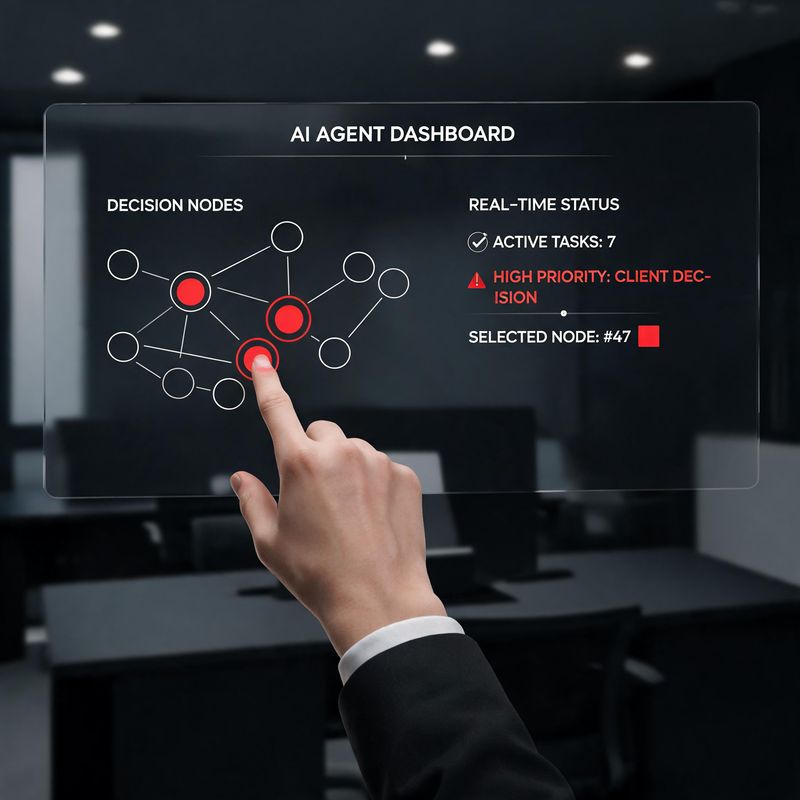
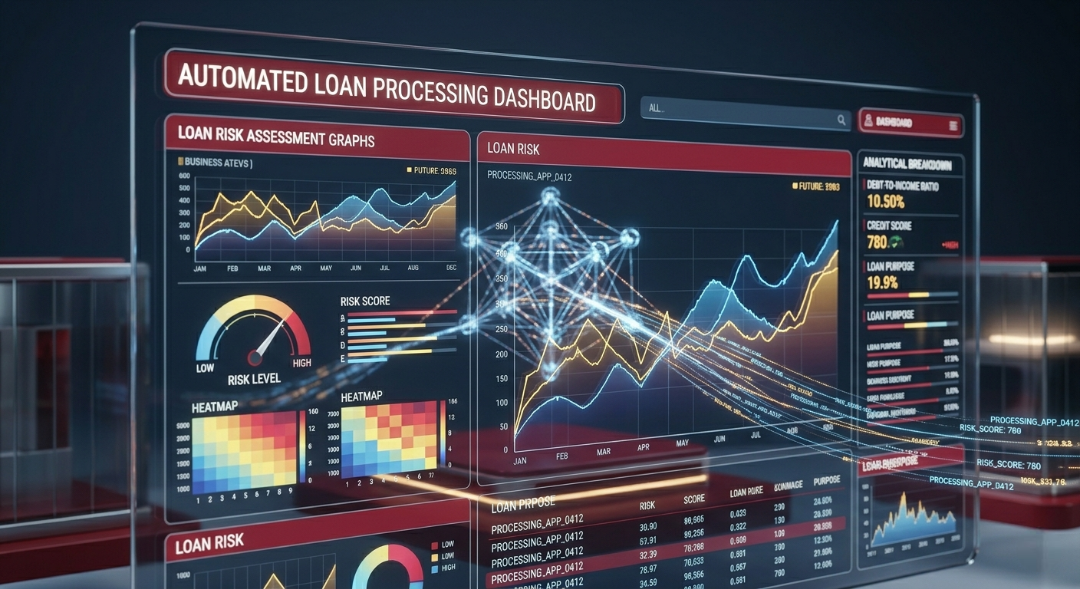
Data Flow Visualization: Making the Invisible Visible
Early modernization initiatives tended to have big bang migrations, wherein whole systems were changed simultaneously. These practices often did not work in government settings, leading to cost overruns, service failures or data corruption.
The incremental strategies take over. The strangler fig pattern will supersede functionality as it routes use cases via modern components, whilst legacy systems remain operational. Parallel run systems keep both old and new systems running at the same time, and can be validated and rolled back in case of problems.
One of the most difficult issues is data synchronization in the case of transition. There should not be a clash between changes in systems. Strong rollback features are also required, since failure should be invertible. No psychological factors are indifferent. Legacy users are under the need to trust the new interfaces, which are developed not as fast as new features.
Decision Explainability: Why the System Does What It Does
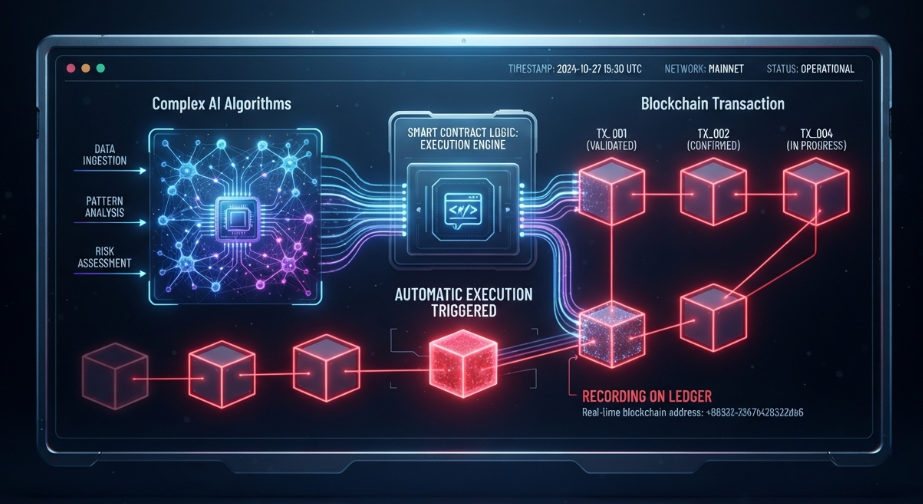
Middleware has been a choice of modernization layer. An abstraction layer insulates the modern apps against the complexity of legacy by revealing a standardized API. REST interfaces are interfaces that convert old protocols known to mainframe systems with the help of HTTP and JSON requests.
Connection pooling is necessary since the mainframe connection is costly and scarce. Caching algorithms are used to offload vulnerable servers, thereby leading to the provision of previously accessed information without re-queries. Error handling converts obscure legacy error codes into meaningful messages to be taken by the developer and the user.
Firms such as Claim Notify have adopted advanced middleware architecture that offers modern API access to the old state databases and gives credit to the shortcomings and availability restrictions of systems that were decades old. A common requirement is protocol translation e.g. SOAP to REST or EBCDIC to ASCII. Under some circumstances with middleware designed and optimized, performance benchmarks incur minimal overhead.
Security Transparency: Building Confidence Through Openness
The old schemas are frequently highly normalized or in a format that is not easily consumed by the modern systems. Modernization converts the fixed-width flat files into relational or analytical formats, making them read-only, and denormalizes data to support read-heavy access patterns.
The nature of the COBOL format like packed decimals requires that they be decoded correctly to maintain financial accuracy. Date fields should be handled with great care and Julian dates and two-digit year representations. The encoding of characters is done in a way that makes them consistent across systems.
The legacy platforms do not often have a genuine null concept; they require sentinel values interpretation. Data constraints that contain business rules need to be replicated and recorded. Referential integrity is often implemented at the application level and it has to be reinstated explicitly in the redesigned schemas.
Error Communication and Honest Problem Disclosure
Migration to legacy requires testing. Representative test datasets are produced through the use of production snapshots. Regression testing will guarantee that all the legacy functions will behave the same way using the new access layers.
The integrity of data is checked between the results of the old and new systems on a record-by-record basis. Peak load testing is used to confirm that the modernization does not make the service poor. Disaster recovery and failover scenarios are repeated several times.
The legacy system experts are important in user acceptance testing because they are not properly documented. The fact that the financial accuracy and the audit requirements are upheld is confirmed by compliance validation.
The Transparency Privacy Balance
Another way of capturing institutional knowledge is through modernization. Architecture decision records should be used to capture undocumented logic that has been identified during migration. Technical debt cannot be left alone, but should be followed and given priority.
It is usually planned to be gradually migrated to microservices or cloud-based architecture in the future, but regulatory and security issues slow such adoption. It is important to establish institutional knowledge because the older staff members retire.
Stability and progress are in a continuous conflict. It is neither sustainable to wrap up legacy systems indefinitely nor is it sustainable to replace them in a hurry. Effective programs strike a balance between the two realities.
Trust Through Truth: The Future of Transparent Fintech
The process of modernizing access to public financial information is usually a long-term process, which may take five to ten years. It needs long-term financing, political will and admiration of the systems that go on serving constantly.
Pragmatic data transformation, abstraction of middleware and gradual migration provide plausible solutions. It is also very important that the legacy experts will be able to transfer their knowledge to fresh teams. Although the replacement of legacy systems can happen one day, at the moment the safe and scalable access is considered to be the priority. The new government IT is not a disruptive process, but a process of disciplined, patient engineering.
 Explore more on these topics






















 Guest Blogging: The Definitive Guide

 Top Trending Topics
 Share This
 Link copied!
 Recently Updated News
 thực chiến - Kiến tạo tương lai cho các nhà sáng tạo nội dung.