
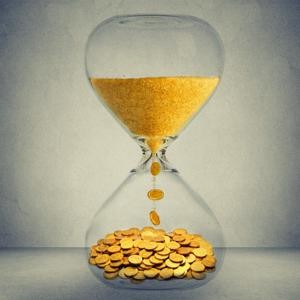
Time is gold: Lead Time, Lag Time, Cycle Time, Reaction Time, Flow Time, Takt Time
Last updated: January 25, 2026 Read in fullscreen view


 Recommended for you
- 17 Oct 2022
 What is the difference between low-end, mid-end and high-end solutions of project management software? 185/1660
 - 18 Oct 2020 How to use the "Knowns" and "Unknowns" technique to manage assumptions 167/1261
- 20 Jan 2022 Difference between Bug, Defect, Error, Fault & Failure 165/1529
- 18 Mar 2022 Difference between Project Management and Management Consulting 158/518
- 12 Jan 2026 Why YouTube Content Is the New Resume: Building Trust and Expertise Even Without Views 156/185
- 03 Aug 2022 What Are OLAs? SLAs vs OLAs vs UCs: What’s The Difference? 155/1247
- 12 Apr 2025 How to Ask Powerful Questions Like Socrates 147/182
- 19 Oct 2021 Software development life cycles 145/823
- 07 Dec 2021 What's the difference between soft freeze, hard freeze and customization freeze? 137/1407
- 04 Oct 2021 Product Validation: The Key to Developing the Best Product Possible 133/441
- 21 Jun 2022 Difference between Quality and Grade 131/962
- 13 Oct 2021 Outsourcing Software Development: MVP, Proof of Concept (POC) and Prototyping. Which is better? 129/607
- 23 Sep 2021 INFOGRAPHIC: Top 9 Software Outsourcing Mistakes 127/550
- 07 Oct 2025 Case Study: Using the “Messaging House” Framework to Build a Digital Transformation Roadmap 127/207
- 15 Aug 2024 Digital Governance vs IT Governance: What’s the Difference and Why It Matters 124/200
- 10 Apr 2022 Difference Between Forward and Backward Reasoning in AI 124/1861
- 18 Aug 2022 What are the consequences of poor requirements with software development projects? 123/391
- 11 Jan 2024 What are the Benefits and Limitations of Augmented Intelligence? 119/605
- 13 Dec 2020 Move fast, fail fast, fail-safe 119/460
- 01 Oct 2020 Fail fast, learn faster with Agile methodology 118/1192
- 15 Aug 2023 Production-Ready vs Feature-Complete: What’s the Difference? 118/373
- 06 Feb 2021 Why fail fast and learn fast? 116/593
- 15 Sep 2022 CRM vs CDP: What's the difference? 116/420
- 02 May 2022 Difference between CapEx vs. OpEx: Two Ways to Finance Your Software Project 112/1740
- 12 Oct 2022 14 Common Reasons Software Projects Fail (And How To Avoid Them) 112/677
- 12 Aug 2024 Understanding Google Analytics in Mumbai: A Beginner's Guide 111/218
- 28 Jul 2022 POC, Prototypes, Pilots and MVP: What Are the Differences? 110/851
- 06 Jun 2024 Software Upgrade vs Software Update: What is the difference? 110/366
- 05 May 2022 DAM vs. CMS: What's the difference? 110/607
- 09 Dec 2021 Customer Service vs Technical Support: What’s The Difference? 106/427
- 14 Mar 2024 Why should you opt for software localization from a professional agency? 102/241
- 18 Oct 2024 IT Governance, IT Management and IT Outsourcing: What’s the Difference? 101/157
- 02 Nov 2021 Difference between an ESTIMATE and a QUOTE 99/454
- 14 Oct 2021 Advantages and Disadvantages of Time and Material Contract (T&M) 98/994
- 10 Nov 2021 PoC vs. Prototype vs. MVP: What’s the difference? 97/934
- 31 Aug 2022 What are the best practices for software contract negotiations? 97/371
- 12 Dec 2021 Zero Sum Games Agile vs. Waterfall Project Management Methods 96/510
- 25 Jan 2022 What is the difference between Outsourcing and Outstaffing? 94/460
- 05 Sep 2023 The Cold Start Problem: How to Start and Scale Network Effects 94/292
- 28 Dec 2021 8 types of pricing models in software development outsourcing 92/526
- 05 Mar 2021 How do you minimize risks when you outsource software development? 91/424
- 24 Nov 2021 What is the difference between off-the-shelf software and customized software? 91/572
- 17 Feb 2022 Prioritizing Software Requirements with Kano Analysis 88/392
- 08 Oct 2022 KPI - The New Leadership 87/696
- 19 Oct 2021 Is gold plating good or bad in project management? 87/918
- 01 Apr 2022 Dedicated Team vs. Extended Team: What’s the difference? 85/411
- 01 Mar 2024 (AI) Artificial Intelligence Terms Every Beginner Should Know 85/419
- 10 Nov 2022 Poor Code Indicators and How to Improve Your Code? 83/300
- 06 Mar 2024 [SemRush] What Are LSI Keywords & Why They Don‘t Matter 82/284
- 10 Dec 2023 Pain points of User Acceptance Testing (UAT) 82/543
- 01 Dec 2023 Laws of Project Management 80/395
- 12 Mar 2024 How do you create FOMO in software prospects? 76/250
- 18 Jul 2021 How To Ramp Up An Offshore Software Development Team Quickly 76/668
- 01 Feb 2022 Outstaffing Vs. Outsourcing: What’s The Difference? 74/662
- 01 Mar 2023 Bug Prioritization - What are the 5 levels of priority? 73/302
- 19 Apr 2021 7 Most Common Time-Wasters For Software Development 72/617
- 04 Oct 2022 Which ERP implementation strategy is right for your business? 71/431
- 01 May 2024 Warren Buffett’s Golden Rule for Digital Transformation: Avoiding Tech Overload 69/277
- 31 Oct 2021 Tips to Fail Fast With Outsourcing 68/459
- 15 Aug 2025 Quantum Technology: Global Challenges and Opportunities for Innovators 63/195
- 05 Jan 2024 Easy ASANA tips & tricks for you and your team 61/259
- 28 Oct 2022 Build Operate Transfer (B.O.T) Model in Software Outsourcing 60/470
- 08 Jan 2024 Ask Experts: Explicitation/Implicitation and Elicitation; two commonly used but barely unraveled concepts 58/439
- 03 Jul 2022 Occam’s Razor and the Art of Software Design 57/559
- 26 Dec 2023 Improving Meeting Effectiveness Through the Six Thinking Hats 54/330
- 06 Nov 2019 How to Access Software Project Size? 45/303
“Time is more precious than gold, more precious than diamonds, more precious than oil or any valuable treasures. It is time that we do not have enough of; it is time that causes the war within our hearts, and so we must spend it wisely.”
Lead time
Lead time is the time measured from the moment a client puts in an order to when the final product gets delivered.
This can be easily understood by thinking of the total time it takes for the client to receive the product from the moment they put in the order to the moment they receive the shipment.
Lead Time is Cycle Time plus the additional amount of time it takes for production to begin and the time it takes to deliver the finished product.
Lead time measures the time elapsed from the point a piece of work – such as defect or feature – is requested (usually by a customer) to the point that it’s delivered. For example, a defect’s lead time starts at the point a customer reports the problem and ends when the fix has been delivered in a patch or version of the software. For new functionality requested, lead time would be measured from the moment a customer requests a new feature to the point it is made available in the software.
Lag time
A time lag is a fairly long interval of time between one event and another related event that happens after it.
If lag is associated with delay, “lead” is the amount of time by which a successor task can be advanced with regard to its predecessor. If adding lag will result in delaying a project, adding lead to dependent tasks on a critical path may reduce the time required to complete the project.
Flow time
Flow time, on the other hand, measures the time it takes for a work item to go from the point that it is accepted into the value stream – i.e., from its first “active state” – to when it’s available to the customer (deployed or delivered). Let’s break that down a bit. All work items go through various workflow states like New, In Progress, In Dev, In Review, Verification and so forth.
These states can be generalized into four broad states:
- New (work item is created)
- Active (when value adding work is being carried out on the item)
- Wait (item is waiting on external dependencies)
- Done (complete state)
A work item can be “accepted” into the value stream at different points of the workflow. For example, incidents that are escaped defects (a bug found in software in production) will enter the value stream as soon as triage is complete and it is determined that a patch or service release is required. New enhancements may only be accepted into a value stream when it is scheduled in the backlog.
Cycle time
Cycle Time is the amount of time a team spends actually working on producing an item, up until the product is ready for shipment. It is the time it takes to complete one task. This includes time spent producing the item and the wait stages (amount of time the task is left ‘waiting’ on the board) between active work times.
Cycle time is what most people conventionally think of when they mistakenly use “lead time” and “takt time” interchangeably.
Reaction time
Reaction time or response time refers to the amount of time that takes place between when we perceive something to when we respond to it.
Takt Time
Takt Time in German means rhythm. It is the steady ‘beat’ to which production must follow to satisfy the demands of the customer.
Takt time is the rate at which manufacturing processes and systems need to complete the production in order to meet the customer's request. Therefore, this is less of measuring the total time it takes to complete a segment or the entirety of the production.
Takt time measures the pace at which work must be done to deliver what has been promised. Takt time can be measured manually or can be automated with takt time solutions.
TIGO Solutions
Time is Gold!
 Explore more on these topics



















 Guest Blogging: The Definitive Guide

 Top Trending Topics
 Share This
 Link copied!
 Recently Updated News