




Yokoten: Best Practice Sharing from a success
Last updated: October 20, 2025 Read in fullscreen view


 Recommended for you
- 01 Aug 2024
 The Standish Group report 83.9% of IT projects partially or completely fail 680/2479
 - 02 Nov 2023 Unlocking Success with The Amoeba Management Model: Key Lessons, Pros & Cons, and Finding the Perfect Fit 348/1021
- 09 Sep 2022 Kaizen, Kaikaku and Kakushin – what’s the difference? 301/3336
- 10 Nov 2021 5S methodology - the SECRET to Japanese SUCCESS 233/1972
- 24 Nov 2022 Genba Genbutsu Genjitsu (3Gs), (Go to the Genba & see for yourself!) 222/3207
- 01 Dec 2023 What is Amoeba Management? 202/1178
- 13 Apr 2024 Lessons on Teamwork and Leadership from Chinese story book "Journey to the West" 157/1224
- 03 Jan 2024 What is the Ringi process? 136/1137
- 07 Mar 2023 Japan’s Unusual Farming Strategy: Renting Land and Leaving It Fallow for 5 Years — Here’s the Truth… 129/243
- 01 Mar 2022 The Toyota Way Management Principles 122/921
- 02 Nov 2021 What is Terms of Reference (ToR)? 122/1689
- 19 Oct 2021 Software development life cycles 118/795
- 01 Apr 2022 Ishikawa (fishbone) diagram in software project management 112/3277
- 18 Oct 2020 How to use the "Knowns" and "Unknowns" technique to manage assumptions 109/1200
- 13 Oct 2021 Outsourcing Software Development: MVP, Proof of Concept (POC) and Prototyping. Which is better? 108/582
- 13 Dec 2020 Move fast, fail fast, fail-safe 104/424
- 04 Oct 2021 Product Validation: The Key to Developing the Best Product Possible 103/411
- 09 Sep 2022 What is 5 Whys (Five Whys)? 103/1073
- 21 Nov 2025 The Pressure of Short-Term Funding on Small-Budget IT Projects 97/126
- 11 Jan 2024 What are the Benefits and Limitations of Augmented Intelligence? 97/577
- 06 Feb 2021 Why fail fast and learn fast? 96/561
- 23 Jun 2024 Best Practices for Managing Project Escalations 92/295
- 12 Aug 2024 Understanding Google Analytics in Mumbai: A Beginner's Guide 91/185
- 12 Oct 2022 14 Common Reasons Software Projects Fail (And How To Avoid Them) 90/652
- 01 Oct 2020 Fail fast, learn faster with Agile methodology 88/1156
- 27 Aug 2022 Kaizen - Culture of Continuous Improvement and Lean Thinking 88/963
- 12 Mar 2022 The u-Japan concept 88/377
- 29 Jan 2026 Honne and Tatemae: Why Do Japanese People Seem Excessively Polite and Indirect? 87/109
- 14 Mar 2024 Why should you opt for software localization from a professional agency? 86/225
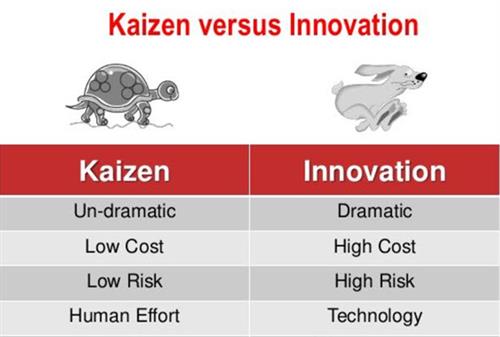
- 29 Aug 2022 Difference between Kaizen and Innovation 86/990
- 18 Aug 2022 What are the consequences of poor requirements with software development projects? 86/344
- 19 Jul 2022 The 12 Principles of Continuous Process Improvement 85/617
- 06 Jun 2022 HEIJUNKA: The art of leveling production 85/690
- 19 Sep 2022 Jidoka in Software Development and Odoo ERP/MRP 84/626
- 04 Mar 2024 Tree Ring Management: Take the Long Term View and Grow Your Business Slowly 84/526
- 03 Apr 2022 Microsoft Solutions Framework (MSF) 83/1406
- 17 Mar 2023 Reduce waste in software development with 3M model: Muda, Mura, Muri 82/1045
- 31 Aug 2022 What are the best practices for software contract negotiations? 82/349
- 15 Jul 2022 Hansei Methodology: Continuously Engaging People in Improvement 82/823
- 03 Jan 2023 Organizing your agile teams? Think about M.A.T (Mastery, Autonomy, Purpose) 81/474
- 01 Jan 2023 How To Use Poka-Yoke (Mistake Proofing) Technique To Improve Software Quality 78/730
- 23 Sep 2021 INFOGRAPHIC: Top 9 Software Outsourcing Mistakes 78/501
- 05 Mar 2021 How do you minimize risks when you outsource software development? 78/409
- 01 Mar 2024 10 Project Management Myths 77/237
- 07 Oct 2025 Case Study: Using the “Messaging House” Framework to Build a Digital Transformation Roadmap 75/154
- 12 Aug 2022 What is End-to-end project management? 75/560
- 02 May 2022 What Is RAID in Project Management? (With Pros and Cons) 75/910
- 15 Apr 2022 Total Quality Management (TQM) - Japanese-style management approach to quality improvement. 75/788
- 12 Dec 2024 Danshari: A Japanese Minimalist Philosophy for Cleaner Code and Leaner IT Operations 74/150
- 06 Mar 2024 [SemRush] What Are LSI Keywords & Why They Don‘t Matter 71/266
- 13 Jul 2022 Applying the business mantra "HORENSO" to Achieve 360-degree Communication 71/1019
- 28 Dec 2021 8 types of pricing models in software development outsourcing 70/504
- 05 Sep 2023 The Cold Start Problem: How to Start and Scale Network Effects 70/261
- 08 Oct 2022 KPI - The New Leadership 68/674
- 14 Oct 2021 Advantages and Disadvantages of Time and Material Contract (T&M) 65/946
- 28 Jul 2022 POC, Prototypes, Pilots and MVP: What Are the Differences? 64/793
- 22 May 2022 What are common mistakes that new or inexperienced managers make? 63/343
- 11 Jul 2022 Lean software development - the game-changer in the digital age 63/342
- 18 Dec 2025 AI: Act Now or Wait Until You’re “Ready”? 62/99
- 01 Jun 2020 Japan Business Review (JBR) 62/396
- 10 Dec 2023 Pain points of User Acceptance Testing (UAT) 61/515
- 18 Dec 2023 The Cone of Uncertainty in Scrum & Requirement Definition 61/786
- 02 Nov 2022 Difference between Change Management and Project Management 60/291
- 17 Oct 2021 Does Fast Tracking increase project cost? 60/430
- 27 Jan 2020 Should a project manager push developers to work more hours due to mistakes of manager schedule setting? 59/496
- 07 Jul 2022 Managing Project Execution Terms 59/466
- 09 May 2022 Build one to throw away vs Second-system effect: What are differences? 57/368
- 01 May 2024 Warren Buffett’s Golden Rule for Digital Transformation: Avoiding Tech Overload 57/263
- 10 Apr 2024 The Parking Lot Method: Unlocking a Simple Secret to Supercharge Your Productivity 56/563
- 14 Jun 2022 Example and Excel template of a RACI chart in Software Development 55/917
- 12 Dec 2021 Zero Sum Games Agile vs. Waterfall Project Management Methods 55/465
- 19 Apr 2021 7 Most Common Time-Wasters For Software Development 54/599
- 04 Oct 2022 Which ERP implementation strategy is right for your business? 54/401
- 01 Dec 2023 Laws of Project Management 53/367
- 19 Oct 2021 Is gold plating good or bad in project management? 52/883
- 10 Nov 2022 Poor Code Indicators and How to Improve Your Code? 52/269
- 18 Jul 2021 How To Ramp Up An Offshore Software Development Team Quickly 52/640
- 18 Oct 2021 Key Elements to Ramping Up a Large Team 50/1295
- 07 Dec 2023 12 project management myths to avoid 50/242
- 05 Jan 2024 Easy ASANA tips & tricks for you and your team 49/246
- 01 Mar 2023 Bug Prioritization - What are the 5 levels of priority? 49/275
- 12 Mar 2024 How do you create FOMO in software prospects? 49/217
- 18 Feb 2026 "Hit and Run" Project Management: Balancing Speed with Sustainability 49/66
- 20 Jul 2022 Software Myths and Realities 49/980
- 24 Nov 2023 The project management paradox: Achieving MORE by doing LESS 48/278
- 02 Jun 2024 Reviving Ancient Wisdom: The Spiritual Side of Project Management 47/297
- 02 Dec 2021 3 Ways to Avoid Scope Creep in IT Consulting 46/255
- 15 May 2022 20 Common Mistakes Made by New or Inexperienced Project Managers 46/328
- 28 Oct 2022 Build Operate Transfer (B.O.T) Model in Software Outsourcing 45/446
- 13 Jan 2020 Quiz: Test your understanding project cost management 45/681
- 31 Oct 2021 Tips to Fail Fast With Outsourcing 45/433
- 26 Sep 2024 Successful Project Management Techniques You Need to Look Out For 45/440
- 06 Jun 2022 Change Management at the Project Level 44/349
- 05 Jun 2023 Fractional, Part-Time (virtual) or Interim CTO: Who Will Cover Your Business Needs? 43/185
- 30 Nov 2023 Project Managers, Focus on Outcomes — Not Deliverables 41/201
- 26 Dec 2023 Improving Meeting Effectiveness Through the Six Thinking Hats 41/312
- 17 Feb 2022 Prioritizing Software Requirements with Kano Analysis 41/345
- 01 Aug 2022 Is planning "set it and forget it" or "set it and check it"? 38/325
- 11 Jan 2022 Lean Thinking and Lean Transformation 34/294
- 06 Nov 2019 How to Access Software Project Size? 31/288
- 10 May 2022 Levels of Teamwork 29/223
- 21 Jun 2024 Dead Horses and the Escalation of Commitment 29/166
What is Yokoten?
Yokoten means “horizontal deployment”. It refers to the practice of copying good results of kaizen in one area to other areas. Yokoten applies more broadly to copying product design ideas as well as better practices in general.
“Best practice sharing” comes close to the meaning of yokoten. In modern business that phrase often means e-mailing PowerPoint presentations, comparing results between divisions and debating the differences between various round fruits.
In project management, Yokoten is a Japanese manufacturing concept that is especially relevant to Project Managers. Yokoten means 'Best Practice Sharing'.
Yoko: Sideways
Tenkai: Development
It's the best translation of a term adopted by Toyota. It reflects the idea of transferring ideas and information among peers.
Yokoten builds on another, more familiar concept: 'Kaizen'
Kaizen is a continuous flow of improvements. Everyone on your team has the right - and responsibility - to spot ways to do things better.
Once you find an idea that works, through Kaizen, the next thing to do is to share it. That's Yokoten. In Toyota's usage, it carries the ideas of:
- sharing a new idea
- transmitting it across the organization (rather than top-down)
- allowing others to copy it
- co-operation between teams
- a shared sense of responsibility and success
Yokoten binds teams and work-groups together into a larger team. For Toyota, it has a big impact on results. It is a 'success-multiplier'.
Where does Yokoten Happen within the Problem Solving Cycle?
Within the 8 step practical problem solving process known as TBP (Toyota Business Practice) the yokoten activity happens in step 8.
- Clarify the problem
- Break down the problem
- Set a target
- Analyze the root cause
- Develop countermeasures
- See countermeasures through
- Evaluate both results and process
- Standardize successes, learn from failures
Within the PDCA cycle yokoten happens in the Act (A) stage, corresponding to step 8 above.
Lesson Learned Meetings are not Enough
Your team members could go further. Encourage them to share new discoveries among themselves. Give them permission to see what other team members are doing.
Your role is to encourage this and get the word out. Simply copelling people to copy innovations and improvements is a step. But for sustainable personal growth and team performance improvements, you need more.
It's attitudes and thinking that people need to share, copy, and adopt. We only really learn lessons when we adopt new ideas and the thinking behind them.
Why Are We Slow to Copy Good Practices through Yokoten?
Yokoten is an essential part of long-term success in a lean culture, but can also have a big impact on short-term results. Yokoten is a success multiplier. Perform a good kaizen and copy the results, and you immediately duplicate the impact. Yet we don’t hear so much about yokoten. Why is this? In a typical company the best practices can become lost among the noise, buried beneath the day-to-day fire-fighting or even deliberately hidden from others in to make one’s own self or group look good. There may be localized incentives in place that prevent yokoten from happening. There are other obstacles to yokoten, including a lack of documented standard as a result of kaizen, weak “go see” culture, or no metrics or ways to agree on what is in fact a better practice.
 Explore more on these topics
























 Guest Blogging: The Definitive Guide

 Top Trending Topics
 Share This
 Link copied!
 Recently Updated News