
AI Agent Development Services: A Complete Guide for Enterprise (BỊ DUPLICATE VỚI 1 BÀI KHÁC VỚI ID=109555)
Last updated: September 30, 2026 Read in fullscreen view


 Recommended for you
- 06 Mar 2026
 Next-Generation AI Agents Explained: OpenClaw, NanoClaw, IronClaw and the Rise of Agent Architectures 400/469
- 14 Jan 2026 How to Evaluate the Business and Productivity Software Company Seismic on RFP AI Agent Use Cases 264/350
- 01 Dec 2025 Manufacturing 4.0: AI Agents Enabling Self-Optimizing Production Systems 219/326
- 02 Dec 2025 The Question That Shook Asia: What Happens When We Ask AI to Choose Between a Mother and a Wife? 214/304
- 29 Oct 2024 Top AI Tools and Frameworks You’ll Master in an Artificial Intelligence Course 205/629
- 05 Jun 2025 How AI-Driven Computer Vision Is Changing the Face of Retail Analytics 197/344
- 09 Jul 2024 What Is Artificial Intelligence and How Is It Used Today? 191/508
- 12 May 2026 Top 6 AI AR/VR Filter Tools for Mind-Blowing Videos and Photos in 2026 187/259
- 16 Oct 2025 AI Inference Explained Simply: What Developers Really Need to Know 184/237
- 23 Dec 2024 Garbage In, Megabytes Out (GIMO): How to Rise Above AI Slop and Create Real Signal 179/256
- 06 Dec 2025 Enterprise Operations 2.0: Why AI Agents Are Replacing Traditional Automation 178/230
- 01 Nov 2023 Difference between Vendor and Subcontractor 158/1258
- 06 Nov 2025 DataOps: The Next Frontier in Agile Data Management 156/223
- 25 Nov 2025 How AI Agents Are Redefining Enterprise Automation and Decision-Making 152/218
- 25 Dec 2025 What Is Algorithmic Fairness? Who Determines the Value of Content: Humans or Algorithms? 151/218
- 08 Apr 2026 Top AI Agent Development Companies for Manufacturing Industry (2026) 134/188
- 15 Apr 2024 Weights & Biases: The AI Developer Platform 132/335
- 17 Oct 2025 MLOps vs AIOps: What’s the Difference and Why It Matters 130/260
- 01 Jul 2025 The Hidden Costs of Not Adopting AI Agents: Risk of Falling Behind 123/283
- 16 Aug 2022 What is a Headless CMS? 123/428
- 21 Aug 2024 What is Singularity and Its Impact on Businesses? 122/598
- 10 Nov 2025 Multi-Modal AI Agents: Merging Voice, Text, and Vision for Better CX 120/249
- 12 Jan 2026 Companies Developing Custom AI Models for Brand Creative: Market Landscape and Use Cases 117/167
- 21 Nov 2025 The Rise of AgentOps: How Enterprises Are Managing and Scaling AI Agents 114/187
- 16 Sep 2022 Examples Of Augmented Intelligence In Today’s Workplaces Shaping the Business as Usual 114/574
- 27 Aug 2025 How AI Consulting Is Driving Smarter Diagnostics and Hospital Operations 113/220
- 09 Sep 2025 Aligning BI Dashboards with KPIs: A Business + Data Collaboration Guide 112/206
- 15 May 2025 AI Consulting for Small Businesses: How to Leverage AI for Growth & Efficiency 109/308
- 24 Dec 2024 Artificial Intelligence and Cybersecurity: Building Trust in EFL Tutoring 109/287
- 06 Feb 2024 What are benefits and drawbacks of co-creating solutions with your clients? 108/338
- 07 Nov 2025 Online vs. Offline Machine Learning Courses in South Africa: Which One Should You Pick? 107/195
- 28 Nov 2025 How AI Will Transform Vendor Onboarding and Seller Management in 2026 105/247
- 24 Oct 2025 AI Agents in SaaS Platforms: Automating User Support and Onboarding 104/182
- 06 May 2025 How Machine Learning Is Transforming Data Analytics Workflows 101/308
- 22 Sep 2025 Why AI Is Critical for Accelerating Drug Discovery in Pharma 98/222
- 27 May 2026 Best 5 Software Development Companies Ideal for Early-Stage Startups 91/143
- 21 Apr 2025 Agent AI in Multimodal Interaction: Transforming Human-Computer Engagement 90/300
- 04 Oct 2023 The Future of Work: Harnessing AI Solutions for Business Growth 90/380
- 30 Dec 2022 Top 6 Reasons to Partner with TIGOSOFT 82/356
- 29 May 2026 The Role of IoT in Modern Insurance App Development 82/109
- 05 Aug 2024 Affordable Tech: How Chatbots Enhance Value in Healthcare Software 77/337
- 15 Aug 2025 Quantum Technology: Global Challenges and Opportunities for Innovators 77/243
- 29 Aug 2025 How AI Is Transforming Modern Management Science 69/152
- 11 Jan 2024 Entering the Japanese Market: Stacking the Deck and Setting Expectations 60/225
- 20 Jul 2026 Why Enterprises Are Embracing Microsoft Copilot and Agentic AI in 2026 45/63
- 24 Mar 2026 AI for Financial Reconciliation: Automating Finance Operations in 2026 31/283
- 17 Jul 2026 Building a Marketplace That Attracts Both Buyers and Sellers 27/49
- 06 Nov 2025 Top AI Development Companies in the USA to Watch in 2026 24/401
- 11 Aug 2026 Top Enterprise AI Custom Model Development Providers in the USA 23/77
- 27 Sep 2026 Building Flexible IT Infrastructure to Support Your Business Growth 11/35
- 28 Sep 2026 AI Chatbot Development Costs Using LLM/RAG 11/33
- 24 Aug 2026 AI Agent Development Services: A Complete Guide for Enterprises 2/20
Time is one of the most important resources for a business, and doing manual work consumes the maximum of it. As most businesses look for the best ways to automate their tasks, AI agents can enhance operational efficiency, streamline workflows, and support faster decision-making. According to Cloudera, over 96% of IT executives are planning to use AI agents in 2026.
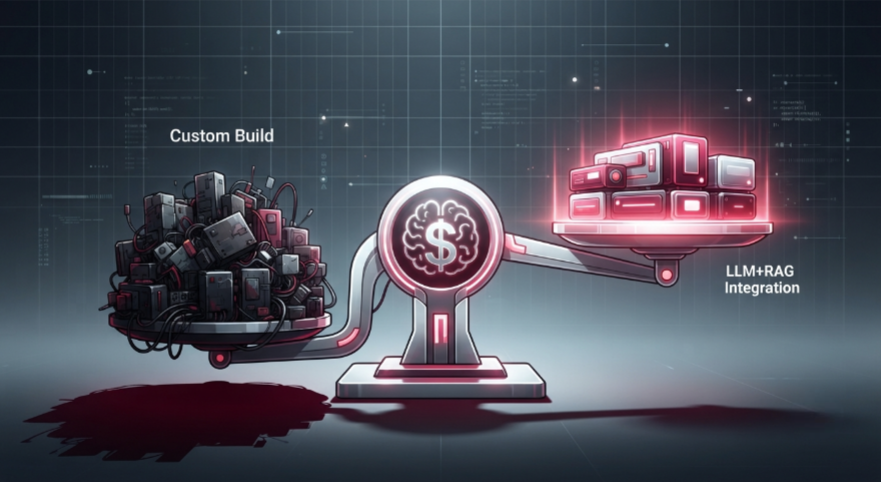
Choosing a reliable and cost-effective AI agent can be challenging for you. But the truth is, not all AI agents are tailored to your business needs, which can lead to unnecessary integration efforts, development costs, and infrastructure expenses. So, the most effective way for you is to get AI agent development services to minimize operational costs, enhance employee productivity, and enable scalable growth.
This comprehensive guide describes what these AI agent services are, why enterprises should choose them, and how they will help you.
What Are AI Agent Development Services?
AI agent development services include designing, developing, and deploying intelligent autonomous agents that help enterprises automate manual tasks and make data-driven decisions.
By opting for the top-rated AI agent development company, you can seamlessly do various things like:
- Analyze unstructured and structured data
- Understand natural language
- Learn from interactions
- Integrate with enterprise apps
- Smoothly collaborate between AI agents, employees, and enterprise systems
What’s Included in AI Agent Development
These are the common services that an AI agent development agency can offer.
- Architectural Planning: Figuring out how your agent will bring it all together, such as data, tools, and existing systems.
- Integration with AI and Large Language Models (LLMs): Integrating large language models with orchestration frameworks to enable controlled execution, task planning, and smooth interaction between enterprise systems and humans.
- Designing the Orchestration: Getting all the different AI models, APIs, and services to execute a multi-step workflow smoothly.
- Mapping Out the Workflow: Taking the business process and turning it into a structured workflow, objectives, decision paths, and execution policies for the AI agent.
- Tailoring the Agent: Configuring the agent to align with business objectives, enterprise architecture, data environments, and security requirements.
- Rigorous testing and validation: Verifying security, performance, and compliance before it touches any live data.
- Deployment and optimization: Making sure of a smooth evolution and preparing your agent for scaling and growth over time, supported by ongoing monitoring to ensure it continues functioning effectively.
Difference Between AI Automation Development and AI Agent Development
Many people get confused between AI automation and AI agent development and assume they are similar, but they are not.
AI automation development: This involves designing algorithms for rule-based, methodical workflows. However, designing automations alone can be time-consuming. Plus, it will lead to a rigid workflow that struggles to match the reasoning, dynamism, rapid deployment, and scalability of AI agents.
AI agent development: It emphasizes developing autonomous systems that can:
- Interpret data, user requests, and system state in real-time.
- Analyze numerous execution paths to identify an appropriate action on the basis of defined business constraints and objectives.
- Implement multiple tasks across enterprise systems with minimal manual intervention while escalating sensitive decisions when needed.
AI agents typically use reasoning and orchestration mechanisms to plan, prioritize, and execute tasks based on defined objectives. Also, they keep a record of information in their persistent context and integrate with other systems as well as tools to take action. Apart from that, they achieve defined objectives and adapt execution when process conditions change along the way.
When Should Enterprises Hire an AI Agent Development Service?
For enterprises facing limited internal expertise or complex implementation requirements, an experienced AI agent development partner can help you out. So, these are the common situations that every business should look for when hiring.
- Organizations don’t have in-house AI expertise: If your team doesn’t have machine learning engineers, data scientists, or product specialists experienced in orchestration, LLMs, or agentic AI systems, a reliable company can help you.
- You’re under pressure to move fast: Maybe your company needs to secure your budget for the upcoming year, prove ROI to the board, or try to get ahead of a competitor.
- Your company has a history of automation failures: If previous investments in AI chatbots, basic RPA tools, or even virtual tools have resulted in clunky language understanding, poor scalability, or fragile configurations, an experienced AI agent development company can address these challenges.
- Enterprises may want deep integration: Integrating an enterprise-grade AI agent with IT service management platforms, HR tools, or other core infrastructure requires robust security expertise and technical skills.
- The company’s budget is extended: Designing and maintaining AI agent infrastructure requires resources that sometimes exceed the budgeted amount.
Key Features to Look for in an Expert-Led AI Agent Development Partner
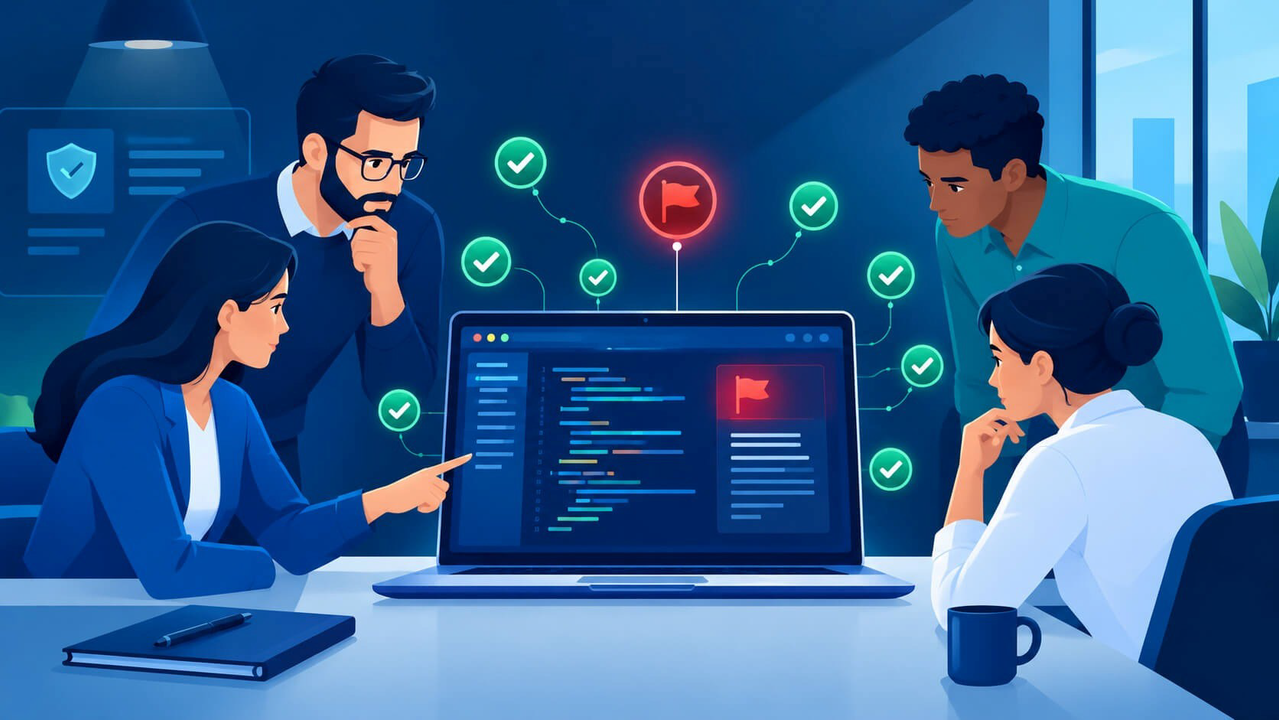
While deciding on an industry-recognized AI agent development partner, look for robust data security and privacy, deep technical expertise in LLM orchestration, and more. These are the essential features that every business must look for:
Experience with Agentic AI
Make sure to look for a vendor with demonstrable experience and hands-on knowledge of task-oriented AI Agents that utilize large language models and orchestration frameworks.
Enterprise System Integration Capabilities
Your AI agent may need to integrate with core systems such as ServiceNow, Jira, Workday, and Azure AD. You should look for an AI agent development partner with proven experience in enterprise authentication, permissions, workflows, and event-driven triggers to ensure secure, reliable integrations with enterprise systems.
Security and Compliance
Look for vendors that take data security seriously. They should have robust encryption, role-based access control, and some transparency around how they store and process your data. And they should comply with applicable security standards and privacy regulations.
Fast Deployment
You need a partner who can show you real-world deployment timelines. They should have frameworks, playbooks, and case studies. If they can't get it done quickly and reliably, you'll be stuck in decision-making delays, watching your budget and momentum decline away.
Ongoing Support and Optimization
Post-deployment support is necessary for addressing issues, monitoring performance, and optimizing the AI agent as business requirements change. Make sure your partner can provide it 24*7. If not, you're stuck with a static solution that will get outdated.
Centralized, Intuitive Interface for Employees
A user-friendly interface will get your employees on board and make it easy for them to get the help they need. A clunk front end leads to low adoption and increases the operational burden on your team.
Summing Up!
Building effective AI agents can be challenging, from identifying the use case and goals to navigating technical complexities, security, enterprise integration, and deployment. To overcome these challenges, enterprises need a solid foundation, the right partner, and a clear roadmap from prototype to production. And that is where experienced AI agent development services, combined with LLM orchestration, can help companies boost efficiency and deliver measurable value.
 Explore more on these topics





 Guest Blogging: The Definitive Guide

 Top Trending Topics
 Share This
 Link copied!

 Recently Updated News
 thực chiến - Kiến tạo tương lai cho các nhà sáng tạo nội dung.